
Recent from talks
Atrioventricular septal defect
Knowledge base stats:
Talk channels stats:
Members stats:
Atrioventricular septal defect
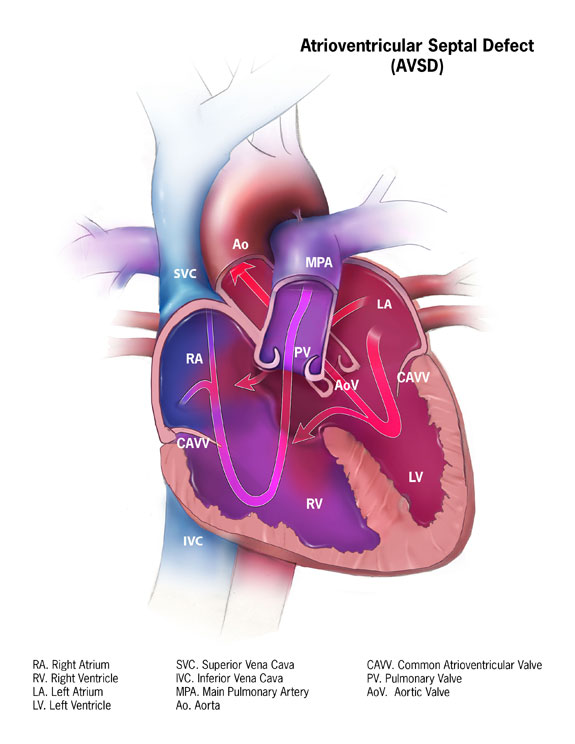
Atrioventricular septal defect (AVSD) or atrioventricular canal defect (AVCD), also known as "common atrioventricular canal" or "endocardial cushion defect" (ECD), is characterized by a deficiency of the atrioventricular septum of the heart that creates connections between all four of its chambers. It is a very specific combination of 3 defects:
1) Atrial Septal Defect (ASD), a hole in the wall between the right and left atria;
2) Ventricular Septal Defect (VSD), a hole in the wall between the right and left ventricles; and
3) Abnormalities of the mitral and/or tricuspid valves.
AVCD is caused by an abnormal or inadequate fusion of the superior and inferior endocardial cushions with the mid portion of the atrial septum and the muscular portion of the ventricular septum. Unlike some heart defects, the condition will not resolve over time and most infants must undergo open heart surgery. The surgery to correct this defect is usually successful and most babies do very well post-op.
Symptoms may include difficulty breathing (dyspnea) and bluish discoloration on skin, fingernails, and lips (cyanosis). An infant will begin to show signs of congestive heart failure, which can include rapid breathing, feeding problems, slow weight gain, low energy, and cold, clammy sweating. Symptoms often appear between 1-2 months of age but can occur earlier in some newborns.
Normally, the four chambers of the heart divide oxygenated and de-oxygenated blood into separate pools. When holes form between the chambers, as in AVSD, the pools can mix. Consequently, arterial blood supplies become less oxygenated than normal, causing ischemia and cyanosis in distal tissues. To compensate, the heart must pump a larger volume of blood to deliver enough oxygen, leading to cardiac enlargement and hypertrophy.
The development of pulmonary hypertension is very serious. And this because the left ventricle is weakened due to its overuse. When this happens, the pressure backs up into the pulmonary veins and the lungs. This type of damage is irreversible which is why immediate treatment is recommended after diagnosis.
Hub AI
Atrioventricular septal defect AI simulator
(@Atrioventricular septal defect_simulator)
Atrioventricular septal defect
Atrioventricular septal defect (AVSD) or atrioventricular canal defect (AVCD), also known as "common atrioventricular canal" or "endocardial cushion defect" (ECD), is characterized by a deficiency of the atrioventricular septum of the heart that creates connections between all four of its chambers. It is a very specific combination of 3 defects:
1) Atrial Septal Defect (ASD), a hole in the wall between the right and left atria;
2) Ventricular Septal Defect (VSD), a hole in the wall between the right and left ventricles; and
3) Abnormalities of the mitral and/or tricuspid valves.
AVCD is caused by an abnormal or inadequate fusion of the superior and inferior endocardial cushions with the mid portion of the atrial septum and the muscular portion of the ventricular septum. Unlike some heart defects, the condition will not resolve over time and most infants must undergo open heart surgery. The surgery to correct this defect is usually successful and most babies do very well post-op.
Symptoms may include difficulty breathing (dyspnea) and bluish discoloration on skin, fingernails, and lips (cyanosis). An infant will begin to show signs of congestive heart failure, which can include rapid breathing, feeding problems, slow weight gain, low energy, and cold, clammy sweating. Symptoms often appear between 1-2 months of age but can occur earlier in some newborns.
Normally, the four chambers of the heart divide oxygenated and de-oxygenated blood into separate pools. When holes form between the chambers, as in AVSD, the pools can mix. Consequently, arterial blood supplies become less oxygenated than normal, causing ischemia and cyanosis in distal tissues. To compensate, the heart must pump a larger volume of blood to deliver enough oxygen, leading to cardiac enlargement and hypertrophy.
The development of pulmonary hypertension is very serious. And this because the left ventricle is weakened due to its overuse. When this happens, the pressure backs up into the pulmonary veins and the lungs. This type of damage is irreversible which is why immediate treatment is recommended after diagnosis.
Recent media