



Community hub
Recent from talks
Knowledge base stats:
Talk channels stats:
Members stats:
Atrocity propaganda
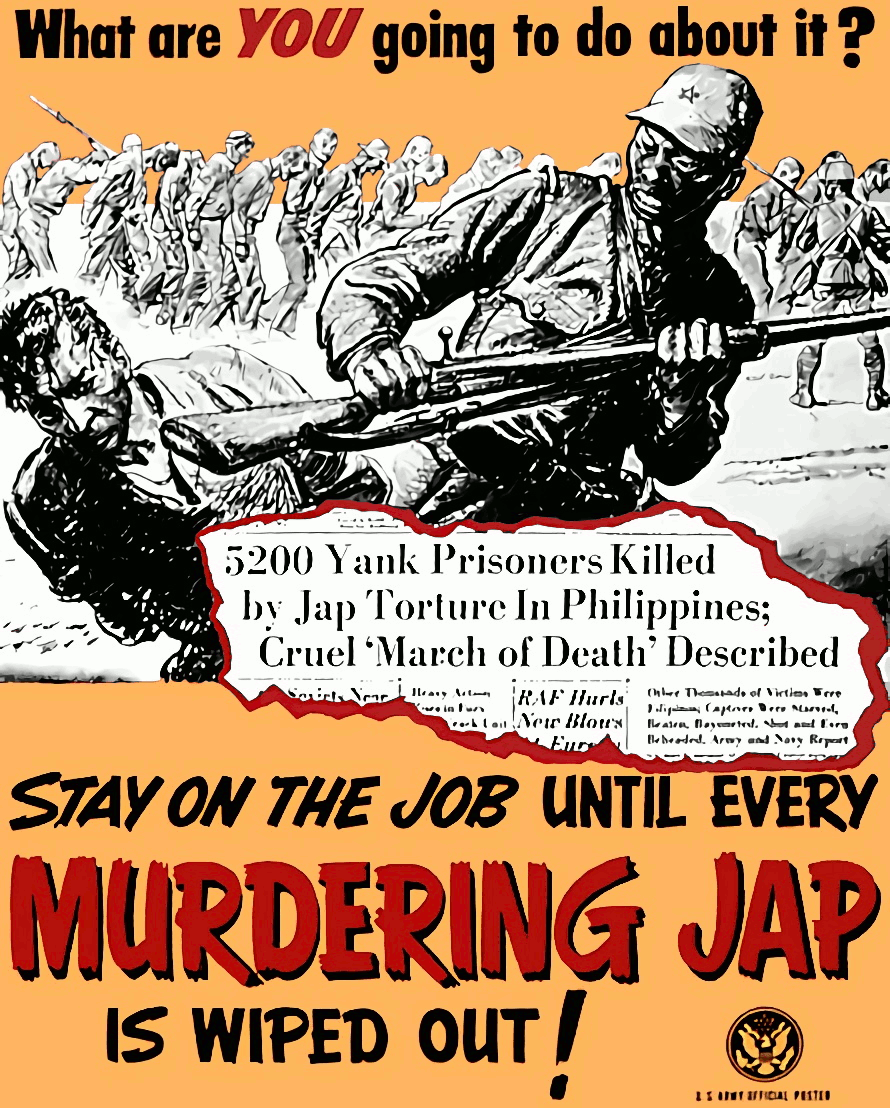
Atrocity propaganda is the spreading of information about the crimes committed by an enemy, which can be factual, but often includes or features deliberate fabrications or exaggerations. This can involve photographs, videos, illustrations, interviews, and other forms of information presentation or reporting.
The inherently violent nature of war means that exaggeration and invention of atrocities often becomes the main staple of propaganda. Patriotism is often not enough to make people hate the enemy, and propaganda is also necessary. "So great are the psychological resistances to war in modern nations", wrote Harold Lasswell, "that every war must appear to be a war of defense against a menacing, murderous aggressor. There must be no ambiguity about who the public is to hate." Human testimony may be unreliable even in ordinary circumstances, but in wartime, it can be further muddled by bias, sentiment, and misguided patriotism.
According to Paul Linebarger, atrocity propaganda leads to real atrocities, as it incites the enemy into committing more atrocities, and, by heating up passions, it increases the chances of one's own side committing atrocities, in revenge for the ones reported in propaganda. Atrocity propaganda might also lead the public to mistrust reports of actual atrocities. In January 1944, Arthur Koestler wrote of his frustration at trying to communicate what he had witnessed in Nazi-occupied Europe: the legacy of anti-German stories during World War I, many of which were debunked in the postwar years, meant that these reports were received with considerable amounts of skepticism.
Like propaganda, atrocity rumors detailing exaggerated or invented crimes perpetrated by enemies are also circulated to vilify the opposing side. The application of atrocity propaganda is not limited to times of conflict but can be implemented to sway public opinion and create a casus belli to declare war.
By establishing a baseline lie and painting the enemy as a monster, atrocity propaganda serves as an intelligence function, since it wastes the time and resources of the enemy's counterintelligence services to defend itself. The propagandists' goal is to influence perceptions, attitudes, opinions, and policies; often targeting officials at all levels of government. Atrocity propaganda is violent, gloomy, and portrays doom to help rile up and get the public excited. It dehumanizes the enemy, making them easier to kill. Wars have become more serious, and less gentlemanly; the enemy must now be taken into account not merely as a man, but as a fanatic. So, "falsehood is a recognized and extremely useful weapon in warfare, and every country uses it quite deliberately to deceive its own people, attract neutrals, and to mislead the enemy." Harold Lasswell saw it as a handy rule for arousing hate, and that "if at first they do not enrage, use an atrocity. It has been employed with unvarying success in every conflict known to man."
The extent and devastation of World War I required nations to keep morale high. Propaganda was used here to mobilize hatred against the enemy, convince the population of the justness of one's own cause, enlist the active support and cooperation of neutral countries, and strengthen the support of one's allies. The goal was to make the enemy appear savage, barbaric, and inhumane.
In a 1095 sermon at Clermont, Urban II promoted the Crusades by claiming that Muslims "had ravaged the churches of God in the Eastern provinces, circumcised Christian men, violated women, and carried out the most unspeakable torture before killing them." Urban II's sermon succeeded in mobilizing popular enthusiasm in support of the People's Crusade. Lurid tales purporting to unveil Jewish atrocities against Christians were also widespread during the Middle Ages. The claim that Jews kidnapped and murdered Christian children to consume their blood during Passover became known as blood libel.
During the Irish Rebellion of 1641, several accounts of atrocities committed by Irish rebels against English settlers in Ireland were published in England. Although these accounts were often exaggerated, "the English perception that the Irish... were routinely committing war crimes–was very real." Many in England reacted to these accounts "with calls for sharp reprisals". Such accounts were used by Oliver Cromwell to justify his conquest of Ireland in 1659, including the massacres that followed the sieges of Drogheda and Wexford.
Hub AI
Atrocity propaganda AI simulator
(@Atrocity propaganda_simulator)
Atrocity propaganda
Atrocity propaganda is the spreading of information about the crimes committed by an enemy, which can be factual, but often includes or features deliberate fabrications or exaggerations. This can involve photographs, videos, illustrations, interviews, and other forms of information presentation or reporting.
The inherently violent nature of war means that exaggeration and invention of atrocities often becomes the main staple of propaganda. Patriotism is often not enough to make people hate the enemy, and propaganda is also necessary. "So great are the psychological resistances to war in modern nations", wrote Harold Lasswell, "that every war must appear to be a war of defense against a menacing, murderous aggressor. There must be no ambiguity about who the public is to hate." Human testimony may be unreliable even in ordinary circumstances, but in wartime, it can be further muddled by bias, sentiment, and misguided patriotism.
According to Paul Linebarger, atrocity propaganda leads to real atrocities, as it incites the enemy into committing more atrocities, and, by heating up passions, it increases the chances of one's own side committing atrocities, in revenge for the ones reported in propaganda. Atrocity propaganda might also lead the public to mistrust reports of actual atrocities. In January 1944, Arthur Koestler wrote of his frustration at trying to communicate what he had witnessed in Nazi-occupied Europe: the legacy of anti-German stories during World War I, many of which were debunked in the postwar years, meant that these reports were received with considerable amounts of skepticism.
Like propaganda, atrocity rumors detailing exaggerated or invented crimes perpetrated by enemies are also circulated to vilify the opposing side. The application of atrocity propaganda is not limited to times of conflict but can be implemented to sway public opinion and create a casus belli to declare war.
By establishing a baseline lie and painting the enemy as a monster, atrocity propaganda serves as an intelligence function, since it wastes the time and resources of the enemy's counterintelligence services to defend itself. The propagandists' goal is to influence perceptions, attitudes, opinions, and policies; often targeting officials at all levels of government. Atrocity propaganda is violent, gloomy, and portrays doom to help rile up and get the public excited. It dehumanizes the enemy, making them easier to kill. Wars have become more serious, and less gentlemanly; the enemy must now be taken into account not merely as a man, but as a fanatic. So, "falsehood is a recognized and extremely useful weapon in warfare, and every country uses it quite deliberately to deceive its own people, attract neutrals, and to mislead the enemy." Harold Lasswell saw it as a handy rule for arousing hate, and that "if at first they do not enrage, use an atrocity. It has been employed with unvarying success in every conflict known to man."
The extent and devastation of World War I required nations to keep morale high. Propaganda was used here to mobilize hatred against the enemy, convince the population of the justness of one's own cause, enlist the active support and cooperation of neutral countries, and strengthen the support of one's allies. The goal was to make the enemy appear savage, barbaric, and inhumane.
In a 1095 sermon at Clermont, Urban II promoted the Crusades by claiming that Muslims "had ravaged the churches of God in the Eastern provinces, circumcised Christian men, violated women, and carried out the most unspeakable torture before killing them." Urban II's sermon succeeded in mobilizing popular enthusiasm in support of the People's Crusade. Lurid tales purporting to unveil Jewish atrocities against Christians were also widespread during the Middle Ages. The claim that Jews kidnapped and murdered Christian children to consume their blood during Passover became known as blood libel.
During the Irish Rebellion of 1641, several accounts of atrocities committed by Irish rebels against English settlers in Ireland were published in England. Although these accounts were often exaggerated, "the English perception that the Irish... were routinely committing war crimes–was very real." Many in England reacted to these accounts "with calls for sharp reprisals". Such accounts were used by Oliver Cromwell to justify his conquest of Ireland in 1659, including the massacres that followed the sieges of Drogheda and Wexford.