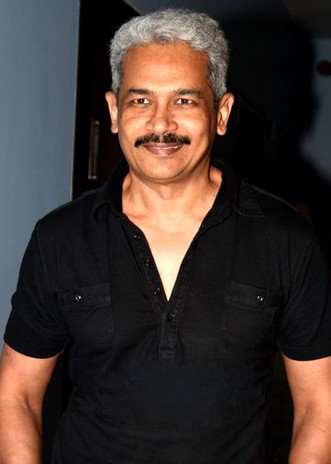

Atul Kulkarni
View on Wikipedia |
Atul Kulkarni (born 10 September 1965) is an Indian actor, producer and screenwriter who works in Hindi, Marathi, Kannada, Malayalam, Tamil, Telugu and English language films. Kulkarni won the National Award for the Best Supporting Actor for the films Hey Ram and Chandni Bar.[1][2] He is also the president of Quest, a research-action organization concentrating on enhancing quality of education. He left his study in engineering at College of Engineering, Pune while he was in his first year.[3] He is known for his performances in films like Hey Ram, Chandni Bar, Rang De Basanti (2006), Natarang (2010) among others. He has also written the screenplay of Laal Singh Chadda,[4] the official remake of Forrest Gump.[5]
Key Information


Early life and career
[edit]Kulkarni received his diploma in acting from the National School of Drama, New Delhi in 1995.[6] He is married to theatre actress Geetanjali Kulkarni (née Geetanjali Moreshwar Sherikar), whom he met at the National School of Drama.[7]
Kulkarni's first stint on stage was during his high school days. He participated in the Maharashtra State Drama Competition regularly. Between 1989 and 1992, he won awards for Acting and also for Drama-Direction.[8] Atul enacted in Gandhi Viruddh Gandhi, the play made later famous by Dilip Prabhavalkar in Marathi professional theatre circuit until mid-90s.[9] Later during his college days he actively participated in cultural gatherings. While studying, Atul joined Natya Aradhana, an amateur theatre group from Solapur. Atul Kulkarni holds a postgraduate diploma in dramatic arts from National School of Drama, New Delhi. Atul Kulkarni, a national-award winner and a fine actor, expresses his belief of art being a product of social, political and economic changes in the society.[10]
Other works
[edit]Philanthropy
[edit]Kulkarni has been serving as President of Quest Education Support Trust.[11] Quest Trust invests in running workshops and enabling Teachers, to support education for children of marginalized communities between 3–14 years. All this activity is mainly in State of Maharashtra. It conducts its activities in Marathi language.[12]
Atul Kulkarni has been active in sharing his knowledge on running NGO with other NGO's. He does visit Maharashtra based NGO's like Snehalaya regularly.[13] Kulkarni has been involved in an environmental project, making a 24-acre barren land in Satara District into Green area.[14]
Filmography
[edit] | This section of a biography of a living person does not include any references or sources. (January 2023) |
As actor
[edit]| Year | Film | Role | Language |
|---|---|---|---|
| 1997 | Bhoomigeetha | Forest officer | Kannada |
| 2000 | Kairee | Prof. Jadhav | Marathi |
| Jayam Manade Raa | Basavayah | Telugu | |
| Hey Ram | Shriram Abhyankar | Hindi Tamil | |
| 2001 | Chandni Bar | Potya Sawant[15] | Hindi |
| Dhyaas Parva | Gopal Krishna Gokhale | Marathi | |
| 2002 | Run | Bhaskar | Tamil |
| Bhet | Prabhakar | Marathi | |
| Bibhatsa | Kallu | Hindi | |
| Dahavi Fa | Ganesh Deshmukh | Marathi | |
| 2003 | Mango Soufflé | Edwin 'Ed' Prakash | English |
| 88 Antop Hill | Pratyush Shelar | Hindi | |
| Satta | Yashwant Varde | ||
| Dum | 'Encounter' Shankar | ||
| Vastupurush | Nishikant Dada | Marathi | |
| 2004 | Andhrawala | Bade Mia's sidekick | Telugu |
| Chanti | MLA Sarvarayudu | ||
| Gowri | Sarkar | ||
| Mansarovar | Ravi Roy | Malayalam | |
| Vajram | Unnamed | ||
| Khakee | Dr. Iqbal Ansari | Hindi | |
| Devrai | Shesh | Marathi | |
| Manmadhan | ACP Deva | Tamil | |
| Leela Mahal Center | GK | Telugu | |
| Chakwa | Tushar Khot | Marathi | |
| 2005 | Page 3 | Vinayak Mane | Hindi |
| 2006 | Kedi | Minister Pughazhenthy | Tamil |
| Raam | Veerendra | Telugu | |
| Rang De Basanti | Laxman Pandey | Hindi | |
| Corporate | Narrator | ||
| Maati Maay | Narsu | Marathi | |
| 2007 | Aa Dinagalu | Agni Shridhar | Kannada |
| Gauri: The Unborn | Sandeep | Hindi | |
| 2008 | Valu | Swanand Gaddamwar | Marathi |
| Talappavu | Krishnadeva Saivar | Malayalam | |
| Kurukshetra | Unnamed | ||
| D-17 | |||
| 2009 | Yeh Mera India | Raj | Hindi |
| Delhi 6 | Gobar | ||
| Padikathavan | Kasi Anandan | Tamil | |
| Vandae Maatharam | Atul | Malayalam Tamil | |
| Jail | Lawyer | Hindi | |
| 2010 | Yaksha | Machendranath Poonja | Kannada |
| Sukhaant | Pratap Gunje | Marathi | |
| Natarang | Guna Kagalkar | ||
| Allah Ke Banday | School Teacher | Hindi | |
| Bumm Bumm Bole | Khogiram Maheshwar Gwala | ||
| 2011 | Panjaa | Kulkarni | Telugu |
| Koffi Bar | Business man | ||
| Aagaah: The Warning | Aazan Khan | Hindi | |
| Chaalis Chauraasi | Bobby | ||
| 2012 | Suzhal | Surya Narayanan | Tamil |
| Edegarike | Agni Shridhar | Kannada | |
| 2013 | Nimidangal | Business man | Tamil |
| Aarambam | JCP Milind Virekar | ||
| The Attacks of 26/11 | Inspector Shinde | Hindi | |
| Popat | Janya | Marathi | |
| Vallinam | Basketball Coach[16] | Tamil | |
| Premachi Goshta | Ram | Marathi | |
| Zanjeer | Jayadev | Hindi | |
| The Lovers | Raoji | English | |
| 2014 | @Andheri | Rajan Pilla | Malayalam |
| Ugramm | Dhiraj Shivrudralingaiah | Kannada | |
| Veeram | Aadalarasu | Tamil | |
| Burma | Bothra Seth | Tamil | |
| Happy Journey | Niranjan | Marathi | |
| 2015 | Abhinetri | Shivaiah | Kannada |
| Dirty Politics | Police Inspector | Hindi | |
| Mythri | Raviprakash | Kannada Malayalam | |
| Jazbaa | Lawyer | Hindi | |
| Nellikka | Satheesh | Malayalam | |
| Kanal | Kuruvila Mathew | ||
| Rajwade and Sons | Shubhankar Rajwade | Marathi | |
| 2016 | Pranam | Hindi | |
| Akira | Akira's father | ||
| 2017 | Raees | Jairaj | |
| The Ghazi Attack | Lieutenant Commander Santosh Devraj | Telugu Hindi | |
| Bongu | Subash, assistant commissioner | Tamil | |
| Aval The House Next Door |
Paul, Jenny's Father | Tamil Hindi[17] | |
| Koode | Coach Ashraf | Malayalam | |
| 2018 | Black Bud | Mehmood Khan | Hindi |
| 2019 | Manikarnika: The Queen of Jhansi | Tatya Tope | |
| 706 | Shekhawat | ||
| Mere Pyare Prime Minister | In PMO | ||
| Junglee | Keshav Kotian | ||
| Majili | Anshu's Father | Telugu | |
| Athiran | Dr. Benjamin Diaz | Malayalam | |
| Valiyaperunnal | Shivaji | ||
| Alidu Ulidavaru | Police Inspector | Kannada | |
| 2020 | Wild Dog[18] | DIG Hemanth | Telugu |
| 2021 | Koi Jaane Na | Dr. Rao | Hindi |
| 2022 | A Thursday | Javed Khan | |
| Manasmita | Panchakshari | Kannada | |
| Khudiram Bose[19] | Barindra Kumar Ghosh | Telugu | |
| Anya | Panchakshari | Marathi | |
| 2023 | Khufiya | Shashank Mehra | Hindi |
| 2025 | Ekka | Masthan Bhai | Kannada |
| 2026 | Biker | Indraneel Chirag | Telugu |
| Dacoit: A Love Story | Ishaaq | Telugu Hindi | |
| Balaramana Dinagalu | Shashidhar | Kannada |
As screenwriter
[edit]| Year | Film | Language |
|---|---|---|
| 2022 | Laal Singh Chaddha | Hindi |
Television/web series
[edit]| Year | Series | Role | Notes |
|---|---|---|---|
| 2017–18 | The Test Case | Colonel Ajinkya Sathe | |
| 2019–2023 | City of Dreams | Ameya Rao Gaikwad | |
| 2020 | The Raikar Case | Yashwant Naik Raikar | |
| Bandish Bandits | Digvijay Rathore | ||
| Sandwiched Forever | VK Sarnaik | [20] | |
| 2021–present | Faraar - Kab Tak? | Host | |
| 2022 | Rudra: The Edge Of Darkness | DCP Gautam Navlakha | |
| 2023 | Happy Family: Conditions Apply | Ramesh Mansukhlal Dholakia |
Awards and nominations
[edit]| Awards | Year | Film | Category | Result | Ref. |
|---|---|---|---|---|---|
| National Film Awards | 2000 | Hey Ram | Best Supporting Actor | Won | [21] |
| 2003 | Chandni Bar | Won | [22] | ||
| Filmfare Awards | 2001 | Hey Ram | Best Supporting Actor | Nominated | |
| Asia Pacific Screen Awards | 2010 | Natarang | Best Performance by an Actor | Nominated | [23] |
| Filmfare Awards South | 2012 | Edegarike | Best Supporting Actor – Kannada | Won | [24] |
| Filmfare OTT Awards | 2023 | Happy Family: Conditions Apply | Best Actor Male in a Comedy Series | Nominated |
- 2019: Won: Best Actor in Murder on the Road to Kathmandu[citation needed]
References
[edit]- ^ "47th National Film Awards". International Film Festival of India. Archived from the original on 5 May 2014. Retrieved 13 March 2012.
- ^ "49th National Film Awards" (PDF). Directorate of Film Festivals. pp. 34–35. Archived (PDF) from the original on 29 October 2013. Retrieved 14 March 2012.
- ^ "Atul Kulkarni: Lesser known facts about the actor". The Times of India. 10 September 2018. ISSN 0971-8257. Retrieved 17 July 2025.
- ^ "Laal Singh Chaddha writer Atul Kulkarni: I was not disappointed when the film didn't do well – Exclusive". The Times of India. 10 March 2023. Retrieved 27 July 2025.
- ^ "Atul Kulkarni Movies: Latest and Upcoming Films of Atul Kulkarni | eTimes". The Times of India. Archived from the original on 11 October 2020. Retrieved 28 September 2020.
- ^ "NSD-GRADUATES1" (PDF). nsd.gov.in. Archived (PDF) from the original on 9 August 2017. Retrieved 12 August 2018.
- ^ "Theatre actor Geetanjali Kulkarni gets 'stamp' for film journey". The Times of India. 5 April 2015. Retrieved 3 August 2015.
{{cite news}}: CS1 maint: deprecated archival service (link) - ^ "www.atulkulkarni.com/". atulkulkarni.com. 3 April 2018. Archived from the original on 5 June 2018. Retrieved 30 May 2018.
- ^ "19970630-gandhi-virudh-gandhi-to-be-staged-at-tejpal-auditorium-mumbai-832641-1997-06-30". indiatoday.in. 3 April 2018. Archived from the original on 20 September 2018. Retrieved 30 May 2018.
- ^ "Actor Atul Kulkarni shares his thoughts on evolving subjects in cinema and throws light on his NGO, Quest". 14 May 2020. Archived from the original on 24 July 2020.
- ^ "genesis". quest.org.in. 3 April 2018. Archived from the original on 31 May 2018. Retrieved 30 May 2018.
- ^ "ganeet_lekh". quest.org.in. 3 April 2018. Archived from the original on 12 June 2018. Retrieved 30 May 2018.
- ^ "Actor-Atul-Kulkarni-visits". snehalaya-charity. snehalaya.org. 3 April 2018. Archived from the original on 12 June 2018. Retrieved 30 May 2018.
- ^ "article17430551.ece". thehindu. 3 April 2018. Archived from the original on 11 October 2020. Retrieved 30 May 2018.
- ^ "Happy Birthday Tabu: From Andhadhun, Astitva, Chandni Bar to Cheeni Kum, Drishyam, Haider; actor's best roles till date | Latest News & Updates at DNAIndia.com". DNA India.
- ^ G Dhananjayan (2014). Pride Of Tamil Cinema: 1931 To 2013. Blue Ocean Publishers. p. 546.
- ^ "Mani Ratnam isn't a fan of horror films: Milind Rau". 5 October 2017.
- ^ K., Janani (29 August 2020). "Nagarjuna turns 61: Wild Dog team unveils new poster on actor's birthday". India Today. Archived from the original on 11 October 2020. Retrieved 29 August 2020.
- ^ "Khudiram Bose Biopic Title Unveiled". Times of India.
- ^ "Sandwiched Forever Review: Kunaal and Aahana show is a feel-good Christmas watch". India Today. 25 December 2020. Retrieved 29 December 2020.
- ^ "47th National Film Awards" (PDF). Directorate of Film Festivals. Archived (PDF) from the original on 22 October 2013. Retrieved 13 March 2012.
- ^ "49th National Film Awards" (PDF). Directorate of Film Festivals. Archived (PDF) from the original on 7 November 2017. Retrieved 14 March 2012.
- ^ "After Atul Kulkarni got nominated for the Best Actor award at the Asia Pacific Screen Awards 2010 for his role in Natrang..." The Times of India. 20 October 2010. Retrieved 27 July 2025.
- ^ Sharanya CR (21 July 2013). "Atul Kulkarni wears a Kannada attire for his Filmfare award". The Times of India. Archived from the original on 29 May 2016. Retrieved 3 August 2015.
External links
[edit]
| International | |
|---|---|
| National | |
| Other | |

Atul Kulkarni
View on GrokipediaEarly life
Birth and upbringing
Atul Kulkarni was born on 10 September 1965 in Belagavi, Karnataka, India, to a businessman father and a housewife mother.[9][10] His family had settled in Solapur, Maharashtra, where he spent much of his childhood, providing him with early exposure to the region's vibrant theater scene.[9][10] This relocation from Karnataka to Maharashtra played a key role in shaping his initial interest in performing arts, as Solapur's local cultural activities introduced him to stage performances during his formative years.[11] Kulkarni's passion for theater emerged prominently during his high school days at Haribhai Deokaran High School in Solapur, where he began participating in amateur plays.[12] He actively joined Natya Aradhana, a local amateur theater group, and competed regularly in the Maharashtra State Drama Competition from 1989 to 1992.[3][13] During this period, he earned multiple awards for both acting and direction, including recognitions as best actor and best director, highlighting his early talent and dedication to the craft.[13][14] Initially, Kulkarni pursued engineering, securing admission to the College of Engineering Pune (COEP) for electrical engineering after completing his junior college in Belagavi.[10][15] However, after completing just the first year, he dropped out in 1989 to follow his true calling in the performing arts, prioritizing theater over a conventional engineering career.[16][17]Education
Atul Kulkarni initially pursued a Bachelor of Engineering at the College of Engineering, Pune (COEP), but dropped out during his first year due to a lack of interest in the field and a growing passion for theater and the arts.[17][11] Following this, he returned to Solapur to complete a bachelor's degree in English literature at D.A.V. College, where he first engaged deeply with stage performances through college plays and an amateur theater group.[10][12] Determined to formalize his acting aspirations, Kulkarni enrolled at the National School of Drama (NSD) in New Delhi at the age of 27, completing a Diploma in Acting in 1995 after three years of intensive training.[17][18] During his time at NSD, he met his future wife, actress Geetanjali Kulkarni, who was a junior batchmate, and the two began their early collaborations in theater while honing their craft at the institution.[19][20] The rigorous NSD curriculum profoundly shaped Kulkarni's approach to acting, providing foundational techniques for nuanced character development and fostering the versatility that enabled his seamless transitions across multiple Indian languages in performances.[17][21][22] This training, equivalent in depth to a decade of practical experience, emphasized methodical preparation and emotional authenticity, influencing his lifelong commitment to theater as a core discipline.[11]Career
Theatre work
After graduating from the National School of Drama in 1995, Atul Kulkarni relocated to Mumbai and joined the city's vibrant professional theater scene, debuting in the lead role of Mahatma Gandhi in the play Gandhi Viruddh Gandhi, directed by Chandrakant Kulkarni.[23] The production, staged in Marathi, Hindi, and Gujarati versions, ran for three years and over 300 performances, earning acclaim for its bold portrayal of Gandhi's ideals amid contemporary political contradictions.[11] Kulkarni's immersive preparation, including learning to spin on the charkha and studying Gandhi's mannerisms, marked his transition from amateur to professional stage work. In Mumbai, Kulkarni collaborated closely with his wife, Geetanjali Kulkarni, whom he met during NSD training and married in 1996; both immersed themselves in the local theater ecosystem, contributing to productions that bridged experimental and commercial Marathi theater.[16] He also took on directing duties, helming his first play, Apan Sarech Ghodegaonkar, in 1997, for which he received a directing award, building on his earlier recognition for acting and direction in the Maharashtra State Drama Competition from 1989 to 1992.[16] Other notable Marathi plays included Jhale Mokale Abhal, which completed over 100 shows, and Chapha, where he won a best actor award in 1988-89.[23] Kulkarni's theater choices often delved into social and political themes, such as historical introspection in Gandhi Viruddh Gandhi—which critiqued modern deviations from Gandhian principles—and explorations of societal hierarchies in plays like Apan Sarech Ghodegaonkar.[23] These works emphasized reform, personal accountability, and cultural critique, themes that later shaped his selective approach to film roles emphasizing substance over commercial appeal.[24] Despite his film career taking precedence after 2000, Kulkarni maintained sporadic theater involvement, including the long-running Kharaashein—an adaptation of Gulzar's stories and poems—that he has performed for over 13 years as of 2017.[25] In the 2020s, he has conducted acting workshops and masterclasses, such as sessions at the London Screen Academy in 2025, nurturing emerging talent while occasionally guest-starring in stage productions.[26]Film roles
Atul Kulkarni made his film debut in 1997 with the Kannada film Bhoomi Geetha, but his breakthrough came in 2000 with Kamal Haasan's Hey Ram, where he portrayed Shriram Abhyankar, the husband of the protagonist's wife Aparna, earning him the National Film Award for Best Supporting Actor.[27][28][29] In 2001, Kulkarni delivered another standout performance in Chandni Bar as Potty, a sleazy pimp exploiting bar dancers in Mumbai's underworld, a role that showcased his ability to embody morally complex characters and won him a second National Film Award for Best Supporting Actor.[30][31][29] His career gained further momentum in 2006 with Rang De Basanti, in which he played Laxman Pandey, a fiery right-wing activist leader who evolves into a key figure in a youth-led movement against corruption, highlighting his skill in portraying ideological transformations.[32][33] Kulkarni's versatility shone in the 2010 Marathi film Natarang, where he took on the lead role of Gunavantrao "Guna" Kagalkar, a passionate village wrestler turned tamasha performer navigating societal prejudices and artistic ambitions, a performance that demonstrated his command of regional dialects and physicality in ensemble-driven narratives.[34][35] Over his career spanning more than two decades, Kulkarni has appeared in over 70 films across multiple Indian languages, including Hindi (Laal Singh Chaddha, 2022, as the protagonist's mentor figure), Marathi (Natarang), Kannada (Edegarike, 2012, as a principled journalist), Tamil, Telugu, and Malayalam, often excelling in supporting roles that add depth to ensemble casts through nuanced portrayals of authority figures, antagonists, and everyday heroes.[1][36][37] In recent years, Kulkarni has continued to diversify his portfolio with critically acclaimed supporting turns, such as the enigmatic intelligence officer in the espionage thriller Khufiya (2023), the pragmatic school principal in the tense hostage drama A Thursday (2022), and the wise guide in the road-trip epic Laal Singh Chaddha (2022), roles that underscore his reputation for bringing gravitas and subtlety to morally ambiguous characters amid high-stakes plots.[38][39][36] His latest project, the 2025 Kannada action-drama Ekka, features him as a pivotal gangster mentor, further exemplifying his adaptability across genres and his acclaim for elevating ensemble dynamics with authentic emotional layers.[40][41]Television and web series
Atul Kulkarni's foray into television began in the late 1990s with roles in Indian TV series, before he shifted focus to web series in the late 2010s, appearing in several acclaimed digital projects across major OTT platforms.[6] His early television work includes a guest appearance in the historical mini-series Swaraj (1997), a Doordarshan production exploring India's freedom struggle. He followed this with a supporting role in the Marathi TV series Pimpalpaan (1998–1999), which aired on Doordarshan and depicted rural life in Maharashtra. Kulkarni's web series debut came with The Test Case (2018), an ALTBalaji original military drama comprising 10 episodes, where he portrayed Colonel Ajinkya Sathe, a stern training officer.[42] In 2019, he starred as the ambitious politician Ameya Rao Gaikwad in City of Dreams, a Hotstar political thriller; the first season had 9 episodes, followed by Season 2 (2021, 7 episodes) and Season 3 (2023, 8 episodes).[43] The Raikar Case (2020), a 7-episode crime thriller on Voot Select, featured Kulkarni as the determined Inspector Yashwant Naik, unraveling a family conspiracy.[44] He played the authoritative music guru Pandit Digvijay Sarangdar in Bandish Bandits (2020), a 10-episode Amazon Prime Video musical drama, reprising the role in Season 2 (2024, 8 episodes).[45] In the family comedy Sandwiched Forever (2020), Kulkarni appeared as V.K. Sarnaik across 15 episodes on ZEE5, portraying a quirky patriarch navigating generational clashes.[44] As of 2025, no new web series projects for Kulkarni have been officially announced beyond his ongoing commitments.[46]Screenwriting
Atul Kulkarni's debut as a lead screenwriter marked a significant shift in his career, with his primary credit being the 2022 Hindi film Laal Singh Chaddha, an adaptation of the 1994 American classic Forrest Gump. In this project, produced by and starring Aamir Khan, Kulkarni crafted the Indianized screenplay based on Eric Roth's original, transforming the narrative to resonate with Indian audiences by relocating key events to the subcontinent's historical and cultural landscape.[47][48] The collaborative writing process spanned over a decade, initiated by casual conversations with Khan about remaking Forrest Gump, though Khan initially hesitated to review the draft, citing doubts about Kulkarni's writing credentials. Kulkarni completed the first draft in 12-15 days, followed by revisions during production, emphasizing cultural nuances like a Sikh Punjabi protagonist from Punjab and integrations of Indian philosophical motifs—such as analogies drawn from everyday desi experiences—to deepen emotional authenticity and familial bonds. This approach highlighted subtle societal reflections, aligning screenwriting with broader social commentary on resilience and human connection in an Indian context.[49][50] Critics and audiences commended the screenplay for its organic adaptation, noting how it infused heartwarming emotional depth while preserving the source's spirit through authentic Indian touches, such as localized humor and historical references, making it a "very desi family film." Despite the film's underwhelming box-office performance, Kulkarni's script was praised for brilliantly justifying the remake with nuanced tweaks that enhanced its relatability.[51][52]Other activities
Production ventures
Atul Kulkarni ventured into film production in the early 2010s, marking his debut as a producer with the Kannada film Neralu (2013), a small-scale project directed by Vinod Khanapure that explored themes of rural life and human connections.[53] Under his production banner Kaffe Kamera, he focused on supporting independent narratives in regional cinema, providing funding and oversight to foster emerging directors and stories outside mainstream commercial circuits.[54] Expanding his production efforts in the mid-2010s, Kulkarni co-produced the Marathi family drama Rajwade and Sons (2015), directed by Sachin Kundalkar, which examined intergenerational dynamics in a traditional joint family.[55] This collaboration highlighted his commitment to Marathi-language content, blending his acting background with behind-the-scenes involvement to nurture authentic regional voices. By the early 2020s, he extended this support to multilingual projects, serving as co-producer on the Odia thriller Mind Game (2023), directed by Rajesh Touchriver, which addressed social issues like human trafficking through a suspenseful narrative.[56] Kulkarni's production portfolio, comprising at least three key projects by 2025, underscores his emphasis on promoting new talent and regional cinema amid the challenges of limited distribution for independent films in a Bollywood-dominated market.[57] These ventures often involved partnerships to manage budgets and logistics, allowing space for innovative storytelling while occasionally incorporating his screenwriting insights in select works.Philanthropy
Atul Kulkarni served as the founding president of the Quality Education Support Trust (QUEST) from its inception in 2007 until 2021, an organization dedicated to enhancing the quality of education for underprivileged children in Maharashtra through non-profit initiatives.[58][59] He continues to serve as a founder trustee and actively supports its work.[60] QUEST focuses on early childhood and elementary education, conducting teacher training workshops to improve pedagogical skills and school enrichment programs that foster holistic learning in rural and tribal areas.[61] As of 2021, these efforts had collectively reached over 260,000 children across more than 5,700 schools and anganwadis, having engaged over 11,000 teachers cumulatively to address foundational learning gaps.[61][62] In addition to education, Kulkarni has been actively involved in environmental conservation efforts in Satara District, Maharashtra, where he co-owns a 24-acre degraded plot that has undergone ecological restoration since 2006.[63] The project emphasizes tree planting, native species regeneration, and sustainable water management practices to revive biodiversity in the Northern Western Ghats, transforming barren land into a forested area through community-driven afforestation and soil conservation techniques.[64][65] Kulkarni's personal commitment includes hands-on participation in these activities, inspired by his broader advocacy for environmental stewardship.[66] Kulkarni actively supports QUEST's fundraising and advocacy, including speaking at international events such as the Maharashtra Foundation's 2025 fundraiser in Florida, where he highlighted the role of transformative education in empowering marginalized youth.[67] Alongside his wife, Geetanjali Kulkarni, he has chosen not to have children, redirecting their personal resources toward community welfare and long-term social impact through these initiatives.[11]Awards and nominations
National Film Awards
Atul Kulkarni received the National Film Award for Best Supporting Actor at the 47th National Film Awards in 2000 for his portrayal of Shriram Abhyankar, a complex fictional character embodying a cold-blooded Hindu fundamentalist amid the turbulent partition era in Hey Ram (2000).[68] His performance, marked by intense conviction and ideological fervor, captured the character's transformation into an anti-Gandhi zealot, earning praise for its depth in a film blending historical drama with personal vendetta.[68] In 2002, at the 49th National Film Awards, Kulkarni won the same category for his role as Potya Sawant in Chandni Bar (2001), depicting a ruthless yet vulnerable gangster trapped in Mumbai's underworld of crime and exploitation. The official citation highlighted his remarkable sensitivity in portraying a character ensnared in a vicious cycle of circumstances, showcasing emotional layers beneath the facade of brutality. These consecutive National Film Awards underscored Kulkarni's versatility, bridging parallel cinema's introspective narratives with the broader appeal of character-driven stories, and solidified his reputation for nuanced performances that transcended genre boundaries.[25] By earning recognition for roles in socially charged films like Hey Ram and Chandni Bar, the awards propelled his transition into mainstream projects while affirming his command over diverse emotional spectrums in Indian cinema.Regional and other awards
Kulkarni has garnered recognition across regional film industries and international platforms for his versatile performances, earning several awards and nominations in Marathi, Kannada, Hindi, and beyond. In the Kannada film industry, he won the Filmfare South Award for Best Supporting Actor for his role as a complex antagonist in Edegarike (2012), highlighting his ability to portray morally ambiguous characters with depth.[69][70] In Hindi cinema, Kulkarni received a nomination for the Star Screen Award for Best Supporting Actor for his portrayal of the gangster husband Potya in Chandni Bar (2001), a role that underscored his skill in depicting emotional vulnerability amid social hardship.[30] For Rang De Basanti (2006), where he played the idealistic activist Laxman Pandey, he earned a nomination for the IIFA Award for Best Actor in a Supporting Role, reflecting his contribution to the film's ensemble dynamic on youth activism.[8] His work in Marathi cinema, particularly the lead role of Guna Kagalkar, a tamasha artist, in Natarang (2010), brought international attention with a nomination for Best Performance by an Actor at the Asia Pacific Screen Awards, emphasizing the film's exploration of folk art traditions.[71] Additionally, for Natarang, he was honored with the Maharashtra State Film Award for Best Actor, recognizing his transformative performance in preserving cultural narratives.[72] Early in his career, Kulkarni's theater contributions earned him multiple accolades in the Maharashtra State Drama Competition between 1989 and 1992, including awards for acting and drama direction, which laid the foundation for his transition to film.[73] In recent years, Kulkarni received a nomination for the OTT Edition Award for Acting Excellence in a Comedy Role in 2024 for his performance in a web series, and a nomination for Best Ensemble Cast at the 2025 OTT Awards for Bandish Bandits (2020). Overall, excluding national honors, Kulkarni has secured approximately 3 wins and over 20 nominations across languages up to 2025, demonstrating his pan-Indian appeal and consistent critical acclaim.[8]Filmography
Feature films as actor
Atul Kulkarni's feature film acting credits span multiple Indian languages, primarily in supporting and character roles, with occasional leads in regional cinema. The following table presents a comprehensive chronological list of his contributions as an actor in feature films, categorized by primary language where applicable (some films are multilingual). Role types are indicated based on billing and critical reception; most are supporting unless noted as lead. Released projects as of November 2025 include Uttarakaanda (2024); unreleased or upcoming include Ekka (Kannada, released 2025) and Dacoit (Hindi, scheduled for 2026).[37][6][25][74]| Year | Title | Language | Role Type |
|---|---|---|---|
| 1997 | Bhoomi Geetha | Kannada | Supporting (debut minor role) |
| 2000 | Kairee | Marathi | Lead |
| 2000 | Jayam Manade Raa | Telugu | Lead |
| 2000 | Hey Ram | Hindi/Tamil | Supporting |
| 2001 | Chandni Bar | Hindi | Supporting |
| 2002 | Bhet | Marathi | Supporting |
| 2002 | Dahavi Fa | Marathi | Supporting |
| 2003 | Satta | Hindi | Supporting |
| 2003 | 88 Antop Hill | Hindi | Supporting |
| 2003 | Dum | Hindi | Supporting |
| 2004 | Khakee | Hindi | Supporting |
| 2004 | Gowri | Telugu | Supporting |
| 2004 | Manmadha | Telugu | Supporting |
| 2005 | Vastupurush | Marathi | Supporting |
| 2005 | Devrai | Marathi | Lead |
| 2005 | Page 3 | Hindi | Supporting |
| 2006 | Maati Maay | Marathi | Supporting |
| 2006 | Kedi | Tamil | Supporting |
| 2006 | Rang De Basanti | Hindi | Supporting |
| 2007 | Aa Dinagalu | Kannada | Supporting |
| 2007 | Gauri: The Unborn | Hindi | Supporting |
| 2008 | Valu: The Wild Dog | Marathi | Supporting |
| 2009 | Sukhaant | Marathi | Lead |
| 2009 | Natarang | Marathi | Lead |
| 2009 | Jail | Hindi | Supporting |
| 2009 | Yeh Mera India | Hindi | Supporting |
| 2009 | Delhi-6 | Hindi | Supporting |
| 2010 | Allah Ke Banday | Hindi | Supporting |
| 2010 | Bumm Bumm Bole | Hindi | Supporting |
| 2010 | Yaksha | Kannada | Supporting |
| 2011 | Panjaa | Telugu | Supporting |
| 2011 | Aagaah: The Warning | Hindi | Supporting |
| 2011 | Kaccha Limboo | Hindi | Supporting |
| 2012 | Edegarike | Kannada | Lead |
| 2012 | A.K. 56 | Kannada | Supporting |
| 2012 | Chaalis Chauraasi | Hindi | Supporting |
| 2013 | Premachi Goshta | Marathi | Supporting |
| 2013 | Popat | Marathi | Lead |
| 2013 | The Attacks of 26/11 | Hindi/Telugu | Supporting |
| 2013 | Zanjeer | Hindi | Supporting |
| 2013 | Thoofan | Telugu | Supporting |
| 2014 | Happy Journey | Malayalam/Marathi | Supporting |
| 2014 | @Andheri | Malayalam | Supporting |
| 2014 | Ugramm | Kannada | Supporting |
| 2014 | Vallinam | Tamil | Supporting |
| 2014 | Burma | Tamil | Supporting |
| 2014 | Veeram | Tamil | Supporting |
| 2015 | Abhinetri | Kannada | Supporting |
| 2015 | Mythri | Kannada/Telugu | Supporting |
| 2015 | Anegan | Tamil | Supporting |
| 2015 | Anekudu | Telugu | Supporting |
| 2015 | Advocate Anuradha Verma | Telugu | Supporting |
| 2015 | Dirty Politics | Hindi | Supporting |
| 2015 | Jazbaa | Hindi | Supporting |
| 2015 | Kanal | Malayalam | Supporting |
| 2015 | Rajwade and Sons | Marathi | Lead |
| 2015 | Nellikka | Malayalam | Supporting |
| 2016 | Shor Se Shuruaat | Hindi | Supporting |
| 2016 | Lalkaar: Ek Jung | Hindi | Supporting |
| 2016 | Aasra | Hindi | Supporting |
| 2016 | Akira | Hindi | Supporting |
| 2017 | Raees | Hindi | Supporting |
| 2017 | The Ghazi Attack | Hindi/Telugu/Tamil | Supporting |
| 2017 | Bongu | Tamil | Supporting |
| 2017 | Aval | Tamil | Supporting |
| 2017 | Baroodh | Hindi | Supporting |
| 2017 | The House Next Door | Hindi | Supporting |
| 2017 | Gruham | Telugu | Supporting |
| 2017 | 9 | Telugu | Supporting |
| 2019 | Junglee | Hindi | Supporting |
| 2019 | Manikarnika: The Queen of Jhansi | Hindi/Telugu/Tamil | Supporting |
| 2019 | Mere Pyare Prime Minister | Hindi | Supporting |
| 2019 | 706 | Hindi | Lead |
| 2019 | Pranaam | Hindi | Supporting |
| 2019 | Alidu Ulidavaru | Kannada | Supporting |
| 2019 | Madhuraraja | Malayalam/Tamil | Supporting |
| 2019 | Majili | Telugu | Supporting |
| 2019 | Jessie | Telugu | Supporting |
| 2020 | Gul Makai | Hindi | Supporting |
| 2021 | Wild Dog | Telugu | Supporting |
| 2021 | Anukoni Athidhi | Telugu | Supporting |
| 2021 | Koi Jaane Na | Hindi | Supporting |
| 2022 | A Thursday | Hindi | Supporting |
| 2022 | Anya | Hindi | Lead |
| 2022 | Laal Singh Chaddha | Hindi | Supporting |
| 2022 | Mindgame | Odia | Supporting |
| 2023 | Khufiya | Hindi | Supporting |
| 2024 | Uttarakaanda | Kannada | Supporting |
| 2025 | Ekka | Kannada | Supporting (released 2025) |
| 2026 | Dacoit | Hindi | Supporting (upcoming) |