
Recent from talks
Engineering
Knowledge base stats:
Talk channels stats:
Members stats:
Engineering
Engineering is the practice of using natural science, mathematics, and the engineering design process to solve problems within technology, increase efficiency and productivity, and improve systems. The traditional disciplines of engineering are civil, mechanical, electrical, and chemical. The academic discipline of engineering encompasses a broad range of more specialized subfields, and each can have a more specific emphasis for applications of mathematics and science. In turn, modern engineering practice spans multiple fields of engineering, which include designing and improving infrastructure, machinery, vehicles, electronics, materials, and energy systems. For related terms, see glossary of engineering.
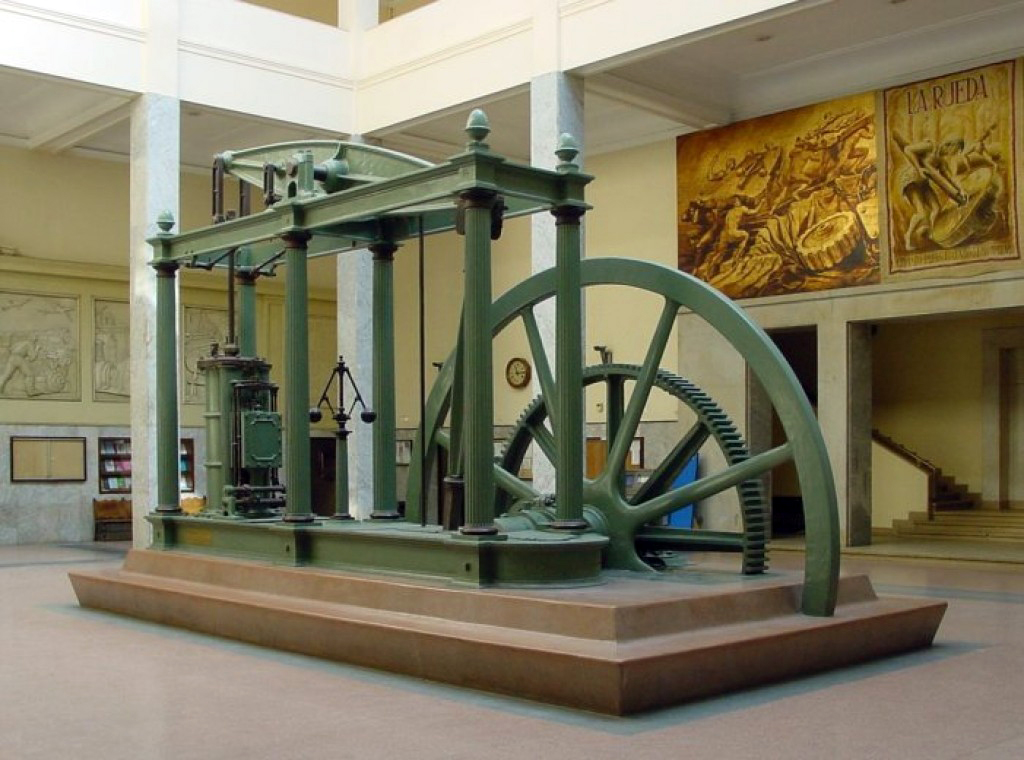
As a human endeavor, engineering has existed since ancient times, starting with the six classic simple machines. Examples of large-scale engineering projects from antiquity include impressive structures like the pyramids, elegant temples such as the Parthenon, and water conveyances like hulled watercraft, canals, and the Roman aqueduct. Early machines were powered by humans and animals, then later by wind. Machines of war were invented for siegecraft. In Europe, the scientific and industrial revolutions advanced engineering into a scientific profession and resulted in continuing technological improvements. The steam engine provided much greater power than animals, leading to mechanical propulsion for ships and railways. Further scientific advances resulted in the application of engineering to electrical, chemical, and aerospace requirements, plus the use of new materials for greater efficiencies.
The word engineering is derived from the Latin ingenium. Engineers typically follow a code of ethics that favors honesty and integrity, while being dedicated to public safety and welfare. Engineering tasks involve finding optimal solutions based on constraints, with testing and simulations being used prior to production. When a deployed product fails, forensic engineering is used to determine what went wrong in order to find a fix. Much of this product lifecycle management is now assisted with computer software, from design to testing and manufacturing. At larger scales, this process normally funded by a company, multiple investors, or the government, so a knowledge of economics and business practices is needed.
The American Engineers' Council for Professional Development (the predecessor of the Accreditation Board for Engineering and Technology aka ABET) has defined "engineering" as:
The creative application of scientific principles to design or develop structures, machines, apparatus, or manufacturing processes, or works utilizing them singly or in combination; or to construct or operate the same with full cognizance of their design; or to forecast their behavior under specific operating conditions; all as respects an intended function, economics of operation and safety to life and property.
Engineering has existed since ancient times, when humans devised inventions such as the wedge, lever, wheel and pulley, etc.
The term engineering is derived from the word engineer, which itself dates back to the 14th century when an engine'er (literally, one who builds or operates a siege engine) referred to "a constructor of military engines". In this context, now obsolete, an "engine" referred to a military machine, i.e., a mechanical contraption used in war (for example, a catapult). Notable examples of the obsolete usage which have survived to the present day are military engineering corps, e.g., the U.S. Army Corps of Engineers.
The word "engine" itself is of even older origin, ultimately deriving from the Latin ingenium (c. 1250), meaning "innate quality, especially mental power, hence a clever invention."
Hub AI
Engineering AI simulator
(@Engineering_simulator)
Engineering
Engineering is the practice of using natural science, mathematics, and the engineering design process to solve problems within technology, increase efficiency and productivity, and improve systems. The traditional disciplines of engineering are civil, mechanical, electrical, and chemical. The academic discipline of engineering encompasses a broad range of more specialized subfields, and each can have a more specific emphasis for applications of mathematics and science. In turn, modern engineering practice spans multiple fields of engineering, which include designing and improving infrastructure, machinery, vehicles, electronics, materials, and energy systems. For related terms, see glossary of engineering.
As a human endeavor, engineering has existed since ancient times, starting with the six classic simple machines. Examples of large-scale engineering projects from antiquity include impressive structures like the pyramids, elegant temples such as the Parthenon, and water conveyances like hulled watercraft, canals, and the Roman aqueduct. Early machines were powered by humans and animals, then later by wind. Machines of war were invented for siegecraft. In Europe, the scientific and industrial revolutions advanced engineering into a scientific profession and resulted in continuing technological improvements. The steam engine provided much greater power than animals, leading to mechanical propulsion for ships and railways. Further scientific advances resulted in the application of engineering to electrical, chemical, and aerospace requirements, plus the use of new materials for greater efficiencies.
The word engineering is derived from the Latin ingenium. Engineers typically follow a code of ethics that favors honesty and integrity, while being dedicated to public safety and welfare. Engineering tasks involve finding optimal solutions based on constraints, with testing and simulations being used prior to production. When a deployed product fails, forensic engineering is used to determine what went wrong in order to find a fix. Much of this product lifecycle management is now assisted with computer software, from design to testing and manufacturing. At larger scales, this process normally funded by a company, multiple investors, or the government, so a knowledge of economics and business practices is needed.
The American Engineers' Council for Professional Development (the predecessor of the Accreditation Board for Engineering and Technology aka ABET) has defined "engineering" as:
The creative application of scientific principles to design or develop structures, machines, apparatus, or manufacturing processes, or works utilizing them singly or in combination; or to construct or operate the same with full cognizance of their design; or to forecast their behavior under specific operating conditions; all as respects an intended function, economics of operation and safety to life and property.
Engineering has existed since ancient times, when humans devised inventions such as the wedge, lever, wheel and pulley, etc.
The term engineering is derived from the word engineer, which itself dates back to the 14th century when an engine'er (literally, one who builds or operates a siege engine) referred to "a constructor of military engines". In this context, now obsolete, an "engine" referred to a military machine, i.e., a mechanical contraption used in war (for example, a catapult). Notable examples of the obsolete usage which have survived to the present day are military engineering corps, e.g., the U.S. Army Corps of Engineers.
The word "engine" itself is of even older origin, ultimately deriving from the Latin ingenium (c. 1250), meaning "innate quality, especially mental power, hence a clever invention."
Recent media