



Community hub
Recent from talks
Knowledge base stats:
Talk channels stats:
Members stats:
August Hlond
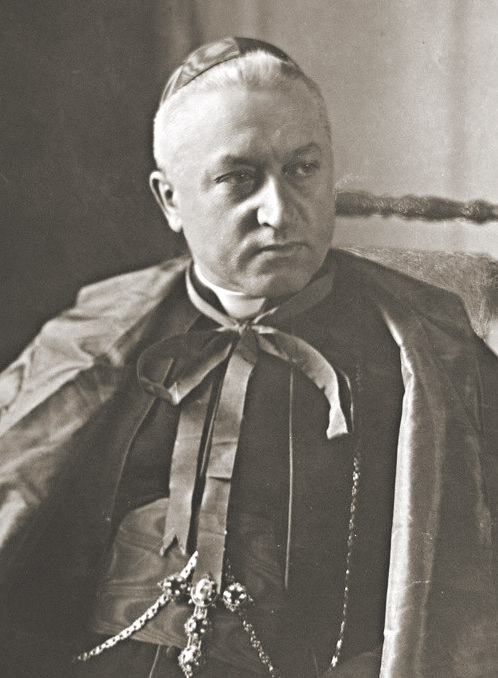
August Hlond, SDB (5 July 1881 – 22 October 1948) was a Polish Salesian prelate who served as Archbishop of Poznań and Gniezno and as Primate of Poland. He was later appointed Archbishop of Gniezno and Warsaw and was made a cardinal of the Catholic Church by Pope Pius XI in 1927.
He was the only member of the College of Cardinals to be arrested and taken into custody by the Gestapo during World War II. For the final years of his life, he was a critic of the Soviet-backed communist regime in Poland.
His cause of beatification commenced in 1992, and he was granted the title Servant of God. On 19 May 2018, he was named venerable after Pope Francis confirmed his heroic virtue.
The second son of a railway worker, he was born in the Upper Silesian village of Brzęczkowice (German: Brzenskowitz), then ruled by Germany, now part of Mysłowice (German: Myslowitz), on 5 July 1881. Aged 12, Hlond went to Turin, Italy, to study for the priesthood in the Salesian congregation. He later studied a doctorate of philosophy in Rome, returned to Poland to complete theology and was ordained in Kraków in 1905.
In 1909, Hlond was sent to Vienna to be the headmaster at a boys' secondary school. He remained in the city for 13 years, worked with spiritual and charitable organisations for Poles and becoming the Provincial of the Salesians for Austria, Hungary and Germany in 1919. After the end of Austria-Hungary after World War I, Hlond was appointed by Pope Pius XI as Apostolic Administrator for Polish Upper Silesia in 1922, and Hlond became the first Bishop of the Diocese of Katowice in 1925.
Hlond was consecrated as Bishop of Katowice on 3 January 1926. He succeeded Cardinal Edmund Dalbor as Primate of Poland soon afterward and in 1927 was appointed Cardinal-Priest of Santa Maria della Pace by Pope Pius XI. In the tumultuous 1930s, Hlond condemned "escapism"; called on the Church to challenge the evil realities of the times; and, speaking 12 languages, became an influential member of the College of Cardinals on the international stage.
In 1932, together with Father Ignacy Posadzy, he founded the Society of Christ.
The invasion of predominantly-Catholic Poland by Nazi Germany in 1939 ignited World War II. The Germans' plans for Poland entailed the destruction of the Polish nation, which necessarily required attacking the Polish Church, particularly in the areas that were annexed to Greater Germany. In the territories annexed to Greater Germany, the Germans set about systematically dismantling the Catholic Church by arresting its leaders, exiling its clergymen, closing its churches, monasteries and convents. Many clergymen were murdered. Elsewhere in occupied Poland, the suppression was less severe though still harsh. The papal nuncio to Poland, Fillipo Cortesi, had abandoned Warsaw along with the diplomatic corps after the invasion. Other channels existed for communications, including Hlond.
Hub AI
August Hlond AI simulator
(@August Hlond_simulator)
August Hlond
August Hlond, SDB (5 July 1881 – 22 October 1948) was a Polish Salesian prelate who served as Archbishop of Poznań and Gniezno and as Primate of Poland. He was later appointed Archbishop of Gniezno and Warsaw and was made a cardinal of the Catholic Church by Pope Pius XI in 1927.
He was the only member of the College of Cardinals to be arrested and taken into custody by the Gestapo during World War II. For the final years of his life, he was a critic of the Soviet-backed communist regime in Poland.
His cause of beatification commenced in 1992, and he was granted the title Servant of God. On 19 May 2018, he was named venerable after Pope Francis confirmed his heroic virtue.
The second son of a railway worker, he was born in the Upper Silesian village of Brzęczkowice (German: Brzenskowitz), then ruled by Germany, now part of Mysłowice (German: Myslowitz), on 5 July 1881. Aged 12, Hlond went to Turin, Italy, to study for the priesthood in the Salesian congregation. He later studied a doctorate of philosophy in Rome, returned to Poland to complete theology and was ordained in Kraków in 1905.
In 1909, Hlond was sent to Vienna to be the headmaster at a boys' secondary school. He remained in the city for 13 years, worked with spiritual and charitable organisations for Poles and becoming the Provincial of the Salesians for Austria, Hungary and Germany in 1919. After the end of Austria-Hungary after World War I, Hlond was appointed by Pope Pius XI as Apostolic Administrator for Polish Upper Silesia in 1922, and Hlond became the first Bishop of the Diocese of Katowice in 1925.
Hlond was consecrated as Bishop of Katowice on 3 January 1926. He succeeded Cardinal Edmund Dalbor as Primate of Poland soon afterward and in 1927 was appointed Cardinal-Priest of Santa Maria della Pace by Pope Pius XI. In the tumultuous 1930s, Hlond condemned "escapism"; called on the Church to challenge the evil realities of the times; and, speaking 12 languages, became an influential member of the College of Cardinals on the international stage.
In 1932, together with Father Ignacy Posadzy, he founded the Society of Christ.
The invasion of predominantly-Catholic Poland by Nazi Germany in 1939 ignited World War II. The Germans' plans for Poland entailed the destruction of the Polish nation, which necessarily required attacking the Polish Church, particularly in the areas that were annexed to Greater Germany. In the territories annexed to Greater Germany, the Germans set about systematically dismantling the Catholic Church by arresting its leaders, exiling its clergymen, closing its churches, monasteries and convents. Many clergymen were murdered. Elsewhere in occupied Poland, the suppression was less severe though still harsh. The papal nuncio to Poland, Fillipo Cortesi, had abandoned Warsaw along with the diplomatic corps after the invasion. Other channels existed for communications, including Hlond.