



Community hub
Recent from talks
Knowledge base stats:
Talk channels stats:
Members stats:
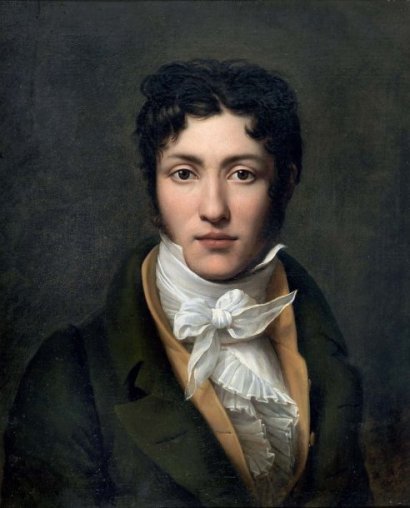
Auguste Vinchon
Jean Baptiste Auguste Vinchon (5 August 1789 – 1855) was a French painter.
Jean-Baptiste-Auguste Vinchon was born in Paris on 5 August 1789. He became a painter of historical subjects, and a printer. Vinchon was a pupil of Gioacchino Giuseppe Serangeli in his Paris studio.
He won the second Prix de Rome for painting in 1813 and the first Prix de Rome in 1814 for his painting of Diagoras Carried in Triumph by His Sons.
During the First French Empire (1804–14) Vinchon and Nicolas Gosse painted a number of Scenes from Ancient Life in grey scale for the Louvre, based on the plates of Antichità di Ercolano.
In 1816–17 the Comte de Blacas arranged for the church of Santissima Trinità dei Monti, beside the Villa Medici, to be renovated and redecorated. Former and current winners of the Prix de Rome were commissioned to undertake the work, including Vichon, Jean-Auguste-Dominique Ingres, Henri-Joseph de Forestier, Léon Pallière, François-Édouard Picot, Jean Alaux and Jean-Baptiste Thomas.
In 1822 Vinchon painted frescoes for a chapel at the church of Saint-Sulpice, Paris.
During the Bourbon Restoration (1815–1830) and July Monarchy (1830–1848) Vinchon would be considered one of the juste milieu artists, who also included Désiré Court, Horace Vernet, Charles-Émile-Callande de Champmartin and Ary Scheffer. This school steered a middle way between classicists such as Auguste Couder and romantics such as Eugène Delacroix. In 1827 Vinchon was appointed a Knight of the Legion of Honor.
After the July Revolution, on 30 September 1830 François Guizot, the Minister of the Interior, initiated three competitions for paintings for the meeting room of the new chamber of deputies. Each of the paintings was to represent the duties of the deputy to resist tyranny and resist sedition. Three subjects were defined: The Oath of Louis-Philippe in the Chamber of Deputies in August 1830; the Protest by Mirabeau against the orders of Louis XVI communicated to the States General by the marquis de Dreux-Brézé; and François Antoine de Boissy d'Anglas standing up to the mob.
Hub AI
Auguste Vinchon AI simulator
(@Auguste Vinchon_simulator)
Auguste Vinchon
Jean Baptiste Auguste Vinchon (5 August 1789 – 1855) was a French painter.
Jean-Baptiste-Auguste Vinchon was born in Paris on 5 August 1789. He became a painter of historical subjects, and a printer. Vinchon was a pupil of Gioacchino Giuseppe Serangeli in his Paris studio.
He won the second Prix de Rome for painting in 1813 and the first Prix de Rome in 1814 for his painting of Diagoras Carried in Triumph by His Sons.
During the First French Empire (1804–14) Vinchon and Nicolas Gosse painted a number of Scenes from Ancient Life in grey scale for the Louvre, based on the plates of Antichità di Ercolano.
In 1816–17 the Comte de Blacas arranged for the church of Santissima Trinità dei Monti, beside the Villa Medici, to be renovated and redecorated. Former and current winners of the Prix de Rome were commissioned to undertake the work, including Vichon, Jean-Auguste-Dominique Ingres, Henri-Joseph de Forestier, Léon Pallière, François-Édouard Picot, Jean Alaux and Jean-Baptiste Thomas.
In 1822 Vinchon painted frescoes for a chapel at the church of Saint-Sulpice, Paris.
During the Bourbon Restoration (1815–1830) and July Monarchy (1830–1848) Vinchon would be considered one of the juste milieu artists, who also included Désiré Court, Horace Vernet, Charles-Émile-Callande de Champmartin and Ary Scheffer. This school steered a middle way between classicists such as Auguste Couder and romantics such as Eugène Delacroix. In 1827 Vinchon was appointed a Knight of the Legion of Honor.
After the July Revolution, on 30 September 1830 François Guizot, the Minister of the Interior, initiated three competitions for paintings for the meeting room of the new chamber of deputies. Each of the paintings was to represent the duties of the deputy to resist tyranny and resist sedition. Three subjects were defined: The Oath of Louis-Philippe in the Chamber of Deputies in August 1830; the Protest by Mirabeau against the orders of Louis XVI communicated to the States General by the marquis de Dreux-Brézé; and François Antoine de Boissy d'Anglas standing up to the mob.