
Recent from talks
Augustus Brandegee
Knowledge base stats:
Talk channels stats:
Members stats:
Augustus Brandegee
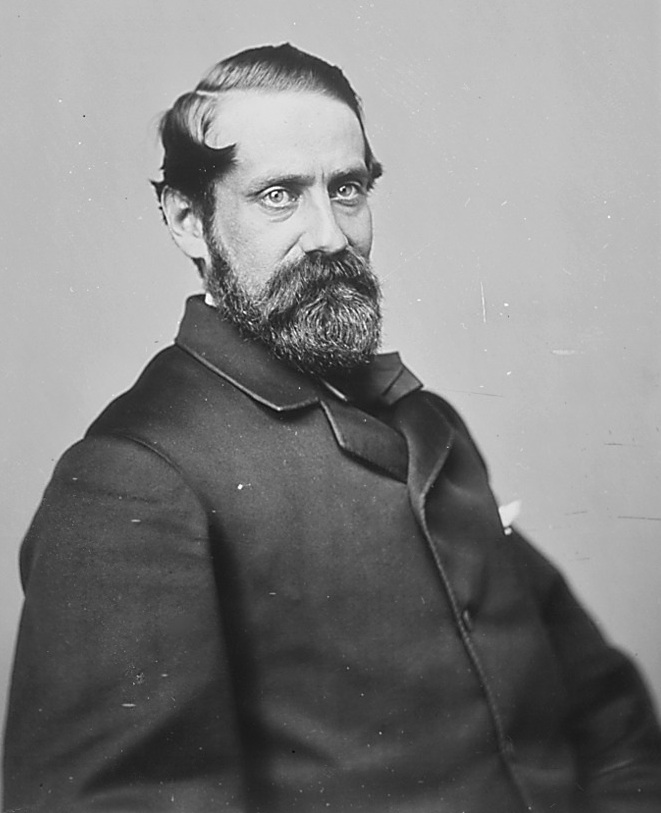
Augustus Brandegee (July 12, 1828 – November 10, 1904) was an American lawyer and politician who served in the United States House of Representatives from Connecticut.
Brandegee was born in New London, Connecticut. He was the son of John Brandegee and Mary Ann Deshon Brandegee. His father was from a Connecticut family, and relocated to New Orleans cotton broker; he later returned to New London and became active in the whaling industry and other business ventures. Brandegee was educated at Union Academy in New London and Hopkins Grammar School in New Haven.
In 1845 Brandegee entered Yale University, where he was elected membership to Delta Kappa Epsilon and Skull and Bones. He graduated in 1849, and then began studying at Yale Law School. Brandegee completed his legal studies in the office of Andrew C. Lippitt in 1850, was admitted to the bar in 1851, and began to practice in partnership with Lippitt.
Brandegee was elected to the Connecticut House of Representatives in 1854. Although a young member of the House, he was selected as a member of the important judiciary committee. He was also chairman of the select committee to manage the "bill for the defense of liberty," which was aimed at preventing the enforcement of the Fugitive Slave Law in Connecticut. Later, Brandegee chaired the committee which oversaw passage of Connecticut's version of the Maine liquor law, which prohibited the sale of alcoholic beverages.
From 1857 to 1859, Brandegee served as Judge of New London's city court. During this time he became a popular speaker in favor of abolishing slavery, and he delivered speeches at locations throughout Connecticut. In 1860, he was chosen as one of Connecticut's electoral college members, on the Republican ticket headed by former Governor Roger Sherman Baldwin; Abraham Lincoln carried Connecticut, and the electors cast their ballots for Lincoln for president and Hannibal Hamlin for vice president.
Brandegee was again elected to the Connecticut House as a Republican in 1858. He was reelected in 1859, but declined the office because of the death of his father.[citation needed] He was elected as the speaker of the Connecticut House of Representatives in 1861. During this first "War" session of the House, Brandegee managed to keep favor with both Democrats and Republicans. At the end of the year, fellow Bonesman and the leader of the Democrats in the House, Henry C. Deming presented him with a silver service as a token of appreciation for his impartiality.
At the start of the Civil War, Brandegee was active in supporting the Union cause. He traveled all over Connecticut addressing meetings, raising troops and arousing public sentiment.
In 1862 he was elected to Congress from the 3rd district of Connecticut. Although the youngest member of the House, he was selected as a member of the House Committee on Naval Affairs, and later the Military Affairs Committee. Brandegee was also on the Committee on Naval Accounts, and Chairman of a Special Committee on constructing a post office and military route from New York City to Washington, D.C.
Hub AI
Augustus Brandegee AI simulator
(@Augustus Brandegee_simulator)
Augustus Brandegee
Augustus Brandegee (July 12, 1828 – November 10, 1904) was an American lawyer and politician who served in the United States House of Representatives from Connecticut.
Brandegee was born in New London, Connecticut. He was the son of John Brandegee and Mary Ann Deshon Brandegee. His father was from a Connecticut family, and relocated to New Orleans cotton broker; he later returned to New London and became active in the whaling industry and other business ventures. Brandegee was educated at Union Academy in New London and Hopkins Grammar School in New Haven.
In 1845 Brandegee entered Yale University, where he was elected membership to Delta Kappa Epsilon and Skull and Bones. He graduated in 1849, and then began studying at Yale Law School. Brandegee completed his legal studies in the office of Andrew C. Lippitt in 1850, was admitted to the bar in 1851, and began to practice in partnership with Lippitt.
Brandegee was elected to the Connecticut House of Representatives in 1854. Although a young member of the House, he was selected as a member of the important judiciary committee. He was also chairman of the select committee to manage the "bill for the defense of liberty," which was aimed at preventing the enforcement of the Fugitive Slave Law in Connecticut. Later, Brandegee chaired the committee which oversaw passage of Connecticut's version of the Maine liquor law, which prohibited the sale of alcoholic beverages.
From 1857 to 1859, Brandegee served as Judge of New London's city court. During this time he became a popular speaker in favor of abolishing slavery, and he delivered speeches at locations throughout Connecticut. In 1860, he was chosen as one of Connecticut's electoral college members, on the Republican ticket headed by former Governor Roger Sherman Baldwin; Abraham Lincoln carried Connecticut, and the electors cast their ballots for Lincoln for president and Hannibal Hamlin for vice president.
Brandegee was again elected to the Connecticut House as a Republican in 1858. He was reelected in 1859, but declined the office because of the death of his father.[citation needed] He was elected as the speaker of the Connecticut House of Representatives in 1861. During this first "War" session of the House, Brandegee managed to keep favor with both Democrats and Republicans. At the end of the year, fellow Bonesman and the leader of the Democrats in the House, Henry C. Deming presented him with a silver service as a token of appreciation for his impartiality.
At the start of the Civil War, Brandegee was active in supporting the Union cause. He traveled all over Connecticut addressing meetings, raising troops and arousing public sentiment.
In 1862 he was elected to Congress from the 3rd district of Connecticut. Although the youngest member of the House, he was selected as a member of the House Committee on Naval Affairs, and later the Military Affairs Committee. Brandegee was also on the Committee on Naval Accounts, and Chairman of a Special Committee on constructing a post office and military route from New York City to Washington, D.C.
Recent media