



Community hub
Recent from talks
Knowledge base stats:
Talk channels stats:
Members stats:
Aviazione Legionaria
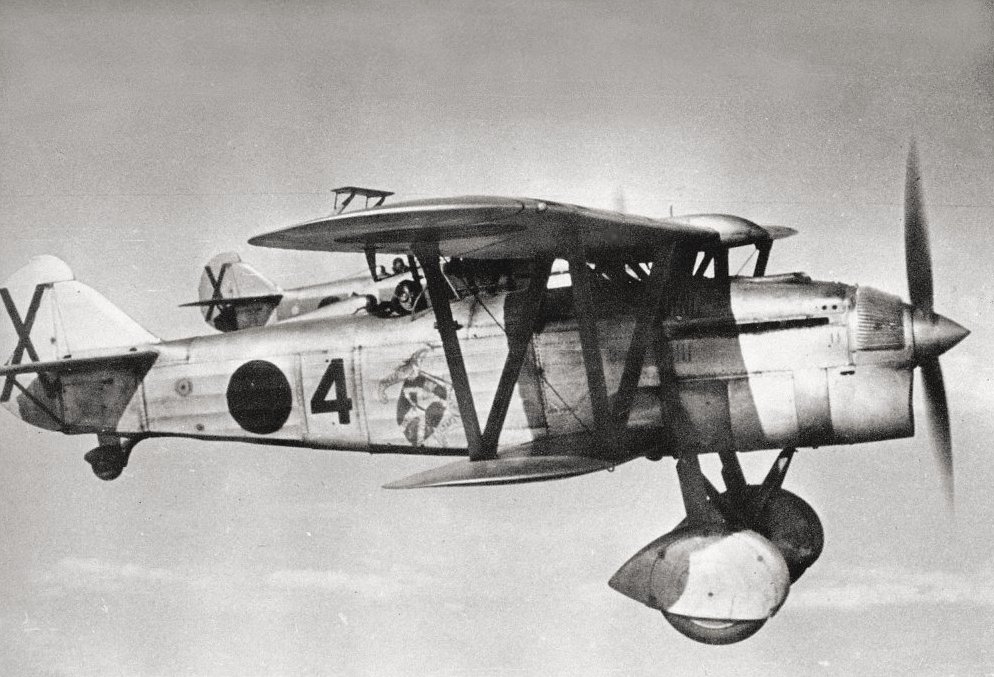
The Legionary Air Force (Italian: Aviazione Legionaria, Spanish: Aviación Legionaria) was an expeditionary corps from the Italian Royal Air Force that was set up in 1936. It was sent to provide logistical and tactical support to the Nationalist faction after the Spanish coup of July 1936, which marked the onset of the Spanish Civil War.
The corps and its Nazi German allies, the Condor Legion, fought against the Spanish Republic and provided support for the Italian ground troops of the Corpo Truppe Volontarie. They served from August 1936 to the end of the conflict, in March 1939. Their main base of operations was on Mallorca, in the Balearic Islands.
At the outbreak of the Spanish Civil War in July 1936, Francisco Franco, the leader of the rebel armies in Spanish North Africa, had about 30,000 troops and Moroccan nationals under his command, along with some artillery units. To transfer his troops and equipment to Mainland Spain, Franco on 24 July 1936 turned to the Italian consul in Tangiers and then directly to Major Luccardi, the military attaché at the Italian consulate.
Through them, Franco tried to convince Benito Mussolini to send twelve transport aircraft, twelve reconnaissance planes, ten fighter aircraft, 3000 aerial bombs, anti-aircraft machine guns and at least forty-five transport ships. Mussolini was initially reluctant to send them, despite his sympathy for Franco, but under pressure from his son-in-law, Galeazzo Ciano, he changed his mind on 25 July. Ciano had in the meantime met with representatives of the Spanish monarchy to arrange the transfer of about thirty fighter planes and other equipment, which would arrive on 2 August, that would be sent by the French government.
On 27 July, Mussolini ordered the undersecretary for the Regia Aeronautica, General Giuseppe Valle, to send 12 three-engined Savoia-Marchetti SM.81 bombers with crews and relevant specialists to Franco. They would form the first unit, initially known as Aviación del Tercio, and set out at dawn on 30 July from Cagliari–Elmas on Sardinia, where they had picked up three officials from the Scuola di Navigazione di Altura at Orbetello, the gerarca Ettore Muti, and Lieutenant Colonel Ruggero Bonomi.
The aircraft crews and the specialists were all volunteers from 7th, 10th and 13th Stormo and were provided with civilian clothes and fake documents. All Italian insignia on the planes had been blotted out to avoid an international incident with European governments that supported the Republicans. Fake documents stated that the planes were being sold to the Spanish journalist Luis Bolín.
Not all of the Italian planes sent to aid the rebel faction reached Morocco since the plane commanded by Angelini crashed in the Mediterranean, that of Mattalia crashed near Saïda in French Morocco, and Lo Forte had to make an emergency landing near Berkane (also in French Morocco) and was seized by the local authorities. The nine survivors of the Moroccan crashes were provided with Nationalist papers and transportation to the airport at Tetuan from which, over the following days, they helped escort the transport ships Araujo, Ciudad de Alicante and Ciudad de Ceuta. They together carried 4,000 men, four artillery batteries, two million cartridges and 12 tons of other munitions to mainland Spain.
Encouraged by the success of this first operation, Mussolini began sending a steady stream of munitions, personnel and supplies under the name of Aviación Legionaria or Aviazione Legionaria.
Hub AI
Aviazione Legionaria AI simulator
(@Aviazione Legionaria_simulator)
Aviazione Legionaria
The Legionary Air Force (Italian: Aviazione Legionaria, Spanish: Aviación Legionaria) was an expeditionary corps from the Italian Royal Air Force that was set up in 1936. It was sent to provide logistical and tactical support to the Nationalist faction after the Spanish coup of July 1936, which marked the onset of the Spanish Civil War.
The corps and its Nazi German allies, the Condor Legion, fought against the Spanish Republic and provided support for the Italian ground troops of the Corpo Truppe Volontarie. They served from August 1936 to the end of the conflict, in March 1939. Their main base of operations was on Mallorca, in the Balearic Islands.
At the outbreak of the Spanish Civil War in July 1936, Francisco Franco, the leader of the rebel armies in Spanish North Africa, had about 30,000 troops and Moroccan nationals under his command, along with some artillery units. To transfer his troops and equipment to Mainland Spain, Franco on 24 July 1936 turned to the Italian consul in Tangiers and then directly to Major Luccardi, the military attaché at the Italian consulate.
Through them, Franco tried to convince Benito Mussolini to send twelve transport aircraft, twelve reconnaissance planes, ten fighter aircraft, 3000 aerial bombs, anti-aircraft machine guns and at least forty-five transport ships. Mussolini was initially reluctant to send them, despite his sympathy for Franco, but under pressure from his son-in-law, Galeazzo Ciano, he changed his mind on 25 July. Ciano had in the meantime met with representatives of the Spanish monarchy to arrange the transfer of about thirty fighter planes and other equipment, which would arrive on 2 August, that would be sent by the French government.
On 27 July, Mussolini ordered the undersecretary for the Regia Aeronautica, General Giuseppe Valle, to send 12 three-engined Savoia-Marchetti SM.81 bombers with crews and relevant specialists to Franco. They would form the first unit, initially known as Aviación del Tercio, and set out at dawn on 30 July from Cagliari–Elmas on Sardinia, where they had picked up three officials from the Scuola di Navigazione di Altura at Orbetello, the gerarca Ettore Muti, and Lieutenant Colonel Ruggero Bonomi.
The aircraft crews and the specialists were all volunteers from 7th, 10th and 13th Stormo and were provided with civilian clothes and fake documents. All Italian insignia on the planes had been blotted out to avoid an international incident with European governments that supported the Republicans. Fake documents stated that the planes were being sold to the Spanish journalist Luis Bolín.
Not all of the Italian planes sent to aid the rebel faction reached Morocco since the plane commanded by Angelini crashed in the Mediterranean, that of Mattalia crashed near Saïda in French Morocco, and Lo Forte had to make an emergency landing near Berkane (also in French Morocco) and was seized by the local authorities. The nine survivors of the Moroccan crashes were provided with Nationalist papers and transportation to the airport at Tetuan from which, over the following days, they helped escort the transport ships Araujo, Ciudad de Alicante and Ciudad de Ceuta. They together carried 4,000 men, four artillery batteries, two million cartridges and 12 tons of other munitions to mainland Spain.
Encouraged by the success of this first operation, Mussolini began sending a steady stream of munitions, personnel and supplies under the name of Aviación Legionaria or Aviazione Legionaria.