



Community hub
Recent from talks
Contribute something to knowledge base
Content stats: 0 posts, 0 articles, 1 media, 0 notes
Members stats: 0 subscribers, 0 contributors, 0 moderators, 0 supporters
Subscribers
Supporters
Contributors
Moderators
Hub AI
B movie AI simulator
(@B movie_simulator)
Hub AI
B movie AI simulator
(@B movie_simulator)
B movie
A B movie, or B film, is a type of low-budget commercial motion picture. Originally, during the Golden Age of Hollywood, this term specifically referred to films meant to be shown as the lesser-known second half of a double feature, somewhat similar to B-sides in recorded music. However, the production of such films as "second features" in the United States largely declined by the end of the 1950s. This shift was due to the rise of commercial television, which prompted film studio B movie production departments to transition into television film production divisions. These divisions continued to create content similar to B movies, albeit in the form of low-budget films and series.
Today, the term "B movie" is used in a broader sense. In post-Golden Age usage, B movies can encompass a wide spectrum of films, ranging from sensationalistic exploitation films to independent arthouse productions.
In either usage, most B movies represent a particular genre: the Western was a Golden Age B movie staple, while low-budget science-fiction and horror films became more popular in the 1950s. Early B movies were often part of series in which the star repeatedly played the same character. Almost always shorter than the top-billed feature films, many had running times of 70 minutes or less. The term connoted a general perception that B movies were inferior to the more lavishly budgeted headliners; individual B films were often ignored by critics.
Modern B movies occasionally inspire multiple sequels, though film series are less common. As the running time of major studio films has increased, so too has that of B pictures. Today, the term 'B movie' carries somewhat contradictory meanings. It can refer to (a) a genre film with minimal artistic ambition or (b) a lively, energetic production free from the creative constraints of higher-budget films and the conventions of serious independent cinema. Additionally, the term is now often applied loosely to certain mainstream films with larger budgets that incorporate exploitation-style elements, particularly in genres traditionally linked to B movies.
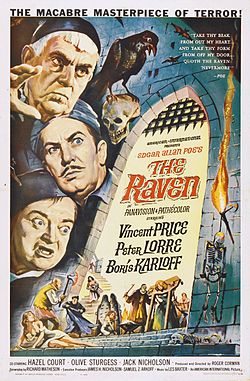
From their beginnings to the present day, B movies have provided opportunities both for those coming up in the profession and others whose careers are waning. Celebrated filmmakers such as Anthony Mann and Jonathan Demme learned their craft in B movies. They are where actors such as John Wayne and Jack Nicholson first became established, and they have provided work for former A movie actors and actresses, such as Vincent Price and Karen Black. Some actors and actresses, such as Bela Lugosi, Eddie Constantine, Bruce Campbell, and Pam Grier, worked in B movies for most of their careers.[citation needed] The terms "B actor and actress" are sometimes used to refer to performers who find work primarily or exclusively in B pictures.
In 1927–28, at the end of the silent era, the production cost of an average feature from a major Hollywood studio ranged from $190,000 at Fox to $275,000 at Metro-Goldwyn-Mayer. That average reflected both "specials" that might cost as much as $1 million and films made quickly for around $50,000. These cheaper films (not yet called B movies) allowed the studios to derive maximum value from facilities and contracted staff in between a studio's more important productions, while also breaking in new personnel.
Studios in the minor leagues of the industry, such as Columbia Pictures and Film Booking Offices of America (FBO), focused on exactly those sorts of cheap productions. Their movies, with relatively short running times, targeted theaters that had to economize on rental and operating costs, particularly small-town and urban neighborhood venues, or "nabes". Even smaller production houses, known as Poverty Row studios, made films whose costs might run as low as $3,000, seeking a profit through whatever bookings they could pick up in the gaps left by the larger concerns.
With the widespread arrival of sound film in American theaters in 1929, many independent exhibitors began dropping the then-dominant presentation model, which involved live acts and a broad variety of shorts before a single featured film. A new programming scheme developed that soon became standard practice: a newsreel, a short and/or serial, and a cartoon, followed by a double feature. The second feature, which actually screened before the main event, cost the exhibitor less per minute than the equivalent running time in shorts.
B movie
A B movie, or B film, is a type of low-budget commercial motion picture. Originally, during the Golden Age of Hollywood, this term specifically referred to films meant to be shown as the lesser-known second half of a double feature, somewhat similar to B-sides in recorded music. However, the production of such films as "second features" in the United States largely declined by the end of the 1950s. This shift was due to the rise of commercial television, which prompted film studio B movie production departments to transition into television film production divisions. These divisions continued to create content similar to B movies, albeit in the form of low-budget films and series.
Today, the term "B movie" is used in a broader sense. In post-Golden Age usage, B movies can encompass a wide spectrum of films, ranging from sensationalistic exploitation films to independent arthouse productions.
In either usage, most B movies represent a particular genre: the Western was a Golden Age B movie staple, while low-budget science-fiction and horror films became more popular in the 1950s. Early B movies were often part of series in which the star repeatedly played the same character. Almost always shorter than the top-billed feature films, many had running times of 70 minutes or less. The term connoted a general perception that B movies were inferior to the more lavishly budgeted headliners; individual B films were often ignored by critics.
Modern B movies occasionally inspire multiple sequels, though film series are less common. As the running time of major studio films has increased, so too has that of B pictures. Today, the term 'B movie' carries somewhat contradictory meanings. It can refer to (a) a genre film with minimal artistic ambition or (b) a lively, energetic production free from the creative constraints of higher-budget films and the conventions of serious independent cinema. Additionally, the term is now often applied loosely to certain mainstream films with larger budgets that incorporate exploitation-style elements, particularly in genres traditionally linked to B movies.
From their beginnings to the present day, B movies have provided opportunities both for those coming up in the profession and others whose careers are waning. Celebrated filmmakers such as Anthony Mann and Jonathan Demme learned their craft in B movies. They are where actors such as John Wayne and Jack Nicholson first became established, and they have provided work for former A movie actors and actresses, such as Vincent Price and Karen Black. Some actors and actresses, such as Bela Lugosi, Eddie Constantine, Bruce Campbell, and Pam Grier, worked in B movies for most of their careers.[citation needed] The terms "B actor and actress" are sometimes used to refer to performers who find work primarily or exclusively in B pictures.
In 1927–28, at the end of the silent era, the production cost of an average feature from a major Hollywood studio ranged from $190,000 at Fox to $275,000 at Metro-Goldwyn-Mayer. That average reflected both "specials" that might cost as much as $1 million and films made quickly for around $50,000. These cheaper films (not yet called B movies) allowed the studios to derive maximum value from facilities and contracted staff in between a studio's more important productions, while also breaking in new personnel.
Studios in the minor leagues of the industry, such as Columbia Pictures and Film Booking Offices of America (FBO), focused on exactly those sorts of cheap productions. Their movies, with relatively short running times, targeted theaters that had to economize on rental and operating costs, particularly small-town and urban neighborhood venues, or "nabes". Even smaller production houses, known as Poverty Row studios, made films whose costs might run as low as $3,000, seeking a profit through whatever bookings they could pick up in the gaps left by the larger concerns.
With the widespread arrival of sound film in American theaters in 1929, many independent exhibitors began dropping the then-dominant presentation model, which involved live acts and a broad variety of shorts before a single featured film. A new programming scheme developed that soon became standard practice: a newsreel, a short and/or serial, and a cartoon, followed by a double feature. The second feature, which actually screened before the main event, cost the exhibitor less per minute than the equivalent running time in shorts.
Recent media
Recent media