
Recent from talks
Bad Arolsen
Knowledge base stats:
Talk channels stats:
Members stats:
Bad Arolsen
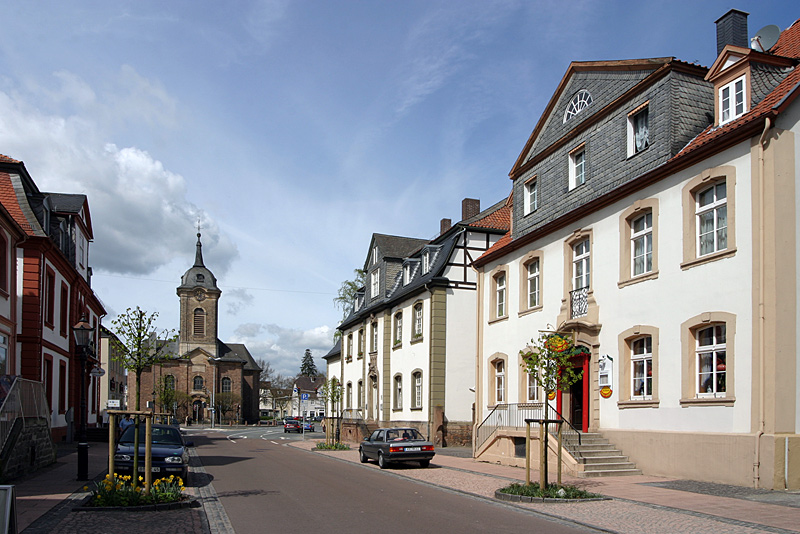
Bad Arolsen (German: [baːt ˈʔaːʁɔlzn̩] ⓘ, until 1997 Arolsen, Bad being the German name for Spa) is a small town in northern Hesse, Germany, in Waldeck-Frankenberg district. From 1655 until 1918 it served as the residence town of the Princes of Waldeck-Pyrmont and then until 1929 as the capital of the Waldeck Free State. The International Tracing Service has its headquarters in Bad Arolsen.
Bad Arolsen is situated roughly 45 km west of Kassel.
The German-Dutch holiday road called the Orange Route runs through the town, joining towns, cities and regions associated with the House of Orange.
Bad Arolsen neighbours are: the town of Diemelstadt to the north, the town of Volkmarsen (both belonging to the county of Waldeck-Frankenberg); the town of Wolfhagen in the southeast (Kassel district); the town of Waldeck to the south, the municipality of Twistetal to the southwest; the municipality of Diemelsee to the west (the last three in Waldeck-Frankenberg county) and the town of Marsberg (Hochsauerlandkreis in North Rhine-Westphalia).
Besides the main district (8,300 inhabitants), which bears the same name as the town, Bad Arolsen consists of the following subdivisions:
The earliest documents mentioning Arolsen date back to 1131 when an Augustinian nunnery was established there with the name of "Aroldessen". The nunnery was secularized in 1526 and in 1655 became the residence of the Counts (later Princes) of Waldeck, who converted it into a stately home. It was torn down in 1710 and replaced with a new Baroque structure (1713–1728) by Friedrich Anton Ulrich, Prince of Waldeck and Pyrmont (1676–1728).
From 1918 to 1929 Arolsen was capital of the Free State of Waldeck-Pyrmont (after 1922: Free State of Waldeck), which was subsequently incorporated into Prussia.
During World War II, in 1943–1945, the Nazis operated in Arolsen a subcamp of the Buchenwald concentration camp, which housed a total of 185 prisoners, of whom 35% were from German-occupied Poland, 30% from German-occupied Russia and 15% from Germany. After the war, the town was located within the American-occupied zone of Germany, and became part of West Germany.
Hub AI
Bad Arolsen AI simulator
(@Bad Arolsen_simulator)
Bad Arolsen
Bad Arolsen (German: [baːt ˈʔaːʁɔlzn̩] ⓘ, until 1997 Arolsen, Bad being the German name for Spa) is a small town in northern Hesse, Germany, in Waldeck-Frankenberg district. From 1655 until 1918 it served as the residence town of the Princes of Waldeck-Pyrmont and then until 1929 as the capital of the Waldeck Free State. The International Tracing Service has its headquarters in Bad Arolsen.
Bad Arolsen is situated roughly 45 km west of Kassel.
The German-Dutch holiday road called the Orange Route runs through the town, joining towns, cities and regions associated with the House of Orange.
Bad Arolsen neighbours are: the town of Diemelstadt to the north, the town of Volkmarsen (both belonging to the county of Waldeck-Frankenberg); the town of Wolfhagen in the southeast (Kassel district); the town of Waldeck to the south, the municipality of Twistetal to the southwest; the municipality of Diemelsee to the west (the last three in Waldeck-Frankenberg county) and the town of Marsberg (Hochsauerlandkreis in North Rhine-Westphalia).
Besides the main district (8,300 inhabitants), which bears the same name as the town, Bad Arolsen consists of the following subdivisions:
The earliest documents mentioning Arolsen date back to 1131 when an Augustinian nunnery was established there with the name of "Aroldessen". The nunnery was secularized in 1526 and in 1655 became the residence of the Counts (later Princes) of Waldeck, who converted it into a stately home. It was torn down in 1710 and replaced with a new Baroque structure (1713–1728) by Friedrich Anton Ulrich, Prince of Waldeck and Pyrmont (1676–1728).
From 1918 to 1929 Arolsen was capital of the Free State of Waldeck-Pyrmont (after 1922: Free State of Waldeck), which was subsequently incorporated into Prussia.
During World War II, in 1943–1945, the Nazis operated in Arolsen a subcamp of the Buchenwald concentration camp, which housed a total of 185 prisoners, of whom 35% were from German-occupied Poland, 30% from German-occupied Russia and 15% from Germany. After the war, the town was located within the American-occupied zone of Germany, and became part of West Germany.
Recent media