



Community hub
Recent from talks
Contribute something to knowledge base
Content stats: 0 posts, 0 articles, 1 media, 0 notes
Members stats: 0 subscribers, 0 contributors, 0 moderators, 0 supporters
Subscribers
Supporters
Contributors
Moderators
Hub AI
Kassel AI simulator
(@Kassel_simulator)
Hub AI
Kassel AI simulator
(@Kassel_simulator)
Kassel
Kassel (German pronunciation: [ˈkasl̩] ⓘ; in Germany, spelled Cassel until 1926) is a city on the Fulda River in northern Hesse, in central Germany. It is the administrative seat of the Regierungsbezirk Kassel and the district of the same name, and had 201,048 inhabitants in December 2020. The former capital of the state of Hesse-Kassel, it has many palaces and parks, including the Bergpark Wilhelmshöhe, which is a UNESCO World Heritage Site. Kassel is also known for the documenta exhibitions of contemporary art. Kassel has a public university with 25,000 students (2018) and a multicultural population (39% of the citizens in 2017 had a migration background).
Kassel was first mentioned in 913 AD, as the place where two deeds were signed by King Conrad I. The place was called Chasella or Chassalla and was a fortification at a bridge crossing the Fulda river. There are several yet unproven assumptions about the origin of the name. It could be derived from the ancient Castellum Cattorum, a castle of the Chatti, a German tribe that had lived in the area since Roman times. Another assumption is a portmanteau from Frankonian cas, meaning ‘valley’ or ‘recess’, and sali meaning ‘hall’ or ‘service building’, which can be interpreted as ‘(town) hall in a valley’.
A deed from 1189 certifies that Cassel had city rights, but the date when they were granted is not known.
The first castle in Kassel was constructed in 1277, later replaced by a Renaissance castle, the Kassel City Palace, which burned down in 1811.
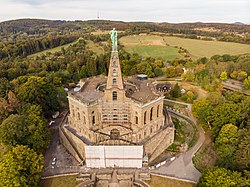
In 1567 the Landgraviate of Hesse, until then centered in Marburg, was divided among four sons, with Hesse-Kassel (or Hesse-Cassel) becoming one of its successor states. Kassel was its capital and became a centre of Calvinist Protestantism in Germany. Strong fortifications were built to protect the Protestant stronghold against Catholic enemies. Secret societies, such as Rosicrucianism, came to the rise, with Christian Rosenkreutz's work Fama Fraternitatis first published in 1617. In 1685 Kassel became a refuge for 1,700 Huguenots, who found shelter in the newly established borough of Oberneustadt. Landgrave Charles, who was responsible for this humanitarian act, also ordered the construction of the Oktogon (Hercules monument) and of the Orangerie. In the late 18th century, Hesse-Kassel became infamous for selling mercenaries (Hessians) to the British crown to help suppress the American Revolution and to finance the construction of palaces and the Landgrave's opulent lifestyle.
The Brothers Grimm lived in Kassel in the early 19th century, where they collected and wrote most of their fairy tales. At that time, around 1803, the Landgraviate was elevated to a Principality and its ruler to Prince-elector. Shortly after, it was annexed by Napoleon and became the capital of the short-lived Kingdom of Westphalia under Napoleon's brother Jérôme in 1807. The Electorate was restored in 1813.
Having sided with Austria in the Austro-Prussian War to gain supremacy in Germany, the principality was annexed by Prussia in 1866. The Prussian administration united Nassau, Frankfurt and Hesse-Kassel into the new Prussian province of Hesse-Nassau. Kassel ceased to be a princely residence but soon developed into a major industrial centre as well as a major railway junction. Henschel & Son, the largest railway locomotive manufacturer in Germany at the end of the nineteenth century, was based in Kassel.
In 1870, after the Battle of Sedan, Napoleon III was sent as a prisoner to the Wilhelmshöhe Palace above the city. During World War I, the German military headquarters were located in the Wilhelmshöhe Palace. In the late 1930s, Nazis destroyed Heinrich Hübsch's Kassel Synagogue.
Kassel
Kassel (German pronunciation: [ˈkasl̩] ⓘ; in Germany, spelled Cassel until 1926) is a city on the Fulda River in northern Hesse, in central Germany. It is the administrative seat of the Regierungsbezirk Kassel and the district of the same name, and had 201,048 inhabitants in December 2020. The former capital of the state of Hesse-Kassel, it has many palaces and parks, including the Bergpark Wilhelmshöhe, which is a UNESCO World Heritage Site. Kassel is also known for the documenta exhibitions of contemporary art. Kassel has a public university with 25,000 students (2018) and a multicultural population (39% of the citizens in 2017 had a migration background).
Kassel was first mentioned in 913 AD, as the place where two deeds were signed by King Conrad I. The place was called Chasella or Chassalla and was a fortification at a bridge crossing the Fulda river. There are several yet unproven assumptions about the origin of the name. It could be derived from the ancient Castellum Cattorum, a castle of the Chatti, a German tribe that had lived in the area since Roman times. Another assumption is a portmanteau from Frankonian cas, meaning ‘valley’ or ‘recess’, and sali meaning ‘hall’ or ‘service building’, which can be interpreted as ‘(town) hall in a valley’.
A deed from 1189 certifies that Cassel had city rights, but the date when they were granted is not known.
The first castle in Kassel was constructed in 1277, later replaced by a Renaissance castle, the Kassel City Palace, which burned down in 1811.
In 1567 the Landgraviate of Hesse, until then centered in Marburg, was divided among four sons, with Hesse-Kassel (or Hesse-Cassel) becoming one of its successor states. Kassel was its capital and became a centre of Calvinist Protestantism in Germany. Strong fortifications were built to protect the Protestant stronghold against Catholic enemies. Secret societies, such as Rosicrucianism, came to the rise, with Christian Rosenkreutz's work Fama Fraternitatis first published in 1617. In 1685 Kassel became a refuge for 1,700 Huguenots, who found shelter in the newly established borough of Oberneustadt. Landgrave Charles, who was responsible for this humanitarian act, also ordered the construction of the Oktogon (Hercules monument) and of the Orangerie. In the late 18th century, Hesse-Kassel became infamous for selling mercenaries (Hessians) to the British crown to help suppress the American Revolution and to finance the construction of palaces and the Landgrave's opulent lifestyle.
The Brothers Grimm lived in Kassel in the early 19th century, where they collected and wrote most of their fairy tales. At that time, around 1803, the Landgraviate was elevated to a Principality and its ruler to Prince-elector. Shortly after, it was annexed by Napoleon and became the capital of the short-lived Kingdom of Westphalia under Napoleon's brother Jérôme in 1807. The Electorate was restored in 1813.
Having sided with Austria in the Austro-Prussian War to gain supremacy in Germany, the principality was annexed by Prussia in 1866. The Prussian administration united Nassau, Frankfurt and Hesse-Kassel into the new Prussian province of Hesse-Nassau. Kassel ceased to be a princely residence but soon developed into a major industrial centre as well as a major railway junction. Henschel & Son, the largest railway locomotive manufacturer in Germany at the end of the nineteenth century, was based in Kassel.
In 1870, after the Battle of Sedan, Napoleon III was sent as a prisoner to the Wilhelmshöhe Palace above the city. During World War I, the German military headquarters were located in the Wilhelmshöhe Palace. In the late 1930s, Nazis destroyed Heinrich Hübsch's Kassel Synagogue.
Recent media
Recent media