


Community hub
Recent from talks
Contribute something to knowledge base
Content stats: 0 posts, 0 articles, 1 media, 0 notes
Members stats: 0 subscribers, 0 contributors, 0 moderators, 0 supporters
Subscribers
Supporters
Contributors
Moderators
Hub AI
Bal des Ardents AI simulator
(@Bal des Ardents_simulator)
Hub AI
Bal des Ardents AI simulator
(@Bal des Ardents_simulator)
Bal des Ardents
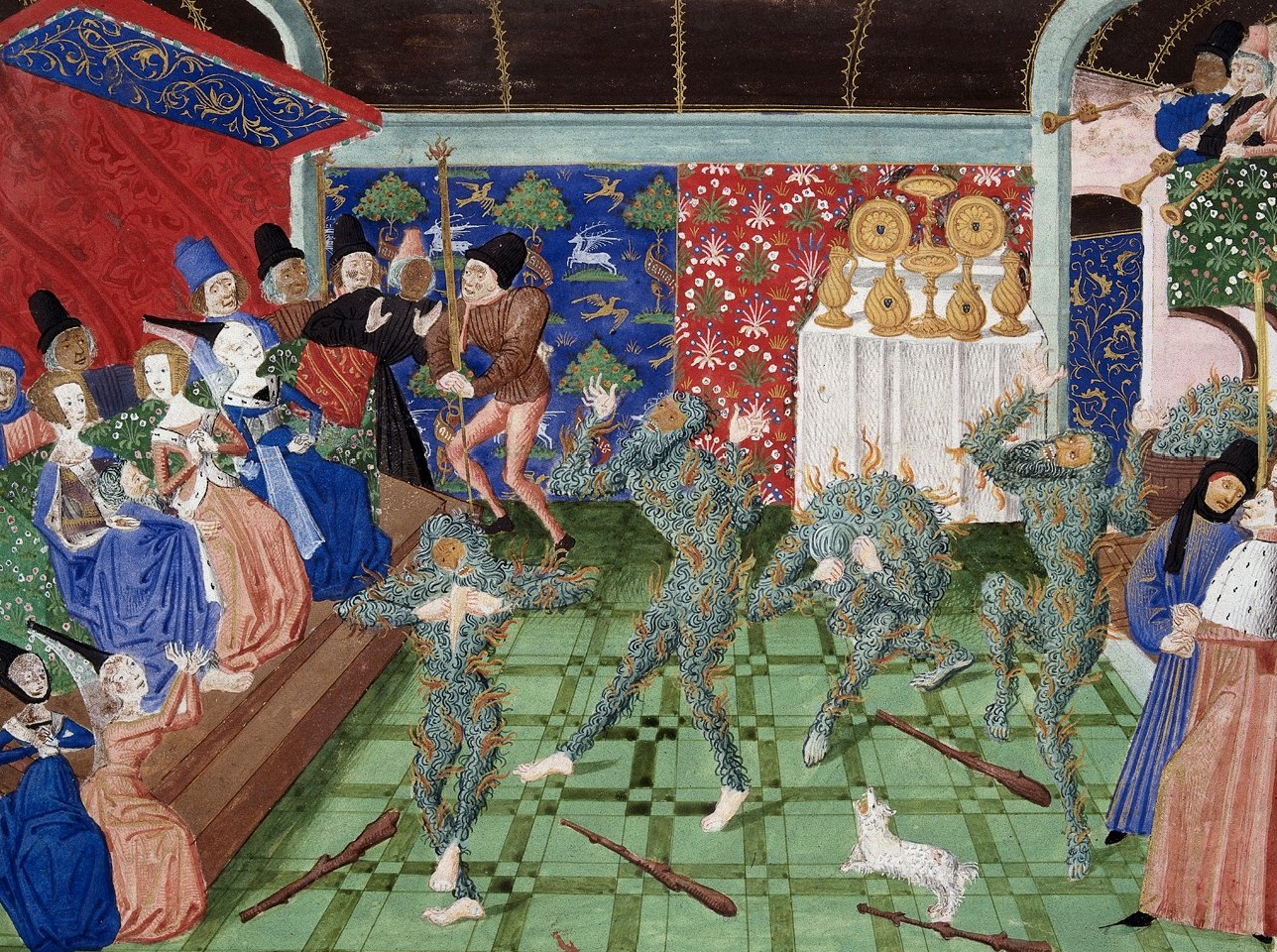
The Bal des Ardents (Ball of the Burning Men), or the Bal des Sauvages (Ball of the Wild Men), was a masquerade ball held on 28 January 1393 in Paris, France, at which King Charles VI had a dance performance with five members of the French nobility. Four of the dancers were killed in a fire caused by a torch brought in by Louis I, Duke of Orléans, the king's brother.
The ball, held at the royal palace of Saint-Pol, was one of a series of events organised to entertain Charles, who had suffered an attack of insanity in the previous summer of that year. The circumstances of the fire undermined confidence in the king's capacity to rule; Parisians considered it proof of courtly decadence and threatened to rebel against the more powerful members of the nobility. The public's outrage forced Charles and his brother Orléans, whom a contemporary chronicler accused of attempted regicide and sorcery, to offer penance for the event.
Charles's wife, Isabeau of Bavaria, held the ball to honor the remarriage of a lady-in-waiting. Scholars believe the dance performed at the ball had elements of traditional charivari, with the dancers disguised as wild men, mythical beings often associated with demonology, that were commonly represented in medieval Europe and documented in revels of Tudor England. The event was chronicled by contemporary writers such as the Monk of St Denis and Jean Froissart, and illustrated in 15th-century illuminated manuscripts by painters such as the Master of Anthony of Burgundy. The incident later provided inspiration for Edgar Allan Poe's short story "Hop-Frog".
In 1380, after the death of his father Charles V of France, the 12-year-old Charles VI was crowned king, beginning his minority with his four uncles acting as regents. Within two years, one of his uncles, Philip of Burgundy, described by historian Robert Knecht as "one of the most powerful princes in Europe", became sole regent to the young king after Louis of Anjou pillaged the royal treasury and departed to campaign in Italy. For their part, Charles' other two uncles, John of Berry and Louis of Bourbon, showed little interest in governing. In 1387, the 20-year-old Charles assumed sole control of the monarchy and immediately dismissed his uncles and reinstated the Marmousets, his father's traditional counselors. Unlike his uncles, the Marmousets wanted peace with England, less taxation and a strong, responsible central government—policies that resulted in a negotiated three-year truce with England, and the Duke of Berry being stripped of his post as governor of Languedoc because of his excessive taxation.
In 1392, Charles suffered the first in a lifelong series of attacks of insanity, manifested by an "insatiable fury" at the attempted assassination of the Constable of France and leader of the Marmousets, Olivier de Clisson—carried out by Pierre de Craon but orchestrated by John IV, Duke of Brittany. Convinced that the attempt on Clisson's life was also an act of violence against himself and the monarchy, Charles quickly planned a retaliatory invasion of Brittany with the approval of the Marmousets, and within months departed Paris with a force of knights.
On a hot August day outside Le Mans, accompanying his forces on the way to Brittany, Charles drew his weapons without warning and charged his own household knights including his brother Louis I, Duke of Orléans—with whom he had a close relationship—crying, "Forward against the traitors! They wish to deliver me to the enemy!" The king killed four men before his chamberlain grabbed him by the waist and subdued him, after which he fell into a coma that lasted for four days. Few believed he would recover; his uncles, the dukes of Burgundy and Berry, took advantage of the king's illness and quickly seized power, re-established themselves as regents and dissolved the Marmouset council.
The comatose king was returned to Le Mans, where Guillaume de Harsigny—a venerated and well-educated 92-year-old physician—was summoned to treat him. After Charles regained consciousness and his fever subsided, he was returned to Paris by Harsigny, moving slowly from castle to castle with periods of rest in between. Late in September, Charles was well enough to make a pilgrimage of thanks to Notre-Dame de Liesse near Laon, after which he returned again to Paris.
Charles' sudden onset of insanity was seen by some as a sign of divine anger and punishment, and by others as the result of sorcery; modern historians such as Knecht speculate that Charles was experiencing the onset of paranoid schizophrenia. The king continued to be mentally fragile, believing he was made of glass, and according to historian Desmond Seward, running "howling like a wolf down the corridors of the royal palaces." Contemporary chronicler Jean Froissart wrote that Charles' illness was so severe that he was "far out of the way; no medicine could help him." During the worst of his illness the king was unable to recognize his wife, Isabeau of Bavaria, demanding her removal when she entered his chamber, but after his recovery he made arrangements for her to hold guardianship of their children. Isabeau eventually became guardian to her son, the future Charles VII (b. 1403), granting her great political power and ensuring a place on the council of regents in the event of a relapse.
Bal des Ardents
The Bal des Ardents (Ball of the Burning Men), or the Bal des Sauvages (Ball of the Wild Men), was a masquerade ball held on 28 January 1393 in Paris, France, at which King Charles VI had a dance performance with five members of the French nobility. Four of the dancers were killed in a fire caused by a torch brought in by Louis I, Duke of Orléans, the king's brother.
The ball, held at the royal palace of Saint-Pol, was one of a series of events organised to entertain Charles, who had suffered an attack of insanity in the previous summer of that year. The circumstances of the fire undermined confidence in the king's capacity to rule; Parisians considered it proof of courtly decadence and threatened to rebel against the more powerful members of the nobility. The public's outrage forced Charles and his brother Orléans, whom a contemporary chronicler accused of attempted regicide and sorcery, to offer penance for the event.
Charles's wife, Isabeau of Bavaria, held the ball to honor the remarriage of a lady-in-waiting. Scholars believe the dance performed at the ball had elements of traditional charivari, with the dancers disguised as wild men, mythical beings often associated with demonology, that were commonly represented in medieval Europe and documented in revels of Tudor England. The event was chronicled by contemporary writers such as the Monk of St Denis and Jean Froissart, and illustrated in 15th-century illuminated manuscripts by painters such as the Master of Anthony of Burgundy. The incident later provided inspiration for Edgar Allan Poe's short story "Hop-Frog".
In 1380, after the death of his father Charles V of France, the 12-year-old Charles VI was crowned king, beginning his minority with his four uncles acting as regents. Within two years, one of his uncles, Philip of Burgundy, described by historian Robert Knecht as "one of the most powerful princes in Europe", became sole regent to the young king after Louis of Anjou pillaged the royal treasury and departed to campaign in Italy. For their part, Charles' other two uncles, John of Berry and Louis of Bourbon, showed little interest in governing. In 1387, the 20-year-old Charles assumed sole control of the monarchy and immediately dismissed his uncles and reinstated the Marmousets, his father's traditional counselors. Unlike his uncles, the Marmousets wanted peace with England, less taxation and a strong, responsible central government—policies that resulted in a negotiated three-year truce with England, and the Duke of Berry being stripped of his post as governor of Languedoc because of his excessive taxation.
In 1392, Charles suffered the first in a lifelong series of attacks of insanity, manifested by an "insatiable fury" at the attempted assassination of the Constable of France and leader of the Marmousets, Olivier de Clisson—carried out by Pierre de Craon but orchestrated by John IV, Duke of Brittany. Convinced that the attempt on Clisson's life was also an act of violence against himself and the monarchy, Charles quickly planned a retaliatory invasion of Brittany with the approval of the Marmousets, and within months departed Paris with a force of knights.
On a hot August day outside Le Mans, accompanying his forces on the way to Brittany, Charles drew his weapons without warning and charged his own household knights including his brother Louis I, Duke of Orléans—with whom he had a close relationship—crying, "Forward against the traitors! They wish to deliver me to the enemy!" The king killed four men before his chamberlain grabbed him by the waist and subdued him, after which he fell into a coma that lasted for four days. Few believed he would recover; his uncles, the dukes of Burgundy and Berry, took advantage of the king's illness and quickly seized power, re-established themselves as regents and dissolved the Marmouset council.
The comatose king was returned to Le Mans, where Guillaume de Harsigny—a venerated and well-educated 92-year-old physician—was summoned to treat him. After Charles regained consciousness and his fever subsided, he was returned to Paris by Harsigny, moving slowly from castle to castle with periods of rest in between. Late in September, Charles was well enough to make a pilgrimage of thanks to Notre-Dame de Liesse near Laon, after which he returned again to Paris.
Charles' sudden onset of insanity was seen by some as a sign of divine anger and punishment, and by others as the result of sorcery; modern historians such as Knecht speculate that Charles was experiencing the onset of paranoid schizophrenia. The king continued to be mentally fragile, believing he was made of glass, and according to historian Desmond Seward, running "howling like a wolf down the corridors of the royal palaces." Contemporary chronicler Jean Froissart wrote that Charles' illness was so severe that he was "far out of the way; no medicine could help him." During the worst of his illness the king was unable to recognize his wife, Isabeau of Bavaria, demanding her removal when she entered his chamber, but after his recovery he made arrangements for her to hold guardianship of their children. Isabeau eventually became guardian to her son, the future Charles VII (b. 1403), granting her great political power and ensuring a place on the council of regents in the event of a relapse.
Recent media
Recent media