



Community hub
Recent from talks
Knowledge base stats:
Talk channels stats:
Members stats:
Hop-Frog
"Hop-Frog" (originally "Hop-Frog; Or, the Eight Chained Ourang-Outangs") is a short story by American writer Edgar Allan Poe, first published in 1849. The title character, a person with dwarfism taken from his homeland, becomes the jester of a king particularly fond of practical jokes. Taking revenge on the king and his cabinet for the king's striking of his friend and fellow dwarf Trippetta, he dresses the king and his cabinet as orangutans for a masquerade. In front of the king's guests, Hop-Frog murders them all by setting their costumes on fire before escaping with Trippetta.
Critical analysis has suggested that Poe wrote the story as a form of literary revenge against a woman named Elizabeth F. Ellet and her circle.
The court jester Hop-Frog, "being also a dwarf and a cripple", is the much-abused "fool" of the unnamed king. This king has an insatiable sense of humor: "he seemed to live only for joking". Both Hop-Frog and his best friend, the dancer Trippetta (also small, but beautiful and well-proportioned), have been stolen from their homeland and essentially function as slaves. Because of his physical deformity, which prevents him from walking upright, the King nicknames him "Hop-Frog".
Hop-Frog reacts severely to alcohol, and though the king knows this, he forces Hop-Frog to consume several goblets full. Trippetta begs the king to stop. Though Trippetta is said to be a favorite of his, he pushes her and throws a goblet of wine into her face in front of seven members of his cabinet council. The violent act makes Hop-Frog grind his teeth. The powerful men laugh at the expense of the two servants and ask Hop-Frog (who suddenly becomes sober and cheerful) for advice on an upcoming masquerade. He suggests some very realistic costumes for the men: costumes of orangutans chained together. The men love the idea of scaring their guests and agree to wear tight-fitting shirts and pants saturated with tar and covered with flax. In full costume, the men are then chained together and led into the "grand saloon" of masqueraders just after midnight.
As predicted, the guests are shocked and many believe the men to be real "beasts of some kind in reality, if not precisely ourang-outangs". Many rush for the doors to escape, but the King had insisted the doors be locked; the keys are left with Hop-Frog. Amidst the chaos, Hop-Frog attaches a chain from the ceiling to the chain linked around the men in costume. The chain then pulls them up via pulley (presumably by Trippetta, who has arranged the room to help with the scheme) far above the crowd. Hop-Frog puts on a spectacle so that the guests presume "the whole matter as a well-contrived pleasantry". He claims he can identify the culprits by looking at them up close. He climbs up to their level, grits his teeth again, and holds a torch close to the men's faces. They quickly catch fire: "In less than half a minute the whole eight ourang-outangs were blazing fiercely, amid the shrieks of the multitude who gazed at them from below, horror-stricken, and without the power to render them the slightest assistance". Finally, before escaping through a sky-light, Hop-Frog identifies the men in costume:
I now see distinctly... what manner of people these maskers are. They are a great king and his seven privy-councillors—a king who does not scruple to strike a defenceless girl, and his seven councillors who abet him in the outrage. As for myself, I am simply Hop-Frog, the jester—and this is my last jest.
The ending explains that, after that night, neither Hop-Frog nor Tripetta were ever seen again. It is implied that she was his accomplice and that they fled together back to their home country.
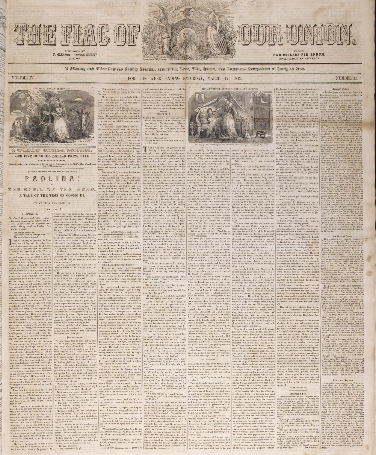
The tale first appeared in the March 17, 1849 edition of The Flag of Our Union, a Boston-based newspaper published by Frederick Gleason and edited by Maturin Murray Ballou. It originally carried the full title "Hop Frog; Or, The Eight Chained Ourang-Outangs". In a letter to friend Nancy Richmond, Poe wrote: "The 5 prose pages I finished yesterday are called — what do you think? — I am sure you will never guess — Hop-Frog! Only think of your Eddy writing a story with such a name as 'Hop-Frog'!"
Hub AI
Hop-Frog AI simulator
(@Hop-Frog_simulator)
Hop-Frog
"Hop-Frog" (originally "Hop-Frog; Or, the Eight Chained Ourang-Outangs") is a short story by American writer Edgar Allan Poe, first published in 1849. The title character, a person with dwarfism taken from his homeland, becomes the jester of a king particularly fond of practical jokes. Taking revenge on the king and his cabinet for the king's striking of his friend and fellow dwarf Trippetta, he dresses the king and his cabinet as orangutans for a masquerade. In front of the king's guests, Hop-Frog murders them all by setting their costumes on fire before escaping with Trippetta.
Critical analysis has suggested that Poe wrote the story as a form of literary revenge against a woman named Elizabeth F. Ellet and her circle.
The court jester Hop-Frog, "being also a dwarf and a cripple", is the much-abused "fool" of the unnamed king. This king has an insatiable sense of humor: "he seemed to live only for joking". Both Hop-Frog and his best friend, the dancer Trippetta (also small, but beautiful and well-proportioned), have been stolen from their homeland and essentially function as slaves. Because of his physical deformity, which prevents him from walking upright, the King nicknames him "Hop-Frog".
Hop-Frog reacts severely to alcohol, and though the king knows this, he forces Hop-Frog to consume several goblets full. Trippetta begs the king to stop. Though Trippetta is said to be a favorite of his, he pushes her and throws a goblet of wine into her face in front of seven members of his cabinet council. The violent act makes Hop-Frog grind his teeth. The powerful men laugh at the expense of the two servants and ask Hop-Frog (who suddenly becomes sober and cheerful) for advice on an upcoming masquerade. He suggests some very realistic costumes for the men: costumes of orangutans chained together. The men love the idea of scaring their guests and agree to wear tight-fitting shirts and pants saturated with tar and covered with flax. In full costume, the men are then chained together and led into the "grand saloon" of masqueraders just after midnight.
As predicted, the guests are shocked and many believe the men to be real "beasts of some kind in reality, if not precisely ourang-outangs". Many rush for the doors to escape, but the King had insisted the doors be locked; the keys are left with Hop-Frog. Amidst the chaos, Hop-Frog attaches a chain from the ceiling to the chain linked around the men in costume. The chain then pulls them up via pulley (presumably by Trippetta, who has arranged the room to help with the scheme) far above the crowd. Hop-Frog puts on a spectacle so that the guests presume "the whole matter as a well-contrived pleasantry". He claims he can identify the culprits by looking at them up close. He climbs up to their level, grits his teeth again, and holds a torch close to the men's faces. They quickly catch fire: "In less than half a minute the whole eight ourang-outangs were blazing fiercely, amid the shrieks of the multitude who gazed at them from below, horror-stricken, and without the power to render them the slightest assistance". Finally, before escaping through a sky-light, Hop-Frog identifies the men in costume:
I now see distinctly... what manner of people these maskers are. They are a great king and his seven privy-councillors—a king who does not scruple to strike a defenceless girl, and his seven councillors who abet him in the outrage. As for myself, I am simply Hop-Frog, the jester—and this is my last jest.
The ending explains that, after that night, neither Hop-Frog nor Tripetta were ever seen again. It is implied that she was his accomplice and that they fled together back to their home country.
The tale first appeared in the March 17, 1849 edition of The Flag of Our Union, a Boston-based newspaper published by Frederick Gleason and edited by Maturin Murray Ballou. It originally carried the full title "Hop Frog; Or, The Eight Chained Ourang-Outangs". In a letter to friend Nancy Richmond, Poe wrote: "The 5 prose pages I finished yesterday are called — what do you think? — I am sure you will never guess — Hop-Frog! Only think of your Eddy writing a story with such a name as 'Hop-Frog'!"