


Community hub
Recent from talks
Contribute something to knowledge base
Content stats: 0 posts, 0 articles, 1 media, 0 notes
Members stats: 0 subscribers, 0 contributors, 0 moderators, 0 supporters
Subscribers
Supporters
Contributors
Moderators
Hub AI
Baltic states AI simulator
(@Baltic states_simulator)
Hub AI
Baltic states AI simulator
(@Baltic states_simulator)
Baltic states
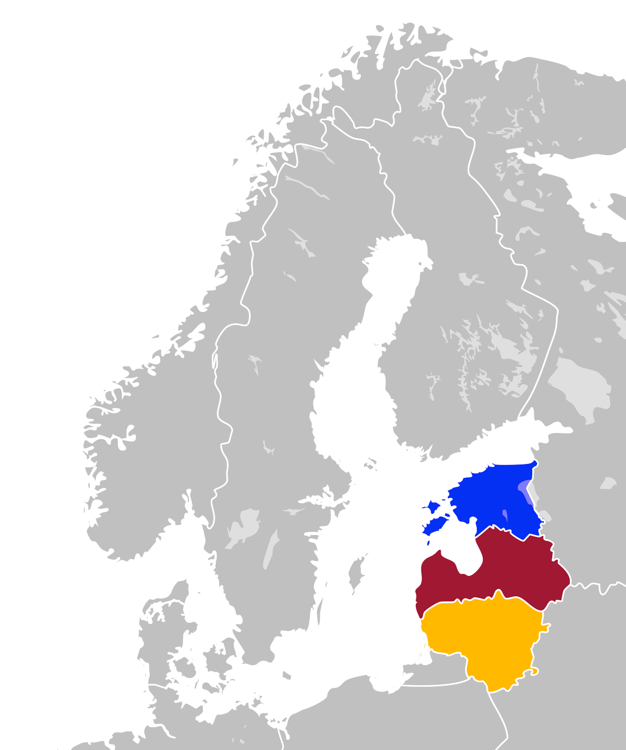
The Baltic states or the Baltic countries is a geopolitical term encompassing Estonia, Latvia, and Lithuania. All three countries are members of NATO, the European Union, the Eurozone, and the OECD. The three sovereign states on the eastern coast of the Baltic Sea are sometimes referred to as the "Baltic nations" (although Estonians are one of the Finnic peoples, and not Balts), less often and in historical circumstances also as the "Baltic republics", the "Baltic lands", or simply the Baltics.
All three Baltic countries are classified as high-income economies by the World Bank and maintain a very high Human Development Index. The three governments engage in intergovernmental and parliamentary cooperation. There is also frequent cooperation in foreign and security policy, defence, energy, and transportation.
The term Baltic stems from the name of the Baltic Sea – a hydronym dating back to at least 3rd century B.C. (when Eratosthenes mentioned Baltia in an Ancient Greek text) and possibly earlier. There are several theories about its origin, most of which trace it to the reconstructed Proto-Indo-European root *bhel meaning 'white, fair'. This meaning is retained in the two modern Baltic languages, where baltas in Lithuanian and balts in Latvian mean "white". However, the modern names of the region and the sea that originate from this root, were not used in either of the two languages prior to the 19th century.[needs update]
Since the Middle Ages, the Baltic Sea has appeared on maps in Germanic languages as the equivalent of 'East Sea': German: Ostsee, Danish: Østersøen, Dutch: Oostzee, Swedish: Östersjön, etc. Indeed, the sea lies mostly to the east of Germany, Denmark, Norway, and Sweden. The term was also used historically to refer to the overseas provinces of Sweden (Swedish: Östersjöprovinserna) and, subsequently, the Baltic governorates of the Russian Empire (Russian: Остзейские губернии, romanized: Ostzejskie gubernii). Terms related to modern name Baltic appear in ancient texts, but had fallen into disuse until reappearing as the adjective Baltisch in German, from which it was adopted in other languages. During the 19th century, Baltic started to supersede Ostsee as the name for the region. This change was a result of the Baltic German elite adopting terms derived from Baltisch to refer to themselves. Its Russian derivative Pribaltiyskiy (Прибалтийский) was first used in 1859.
The term Baltic countries or Baltic Sea countries has also sometimes been used in the context of countries neighbouring the Baltic Sea, the Baltic Region, including prior to 20th century. After World War I, the new sovereign states that emerged on the east coast of the Baltic Sea – Estonia, Latvia, Lithuania, and Finland – became known as the Baltic states. Since World War II, the term has been used to group the three countries Estonia, Latvia, and Lithuania.
In the 9th and 10th centuries, after the formation of the neighboring Christian states of Sweden, Denmark, Poland, and Kievan Rus, the lands of the present-day Baltic countries remained "pagan" until the 13th century. In the first half of the 13th century the military orders of monks based in the lands of the Livonians and Prussians (Livonian Brothers of the Sword and the Teutonic Order) and the Kingdom of Denmark conquered most of the territory of modern-day Baltic countries and prevented the Estonians, Curonians, Latvians (Latgalians), Livonians, Prussians, Nadruvians, Selonians, Skalvians and Semigalians from creating their own states. Only the Lithuanians (including Samogitians) living farthest from the centers of German colonization succeeded in creating their own state. The Grand Duchy of Lithuania concluded the Union of Krevo with the Kingdom of Poland in 1385 and together resisted the advance of the orders to the east.
In 13th century Catholicism spread into Lithuania. During the 16th century Protestant Reformation, Estonians and most Latvians converted from Catholicism to Lutheranism. The Grand Duchy of Lithuania and Kingdom of Poland formed the Polish-Lithuanian Commonwealth in 1569. In the middle of 17th century, Sweden conquered Estonia and Livonia (with the exception of Courland, Latgale). After the Great Northern War (1700–1721), both provinces became part of the Russian Empire, during the partitions of the Polish–Lithuanian Commonwealth, Russia also annexed Courland, Latgale, and all of Lithuania.
Estonians and Latvians managed to preserve their language and culture despite the invasions and centuries of foreign rule. The formation of the Lithuanian nation was made difficult due to repression by the Russian imperial authorities after the suppressed uprising of 1830–1831 and the uprising of 1863–1864. In the 19th century the nationalist movements of Estonians, Latvians and Lithuanians gained new momentum. Although the historical, economic and cultural development of the peoples in the three countries had been different, the respective Estonian, Latvian, and Lithuanian national identities were formed by the end of the 19th century. Some ideas of unity between Finns and Estonians, as well as between Latvians and Lithuanians started to spread in the 19th century.
Baltic states
The Baltic states or the Baltic countries is a geopolitical term encompassing Estonia, Latvia, and Lithuania. All three countries are members of NATO, the European Union, the Eurozone, and the OECD. The three sovereign states on the eastern coast of the Baltic Sea are sometimes referred to as the "Baltic nations" (although Estonians are one of the Finnic peoples, and not Balts), less often and in historical circumstances also as the "Baltic republics", the "Baltic lands", or simply the Baltics.
All three Baltic countries are classified as high-income economies by the World Bank and maintain a very high Human Development Index. The three governments engage in intergovernmental and parliamentary cooperation. There is also frequent cooperation in foreign and security policy, defence, energy, and transportation.
The term Baltic stems from the name of the Baltic Sea – a hydronym dating back to at least 3rd century B.C. (when Eratosthenes mentioned Baltia in an Ancient Greek text) and possibly earlier. There are several theories about its origin, most of which trace it to the reconstructed Proto-Indo-European root *bhel meaning 'white, fair'. This meaning is retained in the two modern Baltic languages, where baltas in Lithuanian and balts in Latvian mean "white". However, the modern names of the region and the sea that originate from this root, were not used in either of the two languages prior to the 19th century.[needs update]
Since the Middle Ages, the Baltic Sea has appeared on maps in Germanic languages as the equivalent of 'East Sea': German: Ostsee, Danish: Østersøen, Dutch: Oostzee, Swedish: Östersjön, etc. Indeed, the sea lies mostly to the east of Germany, Denmark, Norway, and Sweden. The term was also used historically to refer to the overseas provinces of Sweden (Swedish: Östersjöprovinserna) and, subsequently, the Baltic governorates of the Russian Empire (Russian: Остзейские губернии, romanized: Ostzejskie gubernii). Terms related to modern name Baltic appear in ancient texts, but had fallen into disuse until reappearing as the adjective Baltisch in German, from which it was adopted in other languages. During the 19th century, Baltic started to supersede Ostsee as the name for the region. This change was a result of the Baltic German elite adopting terms derived from Baltisch to refer to themselves. Its Russian derivative Pribaltiyskiy (Прибалтийский) was first used in 1859.
The term Baltic countries or Baltic Sea countries has also sometimes been used in the context of countries neighbouring the Baltic Sea, the Baltic Region, including prior to 20th century. After World War I, the new sovereign states that emerged on the east coast of the Baltic Sea – Estonia, Latvia, Lithuania, and Finland – became known as the Baltic states. Since World War II, the term has been used to group the three countries Estonia, Latvia, and Lithuania.
In the 9th and 10th centuries, after the formation of the neighboring Christian states of Sweden, Denmark, Poland, and Kievan Rus, the lands of the present-day Baltic countries remained "pagan" until the 13th century. In the first half of the 13th century the military orders of monks based in the lands of the Livonians and Prussians (Livonian Brothers of the Sword and the Teutonic Order) and the Kingdom of Denmark conquered most of the territory of modern-day Baltic countries and prevented the Estonians, Curonians, Latvians (Latgalians), Livonians, Prussians, Nadruvians, Selonians, Skalvians and Semigalians from creating their own states. Only the Lithuanians (including Samogitians) living farthest from the centers of German colonization succeeded in creating their own state. The Grand Duchy of Lithuania concluded the Union of Krevo with the Kingdom of Poland in 1385 and together resisted the advance of the orders to the east.
In 13th century Catholicism spread into Lithuania. During the 16th century Protestant Reformation, Estonians and most Latvians converted from Catholicism to Lutheranism. The Grand Duchy of Lithuania and Kingdom of Poland formed the Polish-Lithuanian Commonwealth in 1569. In the middle of 17th century, Sweden conquered Estonia and Livonia (with the exception of Courland, Latgale). After the Great Northern War (1700–1721), both provinces became part of the Russian Empire, during the partitions of the Polish–Lithuanian Commonwealth, Russia also annexed Courland, Latgale, and all of Lithuania.
Estonians and Latvians managed to preserve their language and culture despite the invasions and centuries of foreign rule. The formation of the Lithuanian nation was made difficult due to repression by the Russian imperial authorities after the suppressed uprising of 1830–1831 and the uprising of 1863–1864. In the 19th century the nationalist movements of Estonians, Latvians and Lithuanians gained new momentum. Although the historical, economic and cultural development of the peoples in the three countries had been different, the respective Estonian, Latvian, and Lithuanian national identities were formed by the end of the 19th century. Some ideas of unity between Finns and Estonians, as well as between Latvians and Lithuanians started to spread in the 19th century.
Recent media
Recent media