


Community hub
Recent from talks
Contribute something
Nothing was collected or created yet.
Human Development Index
View on Wikipedia

- ≥ 0.950
- 0.900–0.950
- 0.850–0.899
- 0.800–0.849
- 0.750–0.799
- 0.700–0.749
- 0.650–0.699
- 0.600–0.649
- 0.550–0.599
- 0.500–0.549
- 0.450–0.499
- 0.400–0.449
- ≤ 0.399
- Data unavailable
The Human Development Index (HDI) is a statistical composite index of life expectancy, education (mean years of schooling completed and expected years of schooling upon entering the education system), and per capita income indicators, which is used to rank countries into four tiers of human development. A country scores a higher level of HDI when the lifespan is higher, the education level is higher, and the gross national income GNI (PPP) per capita is higher. It was developed by Pakistani economist Mahbub ul-Haq and was further used to measure a country's development by the United Nations Development Programme (UNDP)'s Human Development Report Office.[1][2][3][4]
The 2010 Human Development Report introduced an inequality-adjusted Human Development Index (IHDI). While the simple HDI remains useful, it stated that "the IHDI is the actual level of human development (accounting for this inequality), while the HDI can be viewed as an index of 'potential' human development (or the maximum level of HDI) that could be achieved if there was no inequality."[5]
The index is based on the human development approach, developed by Mahbub ul-Haq, anchored in Amartya Sen's work on human capabilities, and often framed in terms of whether people are able to "be" and "do" desirable things in life. Examples include — being: well-fed, sheltered, and healthy; doing: work, education, voting, participating in community life. The freedom of choice is considered central — someone choosing to be hungry (e.g. when fasting for religious reasons) is considered different from someone who is hungry because they cannot afford to buy food, or because the country is going through a famine.[6]
The index does not take into account several factors, such as the net wealth per capita or the relative quality of goods in a country. This situation tends to lower the ranking of some of the most developed countries, such as the G7 members and others.[7]
Origins
[edit]The origins of the HDI are found in the annual Human Development Reports produced by the Human Development Report Office of the United Nations Development Programme (UNDP). These annual reports were devised and launched by Pakistani economist Mahbub ul-Haq in 1990, and had the explicit purpose "to shift the focus of development economics from national income accounting to people-centered policies". He believed that a simple composite measure of human development was needed to convince the public, academics and politicians that they can, and should, evaluate development not only by economic advances but also improvements in human well-being.

Dimensions and calculation
[edit]New method (2010 HDI onwards)
[edit]
Published on 4 November 2010 (and updated on 10 June 2011), the 2010 Human Development Report calculated the HDI combining three dimensions:[8][9]
- A long and healthy life: Life expectancy at birth
- Education: Mean years of schooling and expected years of schooling
- A decent standard of living: GNI per capita (PPP international dollars)
In its 2010 Human Development Report, the UNDP began using a new method of calculating the HDI. The following three indices are used:
1. Life Expectancy Index (LEI)

- LEI is equal to 1 when life expectancy at birth is 85 years, and 0 when life expectancy at birth is 20 years.
2. Education Index (EI) [10]

- 2.1 Mean Years of Schooling Index (MYSI) [11]
- Fifteen is the projected maximum of this indicator for 2025.
- 2.2 Expected Years of Schooling Index (EYSI) [12]
- Eighteen is equivalent to achieving a master's degree in most countries.


3. Income Index (II)

- II is 1 when GNI per capita is $75,000 and 0 when GNI per capita is $100.
Finally, the HDI is the geometric mean of the previous three normalized indices:
![{\displaystyle {\textrm {HDI}}={\sqrt[{3}]{{\textrm {LEI}}\cdot {\textrm {EI}}\cdot {\textrm {II}}}}.}](https://wikimedia.org/api/rest_v1/media/math/render/svg/364ecd910bf260a13250cde6a9d25e08d9633fe8)
LE: Life expectancy at birth
MYS: Mean years of schooling (i.e. years that a person aged 25 or older has spent in formal education)
EYS: Expected years of schooling (i.e. total expected years of schooling for children under 18 years of age, incl. young men and women aged 13–17)
GNIpc: Gross national income at purchasing power parity per capita
Old method (HDI before 2010)
[edit]The HDI combined three dimensions last used in its 2009 report:
- Life expectancy at birth, as an index of population health and longevity to HDI
- Knowledge and education, as measured by the adult literacy rate (with two-thirds weighting) and the combined primary, secondary, and tertiary gross enrollment ratio (with one-third weighting).
- Standard of living, as indicated by the natural logarithm of gross domestic product per capita at purchasing power parity.

This methodology was used by the UNDP until their 2011 report.
The formula defining the HDI is promulgated by the United Nations Development Programme (UNDP).[13] In general, to transform a raw variable, say , into a unit-free index between 0 and 1 (which allows different indices to be added together), the following formula is used:

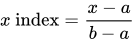
where and are the lowest and highest values the variable can attain, respectively.


The Human Development Index (HDI) then represents the uniformly weighted sum with 1⁄3 contributed by each of the following factor indices:


2023 Human Development Index (2025 report)
[edit]
- ≥ 1.4%
- 1.2%…1.4%
- 1%…1.2%
- 0.8%…1%
- 0.6%…0.8%
- 0.4%…0.6%
- 0.2%…0.4%
- 0%…0.2%
- −0.5%…0%
- −1%…−0.5%
- < −1%
- No data
The Human Development Report 2025 by the United Nations Development Programme was released on 6 May 2025; the report calculates HDI values based on data collected in 2023.
Ranked from 1 to 74 in the year 2023, the following countries are considered to have "very high human development":[14]
| Rank | Country or territory | HDI | ||
|---|---|---|---|---|
| 2023 data (2025 report) | Change since 2015 | 2023 data (2025 report)[15] | Average annual growth (2010–2023) | |
| 1 |  (2) (2)
|
 Iceland Iceland
|
0.972 | 0.28%
|
| 2 |  (1) (1)
|
 Norway Norway
|
0.970 | 0.25%
|

|
 Switzerland Switzerland
|
0.24%
| ||
| 4 | (2)
|
 Denmark Denmark
|
0.962 | 0.35%
|
| 5 | (1)
|
 Germany Germany
|
0.959 | 0.19%
|
|
|
 Sweden Sweden
|
0.38%
| ||
| 7 | (1)
|
 Australia Australia
|
0.958 | 0.20%
|
| 8 | (2)
|
 Netherlands Netherlands
|
0.955 | 0.26%
|
| (1)
|
 Hong Kong Hong Kong
|
0.38%
| ||
| 10 | (3)
|
 Belgium Belgium
|
0.951 | 0.26%
|
| 11 | (4)
|
 Ireland Ireland
|
0.949 | 0.38%
|
| 12 | (4)
|
 Finland Finland
|
0.948 | 0.27%
|
| 13 | (2)
|
 Singapore Singapore
|
0.946 | 0.25%
|
| (2)
|
 United Kingdom United Kingdom
|
0.24%
| ||
| 15 | (27)
|
 United Arab Emirates United Arab Emirates
|
0.940 | 1.04%
|
| 16 | (2)
|
 Canada Canada
|
0.939 | 0.22%
|
| 17 | (1)
|
 Liechtenstein Liechtenstein
|
0.938 | 0.23%
|
| (5)
|
 New Zealand New Zealand
|
0.13%
| ||
|
|
 United States United States
|
0.10%
| ||
| 20 | (1)
|
 South Korea South Korea
|
0.937 | 0.36%
|
| 21 | (2)
|
 Slovenia Slovenia
|
0.931 | 0.33%
|
| 22 | (3)
|
 Austria Austria
|
0.930 | 0.21%
|
| 23 | (3)
|
 Japan Japan
|
0.925 | 0.16%
|
| 24 | (5)
|
 Malta Malta
|
0.924 | 0.50%
|
| 25 | (3)
|
 Luxembourg Luxembourg
|
0.922 | 0.14%
|
| 26 | (1)
|
 France France
|
0.920 | 0.28%
|
| 27 | (3)
|
 Israel Israel
|
0.919 | 0.26%
|
| 28 |
|
 Spain Spain
|
0.918 | 0.40%
|
| 29 | (3)
|
 Czechia Czechia
|
0.915 | 0.22%
|
| (1)
|
 Italy Italy
|
0.24%
| ||
| (2)
|
 San Marino San Marino
|
0.32%
| ||
| 32 | (1)
|
 Andorra Andorra
|
0.913 | 0.20%
|
| (3)
|
 Cyprus Cyprus
|
0.45%
| ||
| 34 | (3)
|
 Greece Greece
|
0.908 | 0.18%
|
| 35 | (1)
|
 Poland Poland
|
0.906 | 0.35%
|
| 36 | (5)
|
 Estonia Estonia
|
0.905 | 0.33%
|
| 37 | (9)
|
 Saudi Arabia Saudi Arabia
|
0.900 | 0.70%
|
| 38 | (1)
|
 Bahrain Bahrain
|
0.899 | 0.80%
|
| 39 | (4)
|
 Lithuania Lithuania
|
0.895 | 0.32%
|
| 40 | (2)
|
 Portugal Portugal
|
0.890 | 0.42%
|
| 41 | (1)
|
 Croatia Croatia
|
0.889 | 0.53%
|
| (4)
|
 Latvia Latvia
|
0.51%
| ||
| 43 | (4)
|
 Qatar Qatar
|
0.886 | 0.45%
|
| 44 | (6)
|
 Slovakia Slovakia
|
0.880 | 0.14%
|
| 45 | (1)
|
 Chile Chile
|
0.878 | 0.47%
|
| 46 | (1)
|
 Hungary Hungary
|
0.870 | 0.22%
|
| 47 | (7)
|
 Argentina Argentina
|
0.865 | 0.15%
|
| 48 |
|
 Montenegro Montenegro
|
0.862 | 0.38%
|
| (13)
|
 Uruguay Uruguay
|
0.47%
| ||
| 50 | (1)
|
 Oman Oman
|
0.858 | 0.22%
|
| 51 | (7)
|
 Turkey Turkey
|
0.853 | 1.10%
|
| 52 | (1)
|
 Kuwait Kuwait
|
0.852 | 0.36%
|
| 53 | (5)
|
 Antigua and Barbuda Antigua and Barbuda
|
0.851 | 0.18%
|
| 54 | (5)
|
 Seychelles Seychelles
|
0.848 | 0.30%
|
| 55 | (1)
|
 Bulgaria Bulgaria
|
0.845 | 0.09%
|
| (2)
|
 Romania Romania
|
0.14%
| ||
| 57 | (6)
|
 Georgia Georgia
|
0.844 | 0.54%
|
| 58 | (4)
|
 Saint Kitts and Nevis Saint Kitts and Nevis
|
0.840 | 0.49%
|
| 59 | (6)
|
 Panama Panama
|
0.839 | 0.47%
|
| 60 | (12)
|
 Brunei Brunei
|
0.837 | 0.13%
|
| (1)
|
 Kazakhstan Kazakhstan
|
0.38%
| ||
| 62 | (3)
|
 Costa Rica Costa Rica
|
0.833 | 0.39%
|
| (5)
|
 Serbia Serbia
|
0.39%
| ||
| 64 | (12)
|
 Russia Russia
|
0.832 | 0.25%
|
| 65 | (10)
|
 Belarus Belarus
|
0.824 | 0.12%
|
| 66 | (3)
|
 Bahamas Bahamas
|
0.820 | 0.21%
|
| 67 | (2)
|
 Malaysia Malaysia
|
0.819 | 0.41%
|
| 68 | (4)
|
 North Macedonia North Macedonia
|
0.815 | 0.21%
|
| 69 | (9)
|
 Barbados Barbados
|
0.811 | 0.18%
|
|
|
 Armenia Armenia
|
0.52%
| ||
| 71 |
|
 Albania Albania
|
0.810 | 0.25%
|
| 72 | (10)
|
 Trinidad and Tobago Trinidad and Tobago
|
0.807 | 0.30%
|
| 73 |
|
 Mauritius Mauritius
|
0.806 | 0.44%
|
| 74 | (7)
|
 Bosnia and Herzegovina Bosnia and Herzegovina
|
0.804 | 0.68%
|
Past top countries
[edit]The list below displays the top-ranked country from each year of the Human Development Index. Norway has been ranked the highest sixteen times, Canada eight times, Iceland three times, and Switzerland and Japan 2 times each.
In each original HDI
[edit]The year represents the time period from which the statistics for the index were derived. In parentheses is the year when the report was published.
- 2023 (2025):
 Iceland
 - 2022 (2024):
 Switzerland
 - 2021 (2022): Switzerland
- 2019 (2020):
 Norway
 - 2018 (2019): Norway
- 2017 (2018): Norway
- 2015 (2016): Norway
- 2014 (2015): Norway
- 2013 (2014): Norway
- 2012 (2013): Norway
- 2011 (2011): Norway
- 2010 (2010): Norway
- 2007 (2009): Norway
- 2006 (2008): Iceland
- 2005 (2007): Iceland
- 2004 (2006): Norway
- 2003 (2005): Norway
- 2002 (2004): Norway
- 2001 (2003): Norway
- 2000 (2002): Norway
- 1999 (2001): Norway
- 1998 (2000):
 Canada
 - 1997 (1999): Canada
- 1995 (1998): Canada
- 1994 (1997): Canada
- 1993 (1996): Canada
- 1992 (1995): Canada
- 1994 (1994): Canada
- 1993 (1993):
 Japan
Japan - 1990 (1992): Canada
- 1990 (1991): Japan
Geographical coverage
[edit]The HDI has extended its geographical coverage: David Hastings, of the United Nations Economic and Social Commission for Asia and the Pacific, published a report geographically extending the HDI to 230+ economies, whereas the UNDP HDI for 2009 enumerates 182 economies and coverage for the 2010 HDI dropped to 169 countries.[16][17]
Country/region specific HDI lists
[edit]- Afghan regions
- Angolan provinces
- African countries
- Albanian counties
- Algerian regions
- Argentine provinces
- Armenian provinces
- Australian states and territories
- Austrian states
- Azerbaijani regions
- Baltic regions
- Bangladeshi districts and divisions
- Belgian provinces
- Bolivian departments
- Bosnia and Herzegovina regions
- Brazilian states
- Canadian provinces and territories
- Chilean regions
- Chinese administrative divisions
- Colombian departments
- Croatian counties
- Danish regions
- Dutch provinces
- Egyptian governorates
- Ethiopian regions
- European countries
- Finnish regions
- French regions
- German states
- Georgian regions
- Greek regions
- Indian states
- Tamil Nadu districts (India)
- Indonesian provinces
- Iranian provinces
- Iraqi governorates
- Italian regions
- Kazakhstan regions
- Japanese prefectures
- Jordanian governorates
- Latin American countries
- Malaysian states
- Mexican states
- Myanmar administrative divisions
- Nepalese provinces
- New Zealand regions
- Nigerian states
- Norwegian regions
- Pakistani administrative units
- Philippine provinces
- Palestinian regions
- Polish voivodeships
- Portuguese Regions
- Romanian regions
- Russian federal subjects
- Serbian Regions
- South African provinces
- South Korean regions
- Spanish communities
- Swedish regions
- Syrian governorates
- Swiss regions
- Thai regions
- Turkish regions
- UK regions
- Ukrainian regions
- U.S. states (American Human Development Report (AHDR))
- Venezuelan states
- Vietnamese regions
Criticism
[edit]
The Human Development Index has been criticized on a number of grounds, including focusing exclusively on national performance and ranking, lack of attention to development from a global perspective, measurement error of the underlying statistics, and on the UNDP's changes in formula which can lead to severe misclassification of "low", "medium", "high" or "very high" human development countries.[18]
There have also been various criticism towards the lack of consideration regarding sustainability[19] (which later got addressed by the planetary pressures-adjusted HDI), social inequality[20] (which got addressed by the inequality-adjusted HDI), unemployment[21] or democracy.[21]
The removal of literacy from HDI has been criticized because educational attainment evaluates only the quantity of education but not the quality or the outcomes of education and can result in perverse incentives.[22]
Economists Hendrik Wolff, Howard Chong and Maximilian Auffhammer discuss the HDI from the perspective of data error in the underlying health, education and income statistics used to construct the HDI. They have identified three sources of data error which are: (i) data updating, (ii) formula revisions and (iii) thresholds to classify a country's development status. They conclude that 11%, 21% and 34% of all countries can be interpreted as currently misclassified in the development bins due to the three sources of data error, respectively. Wolff, Chong and Auffhammer suggest that the United Nations should discontinue the practice of classifying countries into development bins because the cut-off values seem arbitrary, and the classifications can provide incentives for strategic behavior in reporting official statistics, as well as having the potential to misguide politicians, investors, charity donors and the public who use the HDI at large.[18]
In 2010, the UNDP reacted to the criticism by updating the thresholds to classify nations as low, medium, and high human development countries. In a comment to The Economist in early January 2011, the Human Development Report Office responded[23] to an article published in the magazine on 6 January 2011[24] which discusses the Wolff et al. paper. The Human Development Report Office states that they undertook a systematic revision of the methods used for the calculation of the HDI, and that the new methodology directly addresses the critique by Wolff et al. in that it generates a system for continuously updating the human-development categories whenever formula or data revisions take place.
In 2013, Salvatore Monni and Alessandro Spaventa emphasized that in the debate of GDP versus HDI, it is often forgotten that these are both external indicators that prioritize different benchmarks upon which the quantification of societal welfare can be predicated. The larger question is whether it is possible to shift the focus of policy from a battle between competing paradigms to a mechanism for eliciting information on well-being directly from the population.[25]
See also
[edit]

- Corruption Perceptions Index
- Gender Inequality Index
- International development
- Legatum Prosperity Index
- List of sovereign states by percentage of population living in poverty
- OECD Better Life Index (BLI)
- Right to an adequate standard of living
- Social Progress Index
- Sustainable Development Goals (SDGs)
- Where-to-be-born Index
- World Happiness Report
References
[edit]- ^ A. Stanton, Elizabeth (February 2007). "The Human Development Index: A History". PERI Working Papers. ScholarWorks@UMass Amherst: 14–15. Archived from the original on 28 February 2019. Retrieved 28 February 2019.
- ^ "Human Development Index". Definition of 'Human Development Index'. Archived from the original on 1 December 2017. Retrieved 29 November 2017.
- ^ "About Human Development". HDR. UNDP. Archived from the original on 15 April 2012. Retrieved 29 July 2011.
- ^ "Human development index". World Health Organization. Archived from the original on 3 January 2022. Retrieved 26 June 2024.
- ^ "Composite indices — HDI and beyond". Human Development Reports. Archived from the original on 10 August 2016. Retrieved 16 January 2021.
- ^ a b "What is Human Development". HDR. UNDP. 19 February 2015. Archived from the original on 27 October 2017. Retrieved 27 October 2017.
... human development approach, developed by the economist Mahbub Ul Haq ...
- ^ The Courier. Commission of the European Communities. 1994.
- ^ Nations, United (4 November 2010). "Human Development Report 2010". UNDP. Archived from the original on 22 December 2015. Retrieved 15 December 2015.
- ^ "Technical notes" (PDF). UNDP. 2013. Archived (PDF) from the original on 16 June 2015. Retrieved 15 December 2015.
- ^ "New method of calculation of Human Development Index (HDI)". India Study Channel. 1 June 2011. Archived from the original on 10 November 2017. Retrieved 19 November 2017.
- ^ Mean years of schooling (of adults) (years) is a calculation of the average number of years of education received by people ages 25 and older in their lifetime based on education attainment levels of the population converted into years of schooling based on theoretical duration of each level of education attended. Source: Barro, R. J.; Lee, J.-W. (2010). "A New Data Set of Educational Attainment in the World, 1950–2010". NBER Working Paper No. 15902. Working Paper Series. doi:10.3386/w15902. Archived from the original on 7 August 2011. Retrieved 29 July 2011.
- ^ (ESYI is a calculation of the number of years a child is expected to attend school, or university, including the years spent on repetition. It is the sum of the age-specific enrollment ratios for primary, secondary, post-secondary non-tertiary and tertiary education and is calculated assuming the prevailing patterns of age-specific enrollment rates were to stay the same throughout the child's life. Expected years of schooling is capped at 18 years. (Source: UNESCO Institute for Statistics (2010). Correspondence on education indicators. March. Montreal.)
- ^ "Definition, Calculator, etc. at UNDP site". Archived from the original on 20 December 2007. Retrieved 26 May 2020.
- ^ Human Development Report 2025 - A matter of choice: People and possibilities in the age of AI. United Nations Development Programme. 6 May 2025. Archived from the original on 6 May 2025. Retrieved 6 May 2025.
- ^ Human Development Report 2025 - A matter of choice: People and possibilities in the age of AI. United Nations Development Programme. 6 May 2025. Archived from the original on 6 May 2025. Retrieved 6 May 2025.
- ^ Hastings, David A. (2009). "Filling Gaps in the Human Development Index". United Nations Economic and Social Commission for Asia and the Pacific, Working Paper WP/09/02. Archived from the original on 30 April 2011. Retrieved 1 December 2009.
- ^ Hastings, David A. (2011). "A "Classic" Human Development Index with 232 Countries". HumanSecurityIndex.org. Archived from the original on 3 May 2011. Retrieved 9 March 2011. Information Note linked to data
- ^ a b Wolff, Hendrik; Chong, Howard; Auffhammer, Maximilian (2011). "Classification, Detection and Consequences of Data Error: Evidence from the Human Development Index". Economic Journal. 121 (553): 843–870. doi:10.1111/j.1468-0297.2010.02408.x. hdl:1813/71597. ISSN 0013-0133. S2CID 18069132. Archived from the original on 8 August 2020. Retrieved 13 July 2019.
- ^ WWF, WWF. "Living Planet Report 2014" (PDF). Living Planet Report. 2014: 60–62. Archived from the original (PDF) on 14 February 2024. Retrieved 14 February 2024.
- ^ Harttgen, Kenneth; Klasen, Stephan (1 May 2012). "A Household-Based Human Development Index". World Development. 40 (5): 878–899. doi:10.1016/j.worlddev.2011.09.011. hdl:10419/37505. ISSN 0305-750X.
- ^ a b Leiwakabessy, Erly; Amaluddin, Amaluddin (2 May 2020). "A Modified Human Development Index, Democracy And Economic Growth In Indonesia". Humanities & Social Sciences Reviews. 8 (2): 732–743. doi:10.18510/hssr.2020.8282. ISSN 2395-6518.
- ^ Kovacevic, Milorad (2011). "Review of HDI Critiques and Potential Improvements" (PDF). United Nations Development Programme, Human Development Reports, Research Paper 2010/33. Retrieved 27 August 2025.
- ^ "UNDP Human Development Report Office's comments". The Economist. January 2011. Archived from the original on 11 February 2011. Retrieved 12 January 2011.
- ^ "The Economist (pages 60–61 in the issue of Jan 8, 2011)". 6 January 2011. Archived from the original on 13 January 2011. Retrieved 12 January 2011.
- ^ Monni, Salvatore; Spaventa, Alessandro (2013). "Beyond Gdp and HDI: Shifting the focus from Paradigms to Politics". Development. 56 (2): 227–231. doi:10.1057/dev.2013.30. S2CID 84722678.
External links
[edit]
Economic classification of countries | |||||
|---|---|---|---|---|---|
| Three/Four-World Model | |||||
| Gross domestic product (GDP) |
| ||||
| Gross national income and Income | |||||
| Wages and salary | |||||
| Wealth | |||||
| Other national accounts | |||||
| Human development | |||||
| Digital divide | |||||
| Net international investment position (NIIP) | |||||

| International | |
|---|---|
| National | |
| Other | |

Human Development Index
View on GrokipediaOrigins and Historical Development
Creation and Initial Launch
The Human Development Index (HDI) was introduced in 1990 by the United Nations Development Programme (UNDP) in its inaugural Human Development Report (HDR), published on May 1 of that year, as a composite measure intended to prioritize human well-being over traditional economic indicators like gross national product (GNP).[7] Pakistani economist Mahbub ul Haq, serving as project director for the report, spearheaded its development, drawing on collaborations with Indian economist Amartya Sen to emphasize expanding people's capabilities and choices rather than mere commodity expansion or wealth accumulation.[8] The index aimed to redirect development economics toward outcomes in basic human functions, reflecting Haq's view that "the real wealth of a nation is its people" and Sen's capabilities framework, which posits development as the process of enhancing what individuals can do and be.[8] This approach sought to provide policymakers with a simpler, more intuitive alternative to GDP-centric metrics, covering achievements across 130 countries in the initial report.[8] The HDI's core intent was to measure progress in three foundational dimensions: a long and healthy life, access to knowledge, and a decent standard of living, thereby highlighting deprivations in human potential that GDP often overlooked.[8] Health was proxied by life expectancy at birth, education by a combination of adult literacy rates and combined primary, secondary, and tertiary enrollment ratios, and standard of living by real gross domestic product (GDP) per capita adjusted for purchasing power parity (PPP) and transformed logarithmically to account for diminishing returns to income.[8] These indicators were selected for their availability, relevance to basic needs, and ability to capture average attainments without requiring extensive new data collection, though the report acknowledged limitations in data quality for some nations.[8] Initially, the HDI was calculated as the arithmetic mean of dimension indices, each normalized on a scale from 0 to 1 using minimum and maximum goalposts—such as 25 years for minimum life expectancy versus an aspirational 85 years, 0% versus 100% literacy, and $200 versus $40,000 (log-adjusted) for GDP per capita—to reflect relative deprivations from ideal benchmarks.[8] This unweighted averaging method treated the dimensions as equally important substitutes, yielding a single score where 1 represented full achievement and 0 total deprivation, with the formula expressed as HDI = 1 minus the average deprivation across the three components.[8] The approach facilitated cross-country comparisons while underscoring that human development required balanced advancements, not dominance in one area like income.[8]Evolution of the Index
The Human Development Index (HDI), introduced in the 1990 United Nations Development Programme (UNDP) Human Development Report, initially combined normalized measures of life expectancy at birth, adult literacy rate, and gross national income per capita using an arithmetic mean aggregation.[6] This approach aimed to shift focus from purely economic metrics toward broader human capabilities, but early critiques highlighted issues like sensitivity to single-dimension dominance and incomplete education coverage.[9] A major revision occurred in the 2010 Human Development Report, which replaced the literacy rate and school enrollment indicators with mean years of schooling (for adults aged 25 and older) and expected years of schooling (for children entering school), providing a more forward-looking education assessment.[10] Aggregation shifted to a geometric mean to penalize imbalances across the health, education, and income dimensions, reflecting the view that unbalanced development diminishes overall progress.[10] That same report introduced the Inequality-adjusted HDI (IHDI), which discounts the standard HDI for inequalities in distribution within each dimension using the Atkinson inequality measure.[11] Complementary indices expanded the framework earlier; the Gender Development Index (GDI), debuted in the 1995 Human Development Report, adapts the HDI to reveal gender gaps by calculating separate indices for males and females and taking their ratio.[12] The core HDI methodology has remained largely stable since 2010, with the 2025 report emphasizing artificial intelligence's potential to reshape human development—such as through productivity gains or exacerbating inequalities—without proposing structural formula changes.[13] Nonetheless, analyses consistently show HDI values correlating strongly with logarithmically transformed GDP per capita (Pearson r often exceeding 0.90 across global samples), prompting questions about whether refinements add substantial independent insight beyond income-based measures.[14][15]Conceptual Framework and Dimensions
Core Dimensions
The Human Development Index comprises three core dimensions—health, education, and standard of living—chosen as empirical proxies for fundamental capabilities enabling human flourishing, beyond narrow economic metrics like GDP growth. These dimensions reflect observable outcomes tied to biological viability, cognitive expansion, and resource command, aligning with a framework prioritizing what individuals can do and be rather than inputs alone.[1][16] The health dimension assesses a long and healthy life through life expectancy at birth, which aggregates influences from genetics, sanitation, disease prevalence, and healthcare systems to indicate average lifespan potential. This metric captures systemic factors causally linked to mortality reduction, such as vaccination coverage and nutritional security, serving as a downstream indicator of societal conditions supporting physical endurance.[1][17] The education dimension evaluates access to knowledge via two indicators: mean years of schooling for adults aged 25 and older, reflecting completed formal education, and expected years of schooling for current school-age children, projecting future attainment assuming enrollment persistence. These quantify knowledge stock and flow, empirically associated with skill acquisition, innovation capacity, and adaptability, though they overlook informal learning or quality variations.[1][16] The standard of living dimension uses gross national income per capita in purchasing power parity terms to proxy command over goods and services, enabling consumption of necessities and discretionary pursuits. This indicator correlates with material security and opportunity sets, as higher income facilitates investments in health and education infrastructure, though it risks overemphasizing monetary aggregates over non-market welfare.[1][18] While rooted in a capabilities-oriented rationale that equalizes these dimensions to avoid income-centric bias, the approach assumes substitutability across them despite evidence of asymmetric causal pathways, where income gains often drive disproportionate advances in health and education at lower development levels, suggesting equal weighting may mask economic leverage in outcomes.[5][19][20]Indicators Selected and Rationale
The life expectancy at birth indicator was selected for the health dimension of the HDI because it provides a directly observable, aggregate measure of population longevity, empirically linked to causal factors such as access to sanitation, nutrition, and medical infrastructure that extend average lifespans.[1] This choice prioritizes empirical data availability from national vital statistics over subjective or composite health metrics, aligning with the index's aim to quantify basic capabilities without relying on potentially biased self-reported quality-of-life surveys.[5] However, it incorporates no adjustments for morbidity or disability-adjusted life years, which empirical evidence indicates can significantly inflate perceived health outcomes in populations with high chronic disease burdens despite extended total lifespans.[21] For the education dimension, mean years of schooling for adults aged 25 and older, combined with expected years of schooling for children, were chosen as indicators of knowledge acquisition due to their straightforward derivation from census and enrollment data, reflecting quantity of formal education exposure as a foundational input to human capabilities.[1] These metrics were preferred over quality-based alternatives like standardized test scores (e.g., PISA) or cognitive achievement assessments because the latter introduce variability from test design and cultural factors, complicating cross-country comparability, though empirical studies demonstrate that educational quality—measured by learning outcomes—correlates more strongly with economic productivity and innovation than mere attendance duration.[22] The original 1990 formulation relied solely on adult literacy rates for simplicity, but was revised in subsequent iterations to incorporate schooling years after critiques highlighted literacy's insufficiency for capturing broader skill development.[9] Gross national income (GNI) per capita, adjusted for purchasing power parity, was adopted for the standard-of-living dimension to capture command over resources enabling health and education investments, selected over alternatives like GDP per capita because GNI better accounts for international remittances and transfers affecting individual welfare.[1] A logarithmic transformation with goalposts at $100 (minimum) and approximately $75,000 (upper asymptote) was imposed to reflect assumed diminishing marginal returns to income, preventing high-income outliers from dominating the index while emphasizing equity in basic needs fulfillment.[23] This rationale draws on economic theory positing logarithmic utility in consumption, yet cross-national data reveal continued linear gains in non-income outcomes—like reduced mortality and higher patent rates—beyond the cap threshold, suggesting the cutoff introduces arbitrary compression of incentives for further wealth generation.[24] Indicators for political freedoms, such as civil liberties or democratic participation, and environmental sustainability, like carbon emissions per capita or biodiversity preservation, were excluded from the core HDI on the grounds that the index targets universal "basic" dimensions of health, knowledge, and income as prerequisites for broader capabilities, deeming these factors ancillary to avoid diluting focus or introducing ideological contestation in measurement.[1] Empirical analyses, however, indicate causal linkages where institutional freedoms enhance long-term HDI components through innovation and accountability in resource allocation, while environmental degradation inversely affects health and productivity via climate impacts on agriculture and disease vectors.[25] This scoping decision, while simplifying computation, overlooks evidence that sustained development requires integrating such variables to capture trade-offs, as seen in resource-dependent economies where high short-term HDI masks ecological depletion.[26]Methodology and Calculation
Normalization and Aggregation Techniques
The Human Development Index normalizes raw indicator values using a min-max scaling procedure, which rescales each dimension's metrics to a unitless index ranging from 0 to 1 by subtracting the minimum goalpost value and dividing by the range between minimum and maximum goalposts. This approach enables aggregation of heterogeneous indicators—such as life expectancy at birth, schooling years, and per capita income—into a comparable framework, with goalposts established based on historical minima (e.g., 20 years for life expectancy) and aspirational maxima derived from observed global achievements (e.g., 85 years for life expectancy).[27] For education components, minima are set at zero years of schooling, while income employs a logarithmic transformation alongside min-max bounds (from $100 to $75,000 in PPP terms) to reflect empirically observed diminishing marginal utility beyond basic needs.[27][28] Aggregation of these normalized dimension indices into the composite HDI score traditionally relied on averaging techniques that weight dimensions equally, but evolved to curb excessive substitutability—where deficiencies in one dimension could be fully compensated by strengths in another—misaligning with causal interdependencies in development outcomes, such as health prerequisites for effective education.[29] The shift toward methods penalizing imbalances better captures first-principles realities of human capabilities, where empirical evidence shows unbalanced profiles yield suboptimal functionings despite aggregate gains.[30] Critiques of the normalization process highlight its reliance on arbitrary fixed goalposts, which can distort rankings as countries surpass maxima, compressing relative progress and introducing sensitivity to periodic revisions rather than reflecting true advancements.[31][32] Linear scaling within bounds presumes uniform value across the range, potentially underemphasizing non-linear thresholds; for instance, causal analyses indicate that sub-threshold health levels (e.g., life expectancy below 40 years) limit educational yields far more than linear models suggest, as basic physiological needs must precede cognitive development per foundational human capital theories.[2] This assumption overlooks empirical non-linearities observed in development data, where marginal gains at low levels exhibit higher leverage due to compounding effects, though income's logarithmic adjustment partially mitigates this for economic dimensions.[33] Such limitations underscore the index's utility as a summary metric while necessitating caution in interpreting fine-grained comparisons.[34]Pre-2010 Arithmetic Mean Approach
The Human Development Index prior to 2010 aggregated its three dimension indices—life expectancy at birth, a combined education measure of adult literacy rate and combined school enrollment rates (themselves arithmetically averaged), and adjusted gross national income per capita—using a simple unweighted arithmetic mean: HDI = (Ihealth + Ieducation + Iincome)/3, where each dimension index was normalized between 0 and 1 based on goalposts such as 25 years minimum and 85 years maximum for life expectancy.[8][35] This linear averaging method, introduced in the inaugural 1990 United Nations Human Development Report, treated the dimensions as perfectly substitutable, allowing a high score in one area, particularly income, to fully compensate for deficiencies in others without penalty.[7][36] Such perfect compensation produced rankings that prioritized resource-driven income gains over balanced progress, enabling oil-exporting countries like Saudi Arabia (HDI rank 51 in 2009 with value 0.798, bolstered by GNI per capita exceeding $20,000 despite lower literacy and enrollment rates compared to peers) to outperform nations with stronger health and education outcomes but comparatively modest incomes, such as certain Eastern European or Latin American states.[37][36] For instance, this approach elevated Gulf states' positions in mid-tier rankings (e.g., United Arab Emirates at rank 32 in 2007) by offsetting uneven social indicators through hydrocarbon wealth, yielding counterintuitive results where per capita income dominance masked gaps in human capabilities.[38][30] Critics argued that the arithmetic mean's emphasis on unadjusted averages failed to reflect the indivisibility of human development dimensions, as it implied no trade-offs in substituting material wealth for health or knowledge attainment, prompting methodological revisions starting with the 2010 report to incorporate geometric averaging for imbalance sensitivity.[33][30] This pre-2010 framework, while straightforward and data-efficient for cross-country comparisons using available UN and World Bank statistics, thus underscored tensions between simplicity and substantive representation of development equity.[39]Post-2010 Geometric Mean Approach
In the 2010 Human Development Report, marking the twentieth anniversary of the index, the United Nations Development Programme (UNDP) replaced the arithmetic mean aggregation of the three dimension indices with a geometric mean to mitigate perfect substitutability between dimensions, thereby penalizing countries with severe imbalances in health, education, or income achievements.[40][10] This change aimed to better reflect the capabilities approach underlying the HDI, which posits that human development requires balanced progress across dimensions rather than allowing high performance in one area to fully compensate for deficiencies in others.[39] The updated formula computes the HDI as the cubic root of the product of the normalized indices for life expectancy (health), education (mean years of schooling and expected years of schooling), and gross national income per capita (income):Income normalization employs a logarithmic transformation to account for diminishing marginal returns beyond a threshold, using goalposts of $100 to $75,000 (later adjusted).[1][41] The geometric mean enforces complementarity, such that a low value in any dimension disproportionately reduces the overall score—for instance, a country with strong income but weak education experiences a dragged-down HDI compared to arithmetic aggregation.[39] Empirical analysis of the 2010 revision indicated modest shifts in country rankings, with the geometric mean causing only moderate reorderings; for example, nations like Singapore, excelling in income but lagging in education relative to peers, saw relative declines.[29][39] Despite this, the HDI retained a strong correlation with GDP per capita, suggesting persistent dominance of economic factors in driving scores.[6] The approach assumes multiplicative interactions among dimensions, implying inherent complementarities (e.g., education enhances health and income gains synergistically), but critics argue this may overstate interdependence, as evidence from development economics points to contexts where improvements in one dimension yield additive, independent benefits—such as isolated health interventions boosting longevity without requiring educational advances.[42][29] The geometric mean methodology has been retained without fundamental alterations through subsequent reports, including the 2025 edition, which continues to apply it for aggregation while refining indicator goalposts and data sources incrementally.[41] This consistency underscores its perceived alignment with theoretical priors on dimensional balance, though the lack of further tweaks highlights unresolved debates over whether multiplicative penalization accurately captures causal realities in human development pathways.[1]
Data Sources and Empirical Trends
Sources of Data and Reliability
The health dimension of the HDI, measured by life expectancy at birth, draws primarily from the United Nations Population Division's World Population Prospects estimates, which compile vital registration, census, and survey data adjusted for underreporting in many countries. The education dimension uses mean years of schooling for adults aged 25 and older, sourced from the Barro-Lee dataset aggregating national censuses and household surveys, and expected years of schooling for children of school-entry age, derived from enrollment rates reported to the UNESCO Institute for Statistics. The standard of living dimension employs gross national income (GNI) per capita in purchasing power parity (PPP) terms, calculated using the World Bank's Atlas method or IMF estimates when World Bank data are unavailable, with PPP conversions based on International Comparison Program benchmarks. Human Development Reports update HDI values annually using the most recent validated data, which often involves a lag of 1–3 years due to reporting cycles; for example, the 2023/2024 report incorporated life expectancy data up to 2021–2022, education figures through 2022, and GNI estimates for 2022.[43] This lag arises from dependencies on national statistical offices submitting data to international agencies, with HDRO performing imputations or projections for gaps using regression models on historical trends and covariates like GDP growth.[44] Reliability varies significantly by dimension and country income level, with higher errors in low- and lower-middle-income nations where civil registration systems are incomplete, leading to reliance on sample surveys for health and education metrics. Income data face inconsistencies from differing PPP methodologies between the World Bank and IMF, potentially altering GNI figures by 5–10% in some cases, and national accounts underreport informal economies prevalent in developing regions. Empirical studies identify three main error sources—measurement inaccuracies in raw data, imputation for missing values, and aggregation sensitivities—resulting in HDI deviations estimated at 0.05–0.15 points (roughly 5–15% relative to typical values around 0.5–0.7) for many developing countries, often causing rank shifts of 5–20 positions.[45][46] These errors stem from underreporting in surveys (e.g., educational attainment overstated by self-reports) and estimation assumptions, amplifying uncertainty near HDI category boundaries like 0.550 for medium human development.[47] Verification challenges persist, as cross-source reconciliations by HDRO prioritize consistency over individual dataset revisions, though robustness tests show aggregate HDI rankings stable within 1–2 decimal places for most high-income countries.[48]Latest Rankings from 2025 Report
The United Nations Development Programme's Human Development Report 2025, released on May 6, 2025, compiles HDI values for 193 countries and territories using data primarily from 2023, with no substantive changes to the geometric mean aggregation methodology employed since 2010.[13][49] Iceland tops the rankings at 0.972, followed closely by Switzerland and Norway, both at 0.970, reflecting sustained high achievements in life expectancy, education, and gross national income per capita among these nations.[49]| Rank | Country | HDI Value |
|---|---|---|
| 1 | Iceland | 0.972 |
| 2 | Switzerland | 0.970 |
| 2 | Norway | 0.970 |
| 4 | Denmark | 0.962 |
| 5 | Sweden | 0.959 |
| 5 | Germany | 0.959 |
| 7 | Australia | 0.958 |
| 8 | Hong Kong, China | 0.955 |
| 8 | Netherlands | 0.955 |
| 10 | Belgium | 0.951 |