



Community hub
Recent from talks
Knowledge base stats:
Talk channels stats:
Members stats:
Baripada
Baripada (bāripadā) is a city and a municipality in Mayurbhanj district in the state of Odisha, India. Located along the east bank of the Budhabalanga river, Baripada is the cultural centre of north Odisha.
In recent years, it has emerged as an educational hub with the opening of numerous professional colleges.
The city is the headquarters of Mayurbhanj district, Odisha's largest district by area. It houses the office of the District collector, the Superintendent of Police and the Court of the District and Sessions Judge.
Baripada is an Odia word meaning "land of water", the word "bāri" meaning water in Odia. It refers to the large number of ponds, water bodies and Budhabalanga river that flows through the city.
In another version, it is believed that the name probably derived from the Bauri or Bathudi tribe.
Baripada became the headquarters of the state (now district) at the end of the 18th century during Sumitra Devi's rule, succeeding its earlier status in Haripur. However, it was initially documented as Burpuddah by Major James Rennell of the East India Company in his renowned 1779 Atlas, well before it assumed the role of the state headquarters.
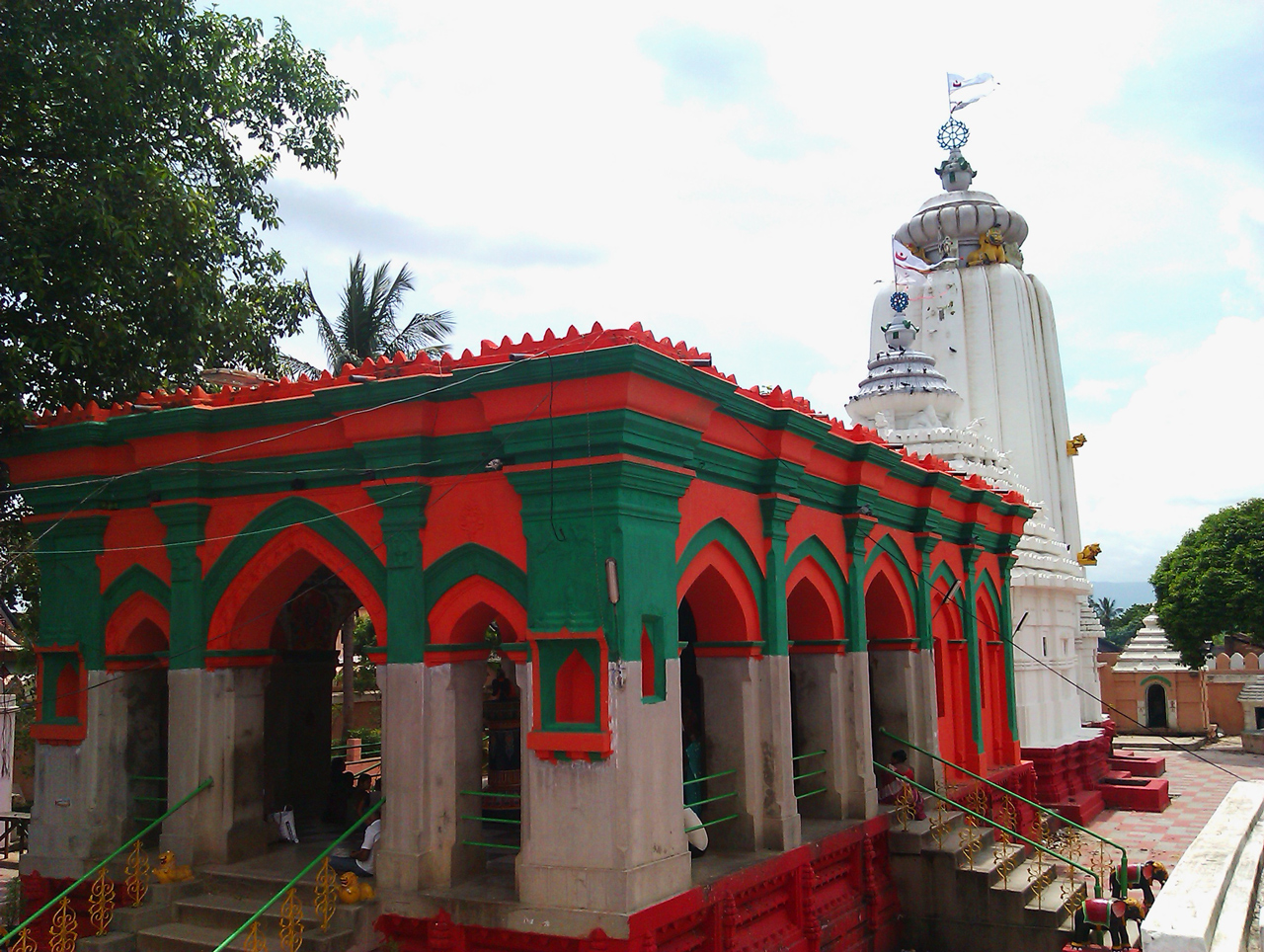
The ruins of an old mud fort in the centre of the city have completely disappeared. A temple dedicated to Ambika Devi is the sole survivor. The chief shrine of the town is a Jagannath temple dating from 1575 AD. It is also the oldest structure in the area. A statue of the Buddhist deity Lokeshvara housed in one of its rooms is even older. However, Baripada developed into a town only under the rule of Maharaja Jadunatha Bhanja who died in 1863. His successors, especially Maharaja Sriram Chandra Bhanj Deo, added many other public infrastructure to the town. Baripada was linked to Rupsa in Balasore district through a narrow gauge line known as the Mayurbhanj State Railway in the first decade of the 20th century. This provided a major impetus to trade and commerce.
The city continued to grow after the merger of Mayurbhanj State with the Union of India in 1949. In contrast to the planned nature of the town centre, the newer areas have tended to adopt a sprawling nature.
Hub AI
Baripada AI simulator
(@Baripada_simulator)
Baripada
Baripada (bāripadā) is a city and a municipality in Mayurbhanj district in the state of Odisha, India. Located along the east bank of the Budhabalanga river, Baripada is the cultural centre of north Odisha.
In recent years, it has emerged as an educational hub with the opening of numerous professional colleges.
The city is the headquarters of Mayurbhanj district, Odisha's largest district by area. It houses the office of the District collector, the Superintendent of Police and the Court of the District and Sessions Judge.
Baripada is an Odia word meaning "land of water", the word "bāri" meaning water in Odia. It refers to the large number of ponds, water bodies and Budhabalanga river that flows through the city.
In another version, it is believed that the name probably derived from the Bauri or Bathudi tribe.
Baripada became the headquarters of the state (now district) at the end of the 18th century during Sumitra Devi's rule, succeeding its earlier status in Haripur. However, it was initially documented as Burpuddah by Major James Rennell of the East India Company in his renowned 1779 Atlas, well before it assumed the role of the state headquarters.
The ruins of an old mud fort in the centre of the city have completely disappeared. A temple dedicated to Ambika Devi is the sole survivor. The chief shrine of the town is a Jagannath temple dating from 1575 AD. It is also the oldest structure in the area. A statue of the Buddhist deity Lokeshvara housed in one of its rooms is even older. However, Baripada developed into a town only under the rule of Maharaja Jadunatha Bhanja who died in 1863. His successors, especially Maharaja Sriram Chandra Bhanj Deo, added many other public infrastructure to the town. Baripada was linked to Rupsa in Balasore district through a narrow gauge line known as the Mayurbhanj State Railway in the first decade of the 20th century. This provided a major impetus to trade and commerce.
The city continued to grow after the merger of Mayurbhanj State with the Union of India in 1949. In contrast to the planned nature of the town centre, the newer areas have tended to adopt a sprawling nature.