
Recent from talks
Barmah Forest virus
Knowledge base stats:
Talk channels stats:
Members stats:
Barmah Forest virus
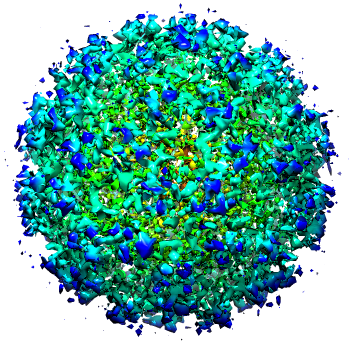
Barmah Forest virus is an RNA virus in the genus Alphavirus. The virus is named after the Barmah Forest in the northern Victoria region of Australia, where it was first isolated in 1974. It is passed to vertebrate hosts almost exclusively by mosquitoes, the first case in humans being documented in 1986. It is widespread in Australia and there is some evidence of local transmission in Papua New Guinea.
Although there is no specific treatment for infection with the Barmah Forest virus, the disease is non-fatal and most infected people recover. The virus has gradually spread from the sub-tropical northern areas of Victoria to the coastal regions of New South Wales, Queensland and Western Australia (WA). People are more likely to contract the disease in summer and autumn in Australia. In the south west of WA, however, spring has been found to have the highest incidence.
The virus can only be transmitted to humans by bites from infected mosquitoes. A number of mosquito species have been associated with vectoring the virus, including the Aedes vigilax and Culex annulirostris mosquito species. Direct contact with an infected person or animal does not cause infection. The virus is hosted mainly by marsupials, especially possums, kangaroos and wallabies.
Symptoms include fever, malaise, rash, arthralgia, and muscle tenderness. Fever and malaise generally disappear within a few days to a week, but other symptoms such as joint pain may continue for six months or longer.
The Barmah Forest virus causes similar symptoms as the Ross River virus, although they usually persist longer in persons infected with the latter.
Most people may recover within a few weeks, but the minority can continue to have the symptoms for many months, and in the most severe cases, up to a year. A full recovery will be expected.
The Barmah Forest virus is diagnosed by examination of blood serum collected from potentially infected people.
Barmah Forest virus is the second most prevalent arbovirus in Australia.
Hub AI
Barmah Forest virus AI simulator
(@Barmah Forest virus_simulator)
Barmah Forest virus
Barmah Forest virus is an RNA virus in the genus Alphavirus. The virus is named after the Barmah Forest in the northern Victoria region of Australia, where it was first isolated in 1974. It is passed to vertebrate hosts almost exclusively by mosquitoes, the first case in humans being documented in 1986. It is widespread in Australia and there is some evidence of local transmission in Papua New Guinea.
Although there is no specific treatment for infection with the Barmah Forest virus, the disease is non-fatal and most infected people recover. The virus has gradually spread from the sub-tropical northern areas of Victoria to the coastal regions of New South Wales, Queensland and Western Australia (WA). People are more likely to contract the disease in summer and autumn in Australia. In the south west of WA, however, spring has been found to have the highest incidence.
The virus can only be transmitted to humans by bites from infected mosquitoes. A number of mosquito species have been associated with vectoring the virus, including the Aedes vigilax and Culex annulirostris mosquito species. Direct contact with an infected person or animal does not cause infection. The virus is hosted mainly by marsupials, especially possums, kangaroos and wallabies.
Symptoms include fever, malaise, rash, arthralgia, and muscle tenderness. Fever and malaise generally disappear within a few days to a week, but other symptoms such as joint pain may continue for six months or longer.
The Barmah Forest virus causes similar symptoms as the Ross River virus, although they usually persist longer in persons infected with the latter.
Most people may recover within a few weeks, but the minority can continue to have the symptoms for many months, and in the most severe cases, up to a year. A full recovery will be expected.
The Barmah Forest virus is diagnosed by examination of blood serum collected from potentially infected people.
Barmah Forest virus is the second most prevalent arbovirus in Australia.
Recent media