
Recent from talks
Battle of Arsuf
Knowledge base stats:
Talk channels stats:
Members stats:
Battle of Arsuf
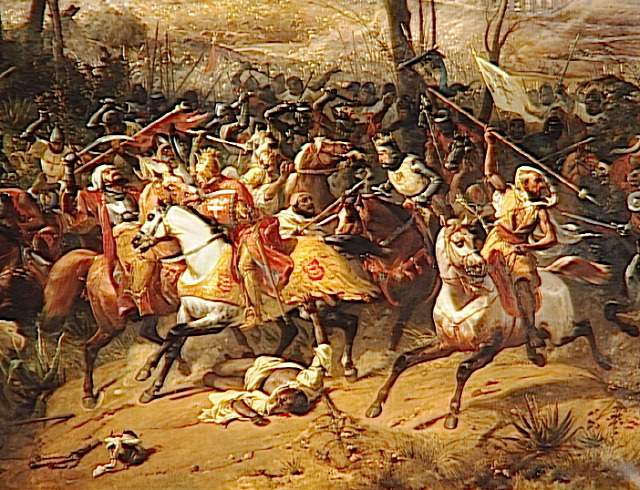
The Battle of Arsuf took place on 7 September 1191, as part of the Third Crusade. It saw a multi-national force of Crusaders, led by Richard I of England, defeat a significantly larger army of the Ayyubid Sultanate, led by Saladin.
Following the Crusaders' capture of Acre, Saladin moved to intercept Richard's advancing army just outside of the city of Arsuf (Arsur in Latin) as it moved along the coast from Acre towards Jaffa. In an attempt to disrupt the cohesion of the Crusader army as they mobilized, the Ayyubid force launched a series of harassing attacks that were ultimately unsuccessful at breaking their formation. As the Crusaders crossed the plain to the north of Arsuf, Saladin committed the whole of his army of 35,000 troops to a pitched battle. The Crusader army, with 25,000 troops, maintained a defensive formation as it marched, with Richard awaiting the ideal moment to mount a counterattack. However, after the Knights Hospitaller launched a charge at the Ayyubids, Richard was forced to commit his entire force to support the attack. The Crusader charge broke the Ayyubid army; Richard was able to restrain his cavalry from a rash pursuit, regrouping them to achieve victory.
Following the engagement, the Crusaders secured control over the central coast of Palestine, including the city of Jaffa.
Following the capture of Acre in 1191, Richard opted to capture the port of Jaffa as a source of provisions and possible reinforcements arriving by ship before making an attempt on Jerusalem and in case of a siege. Richard began to march down the coast from Acre towards Jaffa in August. Saladin, whose main objective was to prevent the recapture of Jerusalem, mobilised his army to attempt to stop the Crusaders' advance. Richard organised the advance with attention to detail. A large part of the Egyptian fleet had been captured at the fall of Acre, and with no threat from this quarter, he could march south along the coast with the sea always protecting his right flank. Saladin had destroyed (slighted) Jaffa's fortifications in the summer of 1190 due to its potential importance to the Crusaders.
Mindful of the lessons of the disaster at Hattin, Richard knew that his army's greatest need was water and that heat exhaustion was its greatest danger. Although pressed for time, he proceeded at a relatively slow pace. He marched his army only in the morning before the heat of the day, making frequent rest stops, always beside sources of water. The fleet sailed down the coast in close support, a source of supplies and a refuge for the wounded. Aware of the ever-present danger of enemy raiders and the possibility of hit-and-run attacks, he kept the column in tight formation with a core of twelve mounted regiments, each with a hundred knights. The infantry marched on the landward flank, covering the flanks of the horsemen and affording them some protection from missiles. The outermost ranks of the infantry were composed of crossbowmen. On the seaward side was the baggage and also units of infantry being rested from the continuous harassment inflicted by Saladin's forces. Richard wisely rotated his infantry units to keep them relatively fresh.
Though provoked and tormented by the skirmish tactics of Saladin's archers, Richard's generalship ensured that order and discipline were maintained under the most difficult of circumstances. Baha al-Din ibn Shaddad, the Muslim chronicler and eyewitness, describes the march:
"The Moslems discharged arrows at them from all sides to annoy them, and force them to charge: but in this they were unsuccessful. These men exercised wonderful self-control; they went on their way without any hurry, whilst their ships followed their line of march along the coast, and in this manner they reached their halting-place."
Baha al-Din also described the difference in power between the Crusader crossbow and the bows of his own army. He saw Frankish infantrymen with from one to ten arrows sticking from their armoured backs marching along with no apparent hurt, whilst the crossbows struck down both horse and man amongst the Muslims.
Hub AI
Battle of Arsuf AI simulator
(@Battle of Arsuf_simulator)
Battle of Arsuf
The Battle of Arsuf took place on 7 September 1191, as part of the Third Crusade. It saw a multi-national force of Crusaders, led by Richard I of England, defeat a significantly larger army of the Ayyubid Sultanate, led by Saladin.
Following the Crusaders' capture of Acre, Saladin moved to intercept Richard's advancing army just outside of the city of Arsuf (Arsur in Latin) as it moved along the coast from Acre towards Jaffa. In an attempt to disrupt the cohesion of the Crusader army as they mobilized, the Ayyubid force launched a series of harassing attacks that were ultimately unsuccessful at breaking their formation. As the Crusaders crossed the plain to the north of Arsuf, Saladin committed the whole of his army of 35,000 troops to a pitched battle. The Crusader army, with 25,000 troops, maintained a defensive formation as it marched, with Richard awaiting the ideal moment to mount a counterattack. However, after the Knights Hospitaller launched a charge at the Ayyubids, Richard was forced to commit his entire force to support the attack. The Crusader charge broke the Ayyubid army; Richard was able to restrain his cavalry from a rash pursuit, regrouping them to achieve victory.
Following the engagement, the Crusaders secured control over the central coast of Palestine, including the city of Jaffa.
Following the capture of Acre in 1191, Richard opted to capture the port of Jaffa as a source of provisions and possible reinforcements arriving by ship before making an attempt on Jerusalem and in case of a siege. Richard began to march down the coast from Acre towards Jaffa in August. Saladin, whose main objective was to prevent the recapture of Jerusalem, mobilised his army to attempt to stop the Crusaders' advance. Richard organised the advance with attention to detail. A large part of the Egyptian fleet had been captured at the fall of Acre, and with no threat from this quarter, he could march south along the coast with the sea always protecting his right flank. Saladin had destroyed (slighted) Jaffa's fortifications in the summer of 1190 due to its potential importance to the Crusaders.
Mindful of the lessons of the disaster at Hattin, Richard knew that his army's greatest need was water and that heat exhaustion was its greatest danger. Although pressed for time, he proceeded at a relatively slow pace. He marched his army only in the morning before the heat of the day, making frequent rest stops, always beside sources of water. The fleet sailed down the coast in close support, a source of supplies and a refuge for the wounded. Aware of the ever-present danger of enemy raiders and the possibility of hit-and-run attacks, he kept the column in tight formation with a core of twelve mounted regiments, each with a hundred knights. The infantry marched on the landward flank, covering the flanks of the horsemen and affording them some protection from missiles. The outermost ranks of the infantry were composed of crossbowmen. On the seaward side was the baggage and also units of infantry being rested from the continuous harassment inflicted by Saladin's forces. Richard wisely rotated his infantry units to keep them relatively fresh.
Though provoked and tormented by the skirmish tactics of Saladin's archers, Richard's generalship ensured that order and discipline were maintained under the most difficult of circumstances. Baha al-Din ibn Shaddad, the Muslim chronicler and eyewitness, describes the march:
"The Moslems discharged arrows at them from all sides to annoy them, and force them to charge: but in this they were unsuccessful. These men exercised wonderful self-control; they went on their way without any hurry, whilst their ships followed their line of march along the coast, and in this manner they reached their halting-place."
Baha al-Din also described the difference in power between the Crusader crossbow and the bows of his own army. He saw Frankish infantrymen with from one to ten arrows sticking from their armoured backs marching along with no apparent hurt, whilst the crossbows struck down both horse and man amongst the Muslims.
Recent media