


Community hub
Recent from talks
Contribute something
Nothing was collected or created yet.
Landau
View on Wikipedia | This article needs additional citations for verification. (March 2017) |
Landau (Palatine German: Landach), officially Landau in der Pfalz (German pronunciation: [ˈlandaʊ ʔɪn deːɐ̯ ˈpfalts], lit. 'Landau in the Palatinate'), is an autonomous (kreisfrei) town surrounded by the Südliche Weinstraße ("Southern Wine Route") district of southern Rhineland-Palatinate, Germany. It is a university town (since 1990), a long-standing cultural centre, and a market and shopping town, surrounded by vineyards and wine-growing villages of the Palatinate wine region. Landau lies east of the Palatinate forest, on the German Wine Route.
Key Information


It contains the districts (Ortsteile) of Arzheim, Dammheim, Godramstein, Mörlheim, Mörzheim, Nussdorf, Queichheim, and Wollmesheim.
History and other settings
[edit]Landau was first mentioned as a settlement in 1106. It was in the possession of the counts of Leiningen-Dagsburg-Landeck, whose arms, differenced by an escutcheon of the Imperial eagle, served as the arms of Landau until 1955.[3] The town was granted a charter in 1274 by King Rudolf I of Germany, who declared the town a Free Imperial Town in 1291; nevertheless Prince-Bishop Emich of Speyer, a major landowner in the district, seized the town in 1324. The town did not regain its ancient rights until 1511 from Maximilian I. An Augustinian monastery was founded in 1276. It has also helped provide college education for the past 28 years.


After the Peace of Westphalia in 1648, control of Landau was ceded to France, although with certain ill-defined reservations.[4] Landau was later part of France from 1680 to 1815,[5] during which it was one of the Décapole, the ten free cities of Alsace, and received its modern fortifications by Louis XIV's military architect Vauban in 1688–99, making the little town (its 1789 population was approximately 5,000) one of Europe's strongest citadels. In the War of the Spanish Succession it had four sieges. After the siege of 1702 lost by the French, an Imperial garrison was installed in Landau. In a subsequent siege from 13 October to 15 November 1703 the French regained the town, following their victory in the Battle of Speyerbach.[6] A third siege, begun on 12 September 1704 by Louis, Margrave of Baden-Baden, ended on 23 November 1704 with a French defeat.[7] During this siege King Joseph I arrived at Landau coming from Vienna in a newly developed convertible carriage. This carriage would become very popular and became named the landau in English, or Landauer in German. The French recaptured Landau once more in a final siege which lasted from 6 June to 20 August 1713 by Marshal General Villars.[8]
Landau was part of Bas-Rhin department between 1789 and 1815. After Napoleon's Hundred Days following his escape from Elba, Landau, which had remained French, was granted to the Kingdom of Bavaria in 1815 and became the capital of one of the thirteen Bezirksämter (counties) of the Bavarian Rheinkreis, later renamed Pfalz.
In 1840 famous political cartoonist Thomas Nast was born in Landau.
Following World War II, Landau was an important barracks town for the French occupation.
Main sites
[edit]
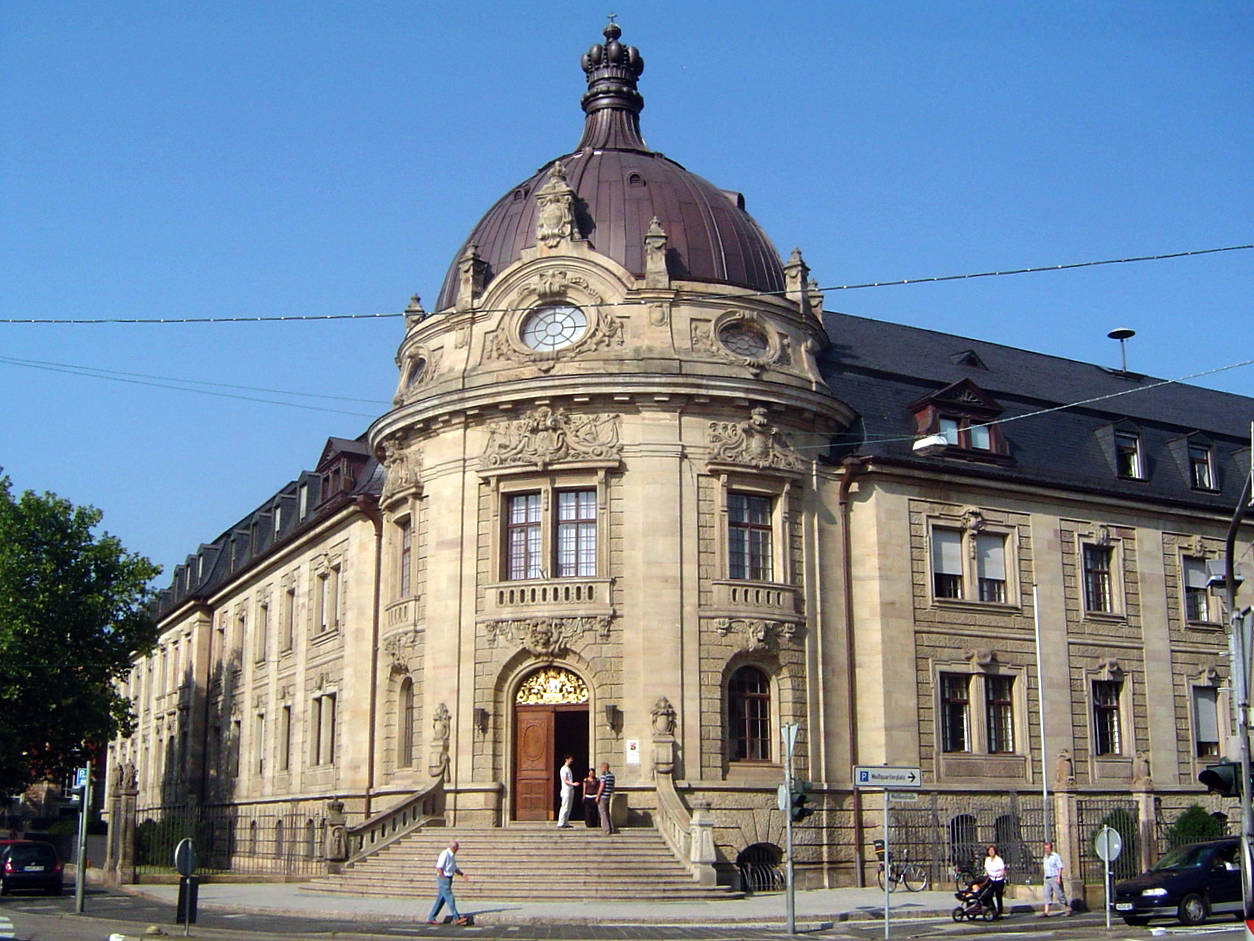
Landau's large main square (Rathausplatz) is dominated by the town hall (Rathaus) and the market hall (Altes Kaufhaus). In the 19th century, the former fortifications gave way to a ring road that encircles the old town centre, from which the old industrial buildings have been excluded. A convention hall, the Festhalle, was built in Art Nouveau style, 1905–07 on a rise overlooking the town park and facing the modernist Bundesamt, the regional government building. The Protestant Collegiate Church (Stiftskirche) in Landau in der Pfalz is one of the oldest buildings in the town. With the construction of the church started in the 14th century, was completed in the mid-16th century.
The zoo is located close to the center of Landau alongside the historical fortifications. Animals are held in natural enclosures. The zoo contains numerous exotic species such as tigers and cheetahs, but also seals, penguins, kangaroos and flamingos and many more.
Economy
[edit]Wine-making continues to be an important industry of Landau.
Transport
[edit]The nearest airports to Landau are:
- Karlsruhe/Baden-Baden Airport, located 66 km (41 mi) south.
- Saarbrücken Airport, located 98 km (61 mi) west.
- Strasbourg Airport, located 111 km (69 mi) south west
- Stuttgart Airport, located 114 km (71 mi) south east.
- Frankfurt Airport, located 123 km (76 mi) north east.
Culture
[edit]The "landau," a luxury open carriage with a pair of folding tops, was invented in the town during the War of the Spanish Succession.
A frequent Ashkenazi surname originates in this town. Probably its most famous bearer was Yechezkel Landau, an 18th-century talmudist and halakhist and the chief rabbi of Prague.
Twin towns – sister cities
[edit]Landau in der Pfalz is twinned with:[9]
 Haguenau, France
- Ribeauvillé, France
 Ruhango, Rwanda


Notable people
[edit]- Jan Boner (1463–1523), German-Polish merchant and banker
- Johann Caspar Bagnato (1696–1757), German-Italian architect
- Johann Christoph Wendland (1755–1828), botanist
- Johann Birnbaum (1763–1832), jurist
- Jacques-Louis Copia (1764–1799), German-French engraver
- Charles-Frédéric Soehnée (1789–1878), German-French painter
- Heinrich Jakob Fried (1802–1870), painter
- François Fleischbein (1804–1878), painter
- Franz Joseph Lauth (1822–1895), egyptologist
- Marcus Otterbourg (1827–1893), American diplomat, lawyer, and judge
- Michel Bréal (1832–1915), German-French philologist
- Ludwig Levy (1854–1907), architect
- Jakob Ritter von Danner (1865–1942), general
- Ludwig Maria Hugo (1871–1935), Roman Catholic bishop in Mainz
- Heinrich Kaspar Schmid (1874–1953), composer
- Franz Ritter von Hörauf (1878–1957), general
- Helmuth Theodor Bossert (1880–1961), art historian, philologist and archaeologist
- Ludwig Kohl-Larsen (1884–1969), physician
- Arnold Metzger (1892–1974), philosopher
- Ferdinand Jodl (1896–1956), general
- Ernst Maisel (1896–1978), general
- Thomas Nast (1840–1902), American caricaturist and editorial cartoonist
- Gustav Harteneck (1892–1984), general
- Lil Picard (1899–1994), German-American cabaret actress
- Richard Rudolf Klein (1921–2011), composer, musician and teacher
- Friedrich Wetter (born 1928), Roman Catholic bishop in Munich
- Fritz Strack (born 1950), psychologist
- Albrecht Hornbach (born 1953), businessman
- Volker Zotz (born 1956), German-Austrian philosopher and writer
- Éric de Moulins-Beaufort (born 1962), French prelate of the Roman Catholic Church
- Anne Lünenbürger (born 1964), operatic soprano
- Charlotte Seither (born 1965), composer and pianist
- Christine Schneider (born 1972), politician (CDU)
- Bas Kast (born 1973), science writer
- Stefan Raunser (born 1976), scientist
- Bernd Metz (born 1979), artist
- Kris Menace (born 1980), electronic musician
- Benjamin Auer (born 1981), footballer
- Marlene Zapf (born 1990), handball player
- Michael Schultz (born 1993), footballer
- Ricarda Lobe (born 1994), hurdler
- Jan May (born 1995), cyclist
- Niklas Hoffmann (born 1997), footballer
References
[edit]- ^ Wahl der Oberbürgermeister der kreisfreien Städte, Landeswahlleiter Rheinland-Pfalz. Retrieved 5 June 2023.
- ^ "Alle politisch selbständigen Gemeinden mit ausgewählten Merkmalen am 31.12.2023" (in German). Federal Statistical Office of Germany. 28 October 2024. Retrieved 16 November 2024.
- ^ "Landaup". Archived from the original on 2005-05-04. Retrieved 2005-06-13.
- ^ Chisholm, Hugh, ed. (1911). . Encyclopædia Britannica. Vol. 16 (11th ed.). Cambridge University Press. p. 153.
- ^ "Landau". Encyclopædia Britannica.
- ^ Ehrend, Helfried (1972). Die vier Belegerungen von Landau auf Münzen und Medaillen (in German). Speyer: Numismatische Gesellschaft Speyer e.V. p. 26.
- ^ Heuser, Emil (1896). Die dritte und vierte Belagerung Landaus im spanischen Erbfolgekrieg (1704 und 1713) (in German). Landau Pfalz: Ed. Kaußlers Buchhandlung. pp. 3–99.
- ^ Heuser, Emil (1896). Die dritte und vierte Belagerung Landaus im spanischen Erbfolgekrieg (1704 und 1713) (in German). Landau Pfalz: Ed. Kaußlers Buchhandlung. pp. 163–214.
- ^ "Partnerstädte". landau.de (in German). Landau in der Pfalz. Retrieved 2021-02-18.
External links
[edit]
 Landau in der Pfalz travel guide from Wikivoyage
- Official website
- Pictures Archived 2011-05-22 at the Wayback Machine
- Lev Landau


| Founding cities |  | |
|---|---|---|
| Other cities | ||


.svg)

.svg)

.svg)
.svg)


| International | |
|---|---|
| National | |
| Geographic | |
| Other | |

Landau
View on GrokipediaGeography
Location and administrative divisions
Landau in der Pfalz is situated in the southern part of Rhineland-Palatinate, Germany, at coordinates 49°12′N 8°07′E.[3] The city lies at an elevation of approximately 142 meters above sea level.[4] It occupies an area of 82.9 km², encompassing urban zones, surrounding vineyards, and areas adjacent to the Palatinate Forest.[5] As an independent city (kreisfreie Stadt) since January 1, 1975, Landau serves as the administrative seat of the Südliche Weinstraße district while maintaining its own district-free status.[1] The municipality is divided into eight incorporated local districts (Ortsbezirke), including Arzheim, Dammheim, Godramstein, Mörlheim, Mörzheim, Nußdorf, Queichheim, and Wollmesheim, alongside inner-city areas such as Altstadt and Neustadt.[6] Geographically, Landau is positioned east of the Queich River and approximately 15 km from the French border, forming a key point along the German Wine Route (Deutsche Weinstraße).[7] The terrain features a transition from flat lowlands suitable for viticulture to gently hilly landscapes that lead into the denser Palatinate Forest, with the city surrounded by numerous wine-growing villages.[5]Climate and environment
Landau in der Pfalz features a temperate oceanic climate classified as Cfb under the Köppen system, characterized by mild temperatures year-round without extreme seasonal variations. Winters are mild with an average January low temperature of approximately 0°C, while summers are warm, with an average July high reaching 25°C. This climate is moderated by the town's location in the Upper Rhine Plain, where the nearby Vosges Mountains provide shelter from harsh continental influences, supporting favorable conditions for agriculture, including viticulture.[8][9][10] Annual precipitation in Landau averages around 850 mm, distributed relatively evenly but with peaks during the summer months, particularly June, which sees the highest rainfall at about 53 mm. The proximity to the Vosges Mountains contributes to this pattern, as orographic effects enhance summer convective rains while keeping overall levels moderate compared to more exposed regions. Air quality remains generally good, with current AQI levels often in the satisfactory range, supporting the area's appeal for outdoor activities and agriculture.[11][12][13] Environmentally, Landau lies within the Upper Rhine Plain, a fertile lowland area that transitions into the biodiverse Palatinate Forest to the west, designated as part of the UNESCO Palatinate Forest-North Vosges Biosphere Reserve since 1998.[14][15] This reserve, the first transboundary biosphere area in Europe, encompasses diverse ecosystems including mixed forests and wetlands, fostering high biodiversity with species such as the European wildcat and various orchids. Local efforts emphasize sustainable viticulture in the surrounding Pfalz wine region, promoting practices like cover cropping and reduced pesticide use to preserve soil health and biodiversity. As of 2025, initiatives for climate adaptation in Landau's wine production have gained momentum, including programs at the nearby Weincampus Neustadt focusing on drought-resistant grape varieties and agroforestry integration to mitigate warming effects. These efforts, part of broader Pfalz sustainability drives, aim to maintain wine quality amid increasing temperatures and erratic precipitation, with projects like the NewClim Summer School—held from 23 to 26 June 2025—training producers in adaptive strategies.[16]History
Medieval origins
Landau in der Pfalz was first mentioned in historical records in 1268, when Count Emich IV of Leiningen fortified the settlement as a "civitas" to secure his nearby Burg Landeck.[17] This early documentation highlights its strategic position in the Palatinate region, initially as a modest fortified site under local noble control. By the late 13th century, surrounding villages such as Eutzingen and Oberbornheim were incorporated, contributing to the town's emerging cohesion and potential for growth.[17] The town's development accelerated with the granting of town rights on May 30, 1274, by King Rudolf I of Habsburg, which established a municipal council and local court, fostering administrative autonomy. In 1291, Rudolf I elevated Landau to the status of a Free Imperial City (Reichsstadt), placing it directly under imperial authority and granting privileges such as a weekly market, which enhanced its role as a trading hub on key routes through the Palatinate.[17] This autonomy allowed Landau to prosper as a market town, with a Kaufhaus (trading house) established by the early 15th century to support commerce in goods like wine and textiles, solidifying its economic significance up to the 16th century.[17] An early Jewish community emerged in Landau during the 13th century, with the first named individuals, Neiher and Selkint Nase, documented in 1329 as property owners in the "upper Jewish alley."[18] However, tensions escalated in 1347 amid conflicts between Jews and townspeople, culminating in the community's destruction during the Black Death persecutions of 1349, when Jews were falsely accused of poisoning wells and faced violent expulsion or execution, as was common across Europe.[19] The town itself became entangled in Palatinate conflicts, notably supporting Habsburg claimant Friedrich the Fair, leading to its pledging to the Bishop of Speyer in 1324 as punishment; it was not fully redeemed until 1511.[17] This imperial status not only bolstered Landau's medieval trading prominence but also laid the groundwork for subsequent fortifications that would define its early modern defenses.Early modern period and fortifications
During the early modern period, Landau's strategic location on the Rhine frontier made it a focal point of geopolitical tensions between France and the Holy Roman Empire. Initially granted town rights in the medieval era, which laid the groundwork for its defensive structures, Landau came under French influence starting in 1680 when Louis XIV's forces occupied the city amid the Reunions policy aimed at expanding French borders. This occupation was formalized through the Treaty of Rijswijk in 1697, though control fluctuated; Landau was fully annexed by France from 1693 to 1714 and again from 1793 to 1815 during the French Revolutionary and Napoleonic Wars.[20] The city's fortifications were extensively redesigned by the renowned military engineer Sébastien Le Prestre de Vauban between 1687 and 1688 as part of Louis XIV's Pré Carré defensive system along France's northeastern borders. Vauban's "second system" transformed Landau into a model bastion fort, featuring a regular polygonal trace italienne with 14 towered bastions, ravelins, lunettes, and a central citadel equipped with its own ditch and casemates for artillery. Additional elements included a floodable wet ditch via locks on the Queich River, counterguards, a northwest crownwork with three demi-lunes, and a traverse covered way to enhance defensive depth against sieges. These upgrades, completed around 1691 under the supervision of Jacques Tarade, positioned Landau as one of Europe's most formidable garrisons, integral to French strategies in the Nine Years' War (1688–1697).[21][22] Landau's fortifications proved their resilience during the War of the Spanish Succession (1701–1714), enduring multiple sieges that highlighted its military significance. In 1702, an Imperial army under Louis William, Margrave of Baden, besieged the city from June to September, lasting 84 days before the French garrison capitulated due to relentless bombardment and isolation of the crownwork. French forces recaptured it in 1703 after a 35-day siege led by Marshal Villars, reinforcing the defenses against further assaults. The fortress fell again in 1713 to Allied forces under Prince Eugene of Savoy, in a prolonged operation that underscored the high costs of Vauban's designs in manpower and time. These conflicts devastated the surrounding region but affirmed Landau's role as a key Rhine barrier.[22] Amid these military developments, Landau contributed to European cultural innovation with the invention of the Landau carriage in the late 18th century, a luxurious four-wheeled vehicle named after the city and designed for nobility, characterized by its folding two-part roof for open-air travel. This coach reflected the era's advancements in coachbuilding during French occupation, blending elegance with practicality for aristocratic transport. French rule also spurred economic shifts, particularly in the wine trade, as Landau's position facilitated exports from the Palatinate's vineyards to French markets, boosting local viticulture and commerce. The Jewish community experienced notable growth during the 18th century, benefiting from relative tolerance under French administration; by 1775, there were approximately 823 Jewish families in the Palatinate, many engaged as wine dealers and merchants.[23][20] Following the Congress of Vienna in 1815, Landau was integrated into the Kingdom of Bavaria, marking the end of its extended French era.19th and 20th centuries
In 1816, following the Congress of Vienna and the dissolution of French control over the region, Landau was incorporated into the Kingdom of Bavaria as part of the Rhine Circle, later renamed the Palatinate, marking its integration into Bavarian administration after centuries of shifting European borders.[24] This period saw gradual industrialization, accelerated by the opening of the Palatine Maximilian Railway on July 18, 1855, which connected Landau to Neustadt and Wissembourg, enhancing trade in local goods such as wine and facilitating economic growth. During the World Wars, Landau experienced significant upheaval. In World War I, its border location made it a military hub, but World War II brought devastation through repeated Allied air raids; the city was bombed 35 times, culminating in the heavy bombing of March 16, 1945 ("Black Friday"), which destroyed approximately 40% of the town, killed 586 people, and involved 1,045 tonnes of bombs.[25] Following Germany's surrender, Landau fell under French military occupation as part of the French zone, which administered the area until the formal end of the Allied occupation in West Germany on May 5, 1955.[26] Post-war reconstruction began amid the formation of Rhineland-Palatinate on August 30, 1946, which incorporated Landau into the new federal state, providing a framework for recovery.[27] Economic revitalization focused on traditional wine production, whose industry maintained continuity from prior eras despite wartime disruptions, alongside emerging manufacturing sectors that supported regional employment and growth. The legacy of 18th-century Vauban fortifications influenced post-war urban planning, preserving elements amid rebuilding efforts. In 1990, the Landau campus emerged as a university site, transforming a former teacher training college into a center for education, psychology, and social sciences, later merging with the Technical University of Kaiserslautern in 2023 to form the RPTU University of Kaiserslautern-Landau.[28] In recent decades, Landau has embraced modern developments while recovering from historical divisions. Dominik Geißler was elected lord mayor in 2022, assuming office on January 1, 2023, for an eight-year term through 2031, emphasizing sustainable urban policies.[29] By April 2025, the city was designated a pilot region for the AIAMO project, a federal initiative led by the German Aerospace Center to deploy artificial intelligence for optimizing traffic flows, reducing emissions, and improving mobility management in urban settings.[30]Demographics
Population trends
Landau in der Pfalz has experienced steady population growth over the past two centuries, reflecting broader urbanization and economic developments in the region. As of 31 December 2024, the city's population stood at 49,028 residents, with a population density of 591 inhabitants per square kilometer across its 82.94 km² area.[31] Historical records indicate modest beginnings, with approximately 2,721 inhabitants in 1800, expanding to 10,392 by 1900 amid industrialization and administrative changes.[32] By 1990, the population had reached 37,274, marking significant post-World War II recovery and expansion.[33] Since the establishment of the university campus in 1990, Landau has seen annual growth of around 2.0% in recent years, driven in part by the influx of students and academic staff.[31] This trend continued from 47,072 residents in 2022 to the 2024 figure.[33] Supported by migration patterns including an influx from eastern Germany following reunification in 1990 and more recent arrivals from Ukraine, as part of wider internal and international movements to western urban centers.[34] The city's demographic profile shows signs of aging, with a median age of 43.1 years, higher than the national average, reflecting lower birth rates and longer life expectancies.[32] Looking ahead, population projections suggest modest increases, potentially reaching around 49,000 by the end of 2025, bolstered by ongoing infrastructure developments such as new student dormitories that opened in the winter semester of 2025/26, which are expected to accommodate additional young residents and sustain growth.[33][35] This trajectory aligns with recent annual changes and the university's role in attracting younger demographics to counterbalance aging trends.[33][36]Ethnic and religious composition
Landau in der Pfalz has a predominantly German population, with approximately 86.2% of residents holding German citizenship as of 31 December 2024.[36] The remaining 13.8% consists of foreign nationals, including EU citizens from Poland (0.9%), Romania (0.8%), and Italy (0.5%), alongside non-EU migrants from Syria (1.1%), Turkey (0.8%), and Ukraine (1.0%).[36] This diversity reflects broader migration patterns in Rhineland-Palatinate, with EU citizens forming a notable portion of recent inflows. Historically, Landau hosted a significant Ashkenazi Jewish community dating back to the medieval period, which peaked at around 600 individuals before World War II and featured a prominent synagogue built in 1884.[19] The surname "Landau," common among Ashkenazi Jews, originated here, adopted by families expelled from the town in 1545 during anti-Jewish pogroms.[37] The Jewish population declined sharply due to the Holocaust, with survivors numbering in the dozens post-1945, and today it is negligible, with no organized community remaining.[19] Religiously, the population is mixed but increasingly unaffiliated, with 30.5% identifying as Roman Catholic and 28.3% as Protestant in 2022.[33] Approximately 41.1% report no religious affiliation or other beliefs, including a small but growing Muslim community estimated at around 5% based on migrant origins from Turkey and Syria.[33] The Jewish presence, once integral to the town's fabric, now constitutes less than 0.1% following the post-Holocaust exodus.[19] Social integration in Landau is supported by its diverse Ortsbezirke (districts), such as Queichheim and Altstadt, where migrant communities form vibrant neighborhoods with shared cultural events.[38] Proximity to the French border has fostered bilingual French-German initiatives in local schools and community programs, promoting cross-cultural exchange and easing integration for EU migrants.[38] In recent years, the Rheinland-Pfälzische Technische Universität Kaiserslautern-Landau (RPTU) campus in Landau has enhanced multiculturalism, with international students from over 120 countries comprising about 15% of the local student body (approximately 1,000 students) as of 2024.[39][40]Government and administration
Local governance
Landau in der Pfalz operates as a kreisfreie Stadt under the municipal governance structure defined by the Gemeindeordnung of Rheinland-Pfalz, with executive power vested in the directly elected Oberbürgermeister and legislative authority in the Stadtrat. The Oberbürgermeister serves an 8-year term and oversees administration, budget, and policy implementation, supported by a Stadtvorstand comprising the mayor, a hauptamtlicher Bürgermeister, and Beigeordnete.[41] The current Oberbürgermeister is Dominik Geißler (CDU), elected in a runoff on July 17, 2022, with 50.9% of the vote, and assuming office on January 1, 2023.[42][43] The Stadtrat, the city's elected council, comprises 44 members who deliberate on local ordinances, budgets, and planning. Members are elected by proportional representation every 5 years through a personalized list system, with the most recent election held on June 9, 2024, achieving a voter turnout of 65.8%. The current composition reflects a balanced distribution: SPD (10 seats, 22.7%), CDU (10 seats, 22.7%), Bündnis 90/Die Grünen (10 seats, 22.7%), AfD (5 seats, 11.4%), Freie Wählergemeinschaft (FWG, 3 seats), Pfeffer und Salz (2 seats), Die Linke (2 seats), FDP (1 seat), and Freie Wähler (1 seat).[44] Council meetings occur every 6-7 weeks, primarily in public session, and members participate in specialized committees for areas like finance, environment, and social affairs.[44] Key municipal policies emphasize sustainability, urban development, and cross-border collaboration. In sustainability efforts, the city's Klimarat—a citizen advisory body—delivered its final report in September 2025, recommending measures such as expanded renewable energy adoption, building retrofits for energy efficiency, and green mobility programs to achieve climate neutrality by 2045, aligning with Rheinland-Pfalz's state goals.[45] Urban development initiatives prioritize compact growth, preservation of historic sites, and integration of affordable housing with public transport enhancements, as outlined in the city's Flächennutzungsplan. Cross-border cooperation with France, facilitated by Landau's proximity to Alsace, includes joint projects on cultural exchange and economic ties; notable examples are hosting the Deutsch-Französischer Kongress in October 2024 and participation in the Oberrheinkonferenz for regional planning.[46][47] These policies are shaped by demographic pressures, including population growth to over 48,000 residents, necessitating adaptive governance. Landau has maintained its status as a kreisfreie Stadt since January 1, 1972, following the territorial reforms that separated it administratively from the surrounding Südliche Weinstraße district, of which it serves as the seat.Symbols and emblems
The coat of arms of Landau in der Pfalz features a silver field bordered in red, charged with a black lion rampant armed and langued red, overlaying a golden inescutcheon bearing a black eagle armed red.[48] This design was officially approved on 10 January 1961 by the Ministry of the Interior of Rhineland-Palatinate in Mainz.[48] The black lion derives from the arms of Count Emich IV von Leiningen-Landeck, who founded the settlement around 1260 and whose county arms included the lion on a silver field with a red border.[48] The black eagle on the golden escutcheon represents the imperial eagle, symbolizing Landau's status as a free imperial city granted in 1291 by Emperor Rudolf I of Habsburg.[48][49] The historical evolution of Landau's symbols traces back to medieval seals that emphasized the city's fortifications and ties to its founders. The earliest known city seal dates to 1283 and depicts the black lion within an orle (a circular border), reflecting early heraldic influences from the Leiningen counts.[49] By 1413, seals incorporated the imperial eagle, as documented in historical armorials, underscoring Landau's imperial privileges amid its strategic location on the Rhine.[48] During the city's long period under French control from 1680 to 1815, local seals and emblems occasionally adapted to reflect administrative changes, though core elements like the lion persisted.[49] Following the Congress of Vienna in 1815, when Landau was ceded to the Kingdom of Bavaria, symbols reverted to emphasize German imperial heritage, paving the way for the unified modern design in 1961.[49] Landau's flag consists of two equal horizontal stripes of black over white, with the coat of arms centered.[50] It was granted alongside the coat of arms on 10 January 1961 and serves as the official banner for civic use.[50][49] The black and white colors evoke traditional Palatine heraldry while providing a neutral field for the arms.[49] These symbols are prominently displayed in the city hall, on official buildings, and during municipal events such as markets and commemorations, reinforcing Landau's historical identity as a border city with imperial roots.[48] As official emblems of a public corporation under German law, the coat of arms and flag are protected against unauthorized commercial use or misrepresentation through civil provisions, including trademark law and regulations on unfair competition, ensuring their integrity in representing the municipality.[51][52]Economy
Key industries
Landau's economy is predominantly service-oriented, with the sector accounting for 85.1% of employment as of 2022, encompassing retail, tourism, and professional services that benefit from the city's central location in the Palatinate region.[53] Manufacturing contributes 14.0% to employment, focusing on machinery, automotive components, and specialized equipment, with notable companies including Wickert Maschinenbau for hydraulic presses and Schmitt Spezialmaschinenbau for custom machinery.[53][54][55] The public sector, including university-related activities at Rheinland-Pfalz Technical University Kaiserslautern-Landau (RPTU), supports about 9.4% of social insurance-covered jobs (as of 2023), driving education, research, and administrative roles.[53] Unemployment in Landau averaged around 5% in 2024 (rising to ~6.1% by December), lower than the national German average of approximately 6%, reflecting a stable labor market bolstered by regional connectivity.[56] Recent developments include emerging tech startups in AI and green energy, supported by RPTU's initiatives in digital innovation, alongside the 2025 Vulcan Energy land agreement—approved in September 2025—for a geothermal and lithium extraction facility in the industrial area, aimed at sustainable industrial expansion with construction targeted for late 2025.[57][58] The city faces challenges from a post-industrial shift, transitioning from its historical reliance on rail infrastructure and fortress-related military activities to modern service and technology-driven sectors, with manufacturing adapting through specialization in high-value goods like automotive parts and publishing.[59]Wine production and agriculture
Landau in der Pfalz forms a key part of the Palatinate (Pfalz) wine region, Germany's second-largest viticultural area with approximately 23,700 hectares of vineyards overall. Within Landau, around 2,062 hectares are dedicated to vine cultivation as of 2022, making it the largest wine-growing municipality in the country. The local terroir, characterized by the Haardt Mountains' protective slopes and the Upper Rhine Plain's mild climate, supports a diverse range of grape varieties, prominently including Riesling for crisp whites and Pinot Noir (Spätburgunder) for elegant reds. These grapes thrive in the region's loess and limestone soils, contributing to wines noted for their balance of fruitiness and minerality.[1] Viticulture in Landau traces back to Roman times, when settlers introduced grape cultivation along the Rhine around 2,000 years ago, establishing the foundations for the area's enduring wine heritage. Monastic orders revived and expanded production from the 7th century onward, integrating it into the local economy through trade and festivals. Today, Landau lies along the German Wine Route (Deutsche Weinstraße), a 85-kilometer scenic trail that promotes viticultural tourism and connects over 2,500 wineries across the Palatinate. Annual wine output from Landau's vineyards supports the broader regional production of about 2.5 million hectoliters (long-term average), with local estates focusing on quality-driven methods like hand-harvesting and gentle pressing to preserve varietal character. In 2025, the harvest yielded high-quality grapes but lower volumes due to summer drought and heatwaves, estimated at ~1.9 million hectoliters regionally.[60][61][62][63] Local organizations, such as the Vinothek Südliche Weinstraße in Landau, foster collaboration among winemakers by serving as a central hub for sales, tastings, and promotion of regional wines. This cooperative model, echoed in nearby estates, enables small producers to pool resources for bottling and marketing, enhancing market access. Events like the annual Herbstmarkt (Autumn Market) and Federweißer Festival draw thousands, featuring young wine tastings, live music, and traditional Palatinate cuisine paired with local vintages, boosting community ties and agritourism. These gatherings highlight sustainable practices, with many participants showcasing eco-friendly labels.[64][65][66] Sustainability has gained momentum in Landau's viticulture, with organic farming expanding rapidly amid climate pressures. In the Palatinate, organic vineyards now cover a significant portion of the total area, up from minimal holdings two decades ago, emphasizing biodiversity through cover crops, reduced pesticides, and natural pest control. Winemakers are adapting to challenges like the 2025 summer drought—marked by prolonged dry spells—through measures such as improved irrigation systems, drought-resistant rootstocks, and earlier harvest timings to mitigate heat stress. These efforts not only preserve yields but also align with broader EU goals for resilient agriculture; wine-related activities and tourism form a key part of the local economy.[67][68]Infrastructure
Transportation networks
Landau's transportation infrastructure is well-integrated into the regional network of Rhineland-Palatinate, facilitating connectivity to major cities and cross-border travel. The city's road system is anchored by the Bundesautobahn 65 (A65), which provides a direct link northward to Ludwigshafen am Rhein, approximately 46 kilometers away, enabling efficient access to the Rhine-Main metropolitan area.[69] To the south and east, the Bundesstraße 39 (B39) serves as a vital federal road, extending from Landau toward the French border at Wissembourg, supporting local and international commerce. In 2025, ongoing construction on the A65 between Landau and Rohrbach focused on bridge maintenance over the B38 and roadway resurfacing, aimed at enhancing safety and durability, with works largely completed by October.[70] The rail network centers on Landau (Pfalz) Hauptbahnhof, operated by Deutsche Bahn, which serves as a key hub for regional and long-distance travel. Regional Express (RE) lines connect Landau to Mannheim in about 42 minutes, offering frequent services that integrate with broader S-Bahn networks in the Rhine-Neckar region for suburban mobility.[71] These rail connections, first established in the late 19th century with lines operational by 1870, have historically supported economic activities such as wine transport from the Palatinate region. Public transit in Landau is managed primarily by Südwestbus, providing an extensive bus network that covers urban routes and connects to surrounding villages along the German Wine Route. Complementing this, dedicated bike paths parallel the Wine Route, promoting sustainable cycling options through vineyards and promoting tourism while reducing road congestion.[72][73] A notable innovation is the 2025 AIAMO pilot project, a collaborative initiative involving Landau and Leipzig to implement AI-optimized mobility solutions, including data-linked traffic management and dynamic commuter routing for improved efficiency and reduced emissions.[30] This project underscores Landau's role in advancing intermodal transport, briefly referencing the economic importance of reliable networks for wine exports to regional markets.[74]Utilities and public services
Landau's energy infrastructure relies on a combination of natural gas and electricity distribution, managed primarily by EnergieSüdwest AG, which ensures reliable supply to households and businesses across the city. In 2025, the municipality organized energy-saving workshops to educate residents on reducing consumption for financial and environmental benefits.[38] Efforts toward renewable energy transition include expanding solar photovoltaic installations, particularly on local vineyards to integrate sustainable power generation with agriculture, supported by regional providers like Pfalzwerke AG.[75] Vulcan Energy Resources acquired the existing geothermal plant in Landau in 2024 and resumed district heating production in April 2025. In June 2025, permits were granted for a new 30 MW geothermal power plant integrated with lithium extraction. In November 2025, Vulcan Energy secured permits for its commercial lithium extraction plant (LEP) integrated with the 30 MW geothermal power plant in Landau.[76][77] Water supply in Landau draws from the Queich River and surrounding sources, with treatment and distribution handled by EnergieSüdwest AG through modern facilities that serve over 50,000 residents in the city and nearby areas.[78] The system includes purification plants like the one in Mörlheim, ensuring compliance with high drinking water standards under the German Drinking Water Ordinance.[79] Waste management is coordinated by the Entsorgungs- und Wirtschaftsbetrieb (EW) Landau, which operates municipal collection services for household waste, recyclables, and bulky items.[80] Germany achieves a recycling rate of approximately 67% for municipal waste as of 2023, with Landau's waste management aligning with national targets through sorted collection systems for paper, plastics, and organics.[81] Residents benefit from free annual bulky waste pickups and access to recycling centers for efficient disposal.[82] Healthcare services in Landau are supported by two main hospitals: the Klinikum Landau-Südliche Weinstraße GmbH, a network of hospitals offering acute care with a total of 399 beds across its locations in Landau and Bad Bergzabern, and the Vinzentius-Krankenhaus, a 307-bed facility focused on comprehensive medical and surgical treatments.[83][84][85] Emergency services are accessible citywide via the unified European number 112, with hospital emergency departments providing 24-hour urgent care integrated under regional oversight.[86]Education
Schools and vocational training
Landau in der Pfalz maintains a robust system of primary and secondary education, with 11 Grundschulen providing foundational education for children aged 6 to 10. These schools emphasize basic literacy, numeracy, and social skills in line with Rhineland-Palatinate's curriculum standards. Notable examples include the Thomas-Nast-Grundschule and the Grundschule Süd, which offer after-school care and extracurricular activities to support working families.[87] Secondary education serves around 5,000 students across various school types, including four Gymnasien that prepare pupils for university entrance through the Abitur qualification. The Otto-Hahn-Gymnasium, for instance, features bilingual programs in English for subjects like geography and history, fostering international competencies. Other Gymnasien, such as the Eduard-Spranger-Gymnasium and Max-Slevogt-Gymnasium, similarly integrate advanced language instruction, with the latter offering French-German bilingual tracks in social studies and earth sciences to enhance cross-border skills in the Palatinate region.[88][89][87] Vocational training in Landau follows Germany's dual education model, combining classroom instruction at Berufsbildende Schulen (BBS) with practical apprenticeships at local companies. The Berufsbildende Schule Landau specializes in trades relevant to the area's economy, such as mechanics and technology, offering programs that lead to recognized qualifications like the Facharbeiterbrief. Partnerships with regional firms, including wineries and manufacturing plants, ensure hands-on experience, with students spending up to 70% of their time in workplaces. The school also provides integration classes for migrant youth, supporting language acquisition and cultural orientation to facilitate entry into the workforce.[90] Recent developments address growing demand due to demographic shifts, including expansions in kindergarten capacity planned for 2025. Initiatives like the WebKITA online platform streamline enrollment, while projects such as the extension of Kita St. Maria aim to add places for young children, easing transitions to primary school. These efforts respond to increasing family needs in the region.[91]Higher education institutions
The Landau campus of the Rheinland-Pfälzische Technische Universität Kaiserslautern-Landau (RPTU) traces its origins to 1990, when it was established as part of the University of Koblenz-Landau, a teacher-training institution that later expanded into broader academic fields; this entity merged with the Technical University of Kaiserslautern in January 2023 to form the current RPTU, Germany's largest university in Rhineland-Palatinate by student enrollment.[92] The campus serves thousands of students and specializes in programs within the Faculty of Natural and Environmental Sciences, the Faculty of Humanities and Social Sciences, and the Faculty of Educational and Social Sciences, emphasizing interdisciplinary approaches to sustainability, ecology, and societal challenges. Enrollment has seen declines in recent years, particularly in STEM fields, though programs like psychology continue to grow as of 2025.[93][94] Key offerings include bachelor's and master's degrees in environmental sciences, geography, psychology, and education sciences, which integrate practical fieldwork in the surrounding Pfalz region known for its natural landscapes and agricultural heritage.[95] These programs attract a diverse student body, including international enrollees through initiatives like the STAIR preparation course for non-EU students.[96] Research at the Landau campus centers on environmental interactions, including viticulture and sustainable agriculture, leveraging the area's position as Germany's largest wine-growing municipality; notable projects include developing bioreactors for on-site winemaking to enhance quality and efficiency in local vineyards.[97][98] The campus also advances artificial intelligence applications, particularly in urban mobility through collaboration on the AIAMO project, where Landau serves as a 2025 pilot city for AI-supported traffic management systems.[99] International partnerships, such as those with the German Academic Exchange Service (DAAD) and European Erasmus+ networks, facilitate joint research and student mobility, fostering global collaborations in environmental and social sciences.[100] Student life benefits from modern facilities, including seven residence halls managed by Studierendenwerk Vorderpfalz, offering affordable single rooms with basic amenities for around 200-300 euros per month.[101] The campus contributes significantly to Landau's economy by drawing students who support local businesses through spending and part-time work.[102] Many graduates from local secondary schools pursue higher education here, strengthening regional talent pipelines. Additionally, the campus hosts occasional cultural events, such as lectures and exhibitions tied to environmental themes, enhancing community engagement.[100]Culture and tourism
Historical sites and landmarks
Landau in der Pfalz features a rich array of historical sites that highlight its role as a border fortress town, with fortifications and buildings spanning medieval to modern eras. These landmarks, shaped by centuries of conflict between French and German powers, attract visitors interested in military history and architecture. The remains of the Vauban fortress represent the city's most significant historical attraction, constructed between 1688 and 1691 under the plans of French military engineer Sébastien Le Prestre de Vauban to secure Louis XIV's western borders. Encompassing an expansive irregular pentagon with 7 kilometers of ramparts, moats, bastions, and ravelins, the fortress was one of Europe's largest at the time and endured multiple sieges, including those in 1702 and 1793. Demolished in 1871 following the Franco-Prussian War, surviving elements include the robust Deutsches Tor (German Gate, built 1717) and Pfälzer Tor (Palatinate Gate), as well as sections of bastions and earthworks that illustrate advanced 17th-century defensive design.[103][104] Medieval town walls, originally erected in the 13th century to protect the burgeoning settlement with 25 towers along an irregular rectangular layout, were largely razed during the fortress's expansion in the late 1600s.[104] The Rathaus on Rathausplatz, built in 1827 amid the town's Bavarian administration, stands as a neoclassical civic centerpiece originally intended as a commander's residence within the fortress precincts. Adjoining it, the Altes Kaufhaus (Old Market Hall) from the 16th century preserves Renaissance elements and hosts markets, contributing to the square's historical vitality.[104][105] Religious architecture is exemplified by the Stiftskirche, a three-aisled Gothic basilica consecrated in 1333 on the site of an earlier Augustinian monastery church dating to 1281. Measuring 70 meters in length with ribbed vaults and restored 19th-century frescoes, it served both Catholic and Protestant congregations until the 19th century and remains a key example of Palatinate medieval stonework.[106][107] Jewish heritage is preserved at the Frank-Loebsches Haus, a multi-story arcade building from the 15th to 17th centuries that functioned as a prominent Jewish residence and now operates as a museum detailing the community's history in Landau from the Middle Ages onward.[108] These sites are maintained by the city of Landau through its heritage department, with guided walking tours offered year-round by the tourism office to explore the fortifications and architecture in detail.[109]Festivals and cultural life
Landau in der Pfalz hosts a vibrant array of annual festivals that celebrate its position in the Southern Wine Route region. The German Wine Festival, held in September as part of the Landau Autumn Market, features a traditional wine village with tastings of local Pfälzer wines, folk music, and artisan stalls, drawing thousands of visitors over ten days to highlight the area's viticultural heritage.[110] Similarly, the Festival of Federweißer in late September offers one of the region's oldest wine celebrations, where attendees enjoy young, semi-fermented Federweißer wine paired with regional cuisine in a lively, community-focused atmosphere.[111] The Landau Summer Old Town Festival in July further enriches this calendar, presenting 52 live music acts across seven stages in the historic city center from morning until late evening over three days.[112] Cultural events in 2025 underscore Landau's commitment to contemporary performing arts. On November 21, the Jugendstil-Festhalle will host "Dance N' Speak Easy," a modern dance production from Paris directed by Philippe Lafeuille, blending spoken word and choreography to explore themes of communication and movement.[113] Pfalztheater performances, originating from the Kaiserslautern-based institution established in the 19th century but actively touring to Landau since the 1990s, regularly feature at local venues like the Festhalle, including operas such as Mozart's Die Zauberflöte and musicals that attract diverse audiences.[114] These events contribute to a dynamic theater scene that has grown since the post-reunification era. The arts landscape in Landau is anchored by key institutions that foster music, theater, and visual culture. The Kulturzentrum Altes Kaufhaus, a historic building renovated in 1995 for cultural use, serves as a hub for concerts, theater productions, and cabaret, hosting events like live music performances by international artists such as Finnish blues singer Ina Forsman in November 2025.[115] Complementing this, the Stadtbibliothek Landau provides resources for literary and educational engagement, while museums such as the Städtisches Museum Landau offer exhibits on regional history and art, including temporary displays on local traditions.[116] The Frank-Loebsches Haus, another cultural venue, supports exhibitions and workshops that integrate contemporary art with community participation.[117] Daily cultural life in Landau reflects a multicultural vibrancy shaped by its proximity to France and historical border dynamics. French influences are evident in the local dialect, cuisine, and cross-border collaborations, stemming from repeated French occupations that infused Palatine culture with Gallic elements like bilingual signage and shared festivals.[104] This blend fosters an inclusive scene where residents and visitors engage in events promoting European unity. Public art installations enhance this everyday experience, such as the large-scale Bronze-Skulptur Landavia on Martha-Saalfeld-Platz, a symbolic nude female figure representing the city's spirit, alongside legal graffiti walls that encourage urban creativity.[118]Sports and recreation
Sports clubs
Landau in der Pfalz hosts a vibrant array of sports clubs that emphasize community engagement and competitive play across various disciplines. The city's sports organizations, numbering 66 in total, collectively attract 21,380 members as of 2025, fostering youth development and recreational activities.[119][120] The Allgemeiner Sportverein (ASV) Landau 1946 e.V. serves as the umbrella organization for 19 affiliated clubs and 36 departments, promoting multi-sport initiatives including football, handball, badminton, and wrestling. Its football section, the Fußball-Club im ASV Landau e.V., traces its competitive roots to the post-World War II era and has competed in regional leagues such as the Oberliga Südwest, achieving a sixth-place finish in the 1949/50 season with notable crowds of up to 12,000 spectators. Following insolvency, the senior team has not competed since the 2017/18 season, though the ASV maintains a focus on youth development and other sports.[121][122] In handball, the Handballspielgemeinschaft (HSG) Landau Land stands out as one of the largest clubs in the region, with over 300 active members, 30 trainers, and 22 teams spanning youth to senior levels. The club competes in regional leagues under the Pfälzer Handball-Verband and emphasizes broad participation, including women's and youth squads that have secured local tournament successes.[123][124] Football enthusiasts also find outlets in dedicated clubs like Sportverein (SV) Landau West 1961 e.V., which fields teams in regional Südpfalz leagues and prioritizes youth programs as a cornerstone of its operations across four departments. Founded in 1961, the club supports competitive play while integrating community events.[125] Cycling clubs benefit from Landau's position along the Deutsche Weinstraße (German Wine Route), where routes through vineyards and the Pfälzerwald attract riders. The Radsportverein Landau-Mörlheim e.V., affiliated with the Sportbund Pfalz, organizes tours and races tailored to the scenic terrain, promoting endurance events and group rides for all levels.[119] The Schachclub 1908 Landau e.V. represents intellectual sports, founded in 1908 with over 100 members, half of whom are youth players. The club fields teams in the Pfälzischer Schachbund leagues and has nurtured players who compete internationally, hosting simultaneous exhibitions and tournaments that draw regional talent.[126][127] These clubs not only drive competitive achievements but also support cultural integration by offering inclusive programs that welcome diverse participants.Facilities and events
Landau in der Pfalz features a range of sports facilities that support both local competitions and recreational activities, with key venues including multi-use stadiums and seasonal ice arenas. The Südpfalzstadion serves as a primary multi-use venue, accommodating football, athletics, and other events with a capacity of approximately 11,000 spectators.[128] This stadium, located near the city's former fortress area, includes natural grass pitches and is bordered by the Schillerpark, enhancing its appeal for community gatherings.[129] For winter sports, the Sparkasse Südpfalz Eisarena provides an ice rink on the former trade fair grounds, primarily used for public skating and occasional ice hockey events during the season from late November to December.[130] Although not a permanent ice hockey arena, it hosts inline and recreational ice activities, drawing local participants and visitors. The facility operates seasonally, offering equipment rental and lessons to promote accessibility.[130] Major events hosted in Landau include the annual Bréal-Marathon, honoring Michel Bréal, the linguist born in Landau who proposed the modern marathon race for the 1896 Olympics. This event, held in early October, features a full marathon course through the Palatinate vineyards and city streets, attracting runners for its scenic route and historical significance.[131] Additionally, the Rheinland-Pfalz Technical University (RPTU) in Landau organizes university sports days as part of its extensive program, including team competitions, fitness challenges, and open events that engage students and the community in activities like running and volleyball.[132] The city's sports infrastructure encompasses over 50 fields, courts, and pitches across various locations, supporting football, tennis, basketball, and more, managed by the municipal sports department.[133] These venues are well-integrated with Landau's public transit network, with bus lines connecting the Südpfalzstadion and university grounds directly from the central station, facilitating easy access for residents and tourists.[134]International relations
Twin towns and sister cities
Landau in der Pfalz maintains formal twin town partnerships with three cities, emphasizing cross-cultural understanding and cooperation since the post-war era. These partnerships, rooted in the city's historical ties to France, were established to foster peace and dialogue at the local level.[135] The earliest partnership is with Ribeauvillé in France, initiated in 1960 to promote people-to-people exchanges and mutual comprehension following World War II. Activities include cultural events such as joint participation in festivals like the Pfeiffertag in Ribeauvillé, tree-planting ceremonies, and youth programs that highlight shared wine-growing traditions along the Alsace Wine Route and the German Wine Route.[135][136] In 1963, Landau formed a sister city relationship with Haguenau, also in France, focusing on strengthening European reconciliation. Collaborative efforts encompass annual exchanges, including professional visits by city planners and administrators on topics like urban development and logistics, as well as cultural festivals and free bus services to facilitate resident interactions. The partnership celebrated its 60th anniversary in 2023–2024 with contract renewals and joint events, underscoring ongoing commitments to education and tourism.[135][137][138] Since 1984, Landau has partnered with Ruhango in Rwanda (initially with Kigoma until administrative reforms in 2002 shifted the focus), prioritizing social and economic development in a developing country context. Initiatives involve support for local projects, educational exchanges, and sustainability efforts, benefiting youth programs and community building.[135] These partnerships, managed through Landau's city administration, yield benefits such as enhanced tourism via joint promotions, expanded youth mobility, and collaborative events on sustainability. Overall, they cultivate long-term intercultural ties and economic opportunities without formal ties to non-partner entities.Other international partnerships
Landau engages in several EU-funded cross-border initiatives with the Alsace region in France through the PAMINA Eurodistrict, which encompasses northern Alsace, southern Palatinate, and parts of Lorraine. These programs focus on enhancing regional integration, with past projects like "Berufsfelder mit Bedarf und grenzüberschreitende Erwerbsfähigkeit" (Professions in Demand and Cross-Border Employability; 2017–2020) aiming to improve labor market access and skills matching for residents on both sides of the border.[139] Funded primarily by European Regional Development Fund (ERDF) grants, these efforts are often ad hoc and project-specific rather than permanent structures, addressing issues such as mobility and economic development in the border area.[140] A key example in education is the promotion of bilingual French-German programs, including exchanges and immersion opportunities. In Landau, the Evaluation of the Restructuring of Bilingual Education (EUBU) project tests innovative French bilingual teaching concepts in local elementary schools.[141] Such initiatives, backed by EU programs like INTERREG, facilitate student and teacher exchanges to foster mutual understanding and prepare youth for binational careers.[142] On the economic front, Landau participates in the PAMINA Business Club, a voluntary network of approximately 50 development agencies, public bodies, and local chambers of commerce promoting cross-border trade and investment between the Palatinate and Alsace.[143] This collaboration emphasizes sectors like manufacturing and logistics, enabling firms to access shared markets and resources through EU-supported events and advisory services. Additionally, as of 2025, Landau joined the AIAMO (KI-gestützte Mobilität für alle) project as a model city alongside Leipzig, developing AI tools for traffic optimization to enhance urban mobility efficiency, though this is a national rather than strictly international effort funded by the German Federal Ministry for Digital and Transport.[30] Culturally, Landau supports preservation of its Jewish heritage through local organizations, with occasional ties to broader European networks, but specific ongoing collaborations with Israeli groups remain limited to heritage research and commemorative events funded via regional grants. These ad hoc cultural exchanges complement permanent EU frameworks by highlighting shared historical narratives.[144]Notable people
Individuals born in Landau
Landau in der Pfalz has been the birthplace of several individuals who gained prominence in fields such as art, linguistics, architecture, and psychology, often influenced by the region's turbulent history of political upheaval and emigration in the 19th and 20th centuries. Many early figures left for opportunities abroad amid liberal movements and economic pressures following the Napoleonic Wars and the 1848 revolutions.[145] Thomas Nast (1840–1902), a pioneering political cartoonist, was born on September 27, 1840, in Landau to a family of musicians; his father, a trombonist in the Bavarian regiment, held liberal views that prompted their emigration to the United States in 1846.[146] Settling in New York City, Nast became renowned for his work in Harper's Weekly, where his illustrations shaped public opinion during the Civil War and helped popularize the modern image of Santa Claus through annual Christmas drawings starting in 1863.[145] His satirical cartoons also contributed to the downfall of Tammany Hall boss William M. Tweed and solidified the Democratic donkey and Republican elephant as party symbols, earning him the title "Father of the American Cartoon."[146] Michel Bréal (1832–1915), a foundational figure in modern semantics and philology, was born on March 26, 1832, in Landau, then part of the Rhenish Palatinate under Bavarian rule.[147] Orphaned young and raised by relatives, he studied in Paris and Heidelberg before becoming a professor at the Collège de France in 1879, where he advanced comparative linguistics and coined the term "semantics" in his 1883 essay Les lois intellectuelles du langage. Bréal's most enduring legacy stems from his 1894 proposal to revive the ancient marathon race for the first modern Olympic Games in 1896, inspired by the legend of Pheidippides, which he detailed in a letter to Pierre de Coubertin; this event has since become a cornerstone of the Olympics.[147] Johann Caspar Bagnato (1696–1757), a Baroque architect of Italian-German descent, was born on September 13, 1696, in Landau to a family originally from Ticino, Switzerland.[148] Trained under his uncle Franz Anton Bagnato, he worked primarily in southern Germany and Switzerland, designing over 20 churches and monasteries noted for their dynamic facades and integration of regional styles, including the pilgrimage church of Birnau (1747–1750) on Lake Constance, a masterpiece of Rococo architecture with undulating walls and elaborate stucco work.[148] His designs emphasized spatial drama and light effects, influencing Upper Swabian Baroque and earning commissions from ecclesiastical patrons across the Holy Roman Empire.[148] Michael Frank (1851–1927), a German judge and legal scholar, was born on October 9, 1851, in Landau. He later moved to Frankfurt, where he served as a judge and lecturer at the University of Frankfurt. Frank was the father of Edith Frank-Holländer (1900–1945), the mother of diarist Anne Frank and her sister Margot, linking Landau to one of the most famous families in 20th-century Jewish history.[149] In the 20th century, Fritz Strack (born 1950), a prominent social psychologist, was born on February 6, 1950, in Landau.[150] After studying psychology at the Universities of Mannheim and Stanford, he joined the University of Würzburg in 1985, where he served as professor until his emeritus status; his research on judgment and decision-making includes the influential 1988 study demonstrating the facial feedback hypothesis, showing that holding a pen in the teeth (simulating a smile) enhances humor ratings of cartoons.[151] Strack's work on reflective and impulsive social behavior, co-authored in a 2004 review, has shaped dual-process theories in psychology, with over 10,000 citations for key publications.[151]Notable residents and associates
Rabbi Yechezkel Landau (1713–1793), a prominent 18th-century Jewish scholar and halakhic authority known as the Noda B'Yehuda after his seminal work on Jewish law, derived his surname from the town of Landau in der Pfalz, reflecting his family's historical origins there. Although born in Opatów, Poland, and serving as chief rabbi of Prague from 1754 until his death, Landau's familial connection to the town underscores its significance in Ashkenazi Jewish nomenclature and cultural heritage.[37] In the modern era, Landau has attracted notable figures through its university and wine industry. Dominik Geißler, born in 1963, has served as Lord Mayor of Landau since 2023, contributing to local governance and urban development initiatives, including sustainable energy projects like geothermal heating transitions. As a CDU politician with prior experience in federal ministries, Geißler resides in Landau and follows in the footsteps of his father, Heiner Geißler, a prominent national figure, enhancing the town's political legacy.[152] The Rheinland-Pfälzische Technische Universität Kaiserslautern-Landau (RPTU) campus in Landau hosts influential academics, such as Professor Malte Drescher, who assumed the role of university president in October 2024. A physicist specializing in ultrafast laser science, Drescher, who studied and earned his doctorate at the University of Karlsruhe, leads RPTU's efforts in interdisciplinary research and education, fostering innovations that support the region's economic growth.[153] Landau's prominence as Germany's largest wine-growing municipality has drawn key contributors to its viticulture sector. The Levy brothers, Hermann (c. 1870s–after 1938) and Heinrich (1877–1938), born in the region near Landau, established a renowned wine business in Landau shortly after World War I, specializing in Pfalz varietals and exporting to international markets. Their enterprise, which thrived until Nazi persecution forced its closure, exemplified the town's role in Jewish-German economic history and the local wine economy's resilience.[154]References
- https://commons.wikimedia.org/wiki/File:Flagge_Landau_in_der_Pfalz.svg