
Recent from talks
Battle of Khaybar
Knowledge base stats:
Talk channels stats:
Members stats:
Battle of Khaybar
The Battle of Khaybar (Arabic: غَزْوَة خَيْبَر) was an armed confrontation between the early Muslims and the Jewish community of Khaybar in 628 CE. Khaybar, which is located approximately 150 kilometres (93 mi) to the northwest of Medina, was home to a sizable community of Jewish tribes.[verification needed]
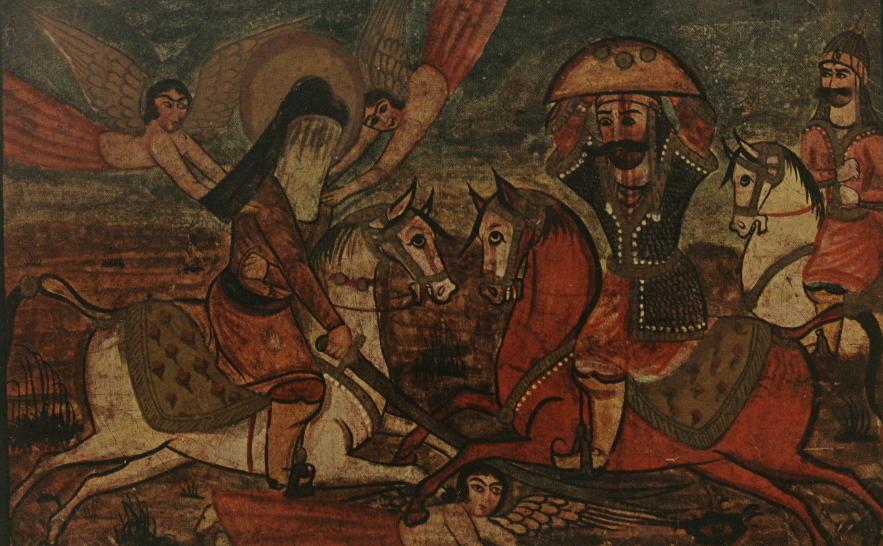
As Muhammad's army began to march on Khaybar, the Banu Ghatafan and other Jewish-allied Arabian tribes did not, or could not, send the reinforcements that had been expected to arrive to defend the settlement, further endangering the Jewish army's poor fortifications. After a brief period of fighting, Khaybar fell to the Muslims and the Jewish commander Marhab ibn al-Harith was killed, reportedly by Ali ibn Abi Talib.
The terms of surrender presented to the oasis after the Muslim conquest stipulated the seizure of the Jews' wealth and also called for every non-Muslim to pay tribute (jizya) to the Muslims in exchange for universal conflict neutrality with protection or emigrate from Khaybar, bolstering the Muslim army in a significant development for Muhammad's military career. In exchange for their acceptance of the terms, the Muslims agreed to cease their campaign against Banu Qurayza and other local tribes. Despite forces consisting of 10–20,000 Jews vs 1,400 Muslims, deaths were remarkably low at 93 Jews and 18 Muslims, with 50 injured between parties.
Since the late 20th century, Muhammad's conquest of Khaybar's Jewish community has become notable as the subject of an Arabic-language rallying slogan ("Khaybar, Khaybar, ya Yahud!"), in the context of the Arab–Israeli conflict.
After the death of Huyayy Chief of the Jewish tribe Banu Nadir, Abu al-Rafi ibn Abi al-Huqayq took charge of the Banu Nadir at Khaybar. Al-Huqayq soon approached neighboring tribes to raise an army against Muhammad.
The Arabic Jewish tribe of Banu Qurayza (along with the other 4 tribes of Medina) provided refuge to the first Muslims and Muhammad and signed a mutual peace and defence treaty which paved the rise of Islam in the Hejaz. Muhammad discovered that Banu Qurayza violated the Medina Constitution peace treaty in conspiring to "put down [kill] all Muslims: man, woman, and child" with Banu Nadir, according to the witness recounts.
After the defeat of the confederates in the battle, and Qurayza's subsequent surrender, Huyayy – Chief of Banu Nadir – (who was at that time in the Qurayza strongholds of Medina) was killed alongside the men of the Qurayza. After Huyayy's death, Abu al-Rafi ibn Abi al-Huqayq took charge of the Banu Nadir at Khaybar. Al-Huqayq soon approached neighboring tribes to raise an army against Muhammad. After learning this, the Muslims, aided by an Arab with a Jewish dialect, assassinated him.
The siege failed where the attacking forces where defeated and forced to retreat due to a violent storm and Medina's attention was turned towards the betrayal of their neighbours, Banu Qurayza. At the tribe's own request, Sa'd bin Mu'adh, an ally from the Aws tribe, was appointed to deliver judgment. Drawing on Jewish legal tradition and a precedent found in the Old Testament, Sa'd ruled that the tribe's combatants were to be executed, while their women, children, and property would be distributed among the Muslims. Qurayza departed towards Banu Nadir in Khaybar, a historical proud Jewish city. After arriving in Khaybar, they sought alliances with a number of non-Muslim Arabian tribes to continue the campaign against Muslims.
Hub AI
Battle of Khaybar AI simulator
(@Battle of Khaybar_simulator)
Battle of Khaybar
The Battle of Khaybar (Arabic: غَزْوَة خَيْبَر) was an armed confrontation between the early Muslims and the Jewish community of Khaybar in 628 CE. Khaybar, which is located approximately 150 kilometres (93 mi) to the northwest of Medina, was home to a sizable community of Jewish tribes.[verification needed]
As Muhammad's army began to march on Khaybar, the Banu Ghatafan and other Jewish-allied Arabian tribes did not, or could not, send the reinforcements that had been expected to arrive to defend the settlement, further endangering the Jewish army's poor fortifications. After a brief period of fighting, Khaybar fell to the Muslims and the Jewish commander Marhab ibn al-Harith was killed, reportedly by Ali ibn Abi Talib.
The terms of surrender presented to the oasis after the Muslim conquest stipulated the seizure of the Jews' wealth and also called for every non-Muslim to pay tribute (jizya) to the Muslims in exchange for universal conflict neutrality with protection or emigrate from Khaybar, bolstering the Muslim army in a significant development for Muhammad's military career. In exchange for their acceptance of the terms, the Muslims agreed to cease their campaign against Banu Qurayza and other local tribes. Despite forces consisting of 10–20,000 Jews vs 1,400 Muslims, deaths were remarkably low at 93 Jews and 18 Muslims, with 50 injured between parties.
Since the late 20th century, Muhammad's conquest of Khaybar's Jewish community has become notable as the subject of an Arabic-language rallying slogan ("Khaybar, Khaybar, ya Yahud!"), in the context of the Arab–Israeli conflict.
After the death of Huyayy Chief of the Jewish tribe Banu Nadir, Abu al-Rafi ibn Abi al-Huqayq took charge of the Banu Nadir at Khaybar. Al-Huqayq soon approached neighboring tribes to raise an army against Muhammad.
The Arabic Jewish tribe of Banu Qurayza (along with the other 4 tribes of Medina) provided refuge to the first Muslims and Muhammad and signed a mutual peace and defence treaty which paved the rise of Islam in the Hejaz. Muhammad discovered that Banu Qurayza violated the Medina Constitution peace treaty in conspiring to "put down [kill] all Muslims: man, woman, and child" with Banu Nadir, according to the witness recounts.
After the defeat of the confederates in the battle, and Qurayza's subsequent surrender, Huyayy – Chief of Banu Nadir – (who was at that time in the Qurayza strongholds of Medina) was killed alongside the men of the Qurayza. After Huyayy's death, Abu al-Rafi ibn Abi al-Huqayq took charge of the Banu Nadir at Khaybar. Al-Huqayq soon approached neighboring tribes to raise an army against Muhammad. After learning this, the Muslims, aided by an Arab with a Jewish dialect, assassinated him.
The siege failed where the attacking forces where defeated and forced to retreat due to a violent storm and Medina's attention was turned towards the betrayal of their neighbours, Banu Qurayza. At the tribe's own request, Sa'd bin Mu'adh, an ally from the Aws tribe, was appointed to deliver judgment. Drawing on Jewish legal tradition and a precedent found in the Old Testament, Sa'd ruled that the tribe's combatants were to be executed, while their women, children, and property would be distributed among the Muslims. Qurayza departed towards Banu Nadir in Khaybar, a historical proud Jewish city. After arriving in Khaybar, they sought alliances with a number of non-Muslim Arabian tribes to continue the campaign against Muslims.
Recent media