
Recent from talks
Battle of Ligny
Knowledge base stats:
Talk channels stats:
Members stats:
Battle of Ligny
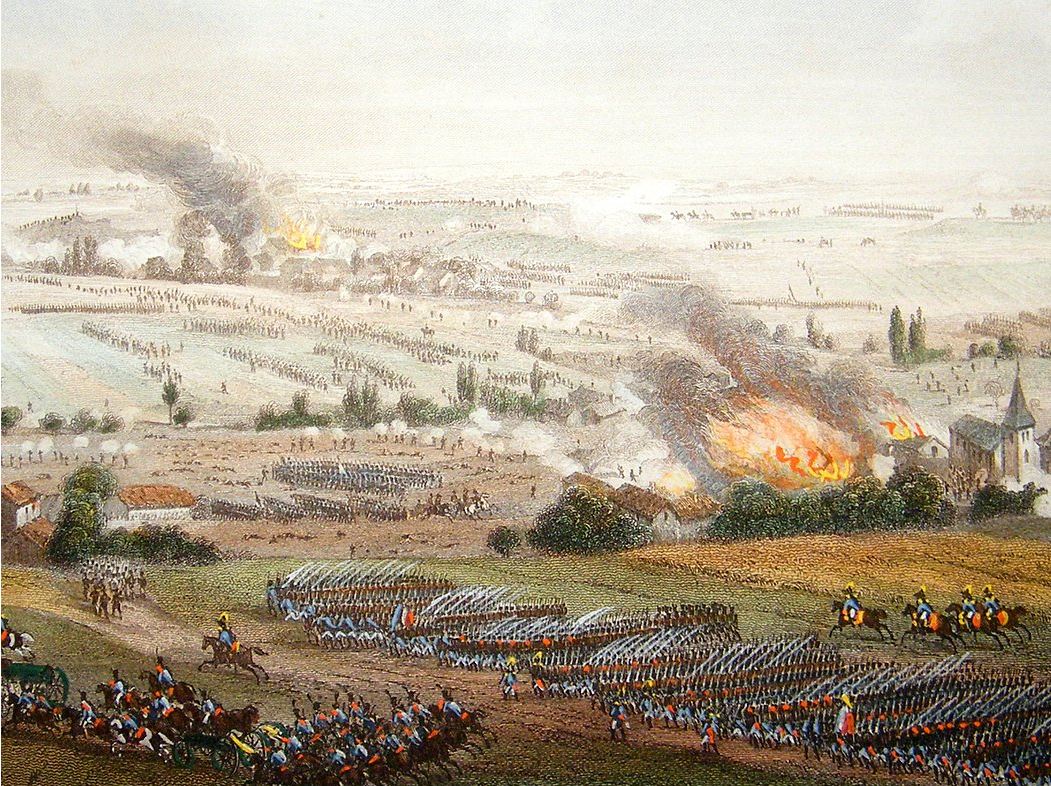
The Battle of Ligny, in which French troops of the Armée du Nord under the command of Napoleon I defeated part of a Prussian army under Field Marshal Blücher, was fought on 16 June 1815 near Ligny in what is now Belgium. The result was a tactical victory for the French, but the bulk of the Prussian army survived the battle in good order, was reinforced by Prussian troops who had not fought at Ligny, and played a role two days later at the Battle of Waterloo. Ligny was the last victory in Napoleon's military career. In the culminating moment of this battle Blücher was wounded and carried off the battlefield, and was replaced by his chief of staff, Lieutenant General Gneisenau.
On 13 March 1815, six days before Napoleon reached Paris, the powers at the Congress of Vienna declared him an outlaw; four days later, the United Kingdom, Russia, Austria, and Prussia bound themselves to put 150,000 men each into the field to end his rule. Napoleon knew that once his attempts at dissuading one or more of the Seventh Coalition Allies from invading France had failed, his only chance of remaining in power was to attack before the Coalition could put together an overwhelming force. If he could destroy the existing Coalition forces south of Brussels before they were reinforced, he might be able to drive the British back to the sea and knock the Prussians out of the war. The Duke of Wellington expected Napoleon to try to envelop the Coalition armies, a maneuver that he had successfully used many times before, by moving through Mons to the south-west of Brussels. The roads to Mons were paved, which would have enabled a rapid flank march. This would have cut Wellington's communications with his base at Ostend, but would also have pushed his army closer to Blücher's. In fact, Napoleon planned instead to divide the two Coalition armies and defeat them separately, and he encouraged Wellington's misapprehension with false intelligence. Moving up to the frontier without alerting the Coalition, Napoleon divided his army into three elements which remained close enough to support one another: a left wing commanded by Marshal Ney, a right wing commanded by Marshal Grouchy, and a reserve, which he commanded personally. Crossing the frontier at Thuin near Charleroi before dawn on 15 June, the French rapidly overran Coalition outposts and secured Napoleon's favored "central position" at the junction between the area where Wellington's allied army was dispersed to his north-west, and Blücher's Prussian army to the north-east.
Only very late on the night of 15 June was Wellington certain that the Charleroi attack was the main French thrust, and he duly ordered his army to deploy near Nivelles and Quatre Bras. Early on the morning of 16 June, at the Duchess of Richmond's ball, on receiving a dispatch from the Prince of Orange, he was shocked by the speed of Napoleon's advance, and hastily sent his army in the direction of Quatre Bras, where the Prince of Orange, with the brigade of Prince Bernhard of Saxe-Weimar, was holding a tenuous position against the French left commanded by Marshal Ney. Ney's orders were to secure the crossroads of Quatre Bras so that if necessary he could later swing east and reinforce Napoleon.
As Napoleon considered the concentrated Prussian army the greater threat, he moved against them first. Lieutenant-General Zieten's I Corps rearguard action on 15 June held up the French advance, allowing Blücher to concentrate his forces in the Sombreffe position, which had been selected earlier for its good defensive attributes.
Napoleon's original plan for 16 June was based on the assumption that the Coalition forces, which had been caught napping, would not attempt a risky forward concentration, and he intended, therefore, to push an advance guard as far as Gembloux, to feel for and ward off Blücher. To assist this operation the reserve would move at first to Fleurus to reinforce Grouchy, should he need assistance in driving back Blücher's troops; but, once in possession of Sombreffe, Napoleon would swing the reserve westwards and join Ney, who, it was supposed, would have in the meantime mastered Quatre Bras.
In pursuance of this object Ney, to whom III Cavalry Corps (Kellermann) was now attached, was to mass at Quatre Bras and push an advanced guard 10 kilometres (6.2 mi) northward of that place, with a connecting division at Marbais to link him with Grouchy. The centre and left-wing together would then make a night-march to Brussels. The Coalition forces would thus be irremediably sundered, and all that remained would be to destroy them in detail. Napoleon now awaited further information from his wing commanders at Charleroi, where he massed the VI Corps (Lobau), to save it, if possible, from a harassing countermarch, as it appeared likely that it would only be wanted for the march to Brussels. Ney spent the morning in massing his I and II corps, and in reconnoitring the enemy at Quatre Bras, who, as he was informed, had been reinforced. But up till noon, he took no serious step to capture the crossroads, which then lay at his mercy. Grouchy meantime reported from Fleurus that Prussians were coming up from Namur, but Napoleon does not appear to have attached much importance to this report. He was still at Charleroi when, between 09:00 and 10:00, further news reached him from the left that considerable hostile forces were visible at Quatre Bras. He at once wrote to Ney saying that these could only be some of Wellington's troops and that Ney was to concentrate his force and crush what was in front of him, adding that he was to send all reports to Fleurus. Then, keeping Lobau provisionally at Charleroi, Napoleon hastened to Fleurus, arriving about 11:00.
The French Armee du Nord (Army of the North) was commanded by veteran officers and headed by Napoleon himself, who had won dozens of battles. Directly under him were three Marshals, Grouchy, Ney, and Soult, all generals of renown and bravery. The corps and division generals were well known for ability and with several campaigns behind them. The troops of the Army of the North were, for the most part, experienced veterans who had seen at least one battle. While the mix of veterans was higher than in either of the other armies, many of the troops had never worked with one another before nor under their officers. Trust in one another and their officers was therefore in short supply. For all that we may count the veterans, it was noted that there were many in the French formations that had never been under fire. In the words of Henri Houssaye, "Napoleon had never held in his hand an instrument so fearsome or fragile". In equipment and supply, the French were well set with both, although the Guard units had to suffer standard weapons, and the Army of the North had more cavalry than their opponents throughout the four days of battle that would follow and end at Waterloo.
By contrast, the Prussian Army was, at this point, in a state of disorganization and rebuilding. According to historian Peter Hofschröer "The armed forces fielded by the Kingdom of Prussia in 1815 were in terms of quality of manpower, equipment, and coherence of organization probably the worst fielded by Prussia in the Revolutionary and Napoleonic Wars." The Prussian cavalry was reorganizing and converting the Freecorps and Legions into regular cavalry formations. The artillery was lacking guns and needed equipment and guns and equipment continued to arrive from Prussia even as the battles were raging. No less than one-third of the Prussian Infantry consisted of Landwehr (militia) and, unlike the Landwehr of 1813/1814, these were untrained. Hofschröer says that "they could be counted to go forward in disorder and retreat in chaos". To further compound the Prussians' problems, the Saxon and Rhinelander contingents were recent additions to the Prussian Army and, having been until recently part of the French Army, they were reluctant to participate. Some Saxons rebelled and were sent home before the French advanced, and many of the Rhinelanders would also desert and head home during the battle.
Hub AI
Battle of Ligny AI simulator
(@Battle of Ligny_simulator)
Battle of Ligny
The Battle of Ligny, in which French troops of the Armée du Nord under the command of Napoleon I defeated part of a Prussian army under Field Marshal Blücher, was fought on 16 June 1815 near Ligny in what is now Belgium. The result was a tactical victory for the French, but the bulk of the Prussian army survived the battle in good order, was reinforced by Prussian troops who had not fought at Ligny, and played a role two days later at the Battle of Waterloo. Ligny was the last victory in Napoleon's military career. In the culminating moment of this battle Blücher was wounded and carried off the battlefield, and was replaced by his chief of staff, Lieutenant General Gneisenau.
On 13 March 1815, six days before Napoleon reached Paris, the powers at the Congress of Vienna declared him an outlaw; four days later, the United Kingdom, Russia, Austria, and Prussia bound themselves to put 150,000 men each into the field to end his rule. Napoleon knew that once his attempts at dissuading one or more of the Seventh Coalition Allies from invading France had failed, his only chance of remaining in power was to attack before the Coalition could put together an overwhelming force. If he could destroy the existing Coalition forces south of Brussels before they were reinforced, he might be able to drive the British back to the sea and knock the Prussians out of the war. The Duke of Wellington expected Napoleon to try to envelop the Coalition armies, a maneuver that he had successfully used many times before, by moving through Mons to the south-west of Brussels. The roads to Mons were paved, which would have enabled a rapid flank march. This would have cut Wellington's communications with his base at Ostend, but would also have pushed his army closer to Blücher's. In fact, Napoleon planned instead to divide the two Coalition armies and defeat them separately, and he encouraged Wellington's misapprehension with false intelligence. Moving up to the frontier without alerting the Coalition, Napoleon divided his army into three elements which remained close enough to support one another: a left wing commanded by Marshal Ney, a right wing commanded by Marshal Grouchy, and a reserve, which he commanded personally. Crossing the frontier at Thuin near Charleroi before dawn on 15 June, the French rapidly overran Coalition outposts and secured Napoleon's favored "central position" at the junction between the area where Wellington's allied army was dispersed to his north-west, and Blücher's Prussian army to the north-east.
Only very late on the night of 15 June was Wellington certain that the Charleroi attack was the main French thrust, and he duly ordered his army to deploy near Nivelles and Quatre Bras. Early on the morning of 16 June, at the Duchess of Richmond's ball, on receiving a dispatch from the Prince of Orange, he was shocked by the speed of Napoleon's advance, and hastily sent his army in the direction of Quatre Bras, where the Prince of Orange, with the brigade of Prince Bernhard of Saxe-Weimar, was holding a tenuous position against the French left commanded by Marshal Ney. Ney's orders were to secure the crossroads of Quatre Bras so that if necessary he could later swing east and reinforce Napoleon.
As Napoleon considered the concentrated Prussian army the greater threat, he moved against them first. Lieutenant-General Zieten's I Corps rearguard action on 15 June held up the French advance, allowing Blücher to concentrate his forces in the Sombreffe position, which had been selected earlier for its good defensive attributes.
Napoleon's original plan for 16 June was based on the assumption that the Coalition forces, which had been caught napping, would not attempt a risky forward concentration, and he intended, therefore, to push an advance guard as far as Gembloux, to feel for and ward off Blücher. To assist this operation the reserve would move at first to Fleurus to reinforce Grouchy, should he need assistance in driving back Blücher's troops; but, once in possession of Sombreffe, Napoleon would swing the reserve westwards and join Ney, who, it was supposed, would have in the meantime mastered Quatre Bras.
In pursuance of this object Ney, to whom III Cavalry Corps (Kellermann) was now attached, was to mass at Quatre Bras and push an advanced guard 10 kilometres (6.2 mi) northward of that place, with a connecting division at Marbais to link him with Grouchy. The centre and left-wing together would then make a night-march to Brussels. The Coalition forces would thus be irremediably sundered, and all that remained would be to destroy them in detail. Napoleon now awaited further information from his wing commanders at Charleroi, where he massed the VI Corps (Lobau), to save it, if possible, from a harassing countermarch, as it appeared likely that it would only be wanted for the march to Brussels. Ney spent the morning in massing his I and II corps, and in reconnoitring the enemy at Quatre Bras, who, as he was informed, had been reinforced. But up till noon, he took no serious step to capture the crossroads, which then lay at his mercy. Grouchy meantime reported from Fleurus that Prussians were coming up from Namur, but Napoleon does not appear to have attached much importance to this report. He was still at Charleroi when, between 09:00 and 10:00, further news reached him from the left that considerable hostile forces were visible at Quatre Bras. He at once wrote to Ney saying that these could only be some of Wellington's troops and that Ney was to concentrate his force and crush what was in front of him, adding that he was to send all reports to Fleurus. Then, keeping Lobau provisionally at Charleroi, Napoleon hastened to Fleurus, arriving about 11:00.
The French Armee du Nord (Army of the North) was commanded by veteran officers and headed by Napoleon himself, who had won dozens of battles. Directly under him were three Marshals, Grouchy, Ney, and Soult, all generals of renown and bravery. The corps and division generals were well known for ability and with several campaigns behind them. The troops of the Army of the North were, for the most part, experienced veterans who had seen at least one battle. While the mix of veterans was higher than in either of the other armies, many of the troops had never worked with one another before nor under their officers. Trust in one another and their officers was therefore in short supply. For all that we may count the veterans, it was noted that there were many in the French formations that had never been under fire. In the words of Henri Houssaye, "Napoleon had never held in his hand an instrument so fearsome or fragile". In equipment and supply, the French were well set with both, although the Guard units had to suffer standard weapons, and the Army of the North had more cavalry than their opponents throughout the four days of battle that would follow and end at Waterloo.
By contrast, the Prussian Army was, at this point, in a state of disorganization and rebuilding. According to historian Peter Hofschröer "The armed forces fielded by the Kingdom of Prussia in 1815 were in terms of quality of manpower, equipment, and coherence of organization probably the worst fielded by Prussia in the Revolutionary and Napoleonic Wars." The Prussian cavalry was reorganizing and converting the Freecorps and Legions into regular cavalry formations. The artillery was lacking guns and needed equipment and guns and equipment continued to arrive from Prussia even as the battles were raging. No less than one-third of the Prussian Infantry consisted of Landwehr (militia) and, unlike the Landwehr of 1813/1814, these were untrained. Hofschröer says that "they could be counted to go forward in disorder and retreat in chaos". To further compound the Prussians' problems, the Saxon and Rhinelander contingents were recent additions to the Prussian Army and, having been until recently part of the French Army, they were reluctant to participate. Some Saxons rebelled and were sent home before the French advanced, and many of the Rhinelanders would also desert and head home during the battle.
Recent media