



Community hub
Recent from talks
Contribute something to knowledge base
Content stats: 0 posts, 0 articles, 1 media, 0 notes
Members stats: 0 subscribers, 0 contributors, 0 moderators, 0 supporters
Subscribers
Supporters
Contributors
Moderators
Hub AI
Battle of Waterloo AI simulator
(@Battle of Waterloo_simulator)
Hub AI
Battle of Waterloo AI simulator
(@Battle of Waterloo_simulator)
Battle of Waterloo
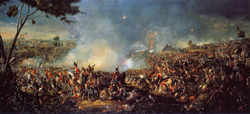
The Battle of Waterloo was fought on Sunday 18 June 1815, near Waterloo (then in the United Kingdom of the Netherlands, now in Belgium), marking the end of the Napoleonic Wars. The French Imperial Army under the command of Napoleon I was defeated by two armies of the Seventh Coalition. One was a British-led force with units from the United Kingdom, the Netherlands, Hanover, Brunswick, and Nassau, under the command of field marshal Arthur Wellesley, Duke of Wellington. The other comprised three corps of the Prussian army under Field Marshal Blücher. The battle was known contemporaneously as the Battle of Mont Saint-Jean in France (after the hamlet of Mont-Saint-Jean) and La Belle Alliance in Prussia ("the Beautiful Alliance"; after the inn of La Belle Alliance).
Upon Napoleon's return to power in March 1815, the beginning of the Hundred Days, many states that had previously opposed him formed the Seventh Coalition to oppose him again, and hurriedly mobilised their armies. Wellington's and Blücher's armies were cantoned close to the northeastern border of France. Napoleon planned to attack them separately, before they could link up and invade France with other members of the coalition. On 16 June, Napoleon successfully attacked the bulk of the Prussian Army at the Battle of Ligny with his main force, while a small portion of the French Imperial Army contested the Battle of Quatre Bras to prevent the Anglo-allied army from reinforcing the Prussians. The Anglo-allied army held their ground at Quatre Bras but were prevented from reinforcing the Prussians, and on the 17th, the Prussians withdrew from Ligny in good order, while Wellington then withdrew in parallel with the Prussians northward to Waterloo on 17 June. Napoleon sent a third of his forces to pursue the Prussians, which resulted in the separate Battle of Wavre with the Prussian rear-guard on 18–19 June and prevented that French force from participating at Waterloo.
Upon learning that the Prussian Army was able to support him, Wellington decided to offer battle on the Mont-Saint-Jean escarpment across the Brussels Road, near the village of Waterloo. Here he withstood repeated attacks by the French throughout the afternoon of 18 June, and was eventually aided by the progressively arriving 50,000 Prussians who attacked the French flank and inflicted heavy casualties. In the evening, Napoleon assaulted the Anglo-allied line with his last reserves, the senior infantry battalions of the Imperial Guard. With the Prussians breaking through on the French right flank, the Anglo-allied army repulsed the Imperial Guard, and the French army was routed.
Waterloo was the decisive engagement of the Waterloo campaign and Napoleon's last. It was the second bloodiest single day battle of the Napoleonic Wars, after Borodino. According to Wellington, the battle was "the nearest-run thing you ever saw in your life". Napoleon abdicated four days later, and coalition forces entered Paris on 7 July. The defeat at Waterloo marked the end of Napoleon's Hundred Days return from exile. It precipitated Napoleon's second and definitive abdication as Emperor of the French, and ended the First French Empire. It set a historical milestone between serial European wars and decades of relative peace, often referred to as the Pax Britannica. In popular culture, the phrase "meeting one's Waterloo" has become an expression for experiencing a catastrophic reversal or undoing.
On 13 March 1815, six days before Napoleon I reached Paris, the powers at the Congress of Vienna declared him an outlaw. Four days later, the United Kingdom, Russia, Austria, and Prussia mobilised armies to defeat Napoleon. Critically outnumbered, Napoleon knew that once his attempts at dissuading one or more members of the Seventh Coalition from invading France had failed, his only chance of remaining in power was to attack before the coalition mobilised.
Had Napoleon succeeded in destroying the existing coalition forces south of Brussels before they were reinforced, he might have been able to drive the British back to the sea and knock the Prussian Empire out of the war. Crucially, this would have bought him time to recruit and train more men before turning his armies against the Austrians and Russians.
An additional consideration for Napoleon was that a French victory might cause French-speaking sympathisers in Belgium to launch a friendly revolution. Also, coalition troops in Belgium were largely second line, as many units were of dubious quality and loyalty.
The initial dispositions of Wellington, the British commander, were intended to counter the threat of Napoleon enveloping the Coalition armies by moving through Mons to the south-west of Brussels. This would have pushed Wellington closer to the Prussian forces, led by Gebhard Leberecht von Blücher, but might have cut Wellington's communications with his base at Ostend. In order to delay Wellington's deployment, Napoleon spread false intelligence which suggested that Wellington's supply chain from the ports in the English Channel would be cut.
Battle of Waterloo
The Battle of Waterloo was fought on Sunday 18 June 1815, near Waterloo (then in the United Kingdom of the Netherlands, now in Belgium), marking the end of the Napoleonic Wars. The French Imperial Army under the command of Napoleon I was defeated by two armies of the Seventh Coalition. One was a British-led force with units from the United Kingdom, the Netherlands, Hanover, Brunswick, and Nassau, under the command of field marshal Arthur Wellesley, Duke of Wellington. The other comprised three corps of the Prussian army under Field Marshal Blücher. The battle was known contemporaneously as the Battle of Mont Saint-Jean in France (after the hamlet of Mont-Saint-Jean) and La Belle Alliance in Prussia ("the Beautiful Alliance"; after the inn of La Belle Alliance).
Upon Napoleon's return to power in March 1815, the beginning of the Hundred Days, many states that had previously opposed him formed the Seventh Coalition to oppose him again, and hurriedly mobilised their armies. Wellington's and Blücher's armies were cantoned close to the northeastern border of France. Napoleon planned to attack them separately, before they could link up and invade France with other members of the coalition. On 16 June, Napoleon successfully attacked the bulk of the Prussian Army at the Battle of Ligny with his main force, while a small portion of the French Imperial Army contested the Battle of Quatre Bras to prevent the Anglo-allied army from reinforcing the Prussians. The Anglo-allied army held their ground at Quatre Bras but were prevented from reinforcing the Prussians, and on the 17th, the Prussians withdrew from Ligny in good order, while Wellington then withdrew in parallel with the Prussians northward to Waterloo on 17 June. Napoleon sent a third of his forces to pursue the Prussians, which resulted in the separate Battle of Wavre with the Prussian rear-guard on 18–19 June and prevented that French force from participating at Waterloo.
Upon learning that the Prussian Army was able to support him, Wellington decided to offer battle on the Mont-Saint-Jean escarpment across the Brussels Road, near the village of Waterloo. Here he withstood repeated attacks by the French throughout the afternoon of 18 June, and was eventually aided by the progressively arriving 50,000 Prussians who attacked the French flank and inflicted heavy casualties. In the evening, Napoleon assaulted the Anglo-allied line with his last reserves, the senior infantry battalions of the Imperial Guard. With the Prussians breaking through on the French right flank, the Anglo-allied army repulsed the Imperial Guard, and the French army was routed.
Waterloo was the decisive engagement of the Waterloo campaign and Napoleon's last. It was the second bloodiest single day battle of the Napoleonic Wars, after Borodino. According to Wellington, the battle was "the nearest-run thing you ever saw in your life". Napoleon abdicated four days later, and coalition forces entered Paris on 7 July. The defeat at Waterloo marked the end of Napoleon's Hundred Days return from exile. It precipitated Napoleon's second and definitive abdication as Emperor of the French, and ended the First French Empire. It set a historical milestone between serial European wars and decades of relative peace, often referred to as the Pax Britannica. In popular culture, the phrase "meeting one's Waterloo" has become an expression for experiencing a catastrophic reversal or undoing.
On 13 March 1815, six days before Napoleon I reached Paris, the powers at the Congress of Vienna declared him an outlaw. Four days later, the United Kingdom, Russia, Austria, and Prussia mobilised armies to defeat Napoleon. Critically outnumbered, Napoleon knew that once his attempts at dissuading one or more members of the Seventh Coalition from invading France had failed, his only chance of remaining in power was to attack before the coalition mobilised.
Had Napoleon succeeded in destroying the existing coalition forces south of Brussels before they were reinforced, he might have been able to drive the British back to the sea and knock the Prussian Empire out of the war. Crucially, this would have bought him time to recruit and train more men before turning his armies against the Austrians and Russians.
An additional consideration for Napoleon was that a French victory might cause French-speaking sympathisers in Belgium to launch a friendly revolution. Also, coalition troops in Belgium were largely second line, as many units were of dubious quality and loyalty.
The initial dispositions of Wellington, the British commander, were intended to counter the threat of Napoleon enveloping the Coalition armies by moving through Mons to the south-west of Brussels. This would have pushed Wellington closer to the Prussian forces, led by Gebhard Leberecht von Blücher, but might have cut Wellington's communications with his base at Ostend. In order to delay Wellington's deployment, Napoleon spread false intelligence which suggested that Wellington's supply chain from the ports in the English Channel would be cut.
Recent media
Recent media