
Recent from talks
Battle of Perryville
Knowledge base stats:
Talk channels stats:
Members stats:
Battle of Perryville
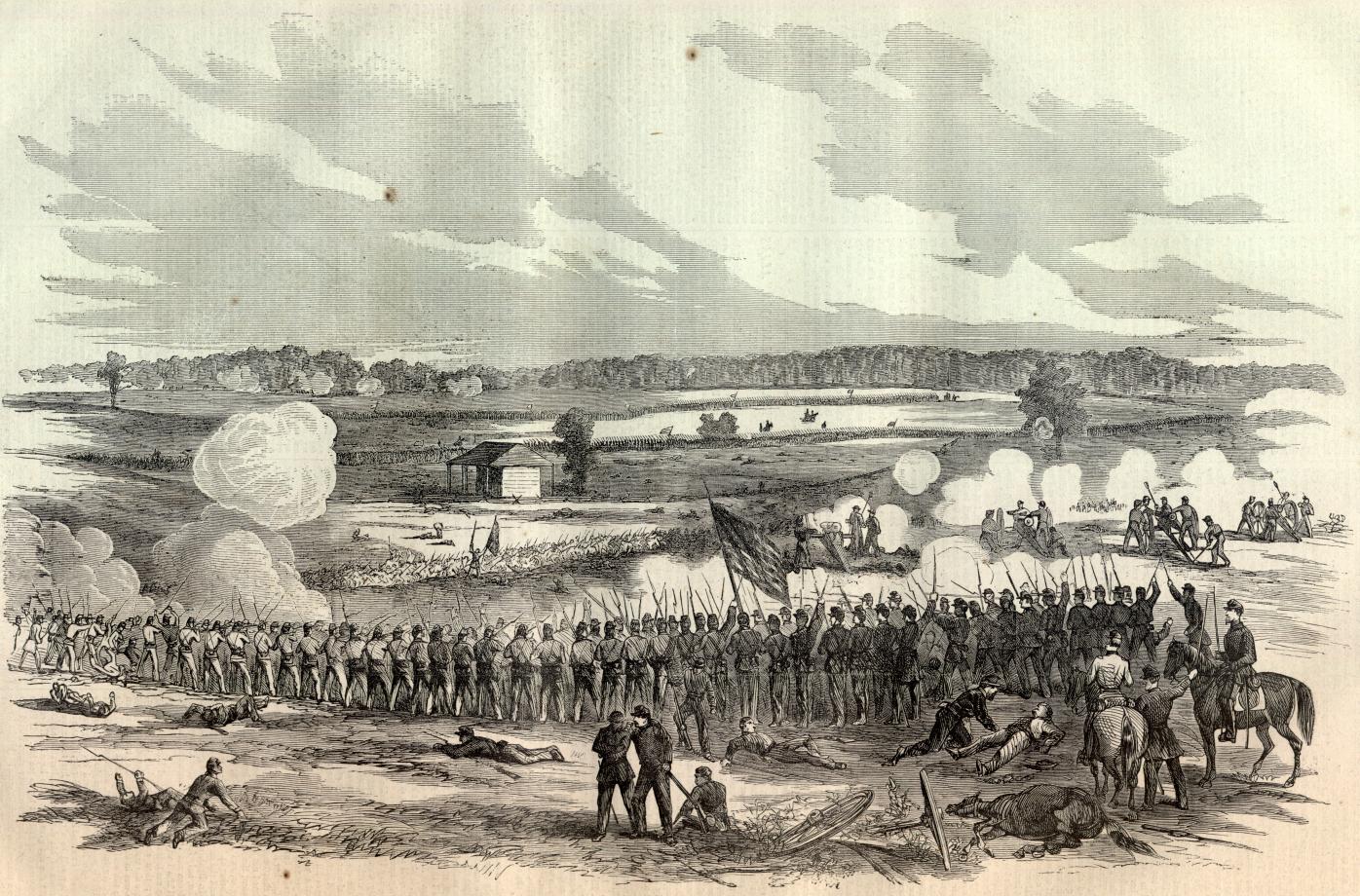
The Battle of Perryville, also known as the Battle of Chaplin Hills, was fought on October 8, 1862, in the Chaplin Hills west of Perryville, Kentucky, as the culmination of the Confederate Heartland Offensive (Kentucky Campaign) during the American Civil War. Confederate Gen. Braxton Bragg's Army of Mississippi initially won a tactical victory against primarily a single corps of Maj. Gen. Don Carlos Buell's Union Army of the Ohio. The battle is considered a strategic Union victory, sometimes called the Battle for Kentucky, since Bragg withdrew to Tennessee soon thereafter. The Union retained control of the critical border state of Kentucky for the remainder of the war.
On October 7, Buell's army, in pursuit of Bragg, converged on the small crossroads town of Perryville in three columns. Union forces first skirmished with Confederate cavalry on the Springfield Pike before the fighting became more general, on Peters Hill, when the Confederate infantry arrived. Both sides were desperate to get access to fresh water. The next day, at dawn, fighting began again around Peters Hill as a Union division advanced up the pike, halting just before the Confederate line. After noon, a Confederate division struck the Union left flank—the I Corps of Maj. Gen. Alexander M. McCook—and forced it to fall back. When more Confederate divisions joined the fray, the Union line made a stubborn stand, counterattacked, but finally fell back with some units routed.
Buell, several miles behind the action, was unaware that a major battle was taking place and did not send any reserves to the front until late in the afternoon. The Union troops on the left flank, reinforced by two brigades, stabilized their line, and the Confederate attack sputtered to a halt. Later, three Confederate regiments assaulted the Union division on the Springfield Pike but were repulsed and fell back into Perryville. Union troops pursued, and skirmishing occurred in the streets until dark. By that time, Union reinforcements were threatening the Confederate left flank. Bragg, short of men and supplies, withdrew during the night, and continued the Confederate retreat by way of Cumberland Gap into East Tennessee.
Considering the casualties relative to the engaged strengths of the armies, the Battle of Perryville was one of the bloodiest battles of the Civil War. It was the largest battle fought in the state of Kentucky.
Situated between the Southern states of Tennessee and Virginia and the Northern states of Illinois, Indiana, and Ohio, the border state of Kentucky was coveted by both sides of the conflict because of its central location and its control of key rivers, particularly the Ohio. In September 1861, Kentucky-born President Abraham Lincoln wrote in a private letter, "I think to lose Kentucky is nearly to lose the whole game."
Opposing political elements within the state vied for control during the early part of the war, and the state legislature declared official neutrality to keep out both the Union and the Confederate armies. This neutrality was first violated on September 3, 1861, when Confederate Maj. Gen. Leonidas Polk occupied Columbus, considered key to controlling the Lower Mississippi. Two days later, Union Brig. Gen. Ulysses S. Grant seized Paducah. Henceforth, the proclaimed neutrality was a dead letter. While the state never seceded from the Union, Confederate sympathizers who were members of the legislature set up a temporary Confederate capital in Bowling Green in November 1861. It never wielded significant power inside the state. The Confederate States recognized Kentucky and added a star representing the state to the Confederate flag.
After the Battle of Shiloh on April 6–7, the beaten Confederate army under Maj. Gen Pierre G.T. Beauregard retreated down into Corinth, very slowly pursued by the combined Union forces under Maj. Gen Henry Halleck – the armies of Grant, Buell, and John Pope. Although Halleck had 100,000 men under his command and Beauregard half or less of that number, it took him 51 days to march the 20 miles from Pittsburg Landing to Corinth, which was abandoned by the Confederates on May 29. Confederate president Jefferson Davis, unhappy with Beauregard's retreat, removed him from command and gave Braxton Bragg the army, which he renamed the Army of Tennessee. Bragg spent most of June drilling and reorganizing the army in camp at Tupelo, Mississippi. The Union armies ignored him, and the war in Tennessee virtually ground to a halt during the summer months. Grant's Army of the Tennessee was scattered about western Tennessee and northern Mississippi, while Buell's Army of Ohio was moving towards Chattanooga at an incredibly slow pace, spending much of that time rebuilding railroad lines. While Halleck had had overall command of the Union war effort in the West since spring, he was summoned to Washington DC in July to become general-in-chief of the armies, leaving Grant and Buell to their separate independent commands – Pope was also called east to take command of the Union war effort in Virginia and his former army added to Grant's and put under the command of William Rosecrans.
The initiative to invade Kentucky came primarily from Confederate Maj. Gen. Edmund Kirby Smith, commander of the Department of East Tennessee. He believed the campaign would allow them to obtain supplies, enlist recruits, divert Union troops from Tennessee, and claim Kentucky for the Confederacy. In July 1862 Col. John Hunt Morgan carried out a successful cavalry raid in the state, venturing deeply into the rear areas of Buell's department. The raid caused considerable consternation in Buell's command and in Washington, D.C. During the raid, Morgan and his forces were cheered and supported by many residents. He added 300 Kentucky volunteers to his 900-man force during the raid. He confidently promised Kirby Smith, "The whole country can be secured, and 25,000 or 30,000 men will join you at once."
Hub AI
Battle of Perryville AI simulator
(@Battle of Perryville_simulator)
Battle of Perryville
The Battle of Perryville, also known as the Battle of Chaplin Hills, was fought on October 8, 1862, in the Chaplin Hills west of Perryville, Kentucky, as the culmination of the Confederate Heartland Offensive (Kentucky Campaign) during the American Civil War. Confederate Gen. Braxton Bragg's Army of Mississippi initially won a tactical victory against primarily a single corps of Maj. Gen. Don Carlos Buell's Union Army of the Ohio. The battle is considered a strategic Union victory, sometimes called the Battle for Kentucky, since Bragg withdrew to Tennessee soon thereafter. The Union retained control of the critical border state of Kentucky for the remainder of the war.
On October 7, Buell's army, in pursuit of Bragg, converged on the small crossroads town of Perryville in three columns. Union forces first skirmished with Confederate cavalry on the Springfield Pike before the fighting became more general, on Peters Hill, when the Confederate infantry arrived. Both sides were desperate to get access to fresh water. The next day, at dawn, fighting began again around Peters Hill as a Union division advanced up the pike, halting just before the Confederate line. After noon, a Confederate division struck the Union left flank—the I Corps of Maj. Gen. Alexander M. McCook—and forced it to fall back. When more Confederate divisions joined the fray, the Union line made a stubborn stand, counterattacked, but finally fell back with some units routed.
Buell, several miles behind the action, was unaware that a major battle was taking place and did not send any reserves to the front until late in the afternoon. The Union troops on the left flank, reinforced by two brigades, stabilized their line, and the Confederate attack sputtered to a halt. Later, three Confederate regiments assaulted the Union division on the Springfield Pike but were repulsed and fell back into Perryville. Union troops pursued, and skirmishing occurred in the streets until dark. By that time, Union reinforcements were threatening the Confederate left flank. Bragg, short of men and supplies, withdrew during the night, and continued the Confederate retreat by way of Cumberland Gap into East Tennessee.
Considering the casualties relative to the engaged strengths of the armies, the Battle of Perryville was one of the bloodiest battles of the Civil War. It was the largest battle fought in the state of Kentucky.
Situated between the Southern states of Tennessee and Virginia and the Northern states of Illinois, Indiana, and Ohio, the border state of Kentucky was coveted by both sides of the conflict because of its central location and its control of key rivers, particularly the Ohio. In September 1861, Kentucky-born President Abraham Lincoln wrote in a private letter, "I think to lose Kentucky is nearly to lose the whole game."
Opposing political elements within the state vied for control during the early part of the war, and the state legislature declared official neutrality to keep out both the Union and the Confederate armies. This neutrality was first violated on September 3, 1861, when Confederate Maj. Gen. Leonidas Polk occupied Columbus, considered key to controlling the Lower Mississippi. Two days later, Union Brig. Gen. Ulysses S. Grant seized Paducah. Henceforth, the proclaimed neutrality was a dead letter. While the state never seceded from the Union, Confederate sympathizers who were members of the legislature set up a temporary Confederate capital in Bowling Green in November 1861. It never wielded significant power inside the state. The Confederate States recognized Kentucky and added a star representing the state to the Confederate flag.
After the Battle of Shiloh on April 6–7, the beaten Confederate army under Maj. Gen Pierre G.T. Beauregard retreated down into Corinth, very slowly pursued by the combined Union forces under Maj. Gen Henry Halleck – the armies of Grant, Buell, and John Pope. Although Halleck had 100,000 men under his command and Beauregard half or less of that number, it took him 51 days to march the 20 miles from Pittsburg Landing to Corinth, which was abandoned by the Confederates on May 29. Confederate president Jefferson Davis, unhappy with Beauregard's retreat, removed him from command and gave Braxton Bragg the army, which he renamed the Army of Tennessee. Bragg spent most of June drilling and reorganizing the army in camp at Tupelo, Mississippi. The Union armies ignored him, and the war in Tennessee virtually ground to a halt during the summer months. Grant's Army of the Tennessee was scattered about western Tennessee and northern Mississippi, while Buell's Army of Ohio was moving towards Chattanooga at an incredibly slow pace, spending much of that time rebuilding railroad lines. While Halleck had had overall command of the Union war effort in the West since spring, he was summoned to Washington DC in July to become general-in-chief of the armies, leaving Grant and Buell to their separate independent commands – Pope was also called east to take command of the Union war effort in Virginia and his former army added to Grant's and put under the command of William Rosecrans.
The initiative to invade Kentucky came primarily from Confederate Maj. Gen. Edmund Kirby Smith, commander of the Department of East Tennessee. He believed the campaign would allow them to obtain supplies, enlist recruits, divert Union troops from Tennessee, and claim Kentucky for the Confederacy. In July 1862 Col. John Hunt Morgan carried out a successful cavalry raid in the state, venturing deeply into the rear areas of Buell's department. The raid caused considerable consternation in Buell's command and in Washington, D.C. During the raid, Morgan and his forces were cheered and supported by many residents. He added 300 Kentucky volunteers to his 900-man force during the raid. He confidently promised Kirby Smith, "The whole country can be secured, and 25,000 or 30,000 men will join you at once."
Recent media