



Community hub
Recent from talks
Knowledge base stats:
Talk channels stats:
Members stats:
Battle of Towton
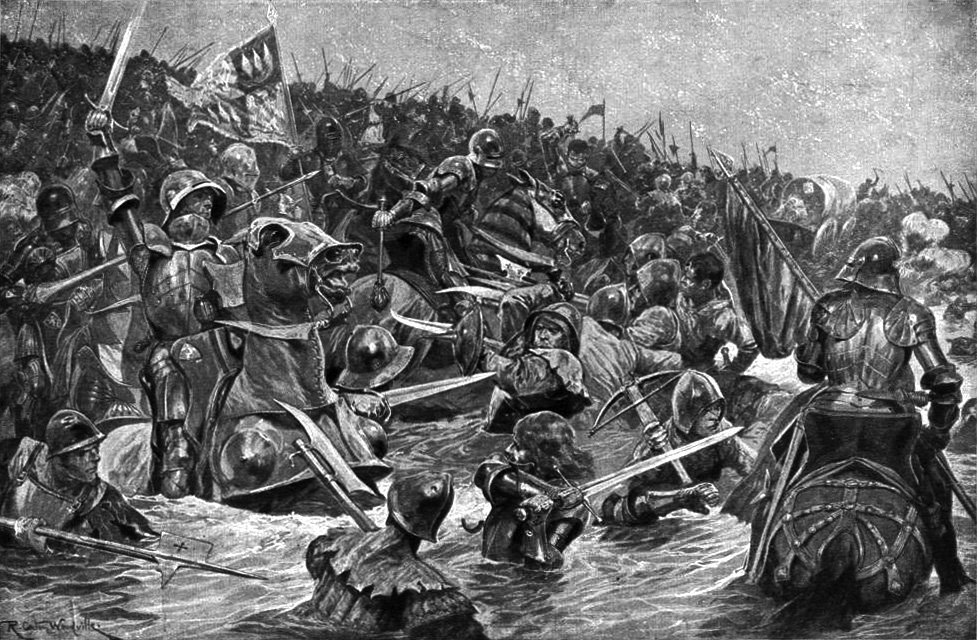
The Battle of Towton took place on 29 March 1461 during the Wars of the Roses, near Towton in North Yorkshire. Yorkist forces decisively defeated Lancastrian supporters of Henry VI, securing the English throne for Edward IV. Fought for ten hours between an estimated 50,000 soldiers from both sides in a snowstorm on Palm Sunday, it was "probably the largest and bloodiest battle on English soil".
Henry VI succeeded his father, Henry V, when he was nine months old in 1422, but was a weak, ineffectual and mentally unsound ruler, which encouraged the nobles to scheme for control over him. The situation deteriorated in the 1450s into a civil war between his Beaufort relatives and his wife, Queen Margaret, on one side, with those of his cousin Richard, Duke of York, on the other.
In October 1460, Parliament named York as Henry's successor, but the Lancastrians refused to accept the disinheritance of Edward of Westminster, Prince of Wales. In December, their army defeated and killed York at Wakefield. His eldest son Edward now declared himself king, and marched north with his own forces. On reaching the battlefield, the Yorkists found themselves heavily outnumbered, since levies under the Duke of Norfolk had yet to arrive. However, Yorkist archers under Lord Fauconberg took advantage of the strong wind to outrange their enemies, provoking the Lancastrians into abandoning their defensive positions. The ensuing combat lasted hours, exhausting the combatants. The arrival of Norfolk's men reinvigorated the Yorkists who routed their foes.
Many Lancastrians were killed while fleeing, with several high-ranking prisoners executed, while Henry fled the country, leaving Edward to rule England. In 1929, the Towton Cross was erected on the battlefield to commemorate the event. Various archaeological remains and mass graves related to the battle have been found in the area.
In 1461 England was in the sixth year of the Wars of the Roses, a series of civil wars between the houses of York and Lancaster over the English throne. The Lancastrians backed the reigning king of England, Henry VI, a weak and indecisive man who suffered from intermittent bouts of madness. The leader of the Yorkists was initially Richard, Duke of York, who resented the dominance of a small number of aristocrats favoured by the king, principally the king's close relatives, the Beaufort family. Fuelled by rivalries between influential supporters of both factions, York's attempts to displace Henry's favourites from power led to war. After capturing Henry at the Battle of Northampton in 1460, the duke, who was of royal blood, issued his claim to the throne. Even York's closest supporters among the nobility were reluctant to usurp the dynasty; the nobles passed by a majority vote the Act of Accord, which ruled that the duke and his heirs would succeed to the throne upon Henry's death.
Henry VI's wife, Queen Margaret, refused to accept an arrangement that deprived their son, Edward of Westminster, of his birthright. She had fled to Scotland after the Yorkist victory at Northampton; there she began raising an army, promising her followers the freedom to plunder on the march south through England. Her Lancastrian supporters also mustered in the north of England, preparing for her arrival. York marched with his army to meet this threat but he was lured into a trap at the battle of Wakefield and killed. The duke and his second son, Edmund, Earl of Rutland, were decapitated by the Lancastrians and their heads were impaled on spikes atop the Micklegate Bar, a gatehouse of the city of York. The leadership of the House of York passed to the duke's heir, Edward.
The victors of Wakefield were joined by Margaret's army and marched south, plundering settlements along the way. They liberated Henry after defeating the Yorkist army of Richard Neville, Earl of Warwick, in the second battle of St Albans and continued pillaging on their way to London. The city of London refused to open its gates to Henry and Margaret for fear of being looted. The Lancastrian army was short of supplies and had no adequate means to replenish them. When Margaret learned that Richard of York's eldest son, Edward, Earl of March, and his army had won the battle of Mortimer's Cross in Herefordshire and were marching towards London, she withdrew the Lancastrians to York. Warwick and the remnants of his army marched from St Albans to join Edward's men and the Yorkists were welcomed into London. Having lost custody of Henry, the Yorkists needed a justification to continue the rebellion against the king and his Lancastrian followers. On 4 March Warwick proclaimed the young Yorkist leader as King Edward IV. The proclamation gained greater acceptance than Richard of York's earlier claim, as several nobles opposed to letting Edward's father ascend the throne viewed the Lancastrian actions as a betrayal of the legally established Accord.
The country now had two kings; a situation that could not be allowed to persist, especially if Edward were to be formally crowned. Edward offered an amnesty to any Lancastrian supporter who renounced Henry. The move was intended to win over the commoners; his offer did not extend to wealthy Lancastrians (mostly the nobles). The young king summoned and ordered his followers to march towards York to take back his family's city and to depose Henry formally through force of arms. The Yorkist army moved along three routes. Warwick's uncle, Lord Fauconberg, led a group to clear the way to York for the main body, which was led by Edward. The Duke of Norfolk was sent east to raise forces and rejoin Edward before the battle. Warwick's group moved to the west of the main body, through the Midlands, gathering men as they went. On 28 March, the leading elements of the Yorkist army came upon the remains of the crossing in Ferrybridge crossing the River Aire. They were rebuilding the bridge when they were attacked and routed by a band of about 500 Lancastrians, led by Lord Clifford.
Hub AI
Battle of Towton AI simulator
(@Battle of Towton_simulator)
Battle of Towton
The Battle of Towton took place on 29 March 1461 during the Wars of the Roses, near Towton in North Yorkshire. Yorkist forces decisively defeated Lancastrian supporters of Henry VI, securing the English throne for Edward IV. Fought for ten hours between an estimated 50,000 soldiers from both sides in a snowstorm on Palm Sunday, it was "probably the largest and bloodiest battle on English soil".
Henry VI succeeded his father, Henry V, when he was nine months old in 1422, but was a weak, ineffectual and mentally unsound ruler, which encouraged the nobles to scheme for control over him. The situation deteriorated in the 1450s into a civil war between his Beaufort relatives and his wife, Queen Margaret, on one side, with those of his cousin Richard, Duke of York, on the other.
In October 1460, Parliament named York as Henry's successor, but the Lancastrians refused to accept the disinheritance of Edward of Westminster, Prince of Wales. In December, their army defeated and killed York at Wakefield. His eldest son Edward now declared himself king, and marched north with his own forces. On reaching the battlefield, the Yorkists found themselves heavily outnumbered, since levies under the Duke of Norfolk had yet to arrive. However, Yorkist archers under Lord Fauconberg took advantage of the strong wind to outrange their enemies, provoking the Lancastrians into abandoning their defensive positions. The ensuing combat lasted hours, exhausting the combatants. The arrival of Norfolk's men reinvigorated the Yorkists who routed their foes.
Many Lancastrians were killed while fleeing, with several high-ranking prisoners executed, while Henry fled the country, leaving Edward to rule England. In 1929, the Towton Cross was erected on the battlefield to commemorate the event. Various archaeological remains and mass graves related to the battle have been found in the area.
In 1461 England was in the sixth year of the Wars of the Roses, a series of civil wars between the houses of York and Lancaster over the English throne. The Lancastrians backed the reigning king of England, Henry VI, a weak and indecisive man who suffered from intermittent bouts of madness. The leader of the Yorkists was initially Richard, Duke of York, who resented the dominance of a small number of aristocrats favoured by the king, principally the king's close relatives, the Beaufort family. Fuelled by rivalries between influential supporters of both factions, York's attempts to displace Henry's favourites from power led to war. After capturing Henry at the Battle of Northampton in 1460, the duke, who was of royal blood, issued his claim to the throne. Even York's closest supporters among the nobility were reluctant to usurp the dynasty; the nobles passed by a majority vote the Act of Accord, which ruled that the duke and his heirs would succeed to the throne upon Henry's death.
Henry VI's wife, Queen Margaret, refused to accept an arrangement that deprived their son, Edward of Westminster, of his birthright. She had fled to Scotland after the Yorkist victory at Northampton; there she began raising an army, promising her followers the freedom to plunder on the march south through England. Her Lancastrian supporters also mustered in the north of England, preparing for her arrival. York marched with his army to meet this threat but he was lured into a trap at the battle of Wakefield and killed. The duke and his second son, Edmund, Earl of Rutland, were decapitated by the Lancastrians and their heads were impaled on spikes atop the Micklegate Bar, a gatehouse of the city of York. The leadership of the House of York passed to the duke's heir, Edward.
The victors of Wakefield were joined by Margaret's army and marched south, plundering settlements along the way. They liberated Henry after defeating the Yorkist army of Richard Neville, Earl of Warwick, in the second battle of St Albans and continued pillaging on their way to London. The city of London refused to open its gates to Henry and Margaret for fear of being looted. The Lancastrian army was short of supplies and had no adequate means to replenish them. When Margaret learned that Richard of York's eldest son, Edward, Earl of March, and his army had won the battle of Mortimer's Cross in Herefordshire and were marching towards London, she withdrew the Lancastrians to York. Warwick and the remnants of his army marched from St Albans to join Edward's men and the Yorkists were welcomed into London. Having lost custody of Henry, the Yorkists needed a justification to continue the rebellion against the king and his Lancastrian followers. On 4 March Warwick proclaimed the young Yorkist leader as King Edward IV. The proclamation gained greater acceptance than Richard of York's earlier claim, as several nobles opposed to letting Edward's father ascend the throne viewed the Lancastrian actions as a betrayal of the legally established Accord.
The country now had two kings; a situation that could not be allowed to persist, especially if Edward were to be formally crowned. Edward offered an amnesty to any Lancastrian supporter who renounced Henry. The move was intended to win over the commoners; his offer did not extend to wealthy Lancastrians (mostly the nobles). The young king summoned and ordered his followers to march towards York to take back his family's city and to depose Henry formally through force of arms. The Yorkist army moved along three routes. Warwick's uncle, Lord Fauconberg, led a group to clear the way to York for the main body, which was led by Edward. The Duke of Norfolk was sent east to raise forces and rejoin Edward before the battle. Warwick's group moved to the west of the main body, through the Midlands, gathering men as they went. On 28 March, the leading elements of the Yorkist army came upon the remains of the crossing in Ferrybridge crossing the River Aire. They were rebuilding the bridge when they were attacked and routed by a band of about 500 Lancastrians, led by Lord Clifford.