
Recent from talks
Battle of the Persian Gate
Knowledge base stats:
Talk channels stats:
Members stats:
Battle of the Persian Gate
The Battle of the Persian Gate took place as part of the Wars of Alexander the Great. In the winter of 330 BC, Ariobarzanes of Persis led a last stand with his outnumbered Persian army at the Persian Gate, near Persepolis, and held back the Macedonian army for approximately a month. However, through captured prisoners of war or a local shepherd, Alexander found a path around to flank the Persian troops from the rear, allowing him to capture half of Persia proper in another decisive victory against the Achaemenid Empire.
The Achaemenid Empire suffered a series of defeats against the Macedonian forces at Granicus (334 BC), Issus (333 BC) and Gaugamela (331 BC), and by the end of 331 BC Alexander had advanced to Babylon and Susa. A Royal Road connected Susa (the first Persian capital city in Elam) with the more eastern capitals of Persepolis and Pasargadae in Persis, and was the natural avenue for Alexander's continued campaign. Meanwhile, King Darius III was trying to raise a new army at Ecbatana. Ariobarzanes was charged with preventing the Macedonian advance into Persis. He relied heavily on the terrain Alexander needed to pass through. There were only a few possible routes through the Zagros Mountains, which were made more hazardous by winter's onset.
After the conquest of Susa, Alexander split the Macedonian army into two parts. Alexander's general, Parmenion, took one half along the Royal Road, and Alexander himself took the route towards Persis. Passing into Persis required traversing the Persian Gates, a narrow mountain pass that lent itself easily to ambush.
During his advance, Alexander subdued the Uxii, a local hill people that had demanded the same tribute from him they used to receive from the Persian kings for safe passage. As he passed into the Persian Gates, he met with no resistance. Believing that he would not encounter any more enemy forces during his march, Alexander neglected to send scouts ahead of his vanguard and thus walked into Ariobarzanes' ambush.
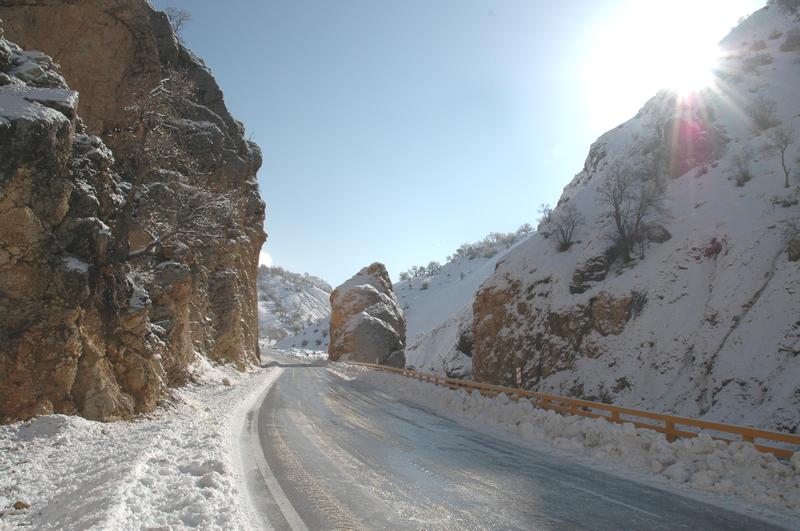
The valley leading up to the Persian Gate is wide, allowing the Macedonian army to enter the mountains at a full march. Ariobarzanes occupied a position near the modern-day village of Cheshmeh Chenar. The road curves to the southeast (to face the rising sun) and narrows considerably at that point, making the terrain particularly treacherous, thus well suited for Ariobarzanes's purposes. According to the historian Arrian, Ariobarzanes had a force of 40,000 infantry and 700 cavalry and faced a Macedonian force of over 10,000. However, some modern historians have claimed these figures for the Achaemenid force to be grossly exaggerated and implausible. Encyclopædia Iranica suggests defenders, as few as 700, and no more than 2000, based on the maximum number of troops likely at Ariobarzanes' disposal, but it notes that most modern historians follow Arrian, Curtius, and Diodorus unreservedly.
The Persian Gate was only a couple of meters wide at the ambush point. Once the Macedonian army had advanced far enough into the narrow pass, the Persians rained down boulders on them from the northern slopes. From the southern slope, Persian archers launched their projectiles. Alexander's army initially suffered heavy casualties, losing entire platoons at a time. The Macedonians attempted to withdraw, but the terrain and their still-advancing rear guard made an orderly retreat impossible. Alexander was forced to leave his dead behind to save the rest of his army—a great mark of disgrace to the Macedonians and to other Greeks, who valued highly the recovery and proper burial of their fallen.
Ariobarzanes had some reason to believe that success here could change the course of the war. Preventing Alexander's passage through the Persian Gates would force the Macedonian army to use other routes to invade Persia proper, all of which would allow Darius more time to field another army and possibly stop the Macedonian invasion altogether.
Ariobarzanes held the pass for a month, but Alexander succeeded in encircling the Persians in a pincer attack with Ptolemy and Perdiccas and broke through the Persian defenses. Alexander and his elite contingent then attacked Ariobarzanes from above in a surprise attack until the Persians could no longer block the pass. Accounts of how he did so vary widely. Curtius and Arrian both report that prisoners of war led Alexander through the mountains to the rear of the Persian position, while a token force remained in the Macedonian camp under the command of Craterus.
Hub AI
Battle of the Persian Gate AI simulator
(@Battle of the Persian Gate_simulator)
Battle of the Persian Gate
The Battle of the Persian Gate took place as part of the Wars of Alexander the Great. In the winter of 330 BC, Ariobarzanes of Persis led a last stand with his outnumbered Persian army at the Persian Gate, near Persepolis, and held back the Macedonian army for approximately a month. However, through captured prisoners of war or a local shepherd, Alexander found a path around to flank the Persian troops from the rear, allowing him to capture half of Persia proper in another decisive victory against the Achaemenid Empire.
The Achaemenid Empire suffered a series of defeats against the Macedonian forces at Granicus (334 BC), Issus (333 BC) and Gaugamela (331 BC), and by the end of 331 BC Alexander had advanced to Babylon and Susa. A Royal Road connected Susa (the first Persian capital city in Elam) with the more eastern capitals of Persepolis and Pasargadae in Persis, and was the natural avenue for Alexander's continued campaign. Meanwhile, King Darius III was trying to raise a new army at Ecbatana. Ariobarzanes was charged with preventing the Macedonian advance into Persis. He relied heavily on the terrain Alexander needed to pass through. There were only a few possible routes through the Zagros Mountains, which were made more hazardous by winter's onset.
After the conquest of Susa, Alexander split the Macedonian army into two parts. Alexander's general, Parmenion, took one half along the Royal Road, and Alexander himself took the route towards Persis. Passing into Persis required traversing the Persian Gates, a narrow mountain pass that lent itself easily to ambush.
During his advance, Alexander subdued the Uxii, a local hill people that had demanded the same tribute from him they used to receive from the Persian kings for safe passage. As he passed into the Persian Gates, he met with no resistance. Believing that he would not encounter any more enemy forces during his march, Alexander neglected to send scouts ahead of his vanguard and thus walked into Ariobarzanes' ambush.
The valley leading up to the Persian Gate is wide, allowing the Macedonian army to enter the mountains at a full march. Ariobarzanes occupied a position near the modern-day village of Cheshmeh Chenar. The road curves to the southeast (to face the rising sun) and narrows considerably at that point, making the terrain particularly treacherous, thus well suited for Ariobarzanes's purposes. According to the historian Arrian, Ariobarzanes had a force of 40,000 infantry and 700 cavalry and faced a Macedonian force of over 10,000. However, some modern historians have claimed these figures for the Achaemenid force to be grossly exaggerated and implausible. Encyclopædia Iranica suggests defenders, as few as 700, and no more than 2000, based on the maximum number of troops likely at Ariobarzanes' disposal, but it notes that most modern historians follow Arrian, Curtius, and Diodorus unreservedly.
The Persian Gate was only a couple of meters wide at the ambush point. Once the Macedonian army had advanced far enough into the narrow pass, the Persians rained down boulders on them from the northern slopes. From the southern slope, Persian archers launched their projectiles. Alexander's army initially suffered heavy casualties, losing entire platoons at a time. The Macedonians attempted to withdraw, but the terrain and their still-advancing rear guard made an orderly retreat impossible. Alexander was forced to leave his dead behind to save the rest of his army—a great mark of disgrace to the Macedonians and to other Greeks, who valued highly the recovery and proper burial of their fallen.
Ariobarzanes had some reason to believe that success here could change the course of the war. Preventing Alexander's passage through the Persian Gates would force the Macedonian army to use other routes to invade Persia proper, all of which would allow Darius more time to field another army and possibly stop the Macedonian invasion altogether.
Ariobarzanes held the pass for a month, but Alexander succeeded in encircling the Persians in a pincer attack with Ptolemy and Perdiccas and broke through the Persian defenses. Alexander and his elite contingent then attacked Ariobarzanes from above in a surprise attack until the Persians could no longer block the pass. Accounts of how he did so vary widely. Curtius and Arrian both report that prisoners of war led Alexander through the mountains to the rear of the Persian position, while a token force remained in the Macedonian camp under the command of Craterus.
Recent media