
Recent from talks
Ancient Macedonian army
Knowledge base stats:
Talk channels stats:
Members stats:
Ancient Macedonian army
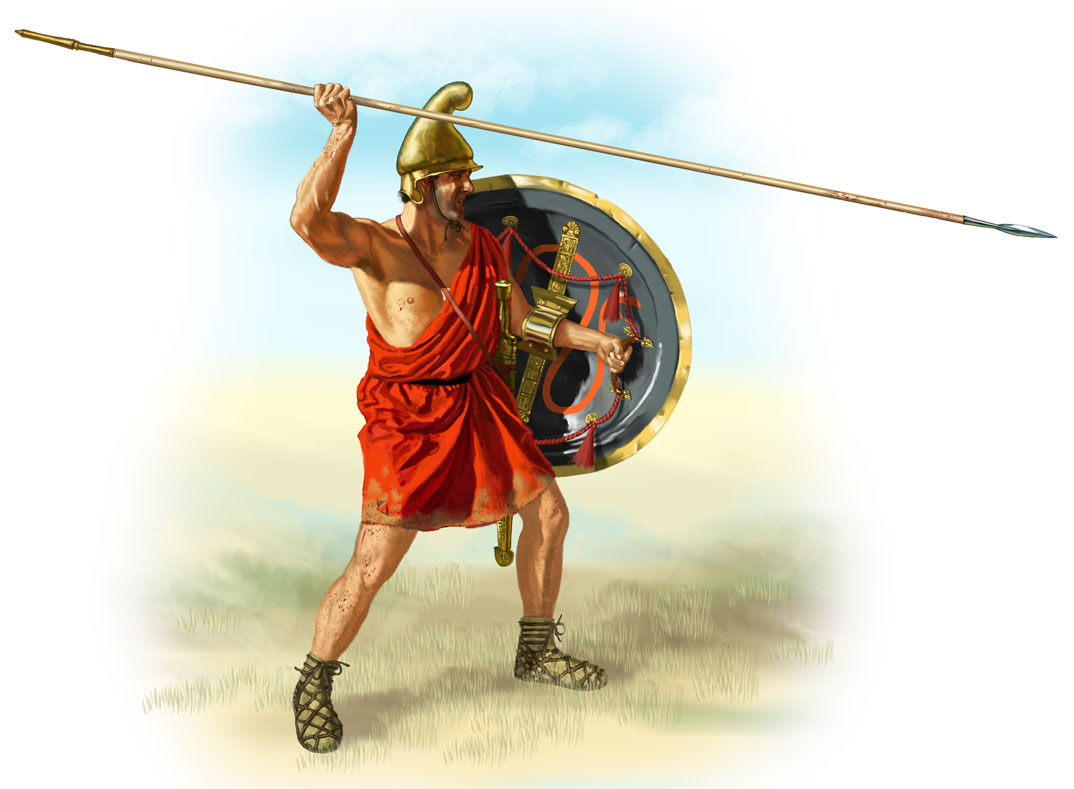
The Kingdom of Macedon possessed one of the greatest armies in the ancient world. It is reputed for the speed and efficiency with which it emerged from Greece to conquer large swathes of territory stretching from Egypt in the west to India in the east. Initially of little account in the Greek world, it was widely regarded as a second-rate power before being made formidable by Philip II, whose son and successor Alexander the Great conquered the Achaemenid Empire in just over a decade's time.
The latest innovations in weapons and tactics were adopted and refined by Philip, and he created a uniquely flexible and effective army. By introducing military service as a full-time occupation, Philip was able to drill his men regularly, ensuring unity and cohesion in his ranks. In a remarkably short time, this led to the development of one of what was among the world's finest military machines for the era. Tactical improvements included the latest developments in the deployment of the traditional Greek phalanx made by men like Epaminondas of Thebes and Iphicrates of Athens. Philip improved on these military innovators by using both Epaminondas' deeper phalanx and Iphicrates' combination of a longer spear and a smaller and lighter shield. However, the Macedonian king also innovated; he introduced the use of a much longer spear, the two-handed pike. The Macedonian pike, also known as the sarissa, gave its wielder many advantages both offensively and defensively. For the first time in Greek warfare, cavalry became a decisive arm in battle. The Macedonian army perfected the co-ordination of different troop types in an early example of combined arms tactics—the heavy infantry phalanx, skirmish infantry, archers, light cavalry and heavy cavalry, and siege engines were all deployed in battle; each troop type being used to its own particular advantage and creating a synergy of mutual support.
Ancient Macedonians and other Greeks (especially Thessalian cavalry) and a wide range of mercenaries from across the Aegean and the Balkans were employed by Phillip. By 338 BC, more than a half of the army for his planned invasion of the Achaemenid Empire came from outside of Macedon's borders—from all over the Greek world and the nearby barbarian tribes, such as the Illyrians, the Paeonians, and the Thracians.
As a result of uneven manuscript survival, most of the primary historical sources for this period have been lost, and scholarship is thus largely reliant on the works of the Greek historians Diodorus Siculus and Arrian, in addition to the incomplete writings of the Roman historian Curtius, all of whom lived centuries later than the events they describe in their works.
If Philip II of Macedon had not been the father of Alexander the Great, he would be more widely known as a first-rate military innovator, tactician and strategist, and as a consummate politician. The conquests of Alexander would have been impossible without the army his father created. Considered semi-barbarous by some metropolitan Greeks, the Macedonians were a martial people; they drank deeply of unwatered wine (the very mark of a barbarian) and no youth was considered to be fit to sit with the men at table until he had killed, on foot with a spear, a wild boar.
When Philip took over control of Macedon, it was a backward state on the fringes of the Greek world and was beset by its traditional enemies: Illyrians, Paeonians and Thracians. The basic structure of the army inherited by Philip II was the division of the companion cavalry (hetairoi) from the foot companions (pezhetairoi), augmented by various allied troops, foreign levied soldiers, and mercenaries. The foot companions existed perhaps since the reign of Alexander I of Macedon, while Macedonian troops are accounted for in the history of Herodotus as subjects of the Persian Empire fighting the Greeks at the Battle of Plataea in 479 BC. Macedonian cavalry, wearing muscled cuirasses, became renowned in Greece during and after their involvement in the Peloponnesian War (431–404 BC), at times siding with either Athens or Sparta and supplemented by local Greek infantry instead of relying on Macedonian infantry. Macedonian infantry in this period consisted of poorly trained shepherds and farmers, while the cavalry was composed of noblemen eager to win glory. An early 4th-century BC stone-carved relief from Pella shows a Macedonian hoplite infantryman wearing a pilos helmet and wielding a short sword showing a pronounced Spartan influence on the Macedonian army before Philip II.
Nicholas Sekunda states that at the beginning of Philip II's reign in 359 BC, the Macedonian army consisted of 10,000 infantry and 600 cavalry, the latter figure similar to that recorded for the 5th century BC. However, Malcolm Errington cautions that any figures for Macedonian troop sizes provided by ancient authors should be treated with a degree of skepticism, since there are very few means by which modern historians are capable of confirming their veracity (and could have been possibly lower or even higher than the numbers stated).
Philip's first achievement was to unify Macedon through his army. He raised troops and made his army the single fount of wealth, honour and power in the land; the unruly chieftains of Macedonia became the officers and elite cavalrymen of the army, the highland peasants became the footsoldiers. Philip took pains to keep them always under arms and either fighting or drilling. Manoeuvres and drills were made into competitive events, and the truculent Macedonians vied with each other to excel.
Hub AI
Ancient Macedonian army AI simulator
(@Ancient Macedonian army_simulator)
Ancient Macedonian army
The Kingdom of Macedon possessed one of the greatest armies in the ancient world. It is reputed for the speed and efficiency with which it emerged from Greece to conquer large swathes of territory stretching from Egypt in the west to India in the east. Initially of little account in the Greek world, it was widely regarded as a second-rate power before being made formidable by Philip II, whose son and successor Alexander the Great conquered the Achaemenid Empire in just over a decade's time.
The latest innovations in weapons and tactics were adopted and refined by Philip, and he created a uniquely flexible and effective army. By introducing military service as a full-time occupation, Philip was able to drill his men regularly, ensuring unity and cohesion in his ranks. In a remarkably short time, this led to the development of one of what was among the world's finest military machines for the era. Tactical improvements included the latest developments in the deployment of the traditional Greek phalanx made by men like Epaminondas of Thebes and Iphicrates of Athens. Philip improved on these military innovators by using both Epaminondas' deeper phalanx and Iphicrates' combination of a longer spear and a smaller and lighter shield. However, the Macedonian king also innovated; he introduced the use of a much longer spear, the two-handed pike. The Macedonian pike, also known as the sarissa, gave its wielder many advantages both offensively and defensively. For the first time in Greek warfare, cavalry became a decisive arm in battle. The Macedonian army perfected the co-ordination of different troop types in an early example of combined arms tactics—the heavy infantry phalanx, skirmish infantry, archers, light cavalry and heavy cavalry, and siege engines were all deployed in battle; each troop type being used to its own particular advantage and creating a synergy of mutual support.
Ancient Macedonians and other Greeks (especially Thessalian cavalry) and a wide range of mercenaries from across the Aegean and the Balkans were employed by Phillip. By 338 BC, more than a half of the army for his planned invasion of the Achaemenid Empire came from outside of Macedon's borders—from all over the Greek world and the nearby barbarian tribes, such as the Illyrians, the Paeonians, and the Thracians.
As a result of uneven manuscript survival, most of the primary historical sources for this period have been lost, and scholarship is thus largely reliant on the works of the Greek historians Diodorus Siculus and Arrian, in addition to the incomplete writings of the Roman historian Curtius, all of whom lived centuries later than the events they describe in their works.
If Philip II of Macedon had not been the father of Alexander the Great, he would be more widely known as a first-rate military innovator, tactician and strategist, and as a consummate politician. The conquests of Alexander would have been impossible without the army his father created. Considered semi-barbarous by some metropolitan Greeks, the Macedonians were a martial people; they drank deeply of unwatered wine (the very mark of a barbarian) and no youth was considered to be fit to sit with the men at table until he had killed, on foot with a spear, a wild boar.
When Philip took over control of Macedon, it was a backward state on the fringes of the Greek world and was beset by its traditional enemies: Illyrians, Paeonians and Thracians. The basic structure of the army inherited by Philip II was the division of the companion cavalry (hetairoi) from the foot companions (pezhetairoi), augmented by various allied troops, foreign levied soldiers, and mercenaries. The foot companions existed perhaps since the reign of Alexander I of Macedon, while Macedonian troops are accounted for in the history of Herodotus as subjects of the Persian Empire fighting the Greeks at the Battle of Plataea in 479 BC. Macedonian cavalry, wearing muscled cuirasses, became renowned in Greece during and after their involvement in the Peloponnesian War (431–404 BC), at times siding with either Athens or Sparta and supplemented by local Greek infantry instead of relying on Macedonian infantry. Macedonian infantry in this period consisted of poorly trained shepherds and farmers, while the cavalry was composed of noblemen eager to win glory. An early 4th-century BC stone-carved relief from Pella shows a Macedonian hoplite infantryman wearing a pilos helmet and wielding a short sword showing a pronounced Spartan influence on the Macedonian army before Philip II.
Nicholas Sekunda states that at the beginning of Philip II's reign in 359 BC, the Macedonian army consisted of 10,000 infantry and 600 cavalry, the latter figure similar to that recorded for the 5th century BC. However, Malcolm Errington cautions that any figures for Macedonian troop sizes provided by ancient authors should be treated with a degree of skepticism, since there are very few means by which modern historians are capable of confirming their veracity (and could have been possibly lower or even higher than the numbers stated).
Philip's first achievement was to unify Macedon through his army. He raised troops and made his army the single fount of wealth, honour and power in the land; the unruly chieftains of Macedonia became the officers and elite cavalrymen of the army, the highland peasants became the footsoldiers. Philip took pains to keep them always under arms and either fighting or drilling. Manoeuvres and drills were made into competitive events, and the truculent Macedonians vied with each other to excel.
Recent media