
Recent from talks
Battle of the St. Lawrence
Knowledge base stats:
Talk channels stats:
Members stats:
Battle of the St. Lawrence
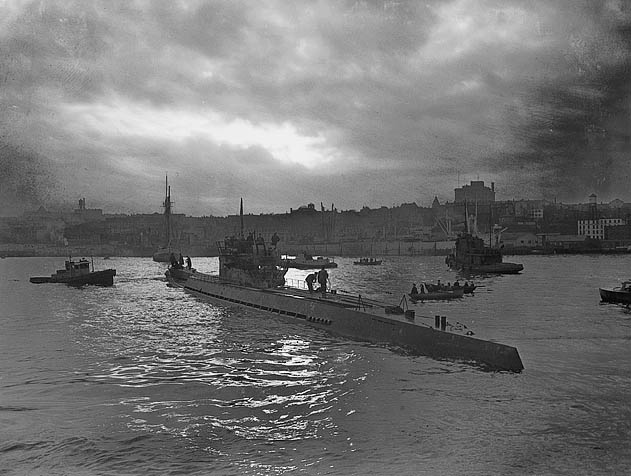
The Battle of the St. Lawrence involved marine and anti-submarine actions throughout the lower St. Lawrence River and the entire Gulf of Saint Lawrence, Strait of Belle Isle, Anticosti Island and Cabot Strait from May–October 1942, September 1943, and again in October–November 1944. During this time, German U-boats sank over 20 merchant ships and four Canadian warships. There were several near-shore actions involving the drop of German spies, or the attempted pickup of escaping prisoners of war. Despite the 23 ships lost, this battle marked a strategic victory for Canadian forces as ultimately they managed to disrupt U-boat activity, protect Canadian and Allied convoys, and intercept all attempted shore operations. This marked the first time that a foreign power had inflicted casualties in Canadian inland waters since the US incursions in the War of 1812.
In the interwar years, poor economic conditions and a sense of security, engendered by the proximity of the United States and the traditional protection of the Royal Navy, had resulted in the Royal Canadian Navy (RCN) being equipped with very few ships, especially for coastal defence. Upgraded to six destroyers just before the war, Canadian naval deployment gave priority to the North Atlantic convoy routes. By the end of the war, the RCN had expanded to become the third largest Allied naval power, with 400 vessels and 100,000 men and women. The Royal Navy contributed two destroyers to the fight in October 1942 when attacks reached their peak.
From the start of the war in 1939 until VE Day, several of Canada's Atlantic coast ports became important to the resupply effort for the United Kingdom and later for the Allied land offensive on the Western Front. Halifax and Sydney, Nova Scotia, became the primary convoy assembly ports, with Halifax being assigned the fast or priority convoys (largely troops and essential material) with the more modern merchant ships, while Sydney was given slow convoys which conveyed bulkier material on older and more vulnerable merchant ships. Both ports were heavily fortified with shore radar emplacements, searchlight batteries, and extensive coastal artillery stations all manned by RCN and Canadian Army regular and reserve personnel. Military intelligence agents enforced strict blackouts throughout the areas and anti-torpedo nets were in place at the harbour entrances. Even though no landings of German personnel took place near these ports, there were frequent attacks by U-boats on convoys departing for Europe. Less extensively used, but no less important, was the port of Saint John, New Brunswick, which also saw matériel funnelled through the port, largely after the United States entered the war in December 1941: the Canadian Pacific Railway mainline from central Canada to Saint John (which crossed the state of Maine) could not be used to transport war matériel while the United States was neutral. Canadian National's all-Canadian routes from central Canada to Halifax and Sydney were unaffected by US neutrality.
Although not crippling to the Canadian war effort, given the country's rail network to the east coast ports, but possibly more destructive to the morale of the Canadian public, was the Battle of the St. Lawrence, when U-boats began to attack domestic coastal shipping along Canada's east coast in the St. Lawrence River and Gulf of St. Lawrence from early 1942 through to the end of the shipping season in late 1944.
The Kriegsmarine had made no formal plans to attack merchant shipping in the St. Lawrence River and Gulf of St. Lawrence, despite its activities off the convoy assembly ports of Halifax and Sydney, Nova Scotia; therefore, early attacks in the Battle of the St. Lawrence were considered ad hoc and opportunistic.
The first attack was by U-553, which torpedoed and sank the British freighter Nicoya at the mouth of the St. Lawrence River several kilometres off Anticosti Island on 12 May 1942, followed by the Dutch freighter Leto in the same vicinity several hours later. U-553 departed the Gulf of St. Lawrence to return to its established patrol in the North Atlantic.
Before these sinkings, the Gulf of St. Lawrence and St. Lawrence River had been guarded by only four RCN warships, a Bangor-class minesweeper, two Fairmile Marine motor launches and an armed yacht; a clearly inadequate force for the task. The RCN's response to the attacks was to deploy five Flower-class corvettes, but it remained inadequate even with these reinforcements.
The incident revealed that the RCN did not have the resources to deal with the situation and there were political repercussions in Canada with suggestions that RCN ships allocated to the Atlantic convoys should be recalled to protect Canadian territorial waters; however, the RCN's priority remained with the protection of convoys to Britain, the Soviet Union and North Africa.
Hub AI
Battle of the St. Lawrence AI simulator
(@Battle of the St. Lawrence_simulator)
Battle of the St. Lawrence
The Battle of the St. Lawrence involved marine and anti-submarine actions throughout the lower St. Lawrence River and the entire Gulf of Saint Lawrence, Strait of Belle Isle, Anticosti Island and Cabot Strait from May–October 1942, September 1943, and again in October–November 1944. During this time, German U-boats sank over 20 merchant ships and four Canadian warships. There were several near-shore actions involving the drop of German spies, or the attempted pickup of escaping prisoners of war. Despite the 23 ships lost, this battle marked a strategic victory for Canadian forces as ultimately they managed to disrupt U-boat activity, protect Canadian and Allied convoys, and intercept all attempted shore operations. This marked the first time that a foreign power had inflicted casualties in Canadian inland waters since the US incursions in the War of 1812.
In the interwar years, poor economic conditions and a sense of security, engendered by the proximity of the United States and the traditional protection of the Royal Navy, had resulted in the Royal Canadian Navy (RCN) being equipped with very few ships, especially for coastal defence. Upgraded to six destroyers just before the war, Canadian naval deployment gave priority to the North Atlantic convoy routes. By the end of the war, the RCN had expanded to become the third largest Allied naval power, with 400 vessels and 100,000 men and women. The Royal Navy contributed two destroyers to the fight in October 1942 when attacks reached their peak.
From the start of the war in 1939 until VE Day, several of Canada's Atlantic coast ports became important to the resupply effort for the United Kingdom and later for the Allied land offensive on the Western Front. Halifax and Sydney, Nova Scotia, became the primary convoy assembly ports, with Halifax being assigned the fast or priority convoys (largely troops and essential material) with the more modern merchant ships, while Sydney was given slow convoys which conveyed bulkier material on older and more vulnerable merchant ships. Both ports were heavily fortified with shore radar emplacements, searchlight batteries, and extensive coastal artillery stations all manned by RCN and Canadian Army regular and reserve personnel. Military intelligence agents enforced strict blackouts throughout the areas and anti-torpedo nets were in place at the harbour entrances. Even though no landings of German personnel took place near these ports, there were frequent attacks by U-boats on convoys departing for Europe. Less extensively used, but no less important, was the port of Saint John, New Brunswick, which also saw matériel funnelled through the port, largely after the United States entered the war in December 1941: the Canadian Pacific Railway mainline from central Canada to Saint John (which crossed the state of Maine) could not be used to transport war matériel while the United States was neutral. Canadian National's all-Canadian routes from central Canada to Halifax and Sydney were unaffected by US neutrality.
Although not crippling to the Canadian war effort, given the country's rail network to the east coast ports, but possibly more destructive to the morale of the Canadian public, was the Battle of the St. Lawrence, when U-boats began to attack domestic coastal shipping along Canada's east coast in the St. Lawrence River and Gulf of St. Lawrence from early 1942 through to the end of the shipping season in late 1944.
The Kriegsmarine had made no formal plans to attack merchant shipping in the St. Lawrence River and Gulf of St. Lawrence, despite its activities off the convoy assembly ports of Halifax and Sydney, Nova Scotia; therefore, early attacks in the Battle of the St. Lawrence were considered ad hoc and opportunistic.
The first attack was by U-553, which torpedoed and sank the British freighter Nicoya at the mouth of the St. Lawrence River several kilometres off Anticosti Island on 12 May 1942, followed by the Dutch freighter Leto in the same vicinity several hours later. U-553 departed the Gulf of St. Lawrence to return to its established patrol in the North Atlantic.
Before these sinkings, the Gulf of St. Lawrence and St. Lawrence River had been guarded by only four RCN warships, a Bangor-class minesweeper, two Fairmile Marine motor launches and an armed yacht; a clearly inadequate force for the task. The RCN's response to the attacks was to deploy five Flower-class corvettes, but it remained inadequate even with these reinforcements.
The incident revealed that the RCN did not have the resources to deal with the situation and there were political repercussions in Canada with suggestions that RCN ships allocated to the Atlantic convoys should be recalled to protect Canadian territorial waters; however, the RCN's priority remained with the protection of convoys to Britain, the Soviet Union and North Africa.
Recent media