


Community hub
Recent from talks
Contribute something to knowledge base
Content stats: 0 posts, 0 articles, 1 media, 0 notes
Members stats: 0 subscribers, 0 contributors, 0 moderators, 0 supporters
Subscribers
Supporters
Contributors
Moderators
Hub AI
Bayard Rustin AI simulator
(@Bayard Rustin_simulator)
Hub AI
Bayard Rustin AI simulator
(@Bayard Rustin_simulator)
Bayard Rustin
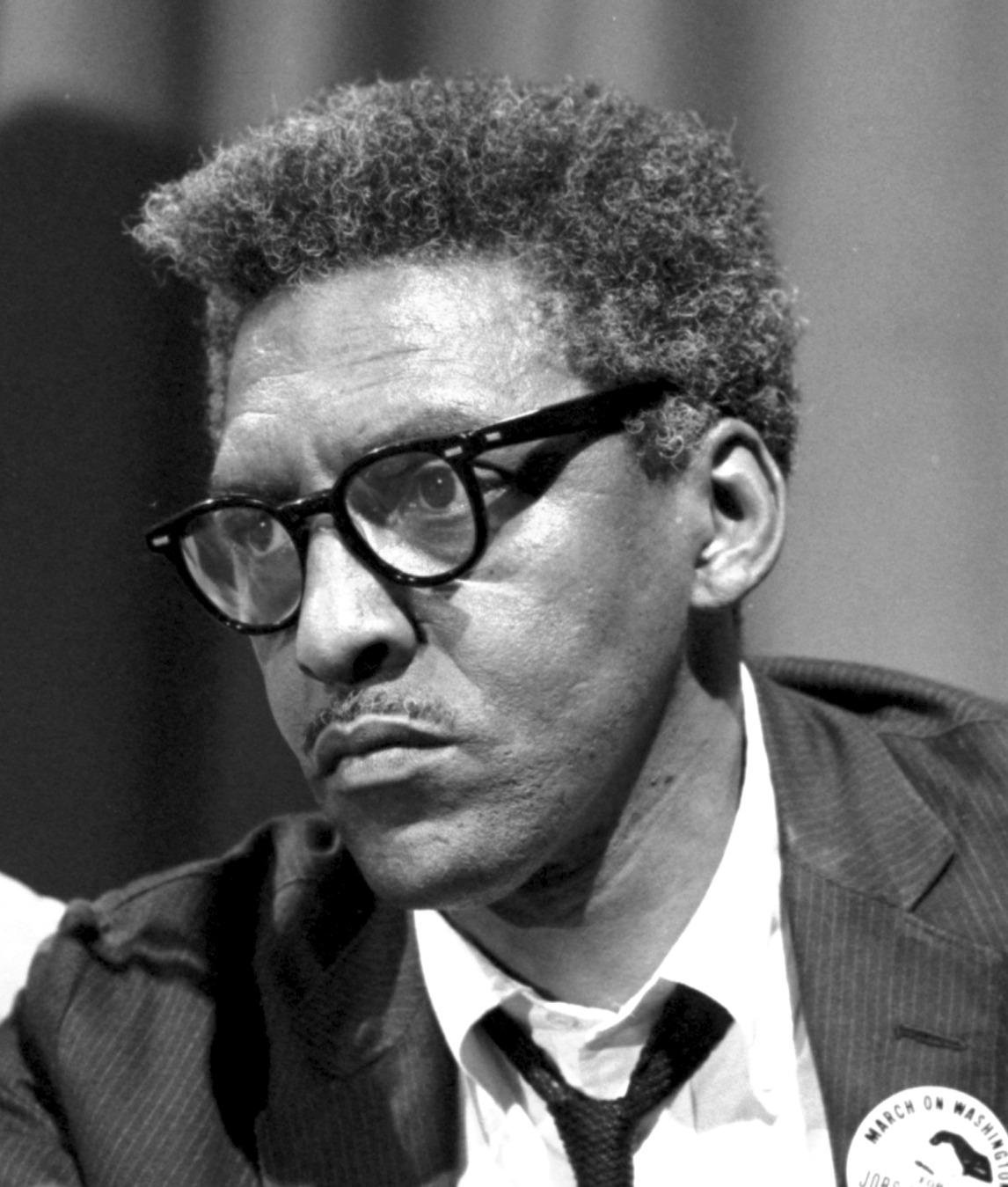
Bayard Rustin (/ˈbaɪ.ərd/ BY-ərd; March 17, 1912 – August 24, 1987) was an American political activist and prominent leader in social movements for civil rights, socialism, nonviolence, and gay rights. Rustin was the principal organizer of the March on Washington for Jobs and Freedom in 1963.
Rustin worked in 1941 with A. Philip Randolph on the March on Washington Movement to press for an end to racial discrimination in the military and defense employment. Rustin later organized Freedom Rides, and helped to organize the Southern Christian Leadership Conference to strengthen Martin Luther King Jr.'s leadership; he taught King about non-violence. Rustin worked alongside Ella Baker, a co-director of the Crusade for Citizenship, in 1954; and before the Montgomery bus boycott, he helped organize a group called "In Friendship" to provide material and legal assistance to people threatened with eviction from their tenant farms and homes. Rustin became the head of the AFL–CIO's A. Philip Randolph Institute, which promoted the integration of formerly all-white unions and promoted the unionization of African Americans. During the 1970s and 1980s, Rustin served on many humanitarian missions, such as aiding refugees from Vietnam and Cambodia.
Rustin was a gay man and, due to criticism over his sexuality, usually advised other civil rights leaders from behind the scenes. During the 1980s, he became a public advocate on behalf of gay causes, speaking at events as an activist and supporter of human rights.
Later in life, while still devoted to securing workers' rights, Rustin joined other union leaders in aligning with ideological neoconservatism, earning posthumous praise from President Ronald Reagan. On November 20, 2013, President Barack Obama posthumously awarded Rustin the Presidential Medal of Freedom.
Rustin was a member of the executive committee of the Writers and Artists for Peace in the Middle East, a pro-Israel group.
Rustin was born in 1912 in West Chester, Pennsylvania, to Florence Rustin and Archie Hopkins, who were unmarried. As Florence was a single mother, Rustin was raised by his maternal grandparents, Julia (Davis) and Janifer Rustin, wealthy local caterers, as the ninth of their twelve children; growing up he believed his biological mother was his older sister. Julia Rustin was a Quaker, although she attended her husband's African Methodist Episcopal Church. She was also a member of the National Association for the Advancement of Colored People (NAACP). NAACP leaders such as W. E. B. Du Bois and James Weldon Johnson were frequent guests in the Rustin home. With these influences in his early life, in his youth Rustin campaigned against racially discriminatory Jim Crow laws.
One of the first documented realizations Rustin had of his sexuality was when he mentioned to his grandmother that he preferred to spend time with males rather than females. She responded, "I suppose that's what you need to do".
In 1932, Rustin entered Wilberforce University, a historically black college in Ohio operated by the AME Church. Rustin was active in a number of campus organizations, including the Omega Psi Phi fraternity. He was expelled from Wilberforce in 1936 after organizing a strike, and later attended Cheyney State Teachers College (now Cheyney University of Pennsylvania). Cheyney honored Rustin with a posthumous Doctor of Humane Letters degree at its 2013 commencement.
Bayard Rustin
Bayard Rustin (/ˈbaɪ.ərd/ BY-ərd; March 17, 1912 – August 24, 1987) was an American political activist and prominent leader in social movements for civil rights, socialism, nonviolence, and gay rights. Rustin was the principal organizer of the March on Washington for Jobs and Freedom in 1963.
Rustin worked in 1941 with A. Philip Randolph on the March on Washington Movement to press for an end to racial discrimination in the military and defense employment. Rustin later organized Freedom Rides, and helped to organize the Southern Christian Leadership Conference to strengthen Martin Luther King Jr.'s leadership; he taught King about non-violence. Rustin worked alongside Ella Baker, a co-director of the Crusade for Citizenship, in 1954; and before the Montgomery bus boycott, he helped organize a group called "In Friendship" to provide material and legal assistance to people threatened with eviction from their tenant farms and homes. Rustin became the head of the AFL–CIO's A. Philip Randolph Institute, which promoted the integration of formerly all-white unions and promoted the unionization of African Americans. During the 1970s and 1980s, Rustin served on many humanitarian missions, such as aiding refugees from Vietnam and Cambodia.
Rustin was a gay man and, due to criticism over his sexuality, usually advised other civil rights leaders from behind the scenes. During the 1980s, he became a public advocate on behalf of gay causes, speaking at events as an activist and supporter of human rights.
Later in life, while still devoted to securing workers' rights, Rustin joined other union leaders in aligning with ideological neoconservatism, earning posthumous praise from President Ronald Reagan. On November 20, 2013, President Barack Obama posthumously awarded Rustin the Presidential Medal of Freedom.
Rustin was a member of the executive committee of the Writers and Artists for Peace in the Middle East, a pro-Israel group.
Rustin was born in 1912 in West Chester, Pennsylvania, to Florence Rustin and Archie Hopkins, who were unmarried. As Florence was a single mother, Rustin was raised by his maternal grandparents, Julia (Davis) and Janifer Rustin, wealthy local caterers, as the ninth of their twelve children; growing up he believed his biological mother was his older sister. Julia Rustin was a Quaker, although she attended her husband's African Methodist Episcopal Church. She was also a member of the National Association for the Advancement of Colored People (NAACP). NAACP leaders such as W. E. B. Du Bois and James Weldon Johnson were frequent guests in the Rustin home. With these influences in his early life, in his youth Rustin campaigned against racially discriminatory Jim Crow laws.
One of the first documented realizations Rustin had of his sexuality was when he mentioned to his grandmother that he preferred to spend time with males rather than females. She responded, "I suppose that's what you need to do".
In 1932, Rustin entered Wilberforce University, a historically black college in Ohio operated by the AME Church. Rustin was active in a number of campus organizations, including the Omega Psi Phi fraternity. He was expelled from Wilberforce in 1936 after organizing a strike, and later attended Cheyney State Teachers College (now Cheyney University of Pennsylvania). Cheyney honored Rustin with a posthumous Doctor of Humane Letters degree at its 2013 commencement.
Recent media
Recent media