
Recent from talks
Bean Station, Tennessee
Knowledge base stats:
Talk channels stats:
Members stats:
Bean Station, Tennessee
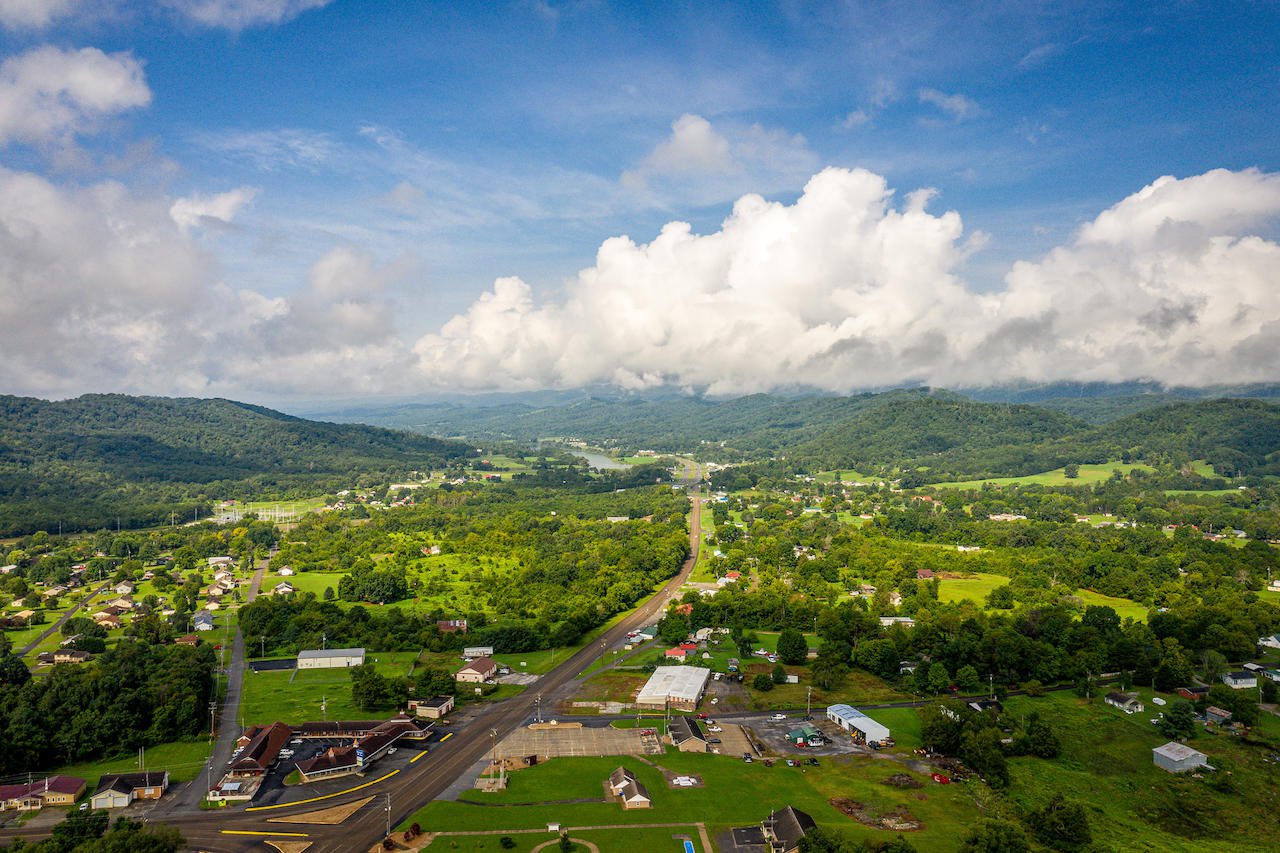
Bean Station is a town located mostly in Grainger County, Tennessee, with a small portion in Hawkins County. As of the 2020 census, the population was 2,967. It is part of the Kingsport and Knoxville metropolitan statistical areas.
Pioneer William Bean established Bean Station in 1776 as a frontier outpost; it is considered one of the earliest permanently settled communities in Tennessee. During the 18th and 19th centuries, due to its strategic location at the crossroads of Daniel Boone's Wilderness Road and the Great Indian Warpath, the town grew to become an important stopover for early pioneers and settlers in the Appalachia region.
During the American Civil War, the town was the site of the final battle of the Knoxville campaign before Confederate forces surrendered to a Union blockade in nearby Blaine. In the early 20th century, Bean Station experienced renewed growth with the development of Tate Springs mineral springs resort, investment from U.S. Senator John K. Shields, and the construction of the Peavine Railroad which provided passenger rail services to Knoxville. In the 1940s, the Tennessee Valley Authority inundated the town as part of the construction of Cherokee Dam, and nearly all of the town's residents were removed via eminent domain and federal court orders. Following its inundation, the town was shifted to the new junction of U.S. Route 11W and U.S. Route 25E, becoming a popular lakeside community, and a commuter town for the city of Morristown in neighboring Hamblen County. Citing annexation attempts by Morristown, Bean Station was incorporated as a town in 1996.
In 1775, pioneers Daniel Boone and William Bean observed the future site of Bean Station from the top of Clinch Mountain while on a hunting-and-surveying excursion. During the American Revolutionary War, Bean served as a captain for the Virginia militia; in 1776, he was awarded over 3,000 acres (4.7 sq mi; 1,200 ha) in the German Creek valley, where he had earlier surveyed and camped with Boone. At this site, Bean later constructed a four-room cabin, which he used as both his family home and as an inn for prospective settlers, fur traders, and longhunters. The inn and its surrounding area were variously called Bean's Cabin, Bean's Crossroads, and Bean's Station. This area is believed to be the first permanently-settled European-American community in present-day Tennessee.
Following Bean's death in May 1782, his sons expanded the homestead into a frontier outpost that included the Bean family cabin, a tavern, and a blacksmith's shop they operated. The settlement was situated at the intersection of Wilderness Road, a north–south pathway constructed in the 1780s that roughly followed the present-day U.S. Route 25E; and the Great Indian Warpath, an east–west pathway that roughly followed what is now U.S. Route 11W. This heavily trafficked crossroads location made Bean Station an important stopover for early American travelers. Additional taverns and inns were operating at the station by the early 1800s. By 1821, the pathway of Wilderness Road from Cumberland Gap to Bean Station was established as the privately owned Bean Station Turnpike and received state funding due to its importance for early interstate travel in the Appalachia region.
Throughout the 1800s, Bean Station attracted the attention of merchants and businessmen. In 1825, Thomas Whiteside constructed Bean Station Tavern, a large tavern with a 40-room capacity, wine cellar, and ballroom. The tavern was one of the largest of its time between New Orleans and Washington, D.C.; the tavern housed several famous guests, including U.S. Presidents Andrew Jackson, Andrew Johnson, and James K. Polk. The main portion of the tavern was destroyed in a fire on the night of December 25, 1886.
During the American Civil War, the Battle of Bean's Station took place in the westernmost area of the community on December 14, 1863. Confederate Army General James Longstreet attempted to capture Bean Station en route to Rogersville after failing to drive Union forces out of Knoxville. Bean Station was held by a contingent of Union Army soldiers under the command of General James M. Shackelford. After two days of fighting, Union forces were forced to retreat.
After the Civil War, businessman Samuel Tate constructed Tate Springs hotel west of Bean Station. In 1876, Captain Thomas Tomlinson, a Union army veteran who served in the Battle of Bean's Station, purchased the property and converted it into a resort complex, which included a large, Victorian-style luxury hotel and mineral spring that was purported to have healing properties. The resort attracted some of the wealthiest people in America but it declined during the Great Depression and closed in 1941. In 1943, the hotel site was redeveloped into a school and orphanage known as Kingswood. A fire destroyed the main hotel structure in 1963, and the only remnants of the complex were cabins, the pool bathhouse, and Tate Springs Springhouse, the last of which was listed on the National Register of Historic Places in 1973. As of 2024, the Kingswood orphanage at the site of Tate Springs remains operational.
Hub AI
Bean Station, Tennessee AI simulator
(@Bean Station, Tennessee_simulator)
Bean Station, Tennessee
Bean Station is a town located mostly in Grainger County, Tennessee, with a small portion in Hawkins County. As of the 2020 census, the population was 2,967. It is part of the Kingsport and Knoxville metropolitan statistical areas.
Pioneer William Bean established Bean Station in 1776 as a frontier outpost; it is considered one of the earliest permanently settled communities in Tennessee. During the 18th and 19th centuries, due to its strategic location at the crossroads of Daniel Boone's Wilderness Road and the Great Indian Warpath, the town grew to become an important stopover for early pioneers and settlers in the Appalachia region.
During the American Civil War, the town was the site of the final battle of the Knoxville campaign before Confederate forces surrendered to a Union blockade in nearby Blaine. In the early 20th century, Bean Station experienced renewed growth with the development of Tate Springs mineral springs resort, investment from U.S. Senator John K. Shields, and the construction of the Peavine Railroad which provided passenger rail services to Knoxville. In the 1940s, the Tennessee Valley Authority inundated the town as part of the construction of Cherokee Dam, and nearly all of the town's residents were removed via eminent domain and federal court orders. Following its inundation, the town was shifted to the new junction of U.S. Route 11W and U.S. Route 25E, becoming a popular lakeside community, and a commuter town for the city of Morristown in neighboring Hamblen County. Citing annexation attempts by Morristown, Bean Station was incorporated as a town in 1996.
In 1775, pioneers Daniel Boone and William Bean observed the future site of Bean Station from the top of Clinch Mountain while on a hunting-and-surveying excursion. During the American Revolutionary War, Bean served as a captain for the Virginia militia; in 1776, he was awarded over 3,000 acres (4.7 sq mi; 1,200 ha) in the German Creek valley, where he had earlier surveyed and camped with Boone. At this site, Bean later constructed a four-room cabin, which he used as both his family home and as an inn for prospective settlers, fur traders, and longhunters. The inn and its surrounding area were variously called Bean's Cabin, Bean's Crossroads, and Bean's Station. This area is believed to be the first permanently-settled European-American community in present-day Tennessee.
Following Bean's death in May 1782, his sons expanded the homestead into a frontier outpost that included the Bean family cabin, a tavern, and a blacksmith's shop they operated. The settlement was situated at the intersection of Wilderness Road, a north–south pathway constructed in the 1780s that roughly followed the present-day U.S. Route 25E; and the Great Indian Warpath, an east–west pathway that roughly followed what is now U.S. Route 11W. This heavily trafficked crossroads location made Bean Station an important stopover for early American travelers. Additional taverns and inns were operating at the station by the early 1800s. By 1821, the pathway of Wilderness Road from Cumberland Gap to Bean Station was established as the privately owned Bean Station Turnpike and received state funding due to its importance for early interstate travel in the Appalachia region.
Throughout the 1800s, Bean Station attracted the attention of merchants and businessmen. In 1825, Thomas Whiteside constructed Bean Station Tavern, a large tavern with a 40-room capacity, wine cellar, and ballroom. The tavern was one of the largest of its time between New Orleans and Washington, D.C.; the tavern housed several famous guests, including U.S. Presidents Andrew Jackson, Andrew Johnson, and James K. Polk. The main portion of the tavern was destroyed in a fire on the night of December 25, 1886.
During the American Civil War, the Battle of Bean's Station took place in the westernmost area of the community on December 14, 1863. Confederate Army General James Longstreet attempted to capture Bean Station en route to Rogersville after failing to drive Union forces out of Knoxville. Bean Station was held by a contingent of Union Army soldiers under the command of General James M. Shackelford. After two days of fighting, Union forces were forced to retreat.
After the Civil War, businessman Samuel Tate constructed Tate Springs hotel west of Bean Station. In 1876, Captain Thomas Tomlinson, a Union army veteran who served in the Battle of Bean's Station, purchased the property and converted it into a resort complex, which included a large, Victorian-style luxury hotel and mineral spring that was purported to have healing properties. The resort attracted some of the wealthiest people in America but it declined during the Great Depression and closed in 1941. In 1943, the hotel site was redeveloped into a school and orphanage known as Kingswood. A fire destroyed the main hotel structure in 1963, and the only remnants of the complex were cabins, the pool bathhouse, and Tate Springs Springhouse, the last of which was listed on the National Register of Historic Places in 1973. As of 2024, the Kingswood orphanage at the site of Tate Springs remains operational.
Recent media