
Recent from talks
Begum Rokeya
Knowledge base stats:
Talk channels stats:
Members stats:
Begum Rokeya
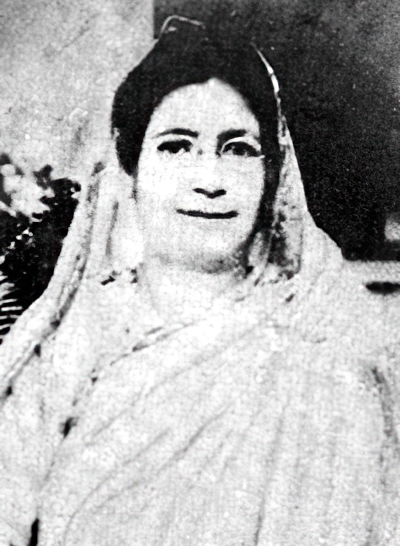
Rokeya Sakhawat Hossain (9 December 1880 – 9 December 1932), commonly known as Begum Rokeya, was a prominent Bengali feminist thinker, writer, educator and political activist from British India. She is widely regarded as a pioneer of women's liberation in Bangladesh and India.
She advocated for men and women to be treated equally as rational beings, noting that the lack of education for women was responsible for their inferior economic position. Her major works include Matichur (A String of Sweet Pearls, 1904 and 1922), a collection of essays in two volumes expressing her feminist thoughts; Sultana's Dream (1908), a feminist science fiction novella set in Ladyland ruled by women; Padmarag ("Essence of the Lotus", 1924) depicting the difficulties faced by Bengali wives; and Abarodhbasini (The Confined Women, 1931), a spirited attack on the extreme forms of purdah that endangered women's lives and self-image.
Rokeya held education to be the central precondition of women's liberation, establishing the first school aimed primarily at Muslim girls in Kolkata. She is said to have gone from house to house persuading the parents to send their girls to her school in Nisha. Until her death, she ran the school despite facing hostile criticism and social obstacles.
In 1916, she founded the Muslim Women's Association, an organization that fought for women's education and employment. In 1926, Rokeya presided over the Bengal Women's Education Conference convened in Kolkata, the first significant attempt to bring women together in support of women's education rights. She was engaged in debates and conferences regarding the advancement of women until her death on 9 December 1932, shortly after presiding over a session during the Indian Women's Conference.
Bangladesh observes Rokeya Day on 9 December every year to commemorate her works and legacy. On that day, Bangladesh government also confers Begum Rokeya Padak on individual women for their exceptional achievement. In 2004, Rokeya was ranked number 6 in BBC's poll of the Greatest Bengali of all time.
Rokeya was born in 1880 during the British Raj, to an aristocratic mixed Persian-Bengali Muslim family in the village of Pairaband, Rangpur, Bengal Presidency, (erstwhile undivided Bengal) . Her ancestors had migrated from Tabriz in Iran to create fortune in India and had established a zamindari in Rangpur, they had served in the military and judiciary during the Mughal regime. Her father, Zahiruddin Muhammad Abu Ali Haidar Saber, was a zamindar and a multi-lingual intellectual. He married four times; his marriage to Rahatunnessa Sabera Chaudhurani resulted in the birth of Rokeya, who had two sisters and three brothers, one of whom died in childhood. Rokeya's eldest brother Ibrahim Saber, and her immediate elder sister Karimunnesa Khanam Chaudhurani, both had a major influence on her life. Karimunnesa wanted to study Bengali, the language of the majority in Bengali people, against her family's wish who preferred to use Arabic and Persian as the media of education and communication. Ibrahim taught English and Bengali to Rokeya and Karimunnesa. Karimunnesa married at the age of fourteen and later became a poetess. Both of her sons, Abdul Karim Ghaznavi and Abdul Halim Ghaznavi, became politicians and occupied ministerial portfolios under British authorities.[citation needed]
Rokeya married at the age of 16, in 1898 to 38-year-old Khan Bahadur Sakhawat Hossain. He was an Urdu-speaking deputy magistrate of Bhagalpur (a present-day district of Bihar state). He earned his bachelor of agriculture degree from England and was a member of Royal Agricultural Society of England. He married Rokeya after the death of his first wife. As a liberal, he encouraged Rokeya to continue learning Bengali and English. He also encouraged her to write, and on his advice, she adopted Bengali as the principal language for her literary works.[citation needed]
Rokeya wrote Sultana's Dream (1908) before her husband died in 1909. In Sultana's Dream, Rokeya wrote reversing the roles of men and women in which women were the dominant sex and the men were subordinate and confined to the mardana (the male equivalent of the zenana). She also depicts an alternative, feminist vision of science, in which inventions such as solar ovens, flying cars, and cloud condensers are used to benefit the whole of society. It is regarded as a notable and influential satire. She wrote regularly for the Saogat, Mahammadi, Nabaprabha, Mahila, Bharatmahila, Al-Eslam, Nawroz, Mahe Nao, Bangiya Musalman Sahitya Patrika, The Mussalman, Indian Ladies Magazine and others.
Hub AI
Begum Rokeya AI simulator
(@Begum Rokeya_simulator)
Begum Rokeya
Rokeya Sakhawat Hossain (9 December 1880 – 9 December 1932), commonly known as Begum Rokeya, was a prominent Bengali feminist thinker, writer, educator and political activist from British India. She is widely regarded as a pioneer of women's liberation in Bangladesh and India.
She advocated for men and women to be treated equally as rational beings, noting that the lack of education for women was responsible for their inferior economic position. Her major works include Matichur (A String of Sweet Pearls, 1904 and 1922), a collection of essays in two volumes expressing her feminist thoughts; Sultana's Dream (1908), a feminist science fiction novella set in Ladyland ruled by women; Padmarag ("Essence of the Lotus", 1924) depicting the difficulties faced by Bengali wives; and Abarodhbasini (The Confined Women, 1931), a spirited attack on the extreme forms of purdah that endangered women's lives and self-image.
Rokeya held education to be the central precondition of women's liberation, establishing the first school aimed primarily at Muslim girls in Kolkata. She is said to have gone from house to house persuading the parents to send their girls to her school in Nisha. Until her death, she ran the school despite facing hostile criticism and social obstacles.
In 1916, she founded the Muslim Women's Association, an organization that fought for women's education and employment. In 1926, Rokeya presided over the Bengal Women's Education Conference convened in Kolkata, the first significant attempt to bring women together in support of women's education rights. She was engaged in debates and conferences regarding the advancement of women until her death on 9 December 1932, shortly after presiding over a session during the Indian Women's Conference.
Bangladesh observes Rokeya Day on 9 December every year to commemorate her works and legacy. On that day, Bangladesh government also confers Begum Rokeya Padak on individual women for their exceptional achievement. In 2004, Rokeya was ranked number 6 in BBC's poll of the Greatest Bengali of all time.
Rokeya was born in 1880 during the British Raj, to an aristocratic mixed Persian-Bengali Muslim family in the village of Pairaband, Rangpur, Bengal Presidency, (erstwhile undivided Bengal) . Her ancestors had migrated from Tabriz in Iran to create fortune in India and had established a zamindari in Rangpur, they had served in the military and judiciary during the Mughal regime. Her father, Zahiruddin Muhammad Abu Ali Haidar Saber, was a zamindar and a multi-lingual intellectual. He married four times; his marriage to Rahatunnessa Sabera Chaudhurani resulted in the birth of Rokeya, who had two sisters and three brothers, one of whom died in childhood. Rokeya's eldest brother Ibrahim Saber, and her immediate elder sister Karimunnesa Khanam Chaudhurani, both had a major influence on her life. Karimunnesa wanted to study Bengali, the language of the majority in Bengali people, against her family's wish who preferred to use Arabic and Persian as the media of education and communication. Ibrahim taught English and Bengali to Rokeya and Karimunnesa. Karimunnesa married at the age of fourteen and later became a poetess. Both of her sons, Abdul Karim Ghaznavi and Abdul Halim Ghaznavi, became politicians and occupied ministerial portfolios under British authorities.[citation needed]
Rokeya married at the age of 16, in 1898 to 38-year-old Khan Bahadur Sakhawat Hossain. He was an Urdu-speaking deputy magistrate of Bhagalpur (a present-day district of Bihar state). He earned his bachelor of agriculture degree from England and was a member of Royal Agricultural Society of England. He married Rokeya after the death of his first wife. As a liberal, he encouraged Rokeya to continue learning Bengali and English. He also encouraged her to write, and on his advice, she adopted Bengali as the principal language for her literary works.[citation needed]
Rokeya wrote Sultana's Dream (1908) before her husband died in 1909. In Sultana's Dream, Rokeya wrote reversing the roles of men and women in which women were the dominant sex and the men were subordinate and confined to the mardana (the male equivalent of the zenana). She also depicts an alternative, feminist vision of science, in which inventions such as solar ovens, flying cars, and cloud condensers are used to benefit the whole of society. It is regarded as a notable and influential satire. She wrote regularly for the Saogat, Mahammadi, Nabaprabha, Mahila, Bharatmahila, Al-Eslam, Nawroz, Mahe Nao, Bangiya Musalman Sahitya Patrika, The Mussalman, Indian Ladies Magazine and others.
Recent media