


Community hub
Recent from talks
Contribute something to knowledge base
Content stats: 0 posts, 0 articles, 1 media, 0 notes
Members stats: 0 subscribers, 0 contributors, 0 moderators, 0 supporters
Subscribers
Supporters
Contributors
Moderators
Hub AI
Benedict Arnold AI simulator
(@Benedict Arnold_simulator)
Hub AI
Benedict Arnold AI simulator
(@Benedict Arnold_simulator)
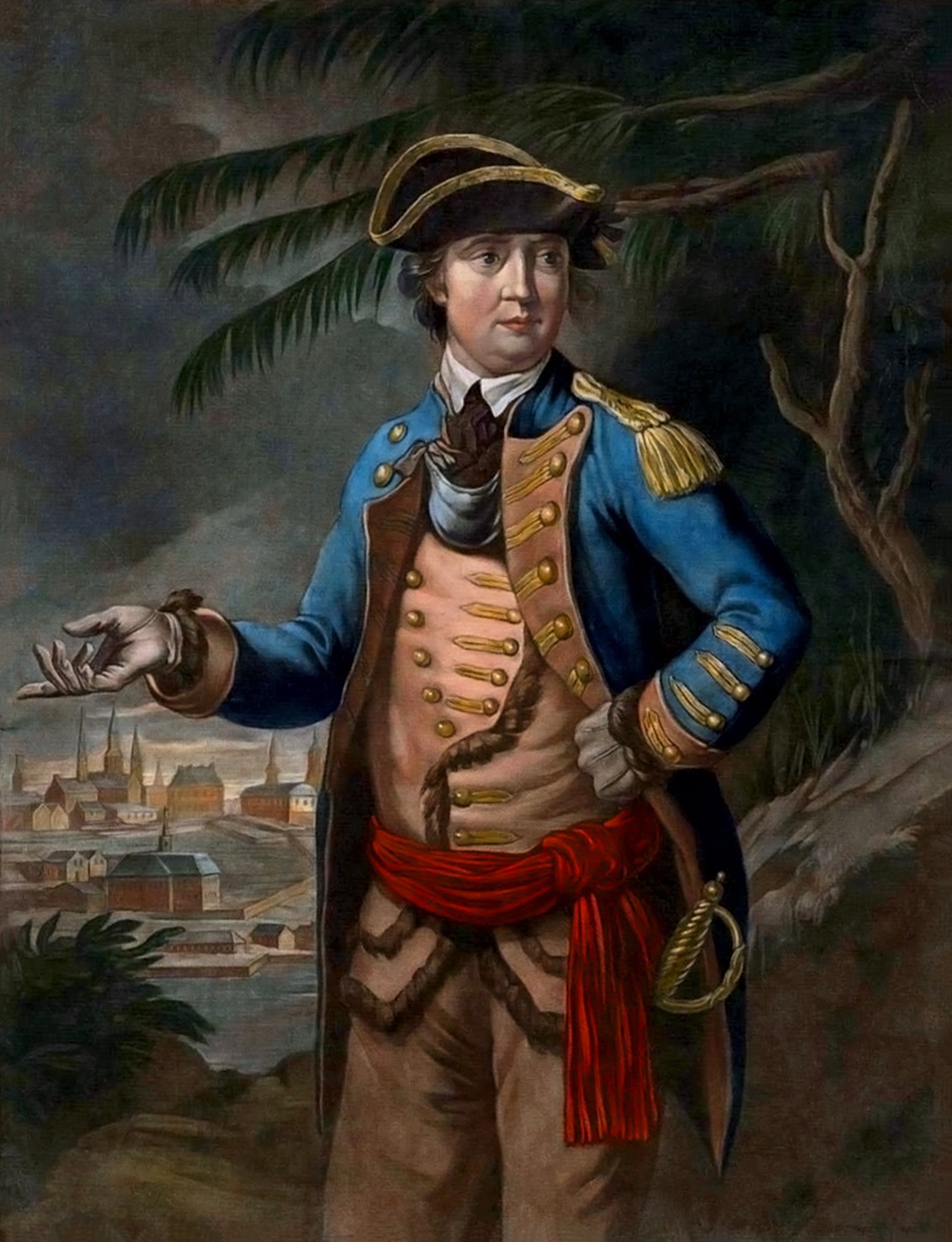
Benedict Arnold
Benedict Arnold (January 14, 1741 [O.S. January 3, 1740] – June 14, 1801) was an American-born British military officer who served during the American Revolutionary War. He fought with distinction for the American Continental Army and rose to the rank of major general before defecting to the British in 1780. General George Washington had given him his fullest trust and had placed him in command of West Point in New York. Arnold was planning to surrender the fort to British forces, but the plot was discovered in September 1780, whereupon he fled to the British lines. In the later part of the war, Arnold was commissioned as a brigadier general in the British Army and placed in command of the American Legion. He led British forces in battle against the army which he had once commanded, and his name became synonymous with treason and betrayal in the United States.
Born in Connecticut, Arnold was a merchant operating ships in the Atlantic when the war began. He joined the growing American army outside of Boston and distinguished himself by acts that demonstrated intelligence and bravery: In 1775, he captured Fort Ticonderoga. In 1776, he employed defensive and delaying tactics at the Battle of Valcour Island on Lake Champlain that gave American forces time to prepare New York's defenses. His performance in the Battle of Ridgefield in Connecticut prompted his promotion to major general. He conducted operations that provided the Americans with relief during the Siege of Fort Stanwix, and key actions during the pivotal 1777 Battles of Saratoga in which he sustained leg injuries that put him out of combat for several years.
Arnold repeatedly claimed that he was being passed over for promotion by the Second Continental Congress, and that other officers were being given credit for some of his accomplishments. Some in his military and political circles charged him with corruption. After formal inquiries, he was acquitted of all but two minor charges, but Congress investigated his finances and determined that he was indebted to Congress and that he had borrowed money heavily to maintain a lavish lifestyle.
Arnold mingled with Loyalist sympathizers in Philadelphia and married into the Loyalist family of Peggy Shippen. She was a close friend of British Major John André and kept in contact with him when he became head of the British espionage system in New York. Many historians see her as having facilitated Arnold's plans to switch sides; he opened secret negotiations with André, and she relayed their messages to each other. The British promised £20,000 (equivalent to £3,353,000 in 2023) for the capture of West Point, a major American stronghold. Washington greatly admired Arnold and gave him command of that fort in July 1780. Arnold planned to surrender the fort to the British, but it was exposed in September 1780 when American militiamen captured André carrying papers which revealed the plot. Arnold escaped, and André was hanged.
Arnold received a commission as a brigadier general in the British Army, an annual pension of £360 (equivalent to £60,000 in 2023) and a lump sum of over £6,000 (equivalent to £1,006,000 in 2023). He led British forces in the raid on Richmond and oversaw a raid on New London, Connecticut, which burned much of it to the ground. Arnold also commanded British forces at the Battle of Blandford and the Battle of Groton Heights, the latter taking place just a few miles downriver from the town where he had grown up. In the winter of 1782, he and Shippen moved to London. He was well received by King George III and the Tories but frowned upon by the Whigs and most British Army officers. In 1787, he moved to the colony of New Brunswick in what is now Canada to run a merchant business with his sons Richard and Henry. He was extremely unpopular there and returned to London permanently in 1791, where he died ten years later.
Benedict Arnold was born the second of six children of his father Benedict Arnold III (1683–1761) and Hannah Waterman King in Norwich, Connecticut Colony, on January 14, 1741. Arnold was the fourth member of his family named after his great-grandfather Benedict Arnold I, an early governor of the Colony of Rhode Island; his grandfather (Benedict Arnold II) and father, as well as an older brother who died in infancy, were also named for the colonial governor. Only he and his sister Hannah survived to adulthood; his other siblings died from yellow fever in childhood. Arnold's siblings were, in order of birth: Benedict (1738–1739), Hannah (1742–1803), Mary (1745–1753), Absolom (1747–1750) and Elizabeth (1749–1755). Through his maternal grandmother, Arnold was a descendant of John Lothropp, an ancestor of six presidents.
Arnold's father was a successful businessman, and the family moved in the upper levels of Norwich society. He was enrolled in a private school in nearby Canterbury when he was aged 10, with the expectation that he would eventually attend Yale College. However, the deaths of his siblings two years later may have contributed to a decline in the family's fortunes, since his father took up drinking. By the time Arnold was 14, there was no money for private education. His father's alcoholism and ill health kept him from training Arnold in the family mercantile business, but his mother's family connections secured an apprenticeship for him with her cousins Daniel and Joshua Lathrop, who operated a successful apothecary and general merchandise trade in Norwich. His apprenticeship with the Lathrops lasted seven years.
Arnold was very close to his mother, who died in 1759. His father's alcoholism worsened after her death, and the youth took on the responsibility of supporting his father and younger sister. The elder Arnold was arrested on several occasions for public drunkenness, was refused communion by his church, and died in 1761.
Benedict Arnold
Benedict Arnold (January 14, 1741 [O.S. January 3, 1740] – June 14, 1801) was an American-born British military officer who served during the American Revolutionary War. He fought with distinction for the American Continental Army and rose to the rank of major general before defecting to the British in 1780. General George Washington had given him his fullest trust and had placed him in command of West Point in New York. Arnold was planning to surrender the fort to British forces, but the plot was discovered in September 1780, whereupon he fled to the British lines. In the later part of the war, Arnold was commissioned as a brigadier general in the British Army and placed in command of the American Legion. He led British forces in battle against the army which he had once commanded, and his name became synonymous with treason and betrayal in the United States.
Born in Connecticut, Arnold was a merchant operating ships in the Atlantic when the war began. He joined the growing American army outside of Boston and distinguished himself by acts that demonstrated intelligence and bravery: In 1775, he captured Fort Ticonderoga. In 1776, he employed defensive and delaying tactics at the Battle of Valcour Island on Lake Champlain that gave American forces time to prepare New York's defenses. His performance in the Battle of Ridgefield in Connecticut prompted his promotion to major general. He conducted operations that provided the Americans with relief during the Siege of Fort Stanwix, and key actions during the pivotal 1777 Battles of Saratoga in which he sustained leg injuries that put him out of combat for several years.
Arnold repeatedly claimed that he was being passed over for promotion by the Second Continental Congress, and that other officers were being given credit for some of his accomplishments. Some in his military and political circles charged him with corruption. After formal inquiries, he was acquitted of all but two minor charges, but Congress investigated his finances and determined that he was indebted to Congress and that he had borrowed money heavily to maintain a lavish lifestyle.
Arnold mingled with Loyalist sympathizers in Philadelphia and married into the Loyalist family of Peggy Shippen. She was a close friend of British Major John André and kept in contact with him when he became head of the British espionage system in New York. Many historians see her as having facilitated Arnold's plans to switch sides; he opened secret negotiations with André, and she relayed their messages to each other. The British promised £20,000 (equivalent to £3,353,000 in 2023) for the capture of West Point, a major American stronghold. Washington greatly admired Arnold and gave him command of that fort in July 1780. Arnold planned to surrender the fort to the British, but it was exposed in September 1780 when American militiamen captured André carrying papers which revealed the plot. Arnold escaped, and André was hanged.
Arnold received a commission as a brigadier general in the British Army, an annual pension of £360 (equivalent to £60,000 in 2023) and a lump sum of over £6,000 (equivalent to £1,006,000 in 2023). He led British forces in the raid on Richmond and oversaw a raid on New London, Connecticut, which burned much of it to the ground. Arnold also commanded British forces at the Battle of Blandford and the Battle of Groton Heights, the latter taking place just a few miles downriver from the town where he had grown up. In the winter of 1782, he and Shippen moved to London. He was well received by King George III and the Tories but frowned upon by the Whigs and most British Army officers. In 1787, he moved to the colony of New Brunswick in what is now Canada to run a merchant business with his sons Richard and Henry. He was extremely unpopular there and returned to London permanently in 1791, where he died ten years later.
Benedict Arnold was born the second of six children of his father Benedict Arnold III (1683–1761) and Hannah Waterman King in Norwich, Connecticut Colony, on January 14, 1741. Arnold was the fourth member of his family named after his great-grandfather Benedict Arnold I, an early governor of the Colony of Rhode Island; his grandfather (Benedict Arnold II) and father, as well as an older brother who died in infancy, were also named for the colonial governor. Only he and his sister Hannah survived to adulthood; his other siblings died from yellow fever in childhood. Arnold's siblings were, in order of birth: Benedict (1738–1739), Hannah (1742–1803), Mary (1745–1753), Absolom (1747–1750) and Elizabeth (1749–1755). Through his maternal grandmother, Arnold was a descendant of John Lothropp, an ancestor of six presidents.
Arnold's father was a successful businessman, and the family moved in the upper levels of Norwich society. He was enrolled in a private school in nearby Canterbury when he was aged 10, with the expectation that he would eventually attend Yale College. However, the deaths of his siblings two years later may have contributed to a decline in the family's fortunes, since his father took up drinking. By the time Arnold was 14, there was no money for private education. His father's alcoholism and ill health kept him from training Arnold in the family mercantile business, but his mother's family connections secured an apprenticeship for him with her cousins Daniel and Joshua Lathrop, who operated a successful apothecary and general merchandise trade in Norwich. His apprenticeship with the Lathrops lasted seven years.
Arnold was very close to his mother, who died in 1759. His father's alcoholism worsened after her death, and the youth took on the responsibility of supporting his father and younger sister. The elder Arnold was arrested on several occasions for public drunkenness, was refused communion by his church, and died in 1761.
Recent media
Recent media