
Recent from talks
The Bengal Club
Knowledge base stats:
Talk channels stats:
Members stats:
The Bengal Club
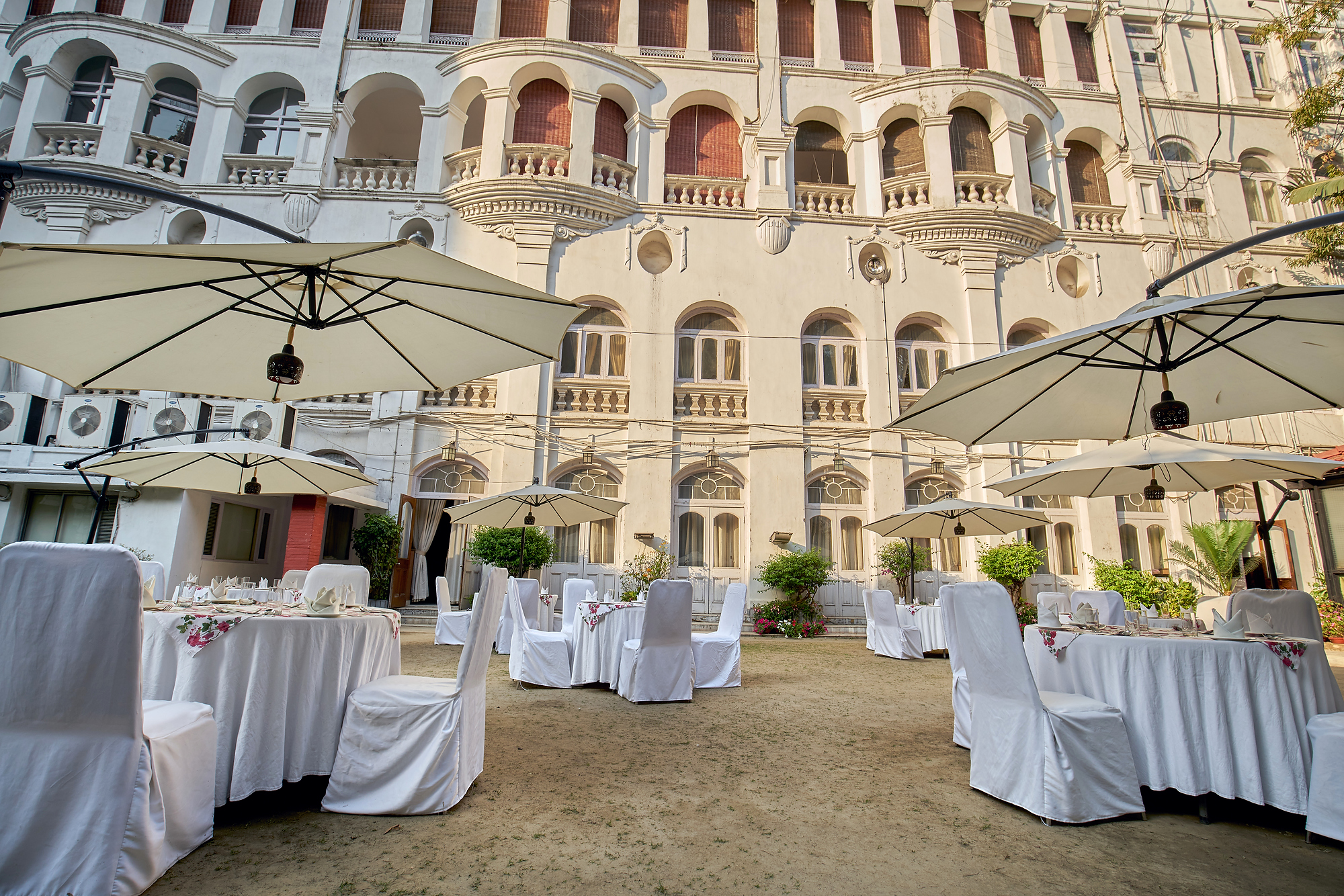
The Bengal Club is a social and business club in Kolkata, India. Founded in 1827, the club is the oldest social club in India. When Kolkata was the capital of British India, the club was considered to be the "unofficial headquarters of the Raj". The club is nowadays known for its old-world ambience and patronage among contemporary social and corporate elites, and is among a small number of Indian clubs featured in the elite list of the "Platinum Clubs of the World".
Works that provide detailed historical information about the club include A Short History of the Bengal Club 1827–1927, a book by Sir Hugh Rahere Panckridge (Barrister-at-law and later judge of the Calcutta High Court); The Bengal Club 1927–1970, a book by R.I. Macalpine (former officer of the Imperial Forest Service); A History of The Bengal Club (1970–2000), a booklet by Arabinda Ray (former club president and senior corporate executive); and The Bengal Club in History, a book edited by academic Malabika Sarkar.
Panckridge writes that the Bengal Club predates many important social clubs in London, though the model for the club was the Oriental Club in London (founded in 1824). The idea for the Bengal Club was conceived of in a meeting of notable Englishmen at the Town Hall of Calcutta in 1826, led by Lieutenant-Colonel (later Lieutenant-General) John Finch, son of the 4th Earl of Aylesford. Finch explained at the meeting that "nothing like a respectable hotel or coffeehouse has ever existed" in Calcutta, and "those who constitute the society of Calcutta have no place where they can spend an idle half hour agreeably"
The club was formally established on 8 February 1827, with the Viscount Combermere its first patron. In 1830, Lord William Bentinck, the last Governor of Bengal and the first Governor-General of India, became the second patron of the club. The club's original members included influential figures like Charles Metcalfe, Henry Thoby Prinsep and Sir Edward Ryan, along with senior military officials. In 1838, the club passed a resolution to reciprocate with the now-extinct Byculla Club of Mumbai (then Bombay). Later, reciprocal relations were established with the Madras Club, the Hong Kong Club and the now-defunct Shanghai Club.
By the 1870s, the club was being described in travelogues as "the most swell establishment of the kind in the East" (by American Civil War general Robert Ogden Tyler) and "an institution known to all the dwellers of the East" (by scholar and historian Sir George William Forrest). By the close of the century, the Bengal Club became one of a handful of buildings in British India to be supplied with electricity.
Panckridge writes that the Bengal Club was originally intended to be called the Calcutta United Service Club. Ironically, a later (unconnected) institution with a similar name, the Bengal United Service Club (now home to the Geological Survey of India), was established in close proximity to the Bengal Club. Much like the Bengal Club, the club had senior British officials and judges as members.
In 1912, on the visit of George V to Kolkata, the club was among a set of buildings illuminated with electric lights to welcome his cavalcade. The King presented the club with his portrait. Over a hundred members of the club served in the First World War. Two members were awarded the Victoria Cross: army doctor Arthur Martin-Leake (the first person to have received the honour twice) and Sir Reginald Graham. Several members also lost their lives in the War. The Governor of Bengal later unveiled a plaque in their memory. In 1927, the Bengal Club celebrated its centenary by organising a grand banquet, with many important figures from British India in attendance. The following day, for the first time in the club's history, female guests were allowed to enter the club for a one-off tour.
According to Macalpine, the club's other milestones in the 20th century included its designation as a public air raid shelter and medical aid post during the Second World War; the grant of honorary membership to around 1,200 armed forces personnel stationed in Kolkata during different phases of the War (above the rank of Lieutenant-colonel); the admittance of Indian members (in 1959); the allowance of women inside the club's premises (initially in fits and starts, and eventually without restriction in 1967); the receipt of valuable paintings and artefacts (gifted by club members and presidents); and visits by many notable dignitaries and public figures.
Hub AI
The Bengal Club AI simulator
(@The Bengal Club_simulator)
The Bengal Club
The Bengal Club is a social and business club in Kolkata, India. Founded in 1827, the club is the oldest social club in India. When Kolkata was the capital of British India, the club was considered to be the "unofficial headquarters of the Raj". The club is nowadays known for its old-world ambience and patronage among contemporary social and corporate elites, and is among a small number of Indian clubs featured in the elite list of the "Platinum Clubs of the World".
Works that provide detailed historical information about the club include A Short History of the Bengal Club 1827–1927, a book by Sir Hugh Rahere Panckridge (Barrister-at-law and later judge of the Calcutta High Court); The Bengal Club 1927–1970, a book by R.I. Macalpine (former officer of the Imperial Forest Service); A History of The Bengal Club (1970–2000), a booklet by Arabinda Ray (former club president and senior corporate executive); and The Bengal Club in History, a book edited by academic Malabika Sarkar.
Panckridge writes that the Bengal Club predates many important social clubs in London, though the model for the club was the Oriental Club in London (founded in 1824). The idea for the Bengal Club was conceived of in a meeting of notable Englishmen at the Town Hall of Calcutta in 1826, led by Lieutenant-Colonel (later Lieutenant-General) John Finch, son of the 4th Earl of Aylesford. Finch explained at the meeting that "nothing like a respectable hotel or coffeehouse has ever existed" in Calcutta, and "those who constitute the society of Calcutta have no place where they can spend an idle half hour agreeably"
The club was formally established on 8 February 1827, with the Viscount Combermere its first patron. In 1830, Lord William Bentinck, the last Governor of Bengal and the first Governor-General of India, became the second patron of the club. The club's original members included influential figures like Charles Metcalfe, Henry Thoby Prinsep and Sir Edward Ryan, along with senior military officials. In 1838, the club passed a resolution to reciprocate with the now-extinct Byculla Club of Mumbai (then Bombay). Later, reciprocal relations were established with the Madras Club, the Hong Kong Club and the now-defunct Shanghai Club.
By the 1870s, the club was being described in travelogues as "the most swell establishment of the kind in the East" (by American Civil War general Robert Ogden Tyler) and "an institution known to all the dwellers of the East" (by scholar and historian Sir George William Forrest). By the close of the century, the Bengal Club became one of a handful of buildings in British India to be supplied with electricity.
Panckridge writes that the Bengal Club was originally intended to be called the Calcutta United Service Club. Ironically, a later (unconnected) institution with a similar name, the Bengal United Service Club (now home to the Geological Survey of India), was established in close proximity to the Bengal Club. Much like the Bengal Club, the club had senior British officials and judges as members.
In 1912, on the visit of George V to Kolkata, the club was among a set of buildings illuminated with electric lights to welcome his cavalcade. The King presented the club with his portrait. Over a hundred members of the club served in the First World War. Two members were awarded the Victoria Cross: army doctor Arthur Martin-Leake (the first person to have received the honour twice) and Sir Reginald Graham. Several members also lost their lives in the War. The Governor of Bengal later unveiled a plaque in their memory. In 1927, the Bengal Club celebrated its centenary by organising a grand banquet, with many important figures from British India in attendance. The following day, for the first time in the club's history, female guests were allowed to enter the club for a one-off tour.
According to Macalpine, the club's other milestones in the 20th century included its designation as a public air raid shelter and medical aid post during the Second World War; the grant of honorary membership to around 1,200 armed forces personnel stationed in Kolkata during different phases of the War (above the rank of Lieutenant-colonel); the admittance of Indian members (in 1959); the allowance of women inside the club's premises (initially in fits and starts, and eventually without restriction in 1967); the receipt of valuable paintings and artefacts (gifted by club members and presidents); and visits by many notable dignitaries and public figures.
Recent media