



Community hub
Recent from talks
Knowledge base stats:
Talk channels stats:
Members stats:
Benidorm
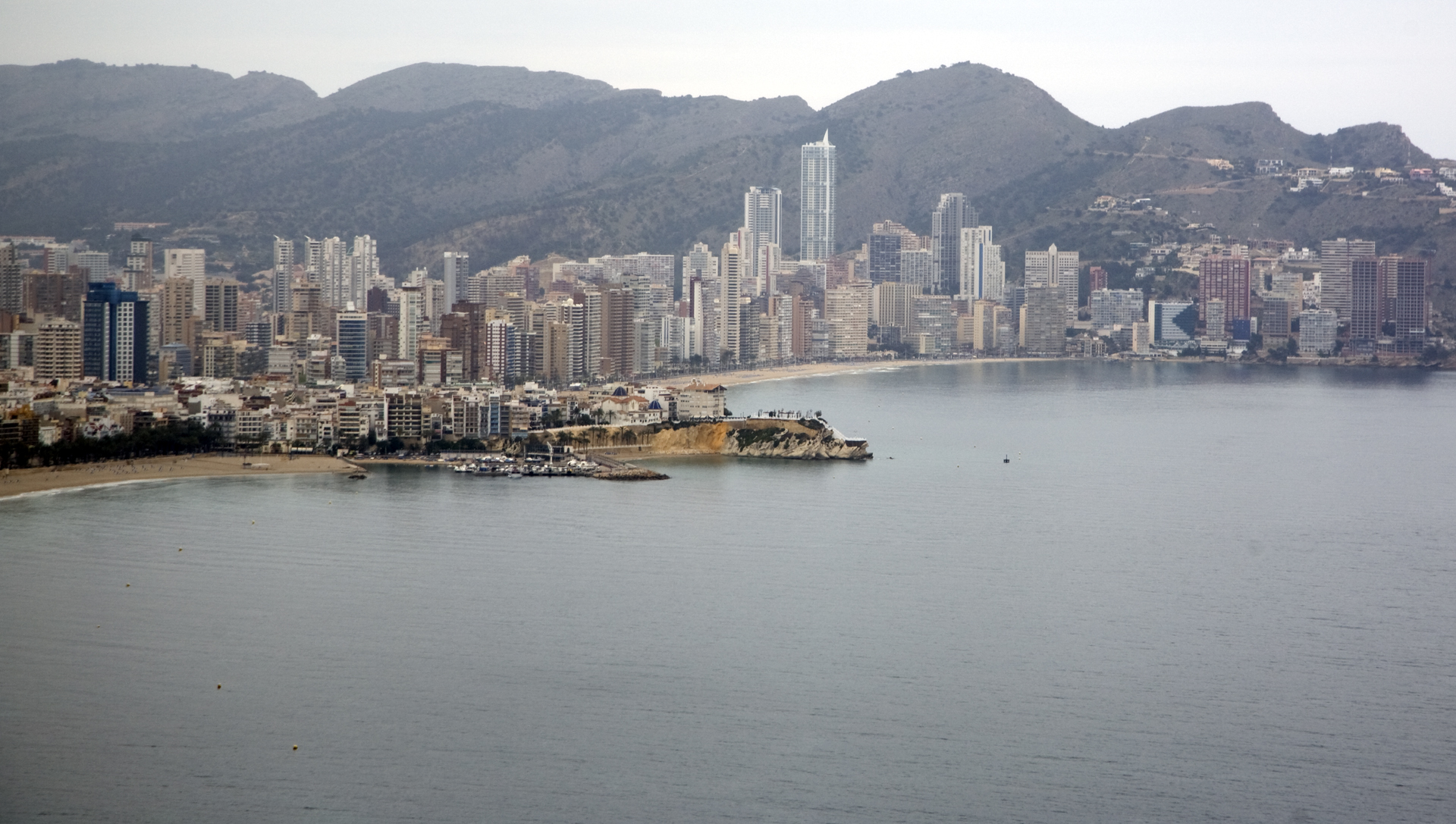
Benidorm (English: /ˈbɛnɪdɔːrm/ BEN-id-orm; Valencian: [beniˈðɔɾm]; Spanish: [beniˈðoɾ]) is a municipality in the province of Alicante, Valencian Community, on the Mediterranean coast of Spain.
Known as the "New York of the Mediterranean", Benidorm has been a tourist destination within Spain since 1925, when its port was extended and the first hotels were built, though it would not be until the 1950s that it became renowned as a summer destination for people coming from inland Spain, especially Madrid. Today it is known for its hotel industry, beaches, and skyscrapers and receives as many tourists from abroad, chiefly from the United Kingdom. According to the 2020 census, Benidorm has a permanent population of 70,450 inhabitants, making it the fifth-most populous town in the Alicante province and the ninth in Valencian Community.
It is thought[by whom?] there were settlements in the Benidorm area possibly as far back as 3000 BC, including evidence of Roman and Punic remains. However, settlements in the area were small and it was not until the arrival of the Arabs that the local population began to grow during the era of the Umayyad dynasty. The Christian King James I of Aragon conquered the region in 1245, and Benidorm first officially became known in 1325, when Admiral Bernat de Sarrià of Polop awarded it a town charter as a way of removing the Moors and allowing Christians to inhabit the area. Strategically, the town was also used by Bernat de Sarrià to stop the rising power of Admiral Roger of Lauria, lord of Altea, in the south of the Kingdom of Valencia.
Benidorm's history for the next few centuries was plagued by attacks from the sea by Ottoman and Barbary pirates. The 17th century saw conditions improve for Benidorm and its people, most notably with the construction of an advanced irrigation system in 1666 to channel water to the region. By the 18th century Benidorm fishermen had become famous and sought after all over Spain and beyond. Tuna was their main catch and they perfected the ancient almadraba technique dating from Islamic times. The success of the fishing industry, together with improved local agriculture, helped to fuel a strong local economy. Coastal traffic increased too, bringing more wealth to the region with the town becoming a base for sea captains and the building of their vessels.
In 1952, Benidorm's fishing industry went into decline; this was a factor in encouraging the town council to approve many new development plans aimed at the tourist market.[citation needed]
In 2018, Benidorm became the first city to achieve the UNE178501 Smart Tourism certification. Its "Benidorm, Destino Turístico Inteligente y Sostenible" plan (2015–2020) focuses on integrating technology for sustainable tourism, including energy efficiency improvements, data-driven management, and citizen participation. The city also established a Smart Destination Living Lab to align its strategies with the UN’s 2030 Sustainable Development Goals (SDGs).
After giving the Spanish Socialist Workers' Party majorities or pluralities in elections from the restoration of democracy in 1977, Benidorm has favoured the right wing People's Party (PP) since the general elections of 1993. The PP gained control of the local council at the 1995 local elections and won 14 of the 25 council seats in the 1999 and 2003 elections. The 2007 election gave them a one-seat majority over the PSOE, but disagreements in the PP group led to a motion of censure being passed against the PP mayor in September 2009. He was replaced by the socialist Agustín Navarro. In 2019, PP won the local elections, obtaining an absolute majority.
As of the 2019 local elections, the political composition on the local council was the following:
Hub AI
Benidorm AI simulator
(@Benidorm_simulator)
Benidorm
Benidorm (English: /ˈbɛnɪdɔːrm/ BEN-id-orm; Valencian: [beniˈðɔɾm]; Spanish: [beniˈðoɾ]) is a municipality in the province of Alicante, Valencian Community, on the Mediterranean coast of Spain.
Known as the "New York of the Mediterranean", Benidorm has been a tourist destination within Spain since 1925, when its port was extended and the first hotels were built, though it would not be until the 1950s that it became renowned as a summer destination for people coming from inland Spain, especially Madrid. Today it is known for its hotel industry, beaches, and skyscrapers and receives as many tourists from abroad, chiefly from the United Kingdom. According to the 2020 census, Benidorm has a permanent population of 70,450 inhabitants, making it the fifth-most populous town in the Alicante province and the ninth in Valencian Community.
It is thought[by whom?] there were settlements in the Benidorm area possibly as far back as 3000 BC, including evidence of Roman and Punic remains. However, settlements in the area were small and it was not until the arrival of the Arabs that the local population began to grow during the era of the Umayyad dynasty. The Christian King James I of Aragon conquered the region in 1245, and Benidorm first officially became known in 1325, when Admiral Bernat de Sarrià of Polop awarded it a town charter as a way of removing the Moors and allowing Christians to inhabit the area. Strategically, the town was also used by Bernat de Sarrià to stop the rising power of Admiral Roger of Lauria, lord of Altea, in the south of the Kingdom of Valencia.
Benidorm's history for the next few centuries was plagued by attacks from the sea by Ottoman and Barbary pirates. The 17th century saw conditions improve for Benidorm and its people, most notably with the construction of an advanced irrigation system in 1666 to channel water to the region. By the 18th century Benidorm fishermen had become famous and sought after all over Spain and beyond. Tuna was their main catch and they perfected the ancient almadraba technique dating from Islamic times. The success of the fishing industry, together with improved local agriculture, helped to fuel a strong local economy. Coastal traffic increased too, bringing more wealth to the region with the town becoming a base for sea captains and the building of their vessels.
In 1952, Benidorm's fishing industry went into decline; this was a factor in encouraging the town council to approve many new development plans aimed at the tourist market.[citation needed]
In 2018, Benidorm became the first city to achieve the UNE178501 Smart Tourism certification. Its "Benidorm, Destino Turístico Inteligente y Sostenible" plan (2015–2020) focuses on integrating technology for sustainable tourism, including energy efficiency improvements, data-driven management, and citizen participation. The city also established a Smart Destination Living Lab to align its strategies with the UN’s 2030 Sustainable Development Goals (SDGs).
After giving the Spanish Socialist Workers' Party majorities or pluralities in elections from the restoration of democracy in 1977, Benidorm has favoured the right wing People's Party (PP) since the general elections of 1993. The PP gained control of the local council at the 1995 local elections and won 14 of the 25 council seats in the 1999 and 2003 elections. The 2007 election gave them a one-seat majority over the PSOE, but disagreements in the PP group led to a motion of censure being passed against the PP mayor in September 2009. He was replaced by the socialist Agustín Navarro. In 2019, PP won the local elections, obtaining an absolute majority.
As of the 2019 local elections, the political composition on the local council was the following: