



Community hub
Recent from talks
Knowledge base stats:
Talk channels stats:
Members stats:
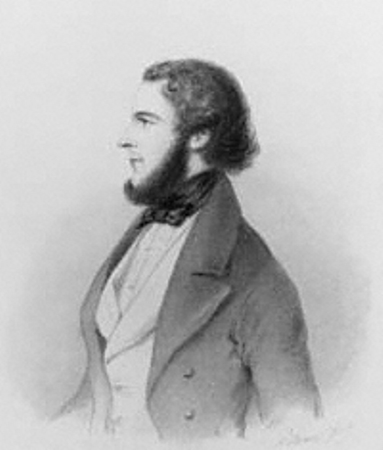
Benjamin Lumley
Benjamin Lumley (1811 – 17 March 1875 in London) was a British North America-born British opera manager and solicitor. Born Benjamin Levy, he was the son of a Jewish merchant, Louis Levy.
Lumley's father was a clothes-dealer who had made his original fortune in British North America. The young Benjamin Levy was a pupil at King Edward's School, Birmingham.
Lumley trained as a solicitor, and then studied for the Bar under Basil Montagu. In this capacity he gave legal advice to the financially troubled manager of what was then His Majesty's Theatre, Pierre Laporte, who came to rely on him extensively. As Lumley had become familiar with making managerial decisions for the theatre, when Laporte died in 1841 the board of the opera company, consisting mainly of wealthy noblemen, asked him to take over.
Lumley had already written a standard handbook on Parliamentary private bills and was launched on a promising legal career. But his memoirs clearly indicate his pleasure in mixing in high society and making a name for himself. Management of Her Majesty's Theatre (now renamed after the accession of Queen Victoria) gave him chances of close relations with stars of the opera and ballet, to give and attend ostentatious parties, and to bring high-quality Italian opera to Victorian London.
The conductor at Her Majesty's was Michael Costa. By their different natures – one a devotee of high musical standards, the other a connoisseur of the star system, Lumley and Costa should have made a perfect team. Indeed they were so for the first five years, one of the longer surviving partnerships of the age. Artistic progress, induced by Lumley, against the inclinations of the more conservative Costa, included the introduction of operas by Giuseppe Verdi to London and of new stars of song and dance, negotiations with Felix Mendelssohn for an opera on William Shakespeare's The Tempest, and in 1847 the London debut of Jenny Lind. The resulting financial success led the optimistic Lumley to purchase the underlying lease of the theatre.
One of the sensations of Lumley's management was the appearance in 1845 of the balletic 'Pas de Quatre', choreographed by Perrot and scored by Pugni. This featured as dancers Marie Taglioni, Carlotta Grisi, Cerrito and Grahn, which may have been inspired by Lumley seeing four girls dancing outside the theatre. The 'Pas de Quatre' became an institution and is frequently revived.
First, Costa felt neglected by Lumley, who wisely from an artistic point of view was not keen to produce Costa's own ballets and operas. Furthermore, Lumley refused to let Costa to take up the task of chief conductor to the Royal Philharmonic Society, then the leading London symphonic orchestra. In 1846 Costa decamped to Covent Garden with most of the orchestra and singers and the support of some leading London critics, to establish there the second Royal Italian Opera Company in competition with Lumley.
Lumley swiftly fought back, showing all his skills as an opportunist. He engaged the composer Michael Balfe to replace Costa. In 1847, despite legal threats from the Covent Garden management, he brought Jenny Lind over for her London debut, for which he had prepared with unprecedented levels of spin and publicity. Giuseppe Verdi had been engaged to write an opera for London, originally intended to be Macbeth, but this was first given in Florence, and so Verdi decided to produce I masnadieri for London.
Hub AI
Benjamin Lumley AI simulator
(@Benjamin Lumley_simulator)
Benjamin Lumley
Benjamin Lumley (1811 – 17 March 1875 in London) was a British North America-born British opera manager and solicitor. Born Benjamin Levy, he was the son of a Jewish merchant, Louis Levy.
Lumley's father was a clothes-dealer who had made his original fortune in British North America. The young Benjamin Levy was a pupil at King Edward's School, Birmingham.
Lumley trained as a solicitor, and then studied for the Bar under Basil Montagu. In this capacity he gave legal advice to the financially troubled manager of what was then His Majesty's Theatre, Pierre Laporte, who came to rely on him extensively. As Lumley had become familiar with making managerial decisions for the theatre, when Laporte died in 1841 the board of the opera company, consisting mainly of wealthy noblemen, asked him to take over.
Lumley had already written a standard handbook on Parliamentary private bills and was launched on a promising legal career. But his memoirs clearly indicate his pleasure in mixing in high society and making a name for himself. Management of Her Majesty's Theatre (now renamed after the accession of Queen Victoria) gave him chances of close relations with stars of the opera and ballet, to give and attend ostentatious parties, and to bring high-quality Italian opera to Victorian London.
The conductor at Her Majesty's was Michael Costa. By their different natures – one a devotee of high musical standards, the other a connoisseur of the star system, Lumley and Costa should have made a perfect team. Indeed they were so for the first five years, one of the longer surviving partnerships of the age. Artistic progress, induced by Lumley, against the inclinations of the more conservative Costa, included the introduction of operas by Giuseppe Verdi to London and of new stars of song and dance, negotiations with Felix Mendelssohn for an opera on William Shakespeare's The Tempest, and in 1847 the London debut of Jenny Lind. The resulting financial success led the optimistic Lumley to purchase the underlying lease of the theatre.
One of the sensations of Lumley's management was the appearance in 1845 of the balletic 'Pas de Quatre', choreographed by Perrot and scored by Pugni. This featured as dancers Marie Taglioni, Carlotta Grisi, Cerrito and Grahn, which may have been inspired by Lumley seeing four girls dancing outside the theatre. The 'Pas de Quatre' became an institution and is frequently revived.
First, Costa felt neglected by Lumley, who wisely from an artistic point of view was not keen to produce Costa's own ballets and operas. Furthermore, Lumley refused to let Costa to take up the task of chief conductor to the Royal Philharmonic Society, then the leading London symphonic orchestra. In 1846 Costa decamped to Covent Garden with most of the orchestra and singers and the support of some leading London critics, to establish there the second Royal Italian Opera Company in competition with Lumley.
Lumley swiftly fought back, showing all his skills as an opportunist. He engaged the composer Michael Balfe to replace Costa. In 1847, despite legal threats from the Covent Garden management, he brought Jenny Lind over for her London debut, for which he had prepared with unprecedented levels of spin and publicity. Giuseppe Verdi had been engaged to write an opera for London, originally intended to be Macbeth, but this was first given in Florence, and so Verdi decided to produce I masnadieri for London.