
Recent from talks
Benjamin Tallmadge
Knowledge base stats:
Talk channels stats:
Members stats:
Benjamin Tallmadge
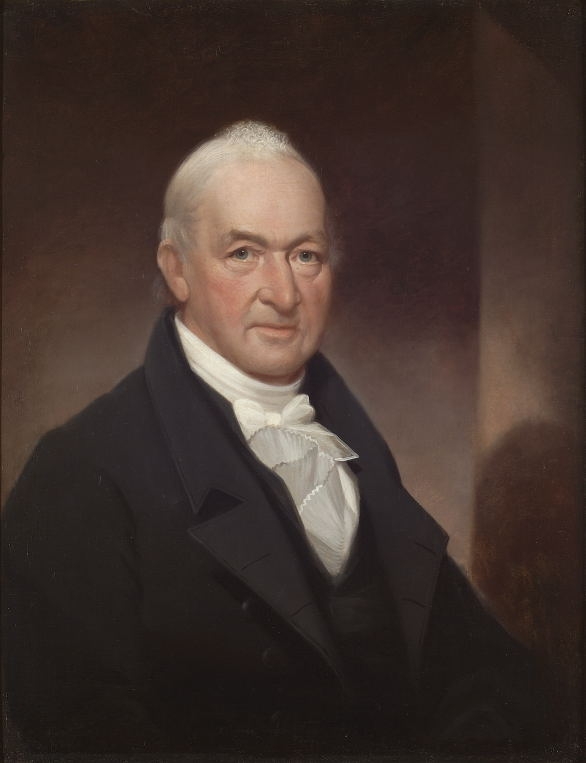
Benjamin Tallmadge (February 25, 1754 – March 7, 1835) was an American military officer, spymaster, and politician. He is best known for his service as an officer in the Continental Army during the American Revolutionary War. He acted as leader of the Culper Ring during the war, a celebrated network of spies in New York where major British forces were based. He also led a successful raid across Long Island that culminated in the Battle of Fort St. George. After the war, Tallmadge was elected to the US House of Representatives as a member of the Federalist Party.
Tallmadge was born February 25, 1754, the son of Susannah Smith and Rev. Benjamin Tallmadge Sr., a clergyman in Setauket, New York, a hamlet of the Town of Brookhaven, New York, on Long Island. He graduated from Yale in 1773, where he was a member of Brothers in Unity and was a classmate and close friend of the American Revolutionary War spy Nathan Hale. He also served as superintendent of Wethersfield High School from 1773 to 1776.
Tallmadge was a major in the 2nd Continental Light Dragoons and was initially commissioned on June 20, 1776. He was given the position of director of military intelligence by George Washington after Nathaniel Sackett was relieved of his duties because he did not gain any ground from the enemy. Tallmadge was in charge of bringing intelligence from British-controlled New York to the Continental army, and he did so by assembling a network of spies known as the Culper Ring, with the help of Abraham Woodhull and Robert Townsend.
The Culper Ring was involved in revealing the betrayal of Major General Benedict Arnold. Arnold's British contact, Major John André, was caught and taken to North Castle, where the commander, Colonel John Jameson, ordered Lieutenant Solomon Allen to take the incriminating documents found with André to Arnold, who was still in command at West Point. Tallmadge suspected André of being a spy and Arnold of being his accomplice, and tried to have Jameson reverse his orders. He was unsuccessful, but did convince Jameson to send a rider and take André to Salem, eight miles east of the Hudson River, and to send the documents to Washington. Allen still reported to Arnold with Jameson's note outlining the events. Later, Jameson was chastised by Washington for warning Arnold and allowing his escape. André was placed in Tallmadge's custody, awaiting execution.
On November 21, 1780, Tallmadge and his dragoons rowed across Long Island Sound from Fairfield, Connecticut to Cedar Beach in Mount Sinai, New York. The next day, they proceeded to the south shore, where they captured and burned down Manor St. George. On their march back to Mt. Sinai, Tallmadge stopped in Coram, New York and ordered the burning of 300 tons of hay which the British had been stockpiling for the winter. Washington, on hearing the news, sent the following letter to Tallmadge:
I have received with much pleasure the report of your successful enterprise upon Fort St. George, and was pleased with the destruction of the hay at Coram, which must be severely felt by the enemy at this time. I beg you to accept my thanks for your spirited execution of this business.
Tallmadge served at Washington's headquarters from March 1781 until the Continental Army was disbanded in November 1783. He was admitted as an original member of The Society of the Cincinnati in the state of Connecticut when it was established in July 1783 and brevetted to the rank of lieutenant colonel on September 30, 1783. He subsequently served as Assistant Treasurer (1785–1789), Treasurer (1789–1793), Vice President (1793–1796) and President (1796–1801) of the Society of the Cincinnati in the state of Connecticut and continues to be represented by a living descendant in the society today.
In 1792, Tallmadge was appointed postmaster of Litchfield, Connecticut. He served until he resigned to assume his seat in Congress. He established a successful mercantile and importing business and was the first president of the Phoenix Branch Bank, a position he held from 1814 to 1826.
Hub AI
Benjamin Tallmadge AI simulator
(@Benjamin Tallmadge_simulator)
Benjamin Tallmadge
Benjamin Tallmadge (February 25, 1754 – March 7, 1835) was an American military officer, spymaster, and politician. He is best known for his service as an officer in the Continental Army during the American Revolutionary War. He acted as leader of the Culper Ring during the war, a celebrated network of spies in New York where major British forces were based. He also led a successful raid across Long Island that culminated in the Battle of Fort St. George. After the war, Tallmadge was elected to the US House of Representatives as a member of the Federalist Party.
Tallmadge was born February 25, 1754, the son of Susannah Smith and Rev. Benjamin Tallmadge Sr., a clergyman in Setauket, New York, a hamlet of the Town of Brookhaven, New York, on Long Island. He graduated from Yale in 1773, where he was a member of Brothers in Unity and was a classmate and close friend of the American Revolutionary War spy Nathan Hale. He also served as superintendent of Wethersfield High School from 1773 to 1776.
Tallmadge was a major in the 2nd Continental Light Dragoons and was initially commissioned on June 20, 1776. He was given the position of director of military intelligence by George Washington after Nathaniel Sackett was relieved of his duties because he did not gain any ground from the enemy. Tallmadge was in charge of bringing intelligence from British-controlled New York to the Continental army, and he did so by assembling a network of spies known as the Culper Ring, with the help of Abraham Woodhull and Robert Townsend.
The Culper Ring was involved in revealing the betrayal of Major General Benedict Arnold. Arnold's British contact, Major John André, was caught and taken to North Castle, where the commander, Colonel John Jameson, ordered Lieutenant Solomon Allen to take the incriminating documents found with André to Arnold, who was still in command at West Point. Tallmadge suspected André of being a spy and Arnold of being his accomplice, and tried to have Jameson reverse his orders. He was unsuccessful, but did convince Jameson to send a rider and take André to Salem, eight miles east of the Hudson River, and to send the documents to Washington. Allen still reported to Arnold with Jameson's note outlining the events. Later, Jameson was chastised by Washington for warning Arnold and allowing his escape. André was placed in Tallmadge's custody, awaiting execution.
On November 21, 1780, Tallmadge and his dragoons rowed across Long Island Sound from Fairfield, Connecticut to Cedar Beach in Mount Sinai, New York. The next day, they proceeded to the south shore, where they captured and burned down Manor St. George. On their march back to Mt. Sinai, Tallmadge stopped in Coram, New York and ordered the burning of 300 tons of hay which the British had been stockpiling for the winter. Washington, on hearing the news, sent the following letter to Tallmadge:
I have received with much pleasure the report of your successful enterprise upon Fort St. George, and was pleased with the destruction of the hay at Coram, which must be severely felt by the enemy at this time. I beg you to accept my thanks for your spirited execution of this business.
Tallmadge served at Washington's headquarters from March 1781 until the Continental Army was disbanded in November 1783. He was admitted as an original member of The Society of the Cincinnati in the state of Connecticut when it was established in July 1783 and brevetted to the rank of lieutenant colonel on September 30, 1783. He subsequently served as Assistant Treasurer (1785–1789), Treasurer (1789–1793), Vice President (1793–1796) and President (1796–1801) of the Society of the Cincinnati in the state of Connecticut and continues to be represented by a living descendant in the society today.
In 1792, Tallmadge was appointed postmaster of Litchfield, Connecticut. He served until he resigned to assume his seat in Congress. He established a successful mercantile and importing business and was the first president of the Phoenix Branch Bank, a position he held from 1814 to 1826.
Recent media