
Recent from talks
Heathkit H8
Knowledge base stats:
Talk channels stats:
Members stats:
Heathkit H8
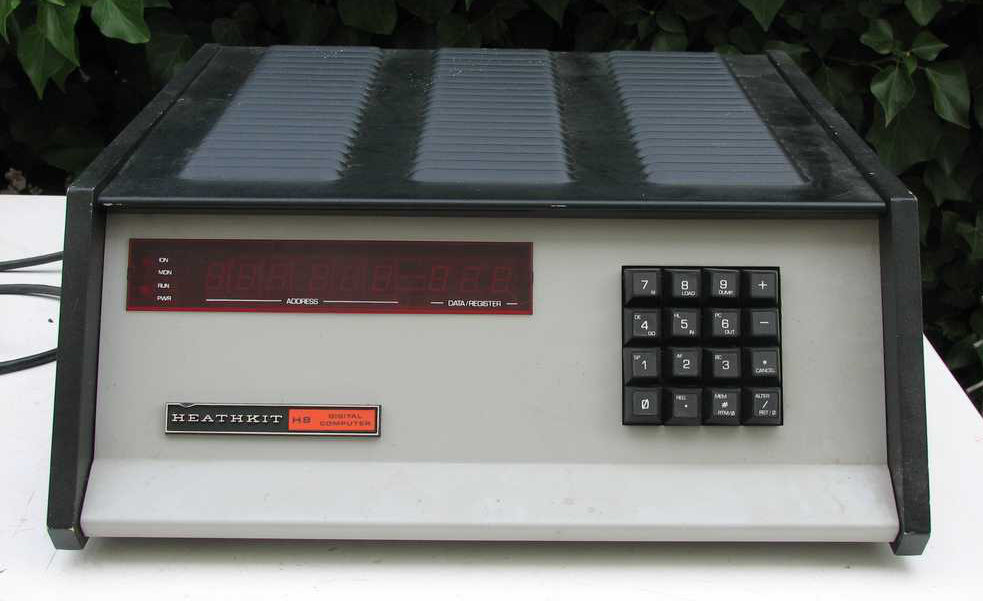
Heathkit's H8 is an Intel 8080A-based microcomputer sold in kit form starting in 1977. The H8 is similar to the S-100 bus computers of the era, and like those machines is often used with the CP/M operating system on floppy disk.
The main difference between the H8 and S-100 machines is the bus; the H8 uses a 50-pin bus design that was smaller, more robust and better engineered electrically. The machine also includes a bootstrap ROM that makes it easier to start up, including code for running basic input/output and allowing input through a front-mounted octal keypad and front panel display, instead of the binary switches and lights used on machines like the Altair 8800.
The H8 requires a separate terminal to be truly useful; Heathkit introduced several terminals as well. A successor model, the "All-in-One" Heathkit H89, combines a Z80 processor board and a floppy disk drive into the cabinet of an Heathkit H19 terminal. This model also was sold in fully assembled form as the WH89. These were later sold by Zenith Electronics with their name on the front as the Zenith Z-89.
MITS announced the Altair 8800 in January 1975 and started selling kits soon after. Marketed to electronics hobbyists through trade magazines like Popular Electronics, the company founders felt there would be limited appeal and expected to sell only a few hundred systems. Instead, they received orders for thousands in the first month. Sales were so much greater than expected that MITS was unable to clear the order backlog for the better part of the year.
The Altair sparked off such intense interest in the microcomputer world that a number of other companies jumped in to fill the sales backlog, building machines that were clones of the Altair. The primary component of this design is the S-100 bus, so named because it uses a 100-pin edge connector that MITS found at bargain prices when they were designing the machine. Unfortunately, the pins are connected from the backplane with a disorganized layout, and it has a number of problems that make it unreliable.
Standardization led to a flourishing of companies selling into the S-100 market. The introduction of floppy disk controllers and the disk-based CP/M operating system dramatically improved the system's capabilities and started the process of turning them into practical small-business tools. By the late 1970s they were beginning to displace minicomputers and other systems in a number of roles.
Heathkit was a long-established player in the electronics market, making kits for products that had proven themselves in the market. Some of these were quite complex, including a color television. The company had considered designing a kit computer as early as 1974, but concluded that it was not a good fit for their traditional market. The successful launch of the Altair changed things, and in 1977 Heathkit decided to design a kit similar to the Altair but addressing its more obvious shortcomings. The H8 was announced in July 1977 and started selling that fall at a price of $379.
For full functionality, the system also requires a 4 KiB SRAM card ($139) and some form of storage controller; at a minimum this would be the H10 paper tape punch/reader or the H8-5 Serial I/O card ($110) which controls a cassette tape, using a 1200-baud variant of the Kansas City standard format. Another common accessory is the H9 video terminal, which is also driven by the H8-5 card; although any serial terminal will suffice. The H9 is limited to upper case characters and 12 display lines, and uses a cheap array of switches for its keyboard. It was eventually superseded by the H19 terminal, a more ergonomic design, and capable of lower-case and graphic-like characters. The H19 became a major product line of its own. The H17 floppy disk system became available in 1978, normally sold with one drive but expandable with a second (and later to three). Use of the H17 requires at least 16 KiB of RAM. The H8 can run CP/M, and often did, but early machines require either a special version of CP/M that was "org'd" at 8 KiB instead of zero, or a small hardware modification and an updated ROM to do so. Heath also offered HDOS, which was written by Gordon Letwin. Letwin later went to Microsoft and was chief architect of OS/2.
Hub AI
Heathkit H8 AI simulator
(@Heathkit H8_simulator)
Heathkit H8
Heathkit's H8 is an Intel 8080A-based microcomputer sold in kit form starting in 1977. The H8 is similar to the S-100 bus computers of the era, and like those machines is often used with the CP/M operating system on floppy disk.
The main difference between the H8 and S-100 machines is the bus; the H8 uses a 50-pin bus design that was smaller, more robust and better engineered electrically. The machine also includes a bootstrap ROM that makes it easier to start up, including code for running basic input/output and allowing input through a front-mounted octal keypad and front panel display, instead of the binary switches and lights used on machines like the Altair 8800.
The H8 requires a separate terminal to be truly useful; Heathkit introduced several terminals as well. A successor model, the "All-in-One" Heathkit H89, combines a Z80 processor board and a floppy disk drive into the cabinet of an Heathkit H19 terminal. This model also was sold in fully assembled form as the WH89. These were later sold by Zenith Electronics with their name on the front as the Zenith Z-89.
MITS announced the Altair 8800 in January 1975 and started selling kits soon after. Marketed to electronics hobbyists through trade magazines like Popular Electronics, the company founders felt there would be limited appeal and expected to sell only a few hundred systems. Instead, they received orders for thousands in the first month. Sales were so much greater than expected that MITS was unable to clear the order backlog for the better part of the year.
The Altair sparked off such intense interest in the microcomputer world that a number of other companies jumped in to fill the sales backlog, building machines that were clones of the Altair. The primary component of this design is the S-100 bus, so named because it uses a 100-pin edge connector that MITS found at bargain prices when they were designing the machine. Unfortunately, the pins are connected from the backplane with a disorganized layout, and it has a number of problems that make it unreliable.
Standardization led to a flourishing of companies selling into the S-100 market. The introduction of floppy disk controllers and the disk-based CP/M operating system dramatically improved the system's capabilities and started the process of turning them into practical small-business tools. By the late 1970s they were beginning to displace minicomputers and other systems in a number of roles.
Heathkit was a long-established player in the electronics market, making kits for products that had proven themselves in the market. Some of these were quite complex, including a color television. The company had considered designing a kit computer as early as 1974, but concluded that it was not a good fit for their traditional market. The successful launch of the Altair changed things, and in 1977 Heathkit decided to design a kit similar to the Altair but addressing its more obvious shortcomings. The H8 was announced in July 1977 and started selling that fall at a price of $379.
For full functionality, the system also requires a 4 KiB SRAM card ($139) and some form of storage controller; at a minimum this would be the H10 paper tape punch/reader or the H8-5 Serial I/O card ($110) which controls a cassette tape, using a 1200-baud variant of the Kansas City standard format. Another common accessory is the H9 video terminal, which is also driven by the H8-5 card; although any serial terminal will suffice. The H9 is limited to upper case characters and 12 display lines, and uses a cheap array of switches for its keyboard. It was eventually superseded by the H19 terminal, a more ergonomic design, and capable of lower-case and graphic-like characters. The H19 became a major product line of its own. The H17 floppy disk system became available in 1978, normally sold with one drive but expandable with a second (and later to three). Use of the H17 requires at least 16 KiB of RAM. The H8 can run CP/M, and often did, but early machines require either a special version of CP/M that was "org'd" at 8 KiB instead of zero, or a small hardware modification and an updated ROM to do so. Heath also offered HDOS, which was written by Gordon Letwin. Letwin later went to Microsoft and was chief architect of OS/2.
Recent media