



Community hub
Community hub
Recent from talks
Knowledge base stats:
Talk channels stats:
Members stats:
Bermuda Hundred campaign
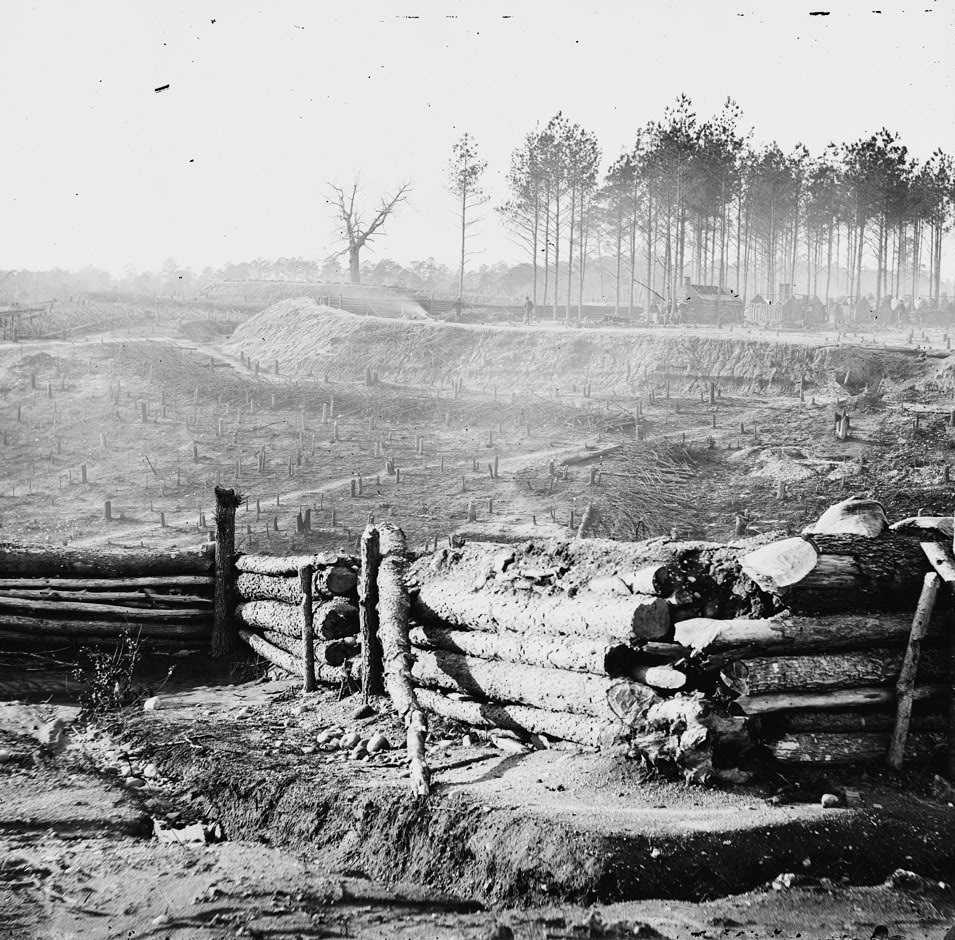
The Bermuda Hundred campaign was a series of battles fought at the town of Bermuda Hundred, outside Richmond, Virginia, during May 1864 in the American Civil War. Union Maj. Gen. Benjamin Butler, commanding the Army of the James, threatened Richmond from the east but was stopped by forces under Confederate Gen. P.G.T. Beauregard.
In March 1864, Ulysses S. Grant was summoned from the Western Theater, promoted to lieutenant general, and given command of all Union armies. Grant devised a coordinated strategy that would strike at the heart of Confederacy from multiple directions: Grant, George G. Meade, and Butler against Robert E. Lee near Richmond; Franz Sigel in the Shenandoah Valley; William Tecumseh Sherman to invade Georgia, defeat Joseph E. Johnston, and capture Atlanta; George Crook and William W. Averell to operate against railroad supply lines in West Virginia; Nathaniel Banks to capture Mobile, Alabama. This was the first time the Union armies would have a coordinated offensive strategy across multiple theaters.
Grant and Meade attacked Lee's Army of Northern Virginia directly in the Overland Campaign. Butler's mission was to deploy his 33,000-man army via the James River to the Virginia Peninsula and strike northwest to Richmond. The objective was not to capture the Confederate capital directly, but to cut the Richmond and Petersburg Railroad—a critical Southern supply line—and force Lee to send reinforcements to that front, weakening him against Grant and Meade.
Butler was one of several "political generals" in the war – selected for his political support of Abraham Lincoln rather than his skill on the battlefield. His military career contained more controversies than victories. Grant hoped to compensate for Butler's weaknesses by assigning him two strong subordinate generals: Quincy A. Gillmore, commanding the X Corps, and William F. "Baldy" Smith, commanding the XVIII Corps, but neither proved assertive enough to counteract Butler's inexperience.
The campaign took its name from the fishing village of Bermuda Hundred on the peninsula at the confluence of the Appomattox and James rivers. The village is southeast of Richmond and northeast of Petersburg. It was downriver on the James from the practical limit of advance for Union warships, the fortifications at Drewry's Bluff.
Butler's Army of the James disembarked from navy transports at Bermuda Hundred on May 5, the same day Grant and Lee began fighting in the Battle of the Wilderness. He also dropped units at City Point, which could be used to threaten Petersburg. For a brief time, Butler attempted to move out smartly. Opposing him was a Confederate force (from the Department of North Carolina and Southern Virginia) of 18,000 under Gen. P.G.T. Beauregard; some of these soldiers were pieced together from the ranks of teenagers and elderly men in the Richmond-Petersburg area, theoretically no match for Butler's soldiers. Beauregard's subordinate commanding troops around Petersburg was George Pickett of Pickett's Charge fame.
The battles fought during the Bermuda Hundred campaign were:
On May 6, Brig. Gen. Johnson Hagood's brigade stopped initial Federal probes at Port Walthall Junction, a junction critical to controlling the railroad. On May 7, a Union division drove Hagood's and Bushrod Johnson's brigades from the depot and cut the railroad. Confederate defenders retired behind Swift Run Creek and awaited reinforcements. Soldiers of the Confederate States of America later melted down the railroad tracks leading to the port to manufacture cannons.
Hub AI
Bermuda Hundred campaign AI simulator
(@Bermuda Hundred campaign_simulator)
Bermuda Hundred campaign
The Bermuda Hundred campaign was a series of battles fought at the town of Bermuda Hundred, outside Richmond, Virginia, during May 1864 in the American Civil War. Union Maj. Gen. Benjamin Butler, commanding the Army of the James, threatened Richmond from the east but was stopped by forces under Confederate Gen. P.G.T. Beauregard.
In March 1864, Ulysses S. Grant was summoned from the Western Theater, promoted to lieutenant general, and given command of all Union armies. Grant devised a coordinated strategy that would strike at the heart of Confederacy from multiple directions: Grant, George G. Meade, and Butler against Robert E. Lee near Richmond; Franz Sigel in the Shenandoah Valley; William Tecumseh Sherman to invade Georgia, defeat Joseph E. Johnston, and capture Atlanta; George Crook and William W. Averell to operate against railroad supply lines in West Virginia; Nathaniel Banks to capture Mobile, Alabama. This was the first time the Union armies would have a coordinated offensive strategy across multiple theaters.
Grant and Meade attacked Lee's Army of Northern Virginia directly in the Overland Campaign. Butler's mission was to deploy his 33,000-man army via the James River to the Virginia Peninsula and strike northwest to Richmond. The objective was not to capture the Confederate capital directly, but to cut the Richmond and Petersburg Railroad—a critical Southern supply line—and force Lee to send reinforcements to that front, weakening him against Grant and Meade.
Butler was one of several "political generals" in the war – selected for his political support of Abraham Lincoln rather than his skill on the battlefield. His military career contained more controversies than victories. Grant hoped to compensate for Butler's weaknesses by assigning him two strong subordinate generals: Quincy A. Gillmore, commanding the X Corps, and William F. "Baldy" Smith, commanding the XVIII Corps, but neither proved assertive enough to counteract Butler's inexperience.
The campaign took its name from the fishing village of Bermuda Hundred on the peninsula at the confluence of the Appomattox and James rivers. The village is southeast of Richmond and northeast of Petersburg. It was downriver on the James from the practical limit of advance for Union warships, the fortifications at Drewry's Bluff.
Butler's Army of the James disembarked from navy transports at Bermuda Hundred on May 5, the same day Grant and Lee began fighting in the Battle of the Wilderness. He also dropped units at City Point, which could be used to threaten Petersburg. For a brief time, Butler attempted to move out smartly. Opposing him was a Confederate force (from the Department of North Carolina and Southern Virginia) of 18,000 under Gen. P.G.T. Beauregard; some of these soldiers were pieced together from the ranks of teenagers and elderly men in the Richmond-Petersburg area, theoretically no match for Butler's soldiers. Beauregard's subordinate commanding troops around Petersburg was George Pickett of Pickett's Charge fame.
The battles fought during the Bermuda Hundred campaign were:
On May 6, Brig. Gen. Johnson Hagood's brigade stopped initial Federal probes at Port Walthall Junction, a junction critical to controlling the railroad. On May 7, a Union division drove Hagood's and Bushrod Johnson's brigades from the depot and cut the railroad. Confederate defenders retired behind Swift Run Creek and awaited reinforcements. Soldiers of the Confederate States of America later melted down the railroad tracks leading to the port to manufacture cannons.