Hubbry Logo
Bernhard GoetzkeBernhard GoetzkeMain
Open search
Bernhard Goetzke
Community hub
Bernhard Goetzke
logo
8 pages, 0 posts
0 subscribers
Be the first to start a discussion here.
Bernhard Goetzke
Bernhard Goetzke
from Wikipedia

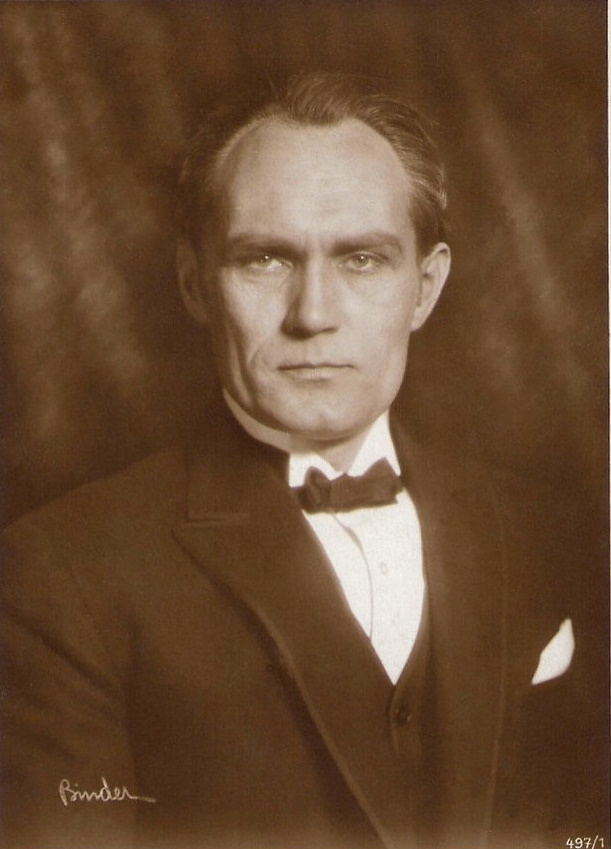
Bernhard Goetzke (5 June 1884 – 7 October 1964) was a German stage and film actor,[2] renowned for his contributions to German silent cinema. Born in Danzig, German Empire (now Gdańsk, Poland), Goetzke began his acting career in theaters across Hagen, Düsseldorf, Dresden, and Berlin. His film debut came in 1917 with Robert Wiene's Furcht (Fear), but his breakthrough roles were in Fritz Lang's films, including Destiny (Der Müde Tod, 1921), Dr. Mabuse the Gambler (1922), and Die Nibelungen (1924). His restrained yet expressive acting style made him a favourite among filmmakers.

Key Information

Career

[edit]

After completing his training as an actor, Goetzke worked at theaters in Hagen and Dresden. He later performed on Max Reinhardt's renowned stages in Berlin and was active for several decades at the Schiller Theater.

Goetzke also appeared in international productions, including Alfred Hitchcock's The Mountain Eagle (1926) and Henri Fescourt's Monte Cristo (1929).

With the advent of sound films, he transitioned to both smaller and larger supporting roles. Up until 1933, Goetzke appeared in as many as ten films per year, participating in productions from France, Italy, England, Hungary, the Soviet Union, and Finland.

Under the rule of the National Socialists, art in Nazi Germany was heavily regulated and used as a tool for propaganda. During this time, Goetzke's workload significantly decreased. Despite these challenges, he featured in over twenty films during World War II, mostly in supporting roles.

His later works included celebrated classics like Münchhausen (1943) and The Golden Spider (Die goldene Spinne, 1943), as well as controversial propaganda films such as Jud Süß (1940) and Ich klage an (1941). After 1945, Goetzke shifted his focus to theater and radio, only occasionally appearing on screen. His final acting role was in the 1961 TV production Elisabeth von England as First Lord of the Admiralty.

During the Nazi era, Goetzke was included in the "Gottbegnadeten-Liste" (God-gifted list) shortly before the war's end.

Goetzke died in West Berlin in 1964, leaving behind a legacy as one of the most distinctive faces of German silent cinema. Over his extensive career, he appeared in 130 films between 1917 and 1961.

Selected filmography

[edit]

References

[edit]
[edit]
Revisions and contributorsEdit on WikipediaRead on Wikipedia
from Grokipedia
Bernhard Goetzke is a German stage and film actor renowned for his powerful and restrained performances in German silent cinema, most notably his portrayal of Death in Fritz Lang's Der müde Tod (Destiny, 1921) and Prosecutor von Wenk in Dr. Mabuse, der Spieler (Dr. Mabuse the Gambler, 1922). Tall and imposing, he became a key figure in Weimar-era expressionist filmmaking through his ability to convey intense dramatic tension with minimal gestures and a commanding presence. Born on 5 June 1884 in Danzig (now Gdańsk, Poland), Goetzke trained privately as an actor before performing in theaters across Germany and working under director Max Reinhardt in Berlin. Goetzke made his film debut in 1917 with Furcht and went on to appear in over 130 films through 1961, often taking prominent roles in major silent productions. His collaborations with Fritz Lang extended to Die Nibelungen (1924), where he played the bard Volker von Alzey, and he starred in Alfred Hitchcock's early film The Mountain Eagle (1926). He also appeared in international projects such as Monte Cristo (1929) as Abbé Faria and Salamander (1928). After the advent of sound film, his career shifted toward supporting and character roles, including in wartime and postwar German productions, while he remained active in theater as a long-time ensemble member of Berlin's Schillertheater and later the State Theatres of West Berlin. He died on 7 October 1964 in West Berlin.

Early Life and Stage Career

Birth and Background

Bernhard Goetzke was born on 5 June 1884 in Danzig, West Prussia, Kingdom of Prussia, Germany, a city now known as Gdańsk, Poland. At the time of his birth, Danzig was a major Hanseatic port city within the German Empire. Limited information is available regarding his family background or early childhood years prior to his professional acting pursuits.

Acting Training

Bernhard Goetzke received private training as an actor before embarking on his professional stage career. This preparation preceded his initial theater engagements and equipped him with the skills necessary for early performances. No details on the specific instructor, duration, or location of his training are documented in available sources, and no formal academy attendance is recorded.

Early Theater Work

Bernhard Goetzke began his acting career on the stage in the early years of the 20th century, undertaking engagements at theaters in various cities across the German Empire, including in Berlin where he worked under director Max Reinhardt. His early stage work focused on developing his craft in the classical and contemporary repertoire typical of German theater at the time, though specific roles from this period are sparsely documented. Goetzke's theater background proved essential to his later transition to silent film.

Film Career

Entry into Film and Silent Era Debut (1917–1920)

Bernhard Goetzke made his film debut in 1917 with the role of the manservant in Furcht (Fear), a drama directed by Robert Wiene. This marked his entry into cinema after activity on the stage, occurring during the final year of World War I. Following this initial appearance, Goetzke began to accumulate credits in the German silent film industry. In 1919, he took supporting roles in several productions, including Veritas Vincit as an Indian character, Madame Dubarry (also known as Passion) as a revolutionary, Unheimliche Geschichten (Eerie Tales) as a friend at a table séance, Die Pantherbraut as a priest, and Die Japanerin as an Arab servant. His screen presence grew more prolific in 1920, with appearances in a variety of films such as Die Brüder Karamasoff as Ivan, Der Schädel der Pharaonentochter as Paophis, Puppen des Todes as the doll carver Erasmus, and multiple installments of serials including the Nirvana series and Die Jagd nach dem Tode. These early roles, primarily supporting parts in dramas, adventures, and exotic-themed stories, laid the foundation for his career in Weimar-era cinema during the immediate post-war period.

Breakthrough in Weimar Silent Cinema (1921–1929)

Bernhard Goetzke's breakthrough in Weimar silent cinema occurred between 1921 and 1929, when he secured prominent roles in major productions that highlighted his commanding screen presence. His work during this period often placed him in roles requiring intensity and authority, contributing to his reputation as a distinctive character actor in German and international silent films. He first gained wide attention for his portrayal of Death in Fritz Lang's Der müde Tod (Destiny, 1921), where he embodied a forbidding yet weary supernatural figure burdened by his eternal task. Lang introduced the character as one who laments the hardness of his office, and Goetzke's performance was described as delivered in eerie perfection. This role marked the beginning of his notable collaborations with Lang. The following year, Goetzke reunited with Lang in Dr. Mabuse, der Spieler (1922), playing State Attorney Norbert von Wenk, a resolute and authoritative prosecutor relentlessly pursuing the criminal mastermind Dr. Mabuse. The part exemplified his skill at portraying determined, commanding figures in complex narratives. He continued his collaboration with Lang in Die Nibelungen (1924), appearing as the bard Volker von Alzey in both parts of the epic (Siegfried and Kriemhilds Rache). Later in the decade, Goetzke continued to appear in significant films, including the Soviet-German co-production Salamander (1928), directed by Grigoriy Roshal, where he played Professor Zange. In 1929, he portrayed the Abbé Faria in Henri Fescourt's French adaptation Monte Cristo, depicting the knowledgeable and supportive priest who befriends Edmond Dantès in prison, imparts crucial knowledge about a hidden treasure, and enables the protagonist's escape through his death. These performances reinforced his tendency toward roles involving authoritative or mentor-like characters with depth and gravitas during the height of Weimar silent cinema.

Transition to Sound and 1930s–1940s Films

Bernhard Goetzke successfully transitioned to sound films in the early 1930s, continuing his career in German cinema despite shifting away from the leading roles that had defined his silent era work. He largely became a supporting and character actor, often cast in roles portraying authority figures, officials, or elderly men. Throughout the 1930s, Goetzke appeared in numerous productions, with credits in around 35–40 films, frequently playing prosecutors, commissioners, military officers, or similar figures. Representative roles included General Pellieux in The Dreyfus Case (1930), Professor Smith in Die Koffer des Herrn O.F. (1931), and Feofar Khan in Michel Strogoff (1936). His work remained steady, reflecting his adaptation to the demands of dialogue-driven cinema while maintaining a consistent presence in the industry. In the early 1940s up to 1945, Goetzke continued to work regularly, appearing in around 25–30 films, though many were smaller or uncredited parts in major productions. He took supporting roles in titles such as Bismarck (1940) as an uncredited wing adjutant, Jud Süß (1940), Der große König (1942) as General von Hülsen (uncredited), The Adventures of Baron Munchausen (1943) as Gatti (uncredited), Paracelsus (1943), and Die goldene Spinne (1943) as the Oberstabsarzt. These appearances typically involved character parts like generals, officials, or background figures, consistent with his status as a reliable supporting player during the period.

Post-War Career (1945–1961)

Following the end of World War II, Bernhard Goetzke's screen career became significantly less prolific as he shifted his primary focus to theater work in West Berlin. He became an ensemble member of the Staatlichen Schauspielbühnen Westberlins (State Theatres of West Berlin), remaining active there until near the end of his life. Throughout his entire career, he appeared in over 140 films between 1917 and 1961, though post-war contributions to cinema were limited and occasional, often in supporting character roles within the context of divided Germany's film industries. His earliest post-war screen appearances included two productions for the East German DEFA studio in 1950, where he played a priest in Semmelweis – Retter der Mütter and a poor farmer in Das kalte Herz. After these, his on-screen work remained sparse; he had a minor involvement in the West German production Das gab's nur einmal (1957/1958). Goetzke's final credit came with a bit role in the West German television film Elisabeth von England (1961), marking the close of his acting career on screen. This period highlighted his transition from prominent film roles in earlier decades to a more subdued but sustained presence in West German theater and occasional media work.

Notable Roles and Contributions

Iconic Silent Era Performances

Bernhard Goetzke earned lasting recognition during the silent era for his compelling portrayals of authoritative, enigmatic, and supernatural figures, particularly in Fritz Lang's landmark films. His most celebrated performance came as Death in Fritz Lang's Der müde Tod (1921), where he embodied the weary, cloaked personification of mortality who challenges a young woman to save her lover by extinguishing three life-candles across historical episodes. Goetzke's tall, slender frame, sharp features, high forehead, and deep-set eyes endowed the character with a statuesque dignity that blended ominous inevitability with tragic melancholy, making this role his international breakthrough and most iconic contribution to German Expressionist cinema. He followed with another defining turn in Lang's Dr. Mabuse, der Spieler (1922) as Staatsanwalt von Wenk, the resolute chief prosecutor who doggedly pursues the criminal mastermind Mabuse across a sprawling narrative of intrigue and corruption. Goetzke's restrained expressiveness conveyed moral steadfastness and intense determination, contrasting his earlier supernatural role while reinforcing his suitability for characters wielding power or upholding order. Goetzke's physical presence and acting style—marked by gaunt intensity and measured gravitas—led to frequent typecasting in roles as villains, lawmen, or tragic authorities in Weimar silent cinema. He also portrayed Volker von Alzey in Lang's epic Die Nibelungen (1924), capturing the heroic and loyal spirit of the bard within the mythic saga. ) These performances remain central to his legacy in German silent film.

Overall Impact on German Cinema

Bernhard Goetzke established himself as a prominent character actor in German silent cinema, particularly through his memorable performances in major Weimar-era films directed by Fritz Lang. His tall, lean presence and restrained acting style—marked by minimal gestures, sculptural stillness, and a sense of hidden power—allowed him to dominate scenes even in supporting roles, earning contemporary recognition as a "dramatic giant" and one of the finest screen actors of his time. Critics praised his ability to convey profound drama through what he withheld rather than overt expression, making his work "soft, and sure, and rather terrible in its strength." Goetzke's portrayal of the weary, sympathetic Death in Fritz Lang's Der müde Tod (Destiny, 1921) stands as one of his most enduring contributions, with his angular face, haunted eyes, and air of profound sadness creating a chilling yet poignant figure. This performance, depicting Death as burdened by his duty rather than malevolent, influenced later cinematic interpretations of the character, most notably Ingmar Bergman's Death in The Seventh Seal (1957). His work in other Lang classics, such as Dr. Mabuse, der Spieler (1922) and Die Nibelungen (1924), further cemented his role in shaping the expressive visual storytelling of German Expressionist cinema. Through these contributions, Goetzke left a lasting mark on German film history, particularly within the silent era's emphasis on atmospheric and psychological depth, where his understated intensity enhanced the era's most ambitious productions.

Later Years and Death

Final Roles and Retirement

In the post-war era, Bernhard Goetzke's screen work became increasingly sparse, with only a handful of appearances in film and television. His credits during the 1950s included minor roles such as a peasant at the carousel in the fantasy film Das kalte Herz (Heart of Stone, 1950) and a priest in Dr. Semmelweis (1950), followed by his portrayal of Herr Woods in the television production Gericht bei Nacht (1957). Goetzke's acting career concluded with his final credited role as the Erster Lord (First Lord) in the 1961 television movie Elisabeth von England. This marked the end of his on-screen contributions after more than four decades in the industry, with no further film or television appearances recorded thereafter.

Death

Bernhard Goetzke died on 7 October 1964 in West Berlin, West Germany, at the age of 80.
Add your contribution
Related Hubs
User Avatar
No comments yet.