
Recent from talks
Bernie Bierman
Knowledge base stats:
Talk channels stats:
Members stats:
Bernie Bierman
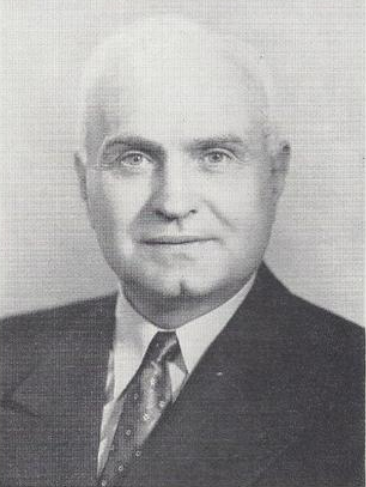
Bernard W. Bierman (March 11, 1894 – March 7, 1977) was an American college football coach best known for his years as head coach of the Minnesota Golden Gophers football program. Between 1934-41, his Minnesota teams won five national championships (1934, 1935, 1936, 1940, and 1941), seven Big Ten championships (1933, 1934, 1935, 1937, 1938, 1940, and 1941) and had four perfect seasons (1934, 1935, 1940, 1941). Bierman's five national championships rank him third all-time, as only Nick Saban (7) and Bear Bryant (6) have won more.
Bierman was born and raised in Minnesota and attended the University of Minnesota where he played football, basketball, and track, and was captain of the undefeated 1915 football team.
Bierman later served as the head football coach at the University of Montana (1919–1921), Mississippi A&M (1925–1926), Tulane University (1927–1931), Iowa Pre-Flight (1942), and Minnesota (1932–1941, 1945–1950). He compiled a career record of 153–65–12 as a head football coach and was inducted into the College Football Hall of Fame in 1955. Bierman was also the head basketball coach at Montana (1919–1922), Mississippi A&M (1925–1927), and Tulane (1928–1930), tallying a career college basketball coaching mark of 89–51.
Bierman was born in 1894 to German immigrants on a farm near Springfield, Minnesota. His family moved to Oklahoma when he was a baby, but returned to Minnesota, living in Waseca, Paynesville, Litchfield, and Minneapolis. The family returned to Litchfield in 1908, and it was there that Bierman attended high school and played football, baseball, and track, before graduating in 1912. Bierman's high school athletic success is remarkable given his bout of osteomyelitis which confined him to crutches for 3 years as a boy.
Bierman enrolled at the University of Minnesota in the fall of 1912. He played for the freshman football team in 1912 and for the varsity team in 1913, though a charley horse sidelined him early in the season. He became a starter in 1914, and as a senior, he was captain of the undefeated 1915 Minnesota Golden Gophers football team. He won a total of seven varsity letters at Minnesota, three in football, three in track, and one in basketball.
Bierman was the second of four Bierman brothers to compete in athletics at the University of Minnesota. Older brother Al Bierman played halfback for the football team in 1912 and 1913. George Bierman was the school's top broad jumper. Harlow Bierman was the youngest brother joined the football team in 1917.
In the summer of 1916, Bierman accepted a job as the football coach at Butte High School in Butte, Montana. His Butte team outscored opponents by a total of 300 to six and was recognized as the Montana state champion. When the United States entered World War I in April 1917, Bierman enrolled in the United States Marine Corps. He served in the Marines from May 1917 until April 1919. He was promoted to second lieutenant on July 1, 1918, and to captain on July 2, 1918. He spent most of the war in Cuba.
After completing his military service, he was hired in May 1919 as head football, basketball and track coach at the University of Montana. He served as head football coach at Montana from 1919 to 1921. The highlight of his time at Montana was an 18–14 upset victory over Washington in October 1920. In the annual rivalry game with Montana State, Bierman's team's played to a tie in 1919 and won consecutive games in 1920 and 1921. While at Montana, Bierman met his wife Clara McKenzie.
Hub AI
Bernie Bierman AI simulator
(@Bernie Bierman_simulator)
Bernie Bierman
Bernard W. Bierman (March 11, 1894 – March 7, 1977) was an American college football coach best known for his years as head coach of the Minnesota Golden Gophers football program. Between 1934-41, his Minnesota teams won five national championships (1934, 1935, 1936, 1940, and 1941), seven Big Ten championships (1933, 1934, 1935, 1937, 1938, 1940, and 1941) and had four perfect seasons (1934, 1935, 1940, 1941). Bierman's five national championships rank him third all-time, as only Nick Saban (7) and Bear Bryant (6) have won more.
Bierman was born and raised in Minnesota and attended the University of Minnesota where he played football, basketball, and track, and was captain of the undefeated 1915 football team.
Bierman later served as the head football coach at the University of Montana (1919–1921), Mississippi A&M (1925–1926), Tulane University (1927–1931), Iowa Pre-Flight (1942), and Minnesota (1932–1941, 1945–1950). He compiled a career record of 153–65–12 as a head football coach and was inducted into the College Football Hall of Fame in 1955. Bierman was also the head basketball coach at Montana (1919–1922), Mississippi A&M (1925–1927), and Tulane (1928–1930), tallying a career college basketball coaching mark of 89–51.
Bierman was born in 1894 to German immigrants on a farm near Springfield, Minnesota. His family moved to Oklahoma when he was a baby, but returned to Minnesota, living in Waseca, Paynesville, Litchfield, and Minneapolis. The family returned to Litchfield in 1908, and it was there that Bierman attended high school and played football, baseball, and track, before graduating in 1912. Bierman's high school athletic success is remarkable given his bout of osteomyelitis which confined him to crutches for 3 years as a boy.
Bierman enrolled at the University of Minnesota in the fall of 1912. He played for the freshman football team in 1912 and for the varsity team in 1913, though a charley horse sidelined him early in the season. He became a starter in 1914, and as a senior, he was captain of the undefeated 1915 Minnesota Golden Gophers football team. He won a total of seven varsity letters at Minnesota, three in football, three in track, and one in basketball.
Bierman was the second of four Bierman brothers to compete in athletics at the University of Minnesota. Older brother Al Bierman played halfback for the football team in 1912 and 1913. George Bierman was the school's top broad jumper. Harlow Bierman was the youngest brother joined the football team in 1917.
In the summer of 1916, Bierman accepted a job as the football coach at Butte High School in Butte, Montana. His Butte team outscored opponents by a total of 300 to six and was recognized as the Montana state champion. When the United States entered World War I in April 1917, Bierman enrolled in the United States Marine Corps. He served in the Marines from May 1917 until April 1919. He was promoted to second lieutenant on July 1, 1918, and to captain on July 2, 1918. He spent most of the war in Cuba.
After completing his military service, he was hired in May 1919 as head football, basketball and track coach at the University of Montana. He served as head football coach at Montana from 1919 to 1921. The highlight of his time at Montana was an 18–14 upset victory over Washington in October 1920. In the annual rivalry game with Montana State, Bierman's team's played to a tie in 1919 and won consecutive games in 1920 and 1921. While at Montana, Bierman met his wife Clara McKenzie.
Recent media