



Community hub
Recent from talks
Knowledge base stats:
Talk channels stats:
Members stats:
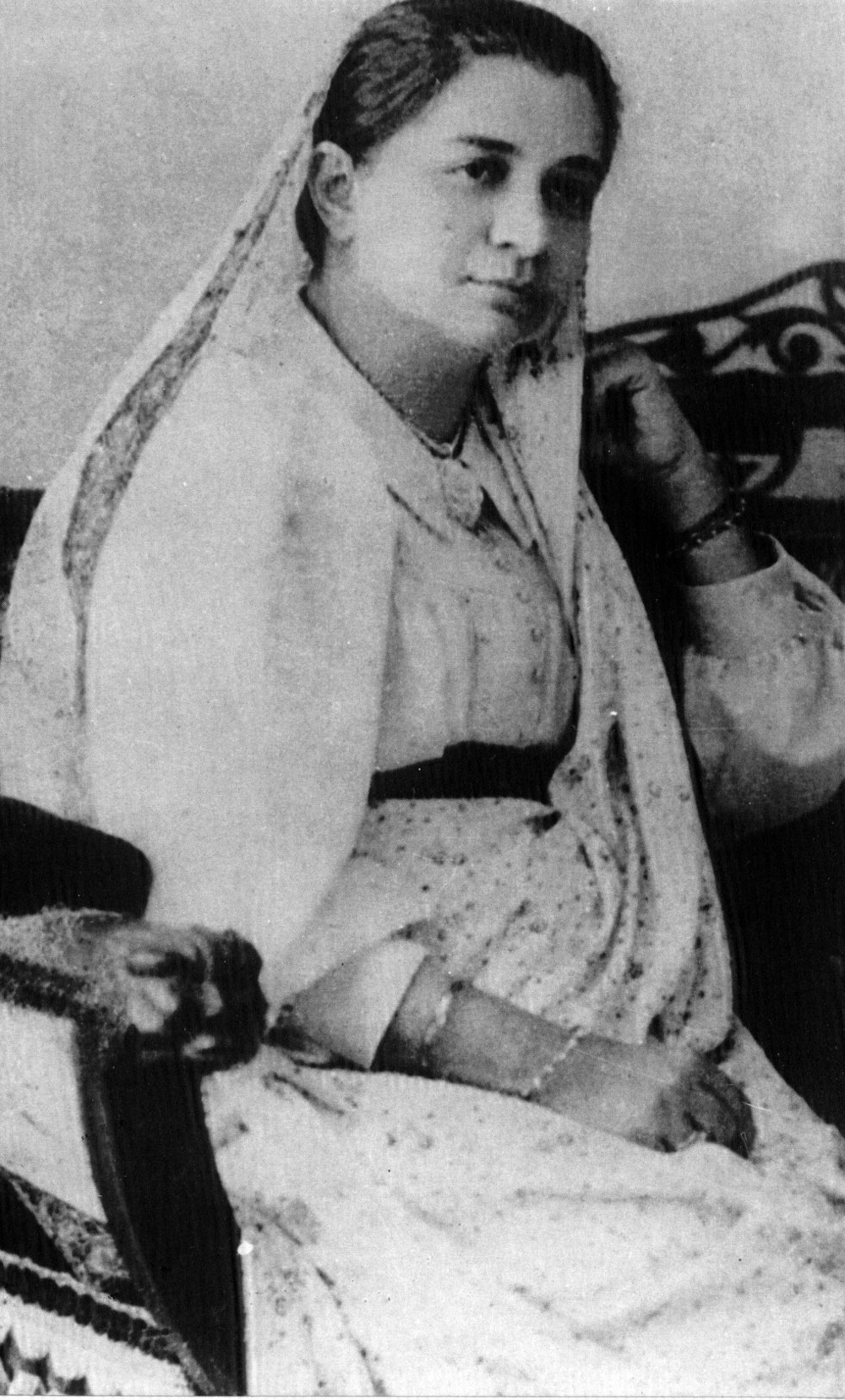
Bhikaiji Cama
Bhikhaiji Rustom Cama (24 September 1861 – 13 August 1936) or simply as, Madam Cama, was one of the prominent figures in the Indian independence movement. She unfurled one of the earliest versions of the flag of independent India on August 22, 1907 and she was the first person to hoist an Indian flag in a foreign nation, at the International Socialist Conference at Stuttgart.
Bhikaiji Cama was born in Bombay (now Mumbai) in a large, affluent Parsi Zoroastrian family. Her parents, Sorabji Framji Patel and Jaijibai Sorabji Patel, were well known in the city, where her father Sorabji—a lawyer by training and a merchant by profession—was an influential member of the Parsi community.
Like many Parsi girls of the time, Bhikhaiji attended Alexandra Girls' English Institution. Bhikhaiji was by all accounts a diligent, disciplined child with a flair for languages. She also excelled at cricket.
On 3 August 1885 at Bombay, she married Rustomji Cama, who was the son of K. R. Cama, and from a loyalist family. Her husband was a wealthy, pro-British lawyer who aspired to enter politics. It was not a compatible or happy marriage, and Bhikhaiji spent most of her time and energy in philanthropic activities and social work.
In October 1896, the Bombay Presidency was hit first by famine, and shortly thereafter by bubonic plague. Cama joined one of the many teams of nurses working out of Grant Medical College (which would subsequently become Haffkine's plague vaccine research centre), in an effort to provide care for the afflicted, and (later) to inoculate the healthy. Cama subsequently contracted the plague herself but survived. As she was severely weakened, she was sent to Britain for medical care in 1902.
She was preparing to return to India in 1904 when she came in contact with Shyamji Krishna Varma, who was well known in London's Indian community for fiery nationalist speeches he gave in Hyde Park. Through him, she met Dadabhai Naoroji, then president of the British Committee of the Indian National Congress and a strong critic of the British’s economic policy in India. She worked as Naoroji's private secretary. She also campaigneed with other nationalists such as Bipin Chander Pal, Lala Hardayal and Vinayak Damondar Savarkaar.
Together with Naoroji and Singh Rewabhai Rana, Cama supported the founding of Varma's Indian Home Rule Society in February 1905. In London, she was told that her return to India would be prevented unless she refrained from continuing these nationalist activities in India. She refused.
That same year Cama relocated to Paris, where, together with Rana and Munchershah Burjorji Godrej, she co-founded the Paris Indian Society. Together with other notable members of the movement for Indian sovereignty living in exile, Cama wrote, published (in the Netherlands and Switzerland) and distributed revolutionary literature for the movement, including Bande Mataram (founded in response to the Crown ban on the nationalist poem Vande Mataram) and later Madan's Talwar (in response to the execution of Madan Lal Dhingra). These weeklies were banned in Britain and India, and were smuggled into India through the French colony of Pondichéry. Cama also sent revolvers concealed in Christmas toys to patriots in India.
Hub AI
Bhikaiji Cama AI simulator
(@Bhikaiji Cama_simulator)
Bhikaiji Cama
Bhikhaiji Rustom Cama (24 September 1861 – 13 August 1936) or simply as, Madam Cama, was one of the prominent figures in the Indian independence movement. She unfurled one of the earliest versions of the flag of independent India on August 22, 1907 and she was the first person to hoist an Indian flag in a foreign nation, at the International Socialist Conference at Stuttgart.
Bhikaiji Cama was born in Bombay (now Mumbai) in a large, affluent Parsi Zoroastrian family. Her parents, Sorabji Framji Patel and Jaijibai Sorabji Patel, were well known in the city, where her father Sorabji—a lawyer by training and a merchant by profession—was an influential member of the Parsi community.
Like many Parsi girls of the time, Bhikhaiji attended Alexandra Girls' English Institution. Bhikhaiji was by all accounts a diligent, disciplined child with a flair for languages. She also excelled at cricket.
On 3 August 1885 at Bombay, she married Rustomji Cama, who was the son of K. R. Cama, and from a loyalist family. Her husband was a wealthy, pro-British lawyer who aspired to enter politics. It was not a compatible or happy marriage, and Bhikhaiji spent most of her time and energy in philanthropic activities and social work.
In October 1896, the Bombay Presidency was hit first by famine, and shortly thereafter by bubonic plague. Cama joined one of the many teams of nurses working out of Grant Medical College (which would subsequently become Haffkine's plague vaccine research centre), in an effort to provide care for the afflicted, and (later) to inoculate the healthy. Cama subsequently contracted the plague herself but survived. As she was severely weakened, she was sent to Britain for medical care in 1902.
She was preparing to return to India in 1904 when she came in contact with Shyamji Krishna Varma, who was well known in London's Indian community for fiery nationalist speeches he gave in Hyde Park. Through him, she met Dadabhai Naoroji, then president of the British Committee of the Indian National Congress and a strong critic of the British’s economic policy in India. She worked as Naoroji's private secretary. She also campaigneed with other nationalists such as Bipin Chander Pal, Lala Hardayal and Vinayak Damondar Savarkaar.
Together with Naoroji and Singh Rewabhai Rana, Cama supported the founding of Varma's Indian Home Rule Society in February 1905. In London, she was told that her return to India would be prevented unless she refrained from continuing these nationalist activities in India. She refused.
That same year Cama relocated to Paris, where, together with Rana and Munchershah Burjorji Godrej, she co-founded the Paris Indian Society. Together with other notable members of the movement for Indian sovereignty living in exile, Cama wrote, published (in the Netherlands and Switzerland) and distributed revolutionary literature for the movement, including Bande Mataram (founded in response to the Crown ban on the nationalist poem Vande Mataram) and later Madan's Talwar (in response to the execution of Madan Lal Dhingra). These weeklies were banned in Britain and India, and were smuggled into India through the French colony of Pondichéry. Cama also sent revolvers concealed in Christmas toys to patriots in India.