


Community hub
Recent from talks
Contribute something to knowledge base
Content stats: 0 posts, 0 articles, 1 media, 0 notes
Members stats: 0 subscribers, 0 contributors, 0 moderators, 0 supporters
Subscribers
Supporters
Contributors
Moderators
Hub AI
Bhumara Temple AI simulator
(@Bhumara Temple_simulator)
Hub AI
Bhumara Temple AI simulator
(@Bhumara Temple_simulator)
Bhumara Temple
Bhumara Temple, sometimes called Bhumra, Bhubhara or Bharkuleswar, is a 5th or 6th-century Gupta era Hindu stone temple site dedicated to Shiva near Satna, in the Indian state Madhya Pradesh. The temple has a square plan with a sanctum and Mandapa. While much of it is in ruins, enough of the temple structure and works of art have survived for scholarly studies. The temple is notable as one of the early examples of an architecture that included an enclosed concentric pradakshina-patha (circumambulation path). Like other early Gupta era Hindu temples, it includes a decorated entrance to the sanctum flanked by Ganga and Yamuna goddesses, and intricately carved sculptures.
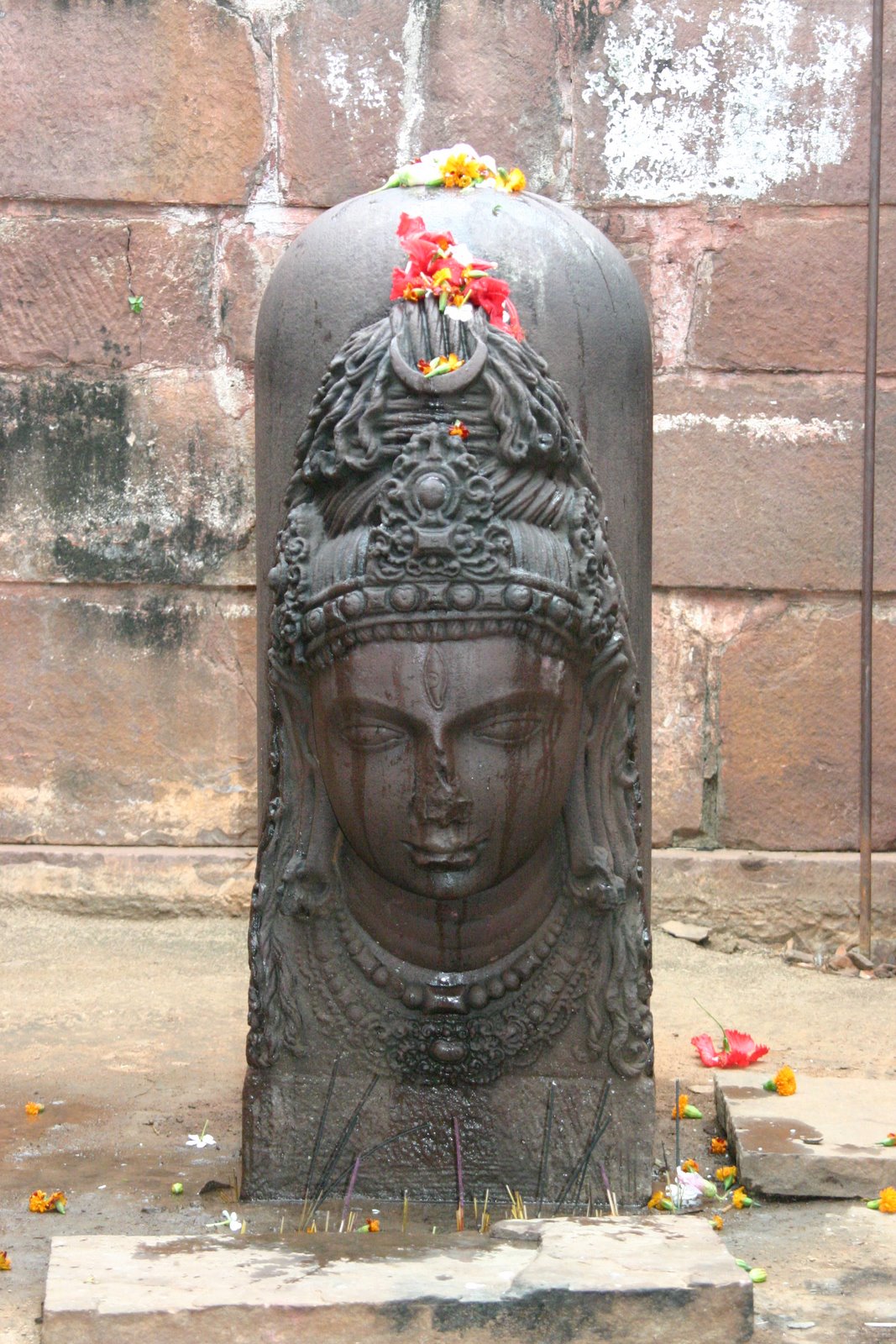
The temple's Ekamukha Linga, a mukhalinga or faced lingam, with a detailed head of Shiva, is a much studied example of Gupta art. The temple reliefs include those for Mahishasura-mardini (Durga), Ganesha, Brahma, Vishnu, Yama, Kubera, Kartikeya, Surya, Kama and others.
A 5th-century relief sculpture at the Bhumara temple is significant in being one of the earliest known representations in sculpture of Ganesha.
Many of the ruined parts of the Bhumara temple have been moved to museums, especially the Kolkata Museum and the Allahabad Museum. The much studied Bhumara image of Ganesha with Sakti sitting in his lap was acquired by the Boston Museum of Fine Arts in 1920s and is now there.
The village and temple site of Bhumara rest on a largely shrubby hill plateau about 12 miles (19 km) northwest-west of the town of Unchehra, near the hills of Khamha and Mohnna. It is about 40 kilometres (25 mi) southwest of the city of Satna, about 35 kilometres (22 mi) south of Nagod and about 110 kilometres (68 mi) NNE of Katni, the closest local train stations. The temple site is at an altitude of 1,500 feet, midst forests.
The archaeologist Alexander Cunningham visited the Bhumara site to confirm local reports of Thari pathar (standing stone) during his 1873-1874 tour of the Central Indian region. He found the stone and the important Bhumra inscription which he published, but he missed the temple that was then mostly covered by forest of shrubs and mango, haritaki and amalaka trees. John Faithfull Fleet translated the inscription in 1888, and it mentioned two kings named Hastin and Sarvanatha. The pillar inscription also described the boundary between their kingdoms and gave an inscription date per ancient Indian calendar that equals 484 CE.
Decades later, over the 1919-1920 period, the Archaeological Survey of India sent a sketch artist named Wartekar and a photographer named Joglekar together to revisit the site. They aimed to check out the local villager claims of many temple ruins on the plateau and the northern face of the hills. The dense forest limited the extent of their search, but they found the Bhumara temple. They reported it to be small single cell structure with a slab roof near an unusual soil mound, and that the temple's door was "magnificently carved".
The first report indicated that stones were sticking out of the temple that suggested the temple was originally much bigger. They also reported that broken pillars and ruins surrounded it. The Archaeological Survey of India then sent a larger team, excavated the mound and discovered numerous sculptures. Among these were a chaitya-window shaped panel with a circular medallion and the sculpture of Ganesha, jumbled remains of mandapa and temple parts. The site was next cleaned up, cleared of the forest growth and the first repairs to the temple was undertaken in early 1920s. During this cleaning, clearing and repairs, states Banerjee, many more "sculptures and their fragments, pillar fragments, lintels, jambs with a number of images" were found.
Bhumara Temple
Bhumara Temple, sometimes called Bhumra, Bhubhara or Bharkuleswar, is a 5th or 6th-century Gupta era Hindu stone temple site dedicated to Shiva near Satna, in the Indian state Madhya Pradesh. The temple has a square plan with a sanctum and Mandapa. While much of it is in ruins, enough of the temple structure and works of art have survived for scholarly studies. The temple is notable as one of the early examples of an architecture that included an enclosed concentric pradakshina-patha (circumambulation path). Like other early Gupta era Hindu temples, it includes a decorated entrance to the sanctum flanked by Ganga and Yamuna goddesses, and intricately carved sculptures.
The temple's Ekamukha Linga, a mukhalinga or faced lingam, with a detailed head of Shiva, is a much studied example of Gupta art. The temple reliefs include those for Mahishasura-mardini (Durga), Ganesha, Brahma, Vishnu, Yama, Kubera, Kartikeya, Surya, Kama and others.
A 5th-century relief sculpture at the Bhumara temple is significant in being one of the earliest known representations in sculpture of Ganesha.
Many of the ruined parts of the Bhumara temple have been moved to museums, especially the Kolkata Museum and the Allahabad Museum. The much studied Bhumara image of Ganesha with Sakti sitting in his lap was acquired by the Boston Museum of Fine Arts in 1920s and is now there.
The village and temple site of Bhumara rest on a largely shrubby hill plateau about 12 miles (19 km) northwest-west of the town of Unchehra, near the hills of Khamha and Mohnna. It is about 40 kilometres (25 mi) southwest of the city of Satna, about 35 kilometres (22 mi) south of Nagod and about 110 kilometres (68 mi) NNE of Katni, the closest local train stations. The temple site is at an altitude of 1,500 feet, midst forests.
The archaeologist Alexander Cunningham visited the Bhumara site to confirm local reports of Thari pathar (standing stone) during his 1873-1874 tour of the Central Indian region. He found the stone and the important Bhumra inscription which he published, but he missed the temple that was then mostly covered by forest of shrubs and mango, haritaki and amalaka trees. John Faithfull Fleet translated the inscription in 1888, and it mentioned two kings named Hastin and Sarvanatha. The pillar inscription also described the boundary between their kingdoms and gave an inscription date per ancient Indian calendar that equals 484 CE.
Decades later, over the 1919-1920 period, the Archaeological Survey of India sent a sketch artist named Wartekar and a photographer named Joglekar together to revisit the site. They aimed to check out the local villager claims of many temple ruins on the plateau and the northern face of the hills. The dense forest limited the extent of their search, but they found the Bhumara temple. They reported it to be small single cell structure with a slab roof near an unusual soil mound, and that the temple's door was "magnificently carved".
The first report indicated that stones were sticking out of the temple that suggested the temple was originally much bigger. They also reported that broken pillars and ruins surrounded it. The Archaeological Survey of India then sent a larger team, excavated the mound and discovered numerous sculptures. Among these were a chaitya-window shaped panel with a circular medallion and the sculpture of Ganesha, jumbled remains of mandapa and temple parts. The site was next cleaned up, cleared of the forest growth and the first repairs to the temple was undertaken in early 1920s. During this cleaning, clearing and repairs, states Banerjee, many more "sculptures and their fragments, pillar fragments, lintels, jambs with a number of images" were found.
Recent media
Recent media