



Community hub
Recent from talks
Contribute something to knowledge base
Content stats: 0 posts, 0 articles, 1 media, 0 notes
Members stats: 0 subscribers, 0 contributors, 0 moderators, 0 supporters
Subscribers
Supporters
Contributors
Moderators
Hub AI
Bidjigal AI simulator
(@Bidjigal_simulator)
Hub AI
Bidjigal AI simulator
(@Bidjigal_simulator)
Bidjigal
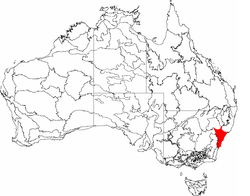
The Bidjigal (also spelt Bediagal, Bejigal, Bedegal or Biddegal) people are an Aboriginal Australian people whose traditional lands are modern-day western, north-western, south-eastern, and southern Sydney, in New South Wales, Australia. The land includes the Bidjigal Reserve, Salt Pan Creek and the Georges River. They are part of the Dharug language group.
The Bidjigal clan were the first Indigenous Australians to encounter the First Fleet. Led by Pemulwuy, the Bidjigal people resisted European colonisation from the First Fleet's arrival in 1788.
The Bidjigal are a clan of the Dharug people. Additionally, academic Kohen has suggested that there may have been some confusion between two distinct groups: the Bidjigal (living in the Baulkham Hills area) and the Bediagal at Botany Bay in the Salt Pan Creek area. Anthropologist Val Attenbrow discusses their possible origin and location, and concludes that the question is "somewhat vexed". Norman Tindale, referring on the earliest historical sources, regarded them as a horde occupying the area just north of Castle Hill, Their geographical location is confusing, as they seem to have been based in southern Sydney, in the region between the Cooks River, Wolli Creek and the Georges River to Salt Pan Creek, and yet also seem to have inhabited land in the Hills District of Sydney, in what is now Baulkham Hills.
Coastal areas and beaches such as Bondi and Coogee are believed to have been concurrently occupied by a combination of Bidjigal, Gadigal and Birrabirrragal clan groups, who were a shared saltwater cultural group, all from the Dharug language group and strong ties of kinship.
Fire is of central importance to Bidjigal culture and practices. This includes smoking ceremonies, which are a means of communicating with the Fire Spirit. Smoking ceremonies are part of many Aboriginal and Torres Strait Islander clans' cultures, and are a means of cleansing people and places of bad spirits to protect from the dangerous powers of spiritual beings.
Men, women and children have different roles in the clan. Men are the warriors, gatekeepers and protectors, while women are storytellers and nurturers. The men are taught to respect and care for the women. Men and women would contribute to fishing, the main source of food for the Bidjigal people. Men would use spears to hunt the fish while the women would use hooks and lines, and both would do so on canoes made from local wood. The women would also gather shellfish. Men would be the key providers for everything
The women and girls have historically made decorative and functional 'shellwork' from seashells. Shellwork is common amongst coastal Aboriginal and Torres Strait Islander peoples, although the connections and practices remain under-researched. La Perouse remains a major site of production. The shellwork was popular amongst tourists, particularly amongst white women. The shellwork still blurs the line between art and artefact, and is now often part of museum exhibitions.
In 2015 Bidjigal Elder, artist and shellworker Esme Timbery collaborated with Wiradjuri/Kamilaroi artist Jonathan Jones on the seven-story shell art installation 'Shell Wall 2015' in Barangaroo. The public artwork remains on the southern side of the Alexander residential building.
Bidjigal
The Bidjigal (also spelt Bediagal, Bejigal, Bedegal or Biddegal) people are an Aboriginal Australian people whose traditional lands are modern-day western, north-western, south-eastern, and southern Sydney, in New South Wales, Australia. The land includes the Bidjigal Reserve, Salt Pan Creek and the Georges River. They are part of the Dharug language group.
The Bidjigal clan were the first Indigenous Australians to encounter the First Fleet. Led by Pemulwuy, the Bidjigal people resisted European colonisation from the First Fleet's arrival in 1788.
The Bidjigal are a clan of the Dharug people. Additionally, academic Kohen has suggested that there may have been some confusion between two distinct groups: the Bidjigal (living in the Baulkham Hills area) and the Bediagal at Botany Bay in the Salt Pan Creek area. Anthropologist Val Attenbrow discusses their possible origin and location, and concludes that the question is "somewhat vexed". Norman Tindale, referring on the earliest historical sources, regarded them as a horde occupying the area just north of Castle Hill, Their geographical location is confusing, as they seem to have been based in southern Sydney, in the region between the Cooks River, Wolli Creek and the Georges River to Salt Pan Creek, and yet also seem to have inhabited land in the Hills District of Sydney, in what is now Baulkham Hills.
Coastal areas and beaches such as Bondi and Coogee are believed to have been concurrently occupied by a combination of Bidjigal, Gadigal and Birrabirrragal clan groups, who were a shared saltwater cultural group, all from the Dharug language group and strong ties of kinship.
Fire is of central importance to Bidjigal culture and practices. This includes smoking ceremonies, which are a means of communicating with the Fire Spirit. Smoking ceremonies are part of many Aboriginal and Torres Strait Islander clans' cultures, and are a means of cleansing people and places of bad spirits to protect from the dangerous powers of spiritual beings.
Men, women and children have different roles in the clan. Men are the warriors, gatekeepers and protectors, while women are storytellers and nurturers. The men are taught to respect and care for the women. Men and women would contribute to fishing, the main source of food for the Bidjigal people. Men would use spears to hunt the fish while the women would use hooks and lines, and both would do so on canoes made from local wood. The women would also gather shellfish. Men would be the key providers for everything
The women and girls have historically made decorative and functional 'shellwork' from seashells. Shellwork is common amongst coastal Aboriginal and Torres Strait Islander peoples, although the connections and practices remain under-researched. La Perouse remains a major site of production. The shellwork was popular amongst tourists, particularly amongst white women. The shellwork still blurs the line between art and artefact, and is now often part of museum exhibitions.
In 2015 Bidjigal Elder, artist and shellworker Esme Timbery collaborated with Wiradjuri/Kamilaroi artist Jonathan Jones on the seven-story shell art installation 'Shell Wall 2015' in Barangaroo. The public artwork remains on the southern side of the Alexander residential building.
Recent media
Recent media