Hubbry Logo
search
logo
Billung
Billung
current hub
2314367

Billung

logo
Community Hub0 Subscribers
Read side by side
from Wikipedia
Billung
Dynasty
Hermann Billung
Current regionSaxony
Founded9th century
FounderCount Wichmann the Elder
Connected familiesWelf and Ascania dynasties
EstateBillung March
Dissolution12th century

The House of Billung was a dynasty of Saxon noblemen in the 9th through 12th centuries.[1]

The first known member of the house was Count Wichmann, mentioned as a Billung in 811. Oda, the wife of Count Liudolf, oldest known member of the Liudolfing House, was also a Billung as was Matilda of Ringelheim.

In the 10th century, the property of the family was centered in the Bardengau around Lüneburg and they controlled the march named after them.[citation needed] In the middle of the 10th century, when the Saxon dukes of the House of Liudolfing had also become German kings, King Otto the Great entrusted more and more of his ducal authority to Hermann Billung. For five generations, the House of Billung ruled the Duchy of Saxony.[2]

The house submerged into the Welf and Ascania dynasties when Duke Magnus died in 1106 without sons; the family's property was divided between his two daughters. His daughter Wulfhilde married Henry IX, Duke of Bavaria, a member of the House of Welf; his daughter Eilika married Otto, Count of Ballenstedt, a member of the House of Ascania. As a consequence, for the following decades control of Saxony was contested between the Welfs and Ascanians.

The Billung dukes of Saxony were:

References

[edit]
Revisions and contributorsEdit on WikipediaRead on Wikipedia
from Grokipedia
The House of Billung was a dynasty of Saxon noblemen who governed the Duchy of Saxony from 973 until the extinction of their male line in 1106.[1] Originating from the Lüneburg region in northeastern Saxony, the family established a power base through military leadership and territorial advocacy, particularly in defending against Slavic tribes and expanding eastward.[1] The dynasty's prominence began with Hermann Billung, who was appointed by King Otto I in 936 as margrave of the eastern marches to counter Slavic threats, and later recognized as dux of Saxony around 965, assuming effective ducal authority upon Otto's death.[1] Hermann, who died on 27 March 973, founded institutions such as St. Michael's Monastery in Lüneburg and solidified the family's influence through loyalty to the Ottonian emperors and strategic marriages.[1] His successors—Bernhard I (d. 1011), Bernhard II (d. 1059), Ordulf (d. 1072), and Magnus (d. 1106)—continued to administer Saxony, managing internal conflicts, church advocacies, and alliances with Scandinavian and Hungarian nobility, though their authority was more pronounced in eastern Saxony than the west.[1] The Billungs played a pivotal role in maintaining Saxon autonomy within the Holy Roman Empire, contributing to regional stability and expansion while navigating imperial politics; their line ended without male heirs, leading to the ducal title passing to Lothar of Süpplingenburg amid rival claims from in-law families like the Welfs and Ascanids.[1]

History

Origins and early Saxon connections

The House of Billung originated among the Saxon nobility in northern Saxony, with their ancestral lands centered around Lüneburg Heath, a region pivotal to Saxon tribal identity and early medieval power structures.[1] The family's emergence reflects the consolidation of comital authority in the post-Carolingian era, as Saxon leaders navigated alliances with Frankish kings and internal tribal hierarchies following the Saxon Wars (772–804). Early Billungs held offices as counts (comites) in Saxon gau districts, such as the Bardengau, administering royal estates, mobilizing levies, and defending against Danish and Slavic threats.[1] The earliest documented reference to the family name appears in 811, when a Count Wichmann is identified as a Billung in contemporary charters, linking the lineage to Saxon administrative roles under Charlemagne's successors.[1] Subsequent generations, including Amelung (d. before 811), who fathered counts Bennit and Enno, underscore the family's entrenched position in Saxon ecclesiastical and secular networks, with ties to bishoprics like Verden. Wichmann the Elder (d. 944), a key early figure and count in the Bardengau and Hadeln, exemplified these connections through military service under Kings Henry I (r. 919–936) and Otto I (r. 936–973), participating in campaigns against the Abodrites and other Slavs while forging matrimonial alliances with other Saxon houses.[1] His rebellion against Otto I in 938–939, alongside Eberhard of Franconia, highlights the Billungs' assertion of regional autonomy amid Ottonian centralization efforts, though it ended in reconciliation and forfeiture of some lands. These early ties positioned the Billungs within the broader Saxon elite, distinct from the ruling Liudolfing dynasty but interlinked through marriages, such as that of Oda Billung (d. 913), daughter of an early Billung princeps, to Liudolf, progenitor of the Ottonian emperors.[1] Genealogical reconstructions remain tentative due to sparse primary sources like the Annalista Saxo and charters, with uncertainties in parentage and exact kinship persisting; for instance, potential links to Thuringian counts or Carolingian nobility lack firm corroboration beyond onomastic patterns. Nonetheless, the family's Saxon rootedness—evident in landholdings, advocacies over monasteries like St. Michael's (founded c. 935 by a Hermann)—laid the groundwork for their elevation under Otto I, transitioning from local counts to march lords.[1]

Hermann Billung and the margraviate (936–973)

In 936, following his coronation as king of East Francia, Otto I appointed Hermann Billung, a Saxon noble whose parentage remains uncertain in contemporary records, as princeps militiae—effectively margrave—of the Billung March, a frontier zone north of the Elbe River spanning from the Limes Saxoniae to the Peene River, established to counter threats from Slavic tribes such as the Obotrites and Lutici.[2][1] This appointment granted Hermann significant autonomy to organize defenses, levy troops, and enforce tribute collection, reflecting Otto's reliance on trusted Saxon lieutenants amid ongoing eastern border instability.[2] Hermann, characterized by the chronicler Widukind of Corvey as a diligent and prudent leader, focused on fortifying the march through military expeditions against Slavic incursions, securing tribute payments that bolstered Saxon economic and territorial control without large-scale permanent conquests during this period.[2] He constructed Lüneburg Castle as a strategic stronghold and founded St. Michael's Monastery there around 956, enhancing administrative and religious infrastructure in the region.[2] During the civil rebellion of 953–954, while Otto campaigned against internal foes and Magyars, Hermann effectively governed Saxony, maintaining order and mobilizing forces against potential Slavic opportunism.[2] By the mid-10th century, Hermann's influence extended to broader Saxon leadership; imperial charters from 956 onward styled him marchio, and by 968 dux, underscoring his de facto ducal authority over eastern Saxony.[2] His loyalty to Otto, demonstrated in joint operations and absence of recorded conflicts, contributed to the stabilization of the northeastern frontier, paving the way for Ottonian expansion. Hermann died on 27 March 973, after which Otto I promptly invested his son Bernard I with ducal powers, ensuring continuity of Billung oversight in the margraviate.[2][1]

Ducal rule and internal dynamics (973–1106)

Bernard I succeeded his father Hermann Billung as Duke of Saxony in 973, confirmed by Emperor Otto II shortly before the latter's death.[1] He consolidated ducal authority through military campaigns, including a victory against Viking invaders at Stade in the late 980s or early 990s, and supported Otto III's succession against rival claimant Henry the Wrangler in 983.[1] Bernard married Hildegard of Stade around 990, forging ties with regional nobility, and fathered several children, including heir Bernard II; he died on 9 February 1011 and was buried at St. Michael's Church in Lüneburg.[1] Bernard II inherited the duchy unopposed in 1011, marrying Eilika of Schweinfurt around 1020 to strengthen alliances with Franconian elites.[1] Early in his reign, he rebelled against Emperor Henry II in 1020 over disputed territories, reflecting tensions between ducal autonomy and imperial oversight, but reconciled soon after, demonstrating pragmatic internal stabilization.[1] His rule emphasized defense against Slavic threats and maintenance of Saxon noble loyalties, producing sons Ordulf and Hermann, as well as daughters; Bernard II died on 29 June 1059.[1] Ordulf acceded in 1059, marrying Ulfhild of Norway in November 1042, which linked the Billungs to Scandinavian royalty and aided northern border security.[1] Internal ducal dynamics strained during the 1070s Saxon revolts against Henry IV, when Ordulf faced imprisonment amid widespread noble discontent over imperial policies, though family succession remained intact with son Magnus as heir; Ordulf died on 28 March 1072.[1] Magnus, succeeding in 1072 while initially imprisoned from the rebellions, married Sophia of Hungary after March 1070, further diversifying Billung marital networks.[1] He joined Otto of Northeim's 1073–1075 uprising, highlighting ongoing friction between Saxon ducal interests and central imperial control, yet prioritized family continuity by siring daughters Wulfhild and Eilika, who later married into the Welf and Ascania houses.[1] The male line extinguished with Magnus's death on 23 August 1106 without sons, fragmenting Billung holdings among kin and ending direct ducal rule.[1] Throughout, successions proceeded patrilineally without recorded fraternal disputes, underscoring stable family cohesion amid external pressures.[1]

Territories and military role

The Billung March and eastern expansion

The Billung March, also known as the northern Saxon Eastern March, was a frontier territory established in 936 by King Otto I of East Francia, encompassing lands east of the Elbe River extending toward the Oder, primarily inhabited by Polabian Slavic tribes including the Obotrites and Vagrians.[3] This region served as a buffer against eastern Slavic incursions and facilitated German eastward expansion through military control and tribute extraction.[1] Hermann Billung, from a prominent Saxon family based near Lüneburg, was appointed as its margrave in 936, granting him authority over military operations in northeastern Saxony along the middle Weser and beyond.[1][3] As margrave from 936 and later elevated to dux in Saxony by 965, Hermann Billung directed campaigns primarily against the Vagrians and Obotrites to secure the march and extend influence westward from the Oder into Slavic-held areas along the Baltic coast.[1] These efforts involved subduing Polabian Slavs, enforcing tribute payments, and defending against raids, contributing to the consolidation of German authority in the borderlands.[3] His brother Wichmann III participated in related fights against Pomeranian Slavs, perishing in 967.[1] The Billung family's power grew through accumulation of territories and church advocacies in these eastern regions, though full colonization remained limited amid ongoing resistance.[1] Expansion faced setbacks, notably the 983 Slavic revolt led by Lutici, Obotrites, and other Polabian groups, which overran the Billung March, destroyed settlements, and temporarily reversed gains east of the Elbe.[3] Hermann's successors, including son Bernard I (duke 973–1011), resumed defensive and reconquest operations, reclaiming core areas and stabilizing the frontier against Wendish tribes into the 11th century.[1] These activities exemplified Saxony's broader policy of militarized eastward push, blending conquest with gradual settlement, though the march's full integration into German realms occurred later under subsequent dynasties.[4]

Defense against Slavic incursions

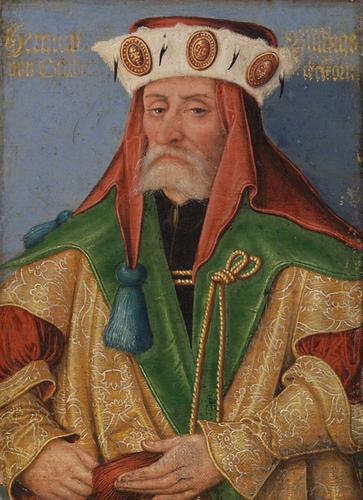
![Hermann Billung][float-right] Hermann Billung was appointed margrave by Emperor Otto I in 936, tasked specifically with defending northern Saxony against incursions by Slavic tribes such as the Vagrians and Obotrites.[1] This role positioned the Billung family as primary guardians of the eastern frontier, where they maintained military command in Saxony and constructed fortifications like the castle at Lüneburg to bolster defenses.[1] In 955, amid internal German conflicts, the Obotrites launched a major invasion into Saxony, slaying adult males and enslaving women and children.[5] Otto I's forces decisively defeated the Obotrites at the Battle of Recknitz, with Hermann Billung's support contributing to the victory; in recognition, Otto expanded Hermann's authority over the Billung March, formalizing Saxon control east of the Elbe.[6] These efforts temporarily stabilized the border, enabling limited Christianization and tribute extraction from subdued tribes, though Hermann pursued a containment strategy rather than aggressive expansion compared to southern margraves.[1] The defenses proved vulnerable during the Slavic revolt of 983, when Obotrites, Veleti, and Lutici tribes rose against German overlordship, destroying key strongholds like Havelberg and overrunning the Billung March, forcing Saxon forces to retreat behind the Elbe.[7] Under Bernard I, who succeeded Hermann as duke in 973, recovery campaigns included joint expeditions with Otto III against the Slavs in 991 and 995, aimed at reasserting control and extracting tribute, though full reconquest of lost territories remained elusive.[1] Bernard's successors, including Bernard II, faced prolonged resistance from figures like the Abodrite prince Kruto, whose forces repelled Saxon incursions for over a decade, highlighting the persistent challenges of the frontier.[8]

Administrative control in Saxony

Hermann Billung's appointment as margrave by King Otto I in 936 marked the inception of Billung administrative authority in Saxony, centered on the northeastern march east of the Elbe River. This role encompassed military command, judicial oversight, fiscal collection from Slavic tribute, and promotion of German settlement through castle construction and land grants, as evidenced by imperial charters dated 952, 958, 961, and 965. Hermann acted as the king's vicar in Saxony during imperial absences, representing Otto I in key assemblies in 953, 961, and 966, while founding St. Michael's Monastery in Lüneburg circa 956–961 to bolster religious and economic control in the region.[1] Upon Hermann's death on 27 March 973, Bernard I succeeded as Duke of Saxony under Emperor Otto II, extending family oversight to the duchy as a whole. Ducal administration involved coordinating with autonomous Saxon counts for local governance, leading tribal levies in imperial campaigns, and managing frontier expansion, though without formal feudal rights to summon vassals or override county jurisdictions—counts of Stade, for example, retained significant independence. Bernard I signed charters affirming Saxon donations, such as one in 1013 under Henry II, underscoring the duke's intermediary role between imperial policy and regional nobility.[1] Later dukes, including Bernard II (1011–1059), emphasized eastern consolidation via ministeriales—loyal, unfree administrators—for fortification and colonization efforts amid Slavic threats, while contending with noble resistance and imperial checks. Bernard II's 1073 rebellion against Henry IV exposed ducal vulnerabilities, as Saxon assemblies favored decentralized power rooted in tribal traditions over centralized ducal fiat. By Magnus's reign (1072–1106), administrative strains from noble fragmentation and lack of hereditary vassalage eroded Billung control, paving the way for dynastic extinction in the male line.[1]

Family structure and notable members

Hermann Billung (c. 900–973)

Hermann Billung was a prominent Saxon nobleman and the founder of the House of Billung, serving as margrave of the Billung March (also known as the Northern March) from 936 until his death.[2] Appointed by King Otto I in 936 as princeps militiae Saxonum (leader of the Saxon army), he played a key role in defending Saxony against Slavic incursions and expanding German control eastward beyond the Elbe River.[2] By 953, he had established a distinct domain in conquered Slavic territories, consolidating authority as margrave.[9] Hermann's military leadership supported Otto I during internal rebellions and external threats, earning him the title of duke (dux) of Saxony, which he effectively held from 961 onward, though formal ducal investiture for his successor occurred posthumously.[10] [2] Born around 900 to parents of Saxon nobility—likely named Billung and an unnamed mother—Hermann rose through loyalty to the Ottonian dynasty, with sparse details on his early career beyond his countship in eastern Saxony.[2] He married Oda, who outlived him, and possibly a second wife named Hildesuith; their children included Bernard I (who succeeded as duke, d. 1011), Liudger (count, d. 1011), Mathilde (d. 1009), and Swanhild (d. 1014).[2] His brothers were Wichmann (count, d. 944 or 945) and Amelung (bishop of Verden, d. 962), indicating ties to both secular and ecclesiastical elites.[2] Hermann's administrative achievements included fortifying the frontier through the construction of Lüneburg Castle and the foundation of St. Michael's Monastery in Lüneburg, which served as a burial site and religious center.[2] Chronicler Widukind of Corvey, a contemporary Saxon monk, portrays him as a steadfast commander in Otto's campaigns, emphasizing his role in maintaining order in Saxony after the death of Duke Bruno in 961.[2] He died on 27 or 28 March 973 and was buried at St. Michael's, with his son Bernard I inheriting his marches and ducal responsibilities under Otto II.[2] Hermann's tenure marked the transition of Saxony's leadership to the Billung family, stabilizing the duchy amid Ottonian imperial expansion.[3]

Bernard I and early successors

Bernard I, son of Hermann Billung and Oda, ruled as Duke of Saxony from 973 until his death on 9 February 1011, succeeding his father immediately after the latter's appointment as duke by Emperor Otto II.[1] He married Hildegard, daughter of Henry I "the Long" of Stade, around 990, and their children included Bernard II, Thietmar, Matilda, and Emma.[1] During his tenure, Bernard I campaigned against Danish incursions, securing a victory over Viking forces at Stade in the late 980s or early 990s, and he maintained loyalty to the Ottonian emperors, including supporting Otto III's succession and later serving Henry II after the latter's election in 1002.[1] [11] His burial occurred at St. Michael's Church in Lüneburg, reflecting the family's growing ties to that region.[1] Bernard II, born after 990 and dying on 29 June 1059, inherited the duchy upon his father's death in 1011 and governed until his own passing, extending Billung control amid evolving imperial dynamics under the Salian emperors.[1] He wed Eilika, daughter of Henry of Schweinfurt, around 1020, fathering Ordulf, Hermann, Gertrude, Hedwig, and Ida, thereby linking the Billungs to other prominent German noble houses.[1] Early in his rule, Bernard II faced internal challenges, including a brief rebellion against Emperor Henry II around 1020, but he later stabilized relations while defending Saxon interests against ecclesiastical encroachments, particularly from Archbishop Adalbert of Bremen, whose ambitions threatened ducal authority in northern territories.[1] [12] He was interred at Lüneburg's St. Michael, continuing the family tradition.[1] Ordulf, born around 1020 and dying on 28 March 1072, acceded as duke in 1059 following Bernard II's death, maintaining Billung dominance during a period of heightened Saxon-imperial tensions.[1] He first married Wulfhild, daughter of King Olaf II of Norway, in November 1042, producing Magnus, and after her death wed Gertrude of Haldensleben in 1071, who bore Bernhard; these unions bolstered alliances with Scandinavian royalty and local nobility.[1] Ordulf's reign involved military engagements to secure Saxon borders, though specific campaigns are sparsely documented, and he navigated conflicts arising from his father's disputes with Bremen while aligning with imperial figures like Henry III.[1] His burial at Lüneburg St. Michael underscored the site's emerging role as a ducal necropolis.[1] Magnus, born around 1045 and dying on 23 August 1106 without male heirs, assumed the ducal title in 1072 after Ordulf's death, marking the final generation of direct Billung male rule in Saxony.[1] He married Sophia of Hungary, daughter of King Béla I, after 6 March 1070, and their daughters Wulfhild and Eilika connected the family to the Welf and Ascanian lines through subsequent marriages.[1] Imprisoned by Emperor Henry IV in 1070 amid rebellions tied to the Investiture Controversy, Magnus later rebelled against the emperor, reflecting strains between Saxon autonomy and central imperial power, before his release and resumption of rule.[1] The extinction of the Billung male line upon his death led to the duchy's transfer to Lothar of Supplinburg in 1106, with family estates dispersing via his daughters' inheritances.[1] He too was buried at Lüneburg St. Michael.[1]

Later dukes and extinction of the male line

Bernard II succeeded his father as Duke of Saxony in 1011 and governed until his death on 29 June 1059, buried at St. Michael's Church in Lüneburg.[1] Born after 990, he married Eilika of Schweinfurt (died after 1055/56) around 1020, by whom he had several children, including Ordulf, Hermann, and daughters Gertrude, Hedwig, and Ida.[1] During his reign, Bernard II initially supported Emperors Conrad II and Henry III but grew wary of the latter's alliance with Archbishop Adalbert of Bremen, whose ambitions threatened Saxon ducal authority; this rivalry persisted across generations of Billungs, involving territorial defenses and near-rebellions until Adalbert's death in 1072.[1] In 1020, Bernard rebelled against Henry III, seizing the fortress of Scalkesburh, but was restored after the empress's intervention.[1] Ordulf, born around 1020 and son of Bernard II and Eilika, acceded as duke in 1059 upon his father's death and ruled until 28 March 1072, when he too was buried at Lüneburg's St. Michael's.[1] He first married Ulfhild of Norway (died 1071) in November 1042, producing son Magnus, and wed secondly Gertrude of Haldensleben (died 1116) in 1071, by whom he had a son Bernhard who predeceased him without issue.[1] Ordulf continued the familial resistance to Archbishop Adalbert's encroachments on Saxon lands, maintaining the Billung defensive posture amid imperial and ecclesiastical pressures.[1] Magnus, born around 1045 as Ordulf's eldest son by Ulfhild, became duke in 1072 and held the title until his death on 23 August 1106, also interred at St. Michael's in Lüneburg.[1] Imprisoned in 1070 amid tensions but later released, he wed Sophia of Hungary (died 1095) after 6 March 1070, fathering only daughters Wulfhild and Eilika, with no surviving male heirs.[1] Magnus joined Otto of Northeim's rebellion against Emperor Henry IV and intensified hostilities with Bremen, launching plundering raids on the archbishopric's territories as a longstanding Billung adversary.[1] His childless death extinguished the Billung male line after five generations of ducal rule; family estates divided between his daughters' husbands—Welf V ("the Black") and Otto of Ballenstedt—while Emperor Henry V invested Lothar of Süpplingenburg as Duke of Saxony later in 1106.[1]

Relations with the Holy Roman Empire

Alliances with Ottonian emperors

Hermann Billung, founder of the Billung line, forged a close alliance with Emperor Otto I through military service and administrative roles in Saxony. In 936, Otto I appointed Hermann as princeps militiae (leader of the army) and margrave over the northern Saxon march along the lower Elbe, entrusting him with defense against Slavic tribes and Danish threats.[2] This grant marked the establishment of the Billung March, a strategic buffer zone that strengthened Ottonian control in the east while leveraging Hermann's local Saxon influence.[1] During Otto I's Italian campaigns, particularly from 961 onward, Hermann served as the emperor's personal deputy in Saxony, exercising de facto ducal authority over the duchy despite never receiving the formal title of duke in royal charters.[2] Hermann's governance focused on suppressing internal Saxon revolts, such as those led by figures like Wichmann the Younger, and coordinating eastern expansions, thereby ensuring loyalty to the Ottonian crown amid regional autonomies.[1] His role exemplified the emperors' strategy of delegating power to reliable nobles to maintain imperial cohesion without alienating Saxon elites. Following Otto I's death in May 973, Hermann's loyalty extended to Otto II, who confirmed the family's position by designating Hermann's son Bernard I as duke of Saxony shortly before Hermann's own death on 27 March 973.[2] This succession underscored the Billungs' alignment with the Ottonian dynasty, as Bernard continued military support against external incursions and internal challengers, including backing Otto III's accession against rivals like Henry II the Wrangler.[1] The alliance provided the Ottonians with a stable Saxon power base, facilitating campaigns in Italy and the east, while the Billungs gained hereditary authority over vast territories.

Conflicts and power negotiations

The appointment of Hermann Billung as military commander in Saxony by Otto I in 936 provoked immediate resistance from his brother Wichmann II, who rebelled against the king in 938, allying with Eberhard of Franconia and others disaffected by Otto's centralizing policies; the uprising was quelled by 941, with Wichmann reconciled to the crown, underscoring the Billungs' need to negotiate familial and regional loyalties amid imperial expansion.[1] Upon Otto II's accession in 973, Hermann's ceremonial entry into Magdeburg with ducal honors raised alarms of potential overreach, prompting swift imperial affirmation of his Saxon duchy while retaining royal oversight of key assets like the Goslar silver mines, a compromise that preserved Billung autonomy without direct confrontation.[13] Bernard II, succeeding in 1011, initially aligned with Henry II, joining campaigns against Poland and facilitating the 1018 Treaty of Bautzen; however, by 1019 he rebelled, seizing the fortress of Scalkesburh and demanding formal recognition of Saxon tribal customs, which his father had unsuccessfully sought, leveraging the duchy’s military strength to extract concessions before withdrawing following intercession by Empress Kunigunde, after which he was restored to his holdings.[1] This revolt highlighted growing Saxon ducal assertions against Salian encroachment, with Bernard securing similar legal guarantees from Conrad II in the 1020s, reflecting ongoing negotiations over customary law versus imperial reform.[14] Under Henry IV, the Billungs' tensions escalated into broader Saxon opposition; Ordulf (r. 1072) inherited a duchy wary of Salian fortifications and fiscal impositions, while his son Magnus was imprisoned in 1070 for ties to the rebellious Otto of Nordheim, only assuming the ducal title while captive, a maneuver that strained but did not break Billung loyalty until Magnus's later raids against Archbishop Adalbert of Bremen and partial defection amid the 1073–1075 Saxon revolt, where ducal forces contributed to imperial defeats at Langensalza before peace terms in 1075 curtailed royal influence in Saxony.[1][15] These episodes embodied the dynasty's role in channeling Saxon resentment against Salian efforts to reassert centralized authority, culminating in the male line's extinction by 1106 without resolving underlying power imbalances.[15]

Ecclesiastical ties and foundations

Hermann Billung established the Benedictine monastery of St. Michael in Lüneburg around 956, alongside constructing the castle there, to bolster regional authority in the Bardengau following his inheritance of comital rights in 944.[1][2] This foundation integrated ecclesiastical presence with secular governance, facilitating land settlement and administrative control amid eastern expansions.[1] The Billung dukes accumulated advocacies—protective lordships—over numerous churches in northeastern Saxony, enabling influence over ecclesiastical properties and personnel while aligning with Ottonian imperial policies favoring monastic reforms and missionary activities.[1] These ties supported the defense of bishoprics like those in Bremen and Verden against Slavic threats, though jurisdictional frictions arose, as evidenced by rival fortifications erected by the dukes in Hamburg challenging the Archbishopric of Hamburg-Bremen's northern claims.[16] Successors like Bernard I (r. 973–1011) perpetuated these connections, with family members such as his daughter Godesdind serving as abbess of Herford Abbey from 1002 to 1040, underscoring the dynasty's embedded role in Saxon ecclesiastical networks despite occasional power struggles with archbishops.[1] Later Billungs maintained patronage of St. Michael's, which received lands from imperial confiscations, reinforcing the monastery's economic viability until the dynasty's male line ended in 1106.[1]

Legacy

Impact on Saxon and German history

The Billung dynasty profoundly shaped Saxon governance by establishing effective administrative and military control over the duchy from 936 onward, when Hermann Billung was appointed princeps militiæ by King Otto I, effectively managing Saxony in the king's stead despite Otto's retention of the ducal title until 961.[1] Hermann's campaigns against Slavic tribes, including the Vagrians and Obotrites, defended northern Saxony from incursions and secured the eastern frontier, creating the Billung March as a buffer zone for territorial expansion west of the Oder River.[1] [3] This stabilization countered internal Saxon revolts, such as those involving Billung relatives like Wichmann II in 938 and 953, fostering loyalty to the Ottonian emperors and preventing fragmentation in the empire's core northern region.[1] Successors like Bernard I (r. 973–1011) and Bernard II (r. 1011–1059) consolidated this power through territorial accumulation around Lüneburg and strategic marriages, such as Bernard I's union with Hildegarde of Stade around 990, which bolstered northeastern influence despite limited direct vassalage over local counts.[1] Their hereditary tenure transformed Saxony into a stable appanage, serving as a model for ducal autonomy under imperial oversight, and supported broader German efforts in the Ostsiedlung by holding the Elbe line even after setbacks like the Slavic revolt of 983.[3] The dynasty's extinction with Magnus's death in 1106 without male heirs marked a pivotal shift, prompting Emperor Henry V to appoint Lothar of Supplinburg, which redirected Saxon power southward and intensified conflicts during the Investiture Controversy, ultimately diminishing the duchy's original cohesion but preserving its role in imperial politics.[1] [3]

Genealogical continuations and cultural influence

The male line of the Billung family extinguished upon the death of Duke Magnus in 1106, who left no surviving sons, leading to the duchy's title passing to Lothar of Supplingenburg while female descendants perpetuated Billung lineage through prominent marriages.[1] Magnus's elder daughter, Wulfhild (c. 1071–1126), married Henry IX, Duke of Bavaria from the Welf house, producing offspring including Sophia of Bavaria (1105–1137), who wed future Holy Roman Emperor Lothar III, and Henry X, Duke of Saxony and Bavaria (c. 1108–1139), thereby infusing Billung heritage into the Welf dynasty that later contested imperial thrones and shaped Guelph politics in Germany and Italy.[1] Magnus's younger daughter, Eilika (c. 1080–after 1115), wed Otto of Ballenstedt (c. 1070–1123), progenitor of the Ascanian house, yielding son Albert I "the Bear" (c. 1100–1170), who expanded Brandenburg as margrave from 1157 and established the Ascanian line's dominance in northeastern Germany through conquests and administrative reforms.[1] These unions disseminated Billung Saxon roots into two enduring noble houses, with Welf descendants influencing electoral colleges and Ascanian heirs governing principalities like Anhalt and Saxe-Lauenburg into the early modern era, thus extending familial claims and alliances across the Holy Roman Empire.[1] Culturally, the Billungs' legacy manifested in the reinforcement of Saxon customary law and eastern frontier traditions, which successor houses like the Ascanians adapted in colonizing Slavic territories, promoting fortified settlements and Germanic legal frameworks that facilitated demographic shifts and economic integration in the Elbe region.[1] Their patronage of ecclesiastical institutions, including monasteries at Lüne and Corvey continued by kin, preserved Carolingian-era scripts and hagiographies emphasizing Saxon resilience against pagan incursions, influencing medieval chronicles that romanticized the dynasty's role in Christianizing northern Europe.[1] Though the family name faded, Billung-derived noble customs—such as hereditary advocacy over bishoprics—shaped feudal hierarchies, evident in Welf and Ascanian minting of denarii bearing Saxon motifs until the 12th century, underscoring a pragmatic blend of martial defense and pious endowment.[17]
User Avatar
No comments yet.