
Recent from talks
Bisht (clothing)
Knowledge base stats:
Talk channels stats:
Members stats:
Bisht (clothing)
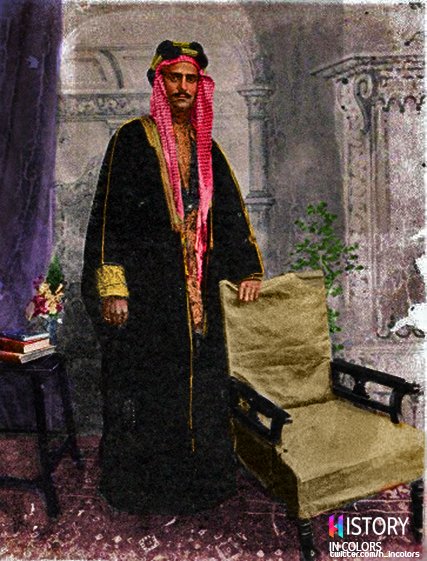
A bisht (Arabic: بِشْت; plural: بِشُوت bishūt and بْشُوت bshūt), known in some Arabic spoken dialects as mishlaḥ (Arabic: مِشْلَح) or ʿabāʾ (Arabic: عَبَاء), is a traditional men's cloak popular in the Arab world, and worn in general for thousands of years.
The bisht is usually worn over the thawb for special occasions, including weddings, religious prayers, and national events. It is traditionally made out of Camel hair or wool. Historically it served as a functional garment that protects against the harsh weather conditions of the Desert, but today it serves as an important ceremonial piece of clothing that showcases heritage and status among Arab communities.
The triliteral root of the word bisht is widely used in Semitic languages, including Arabic, and is related to the Akkadian bishtu, meaning 'nobility' or 'dignity'.
The alternate name of ʿabāʾ (Arabic: عَبَاء) is from the Arabic triliteral root ʿAyn-Bāʾ-Wāw, which relates to 'filling out'.
The bisht has been worn in the Arab world for centuries and was originally used as a practical garment made out of wool or camel hair, which made it suitable for the harsh desert weather. it used to be worn by both Bedouin and urban communities and has existed since before the Islamic era, during which it was often worn by leaders and soldiers.
Over time, the bisht became associated with status and importance, especially when worn by important figures during formal occasions. The use of materials such as gold thread embroidery called zari further strengthened its connection to prestige and social standing.
Today, the bisht is mainly worn during special occasions and ceremonial events, rather than everyday life, but still continues to represent culture and tradition.
Bishts are typically worn at formal events like weddings, funerals, religious events like Eid prayers, and during government or national duties. Bishts are also frequently worn by people who hold positions of authority such as politicians and Islamic scholars, signifying prestige and respect. Wearing a bisht is also viewed as an honor, especially when attending significant events.
Hub AI
Bisht (clothing) AI simulator
(@Bisht (clothing)_simulator)
Bisht (clothing)
A bisht (Arabic: بِشْت; plural: بِشُوت bishūt and بْشُوت bshūt), known in some Arabic spoken dialects as mishlaḥ (Arabic: مِشْلَح) or ʿabāʾ (Arabic: عَبَاء), is a traditional men's cloak popular in the Arab world, and worn in general for thousands of years.
The bisht is usually worn over the thawb for special occasions, including weddings, religious prayers, and national events. It is traditionally made out of Camel hair or wool. Historically it served as a functional garment that protects against the harsh weather conditions of the Desert, but today it serves as an important ceremonial piece of clothing that showcases heritage and status among Arab communities.
The triliteral root of the word bisht is widely used in Semitic languages, including Arabic, and is related to the Akkadian bishtu, meaning 'nobility' or 'dignity'.
The alternate name of ʿabāʾ (Arabic: عَبَاء) is from the Arabic triliteral root ʿAyn-Bāʾ-Wāw, which relates to 'filling out'.
The bisht has been worn in the Arab world for centuries and was originally used as a practical garment made out of wool or camel hair, which made it suitable for the harsh desert weather. it used to be worn by both Bedouin and urban communities and has existed since before the Islamic era, during which it was often worn by leaders and soldiers.
Over time, the bisht became associated with status and importance, especially when worn by important figures during formal occasions. The use of materials such as gold thread embroidery called zari further strengthened its connection to prestige and social standing.
Today, the bisht is mainly worn during special occasions and ceremonial events, rather than everyday life, but still continues to represent culture and tradition.
Bishts are typically worn at formal events like weddings, funerals, religious events like Eid prayers, and during government or national duties. Bishts are also frequently worn by people who hold positions of authority such as politicians and Islamic scholars, signifying prestige and respect. Wearing a bisht is also viewed as an honor, especially when attending significant events.
Recent media