

BlueSG
View on Wikipedia
Flexar (officiallly BlueSG Pte Ltd[1]) is a Singaporean company providing electric car sharing and electric car charging services.[5] The company was originally launched as BlueSG in September 2017, beginning operations in December 2017 with 30 charging stations and 80 all-electric Bolloré Bluecar available via a paid subscription model.[6]
Key Information


In February 2021, BlueSG was acquired by Goldbell Group, with the acquisition completed in October 2021.[7][8][9] Around the same period, its charging network was divested to TotalEnergies.[10] By December 2020, the company had expanded to 374 charging stations and a fleet of 667 vehicles across Singapore.[11]
In August 2025, operations were temporarily suspended, during which the existing fleet was retired and the charging network discontinued. In April 2026, the company relaunched a renewed car-sharing service under the brand name Flexar, while continuing to operate under its legal entity, BlueSG Pte Ltd.[12]
History
[edit]

2016 - 2017: Bolloré and LTA agreement for an electric car-sharing programme
[edit]In June 2016, Bolloré signed an agreement with the Land Transport Authority (LTA) and the Economic Development Board to develop an electric car-sharing programme. On 27 September 2017, BlueSG announced with LTA to launch Singapore's first large scale electric car sharing programme, with the service's electric car supplied by Bolloré. The company also opened their Asia-Pacific headquarters for its e-mobility, energy management and system integration business for the region.[13] Bolloré used to operate several similar electric car-sharing services such as Autolib' in Paris, BlueIndy in Indianapolis and Bluecity in London, but failed to achieve scalability and has since ceased to operate in these 3 cities.[14][15][16]
Construction of the charging stations began at the end of September 2017 and in December 2017, the service was officially opened to the public with 30 charging stations and 80 cars located throughout the island.[6] BlueSG planned to expand the service to offer 2,000 charging points in 500 charging locations, with 400 charging points open for public use and 1,000 electric cars deployed by 2020.[17] In January 2018, within the first 3 weeks of operations, over 3,000 members signed up for the service, with 5,000 rentals completed.[17]
2018 - 2020: Launch as blueSG
[edit]In December 2018, it was announced that BlueSG will open its charging stations to privately owned electric vehicles from the first quarter of 2019.[18] The charging service was officially launched in April 2019, with a total of 25 charging stations open to privately owned electric vehicles on a yearly subscription basis.[19]
In April 2019, BlueSG released 99 charging points, which is around 13 per cent of its network of 755 chargers at 191 stations, across 25 locations for public use. It had also promised to release 20 per cent of its projected of 2,000 chargers by 2020.[20]
2021 - 2025: Acquisition by Goldbell and TotalEnergies, temporary suspension
[edit]In February 2021, Goldbell Group, a Singaporean company, announced it had acquired BlueSG from Bolloré and the acquisition was finalised by October of the same year, after being in discussions since June 2020. According to Singapore's Accounting and Corporate Regulatory Authority, BlueSG has been in a deficit since its launch, with the company making a loss of S$9.3 million in 2019.[4] After the acquisition was completed in October 2021, Goldbell would be investing around S$70 million in the company within the next 5 years to expand BlueSG's services and fleet, with plans to introduce different models of electric vehicles into its fleet[9] and to set up a new research and development centre that will be developing new mobility technologies and algorithms and to expand the service regionally.[21]
On 28 July 2021, it was announced that the network of 1,500 BlueSG charging stations was sold to TotalEnergies, which would continue to operate and maintain the charging stations.[10]
On 4 August 2025, it was announced that BlueSG would pause its car-sharing service from 8 August as part of a major relaunch and the introduction of a new service in 2026, while also laying off a portion of its workforce.[22] BlueSG was criticised for the sudden announcement with only four days' notice, which caught both customers and employees off guard.[22] While the fleet was initially being transferred to Tribecar, another car sharing firm, to be part of its rental fleet,[23] the Land Transport Authority, the regulator, blocked the transfer due to restrictions of the EV Sharing Scheme, which the Bolloré Bluecar inventory was registered under at.[24] Instead, the Bolloré Bluecar inventory was scrapped while Opel Corsa-e cars were sold to used car dealerships.[24] The EV charging network, while operated under TotalEnergies, was shut down on 30 September 2025, with majority of the charging points transferred to other EV charging operators.[25]
2026 - present: Relaunched as Flexar
[edit]In April 2026, the company announced its return to the car sharing market, offering point-to-point rental services. It would charge customers rental fees, allowing them to return vehicles at specific locations while it managed the top-up of fuel or charging of batteries depending on the vehicle type. The fleet is a mix of electric and combustion engine cars.[26]
The service was officially launched on 4 May 2026, with 200 cars and 100 pick-up/drop-off points.[27]
Current operations and fleet
[edit]Flexar operations and fleet
[edit]The service is available to users aged 18 and above who hold a valid Singapore driving licence. It operates as a point-to-point car-sharing system, similar to BlueSG’s previous model. Unlike its predecessor, Flexar does not require a membership fee, and its fleet is not fully electric.[28]
According to the company’s website, rentals are free for the first five minutes. Thereafter, charges are S$0.52 per minute for the next 15 minutes, S$0.49 per minute for the subsequent 20 minutes, S$0.46 per minute for the following 20 minutes, and S$0.44 per minute beyond one hour.[29]
Former operations and fleet
[edit]BlueSG operations
[edit]Anyone aged 21 years and above with a valid Singapore driving license, ASEAN driving license or an International driver's permit could sign up for the service through the BlueSG mobile application or their official website. Users could choose between 2 rental plans, with per minute fees of S$0.36 (increased from S$0.33 from 1 March 2021).[30] An available car could be booked through the mobile application or at the charging station itself. A parking space would also be reserved through the application prior to returning the car to the charging station, or users can park at any available lot that is not already reserved.
BlueSG introduced 2 rental packages on 1 October 2019, with the packages originally available for durations of 3 hours and 5 hours rentals respectively, which were only available from Monday to Friday.[31] On 1 March 2021, with per minute fees increased to S$0.36, the prices for the rental packages was also revised and the 5 hour package was replaced with a 4 hours one instead.[32] As of March 2024, the rates for the Corsa-E was revised to S$0.52 per minute, rental packages were also revised to 2 hours and 3 hours only available at different prices for weekdays and weekends, with the 4 hours package removed.[30]
Private EV charging service
[edit]The BlueSG charging service was officially launched in April 2019, with users having to sign up for the charging services through BlueSG's official website and a yearly subscription fee of $20 will be charged in addition to per-minute charging fees of $1 per hour for first 3 hours and $2 per hour subsequently.[19][33]
Fleet
[edit]
The service used the all-electric Bolloré Bluecar, which were adapted to suit Singapore's left-hand traffic. It is a three-door hatchback electric car with four seats and has a 30 kWh lithium metal polymer (LMP) battery, coupled to a supercapacitor, that provides an electric range of 250 km (160 mi) in urban use, and a maximum speed of 120 km/h (75 mph).[34]
The Opel Corsa-e was introduced to the fleet in October 2022.[35] It is a five-door hatchback electric car with five seats and with a 50 kWh lithium-ion battery pack, which has an estimated range of 337 km (209 mi), which is longer than the range of the Bluecar. The car also features fast charging which allows it to be recharged from 10 to 80 percent capacity in 30 minutes, although there are no fast chargers in BlueSG stations.[36]
In July 2023, BlueSG unveiled its latest addition to the fleet, a Singaporean-assembled, "First 100" edition Hyundai Ioniq 5.[37] It is a five-door SUV electric car with five seats and has a 77 kWh lithium-ion battery pack, enabling a maximum driving range of 507 km (315 mi). Being the one and only fleet vehicle of its kind, it features a distinct livery and colour as compared to the rest of the fleet. The car bears the license plate "EVS1L", designating it as the inaugural car among the 100.[38] The car is accessible only via advance reservations and special rental packages, which cost S$90 and S$200 for 6-hour and 24-hour durations respectively.[39]
Controversies
[edit]As with most car sharing companies in Singapore, BlueSG has come into the spotlight for its high excess fees against its users in an event of an accident or maintenance issues with the vehicle, including minor ones,[40] with growing calls to regulate the industry and increase consumer protections from such predatory practices.[41]
In 2021, a BlueSG user was charged SG$1,000 for a flat tyre.[42] In 2022, a BlueSG user was charged almost S$10,000 excluding a further third-party charge of S$5,000 to S$8,000 – totaling up to S$18,000 – after the car was damaged from hitting a garbage can.[43]
In 2025, a BlueSG employee was charged for exploiting the system for free rides and for driving without a driving licence on 150 occasions between 2023 and 2024. As a customer service agent, he misused his access to BlueSG's internal database, adjusting rental durations to zero minutes so that he could drive for free. The employee was sentenced to seven months and six weeks imprisonment and was banned from obtaining any driving licence for three years.[44]
Gallery
[edit]-
 Bluesg Bluecar with the 100 stations celebratory livery.
 -
 Front view of the Bluecar.
 -
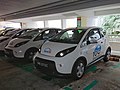 Bluesg Bluecars parked at a station.
 -
 Bluesg station in Ang Mo Kio.
 -
 Front view of the Corsa-e.
 -
 Back view of the Corsa-e.
 -
 Bluesg Corsa-e parked at a station.


See also
[edit]References
[edit]- ^ a b "BLUESG PTE. LTD. (201617258W) - Singapore Company". SGP Business. Retrieved 26 April 2026.
- ^ "BlueSG lays off staff ahead of operations pause to revamp app and fleet". The Business Times. 4 August 2025. Retrieved 26 April 2026.
- ^ "BlueSG". Tracxn. Retrieved 8 February 2021.
- ^ a b "Electric car-sharing outfit BlueSG poised to be sold". The Straits Times. 1 February 2021. Retrieved 7 February 2021.
- ^ "BlueSG Pte Ltd Information". The French Chamber of Commerce in Singapore. Archived from the original on 19 June 2018. Retrieved 18 June 2018.
- ^ a b "SINGAPORE'S FIRST LARGE-SCALE ELECTRIC VEHICLE CAR-SHARING PROGRAMME TO HIT THE ROADS IN DECEMBER". Land Transport Authority. 27 September 2017. Retrieved 18 June 2018.
- ^ "Goldbell Group confirms BlueSG acquisition, to invest more than S$70 million over next 5 years". Channel News Asia. 5 February 2021. Retrieved 7 February 2021.
- ^ "GOLDBELL GROUP ANNOUNCES ACQUISITION OF BLUESG". Goldbell - Market Leader in Industrial Vehicles. Goldbell. 5 February 2021. Retrieved 7 February 2021.
- ^ a b "GOLDBELL ON THE FAST TRACK TO DRIVE BLUESG GROWTH Company plans to invest up to S$40 million by end 2023". Goldbell Group. 18 October 2021. Retrieved 25 October 2021.
- ^ a b "BlueSG electric vehicle charging network to be acquired by TotalEnergies". Channel News Asia. 28 July 2021. Archived from the original on 30 August 2021. Retrieved 3 September 2021.
- ^ "S'pore Electric Car-Sharing Firm BlueSG Confirms Acquisition By Goldbell Group". Vulcan Post. 5 February 2021. Retrieved 7 February 2021.
- ^ "BlueSG's revamped car-sharing service Flexar to begin public beta testing". 13 April 2026. Retrieved 26 April 2026.
- ^ "Singapore's first electric car-sharing programme to launch in December". Channel News Asia. 27 September 2017. Archived from the original on 17 June 2018. Retrieved 18 June 2018.
- ^ "Paris: Autolib electric car scheme 'to end in days' after authorities pull the plug". The Local. 19 June 2018. Retrieved 1 June 2020.
- ^ "BlueIndy electric cars will be repurposed — or crushed". Auto Blog. 31 May 2020. Retrieved 1 June 2020.
- ^ "Bluecity service has permanently closed since 10 February 2020". Bluecity. Archived from the original on 7 August 2020. Retrieved 23 March 2020.
- ^ a b "More than 5,000 BlueSG electric car rentals in first 3 weeks of service". The Straits Times. 3 January 2018. Retrieved 18 June 2018.
- ^ "BlueSG will open charging stations to privately owned electric vehicles from next year". The Straits Times. 1 December 2018. Retrieved 10 February 2019.
- ^ a b "BlueSG opens charge points to electric vehicle owners" (PDF). 23 April 2019. Archived from the original (PDF) on 4 December 2021. Retrieved 7 February 2021.
- ^ Tan, Christopher (23 April 2019). "Owners of electric vehicles can pay to use BlueSG chargers from today". The Straits Times. ISSN 0585-3923. Retrieved 7 August 2025.
- ^ "Goldbell confirms acquisition of BlueSG; commits $70m to turn it around and expand business". The Straits Times. 5 February 2021. Retrieved 7 February 2021.
- ^ a b Ong, Chelsea (4 August 2025). "BlueSG announces sudden pause to car-sharing service from Aug 8, confirms layoffs". www.channelnewsasia.com. Retrieved 14 August 2025.
- ^ "Tribecar repurposing used BlueSG cars for new EV rental fleet". CNA. Retrieved 12 January 2026.
- ^ a b "BlueSG disposes of old EVs ahead of relaunch in 2026". The Straits Times. 18 December 2025. ISSN 0585-3923. Retrieved 12 January 2026.
- ^ "TotalEnergies ends EV charging operation in S'pore, to transfer charging points to other operators". The Straits Times. 27 November 2025. ISSN 0585-3923. Retrieved 14 April 2026.
- ^ "BlueSG relaunches as Flexar car sharing service". The Straits Times. 13 April 2026. ISSN 0585-3923. Retrieved 14 April 2026.
- ^ "Flexar car-sharing service launches in Singapore". The Straits Times. 4 May 2026. ISSN 0585-3923. Retrieved 5 May 2026.
- ^ "BlueSG returns with new car-sharing service Flexar from April 15; fleet not all-electric". The Straits Times. 13 April 2026. Retrieved 26 April 2026.
- ^ "New car-sharing service from BlueSG team to launch under Flexar brand on Apr 15, fleet not fully electric". Channel News Asia. 14 April 2026. Retrieved 26 April 2026.
- ^ a b "Pricing - BlueSG". BlueSG. 4 March 2024.
- ^ "BlueSG's Electric Vehicle Car-Sharing announced the opening of its 1,000th charging point, across 253 charging stations island-wide". Eco-Business. 1 October 2019. Retrieved 27 October 2019.
- ^ "Rental Packages - BlueSG". 27 July 2020. Retrieved 27 March 2021.
- ^ "Charging service". BlueSG. 2 April 2019. Retrieved 7 February 2020.
- ^ Bluecar. "bluecar La citadine 100% électrique" (PDF). Archived from the original (PDF) on 5 July 2016. Retrieved 16 April 2018.
- ^ "First of 500 BlueSG electric Opel Corsa-e cars launched in S'pore for rental". Mothership. 28 October 2022. Retrieved 3 May 2023.
- ^ "BlueSG announces more choice for its car-sharing customers with launch of new Opel Corsa-e flee". Carbuyer Singapore. 19 December 2022. Retrieved 3 May 2023.
- ^ "Fast Lane: Wild sports cars, electric multi-seaters". The Straits Times. 7 July 2023. Retrieved 3 December 2023.
- ^ "FAQs: Bluesg Ioniq 5". Archived from the original on 3 December 2023. Retrieved 3 December 2023.
- ^ "Home: Bluesg Ioniq 5". Archived from the original on 31 October 2023. Retrieved 3 December 2023.
- ^ Yip, Christy. "'The sight and sound give me PTSD': Hassles outweigh savings for some car-sharing users". CNA. Archived from the original on 12 March 2023. Retrieved 5 July 2024.
When accidents happen, however, car-sharing quickly becomes a costly affair owing to an accident insurance clause that dictates excess fees.
- ^ Yeap, Amanda (19 January 2024). "The Big Read: Growing calls to regulate car-sharing, amid rising complaints of hefty repair costs and poor service". TODAY. Archived from the original on 19 January 2024. Retrieved 8 July 2024.
- ^ Yeap, Amanda (24 April 2021). "Car-sharing firms increase penalties to deter 'inconsiderate usage' while some users complain of high repair costs". TODAY. Retrieved 8 July 2024.
- ^ Lay, Belmont (30 September 2022). "BlueSG user to pay some S$10,000 after car hits 'garbage can' as he let someone else park it". mothership.sg. Retrieved 8 July 2024.
- ^ Lam, Lydia (14 August 2025). "BlueSG employee exploited system for free rides, drove without licence 150 times". CNA. Retrieved 14 August 2025.
External links
[edit]

BlueSG
View on GrokipediaHistory
Founding and Initial Launch
BlueSG Pte Ltd was founded in 2016 as a subsidiary of the French Bolloré Group to operate an electric vehicle car-sharing service in Singapore, building on Bolloré's experience with the Autolib' program in Paris.[10][11] The initiative emerged from a partnership with Singapore's Land Transport Authority (LTA), announced on July 29, 2016, aimed at introducing the city's first large-scale electric car-sharing scheme to support a car-lite urban mobility vision.[10][12] On September 27, 2017, BlueSG detailed its rollout plans, including the deployment of 80 Bolloré Bluecar electric vehicles across 30 stations for one-way, point-to-point rentals accessible via a mobile app.[13][14] The service launched on December 12, 2017, marking Singapore's inaugural public electric car-sharing operation, with vehicles equipped for short urban trips and supported by Bolloré's battery-swapping technology at designated stations.[13][15] Initial pricing started at S$0.40 per minute for driving, plus station access fees, targeting commuters seeking flexible, emission-free alternatives to private cars or taxis.[13][16]Ownership Changes and Expansion
In February 2021, Goldbell Group, a Singapore-based distributor of commercial vehicles and industrial equipment, announced its acquisition of BlueSG from French conglomerate Bolloré Group to accelerate the company's growth phase.[5] The deal, aimed at positioning BlueSG as Goldbell's global headquarters for shared mobility, was completed on 18 October 2021, with Goldbell committing over S$70 million in investments over the subsequent five years to expand operations, fleet, and infrastructure.[2] [17] Following the acquisition, BlueSG pursued fleet modernization and scale-up, transitioning from its original Bolloré Bluecar models—known for limited range and two-seat configuration—to incorporate more practical vehicles. In late 2022, the company added 500 Opel Corsa-e electric vehicles, increasing overall fleet capacity and addressing prior limitations in interior space and battery life for urban sharing.[4] This expansion built on the pre-acquisition fleet of approximately 667 vehicles across 374 stations as of December 2020, with Goldbell also boosting staff by 20% by year-end 2021 to support operational growth.[18] Concurrently, Bolloré divested its Blue Charge network—Singapore's largest EV charging infrastructure with over 1,100 points—to TotalEnergies in July 2021 for an undisclosed sum, pending regulatory approval, allowing BlueSG to continue leveraging the stations under new ownership while focusing on vehicle-centric expansion.[19] These moves reflected Goldbell's strategy to integrate BlueSG into its engineering ecosystem, though actual station growth lagged earlier ambitions of 500 locations by 2020, stabilizing instead around existing public and dedicated points.[20]Operational Suspension and Wind-Down (2025)
On August 4, 2025, BlueSG announced the suspension of its electric car-sharing operations in Singapore, effective August 8, 2025, at 11:59 pm, framing the move as a "strategic pause" to facilitate a major platform upgrade.[8][21] The company stated this downtime would enable fleet refreshment, software enhancements, and infrastructure improvements to address evolving user needs and competitive pressures.[22][23] The decision was influenced by operational challenges, including mounting financial losses from an ageing vehicle fleet—primarily Bluecars and Opel Corsa-e models averaging over five years old—and high maintenance costs that eroded profitability amid stagnant utilization rates.[7] Insiders noted that deferred investments in newer electric vehicles and digital systems had compounded these issues, with the pause allowing time for procurement of updated models compatible with Singapore's evolving EV infrastructure.[23] As a result, BlueSG retrenched a "significant portion" of its workforce, aligning staffing with the reduced operational footprint during the hiatus.[24][22] Customer impacts included the termination of all active rentals by the suspension deadline, with final billing processed through August 31, 2025, after which accounts would be archived or closed upon request.[25][26] Excess fleet vehicles were repurposed for alternative uses, such as longer-term EV rentals by third-party firms like Tribecar, which rebranded some as "Le Blu Frenchy" for leases ranging from three months to two years.[27] BlueSG indicated a planned relaunch in 2026 with an enhanced service model, though specifics on timeline, fleet size, or pricing remained undisclosed at the time of announcement.[7][28] Analysts observed that the abrupt halt risked damaging brand trust and market share to competitors like GetGo and WhizzGo, potentially complicating the return amid Singapore's maturing car-sharing sector.[7][29]Operations
Business Model and User Experience
BlueSG operated a point-to-point electric vehicle car-sharing model, unique in Singapore for permitting users to retrieve vehicles from one station and return them to any other within its network, in contrast to round-trip services requiring return to the origin.[9] [30] This flexibility supported ad-hoc urban mobility, with revenue derived primarily from membership subscriptions and usage-based fees rather than fixed rentals or fuel surcharges, given the all-electric fleet.[30] Membership tiers included a free option with no monthly fee, a basic plan at S$8 per month, and a premium plan at S$18 per month, the latter providing perks such as priority reservations or bundled vouchers in earlier iterations.[31] [32] Rental pricing followed a per-minute structure, charging S$0.52 for Bluecar vehicles and S$0.58 for Opel Corsa-e models, inclusive of charging costs at stations but subject to minimum trip fees and GST.[32] [33] Users accessed the service via a mobile application for vehicle location, optional station and parking reservations, and rental initiation, authenticating entry with a CEPAS card or app-based unlock at over 300 islandwide stations.[1] The compact electric vehicles facilitated easy handling in dense traffic, with one-way drops enhancing convenience for errands or multi-stop trips, as noted in operator testimonials emphasizing simplicity and environmental alignment.[1] However, practical experiences highlighted occasional hurdles like limited vehicle availability during peaks, app-dependent parking bookings, and the need for station proximity, potentially affecting reliability for time-sensitive travel.[34]Fleet Details and Maintenance
BlueSG's fleet initially comprised Bolloré Bluecars, two-seater electric hatchbacks designed specifically for car-sharing, with an early operational size reaching 667 vehicles by 2019.[30] These vehicles featured a 30 kWh lithium-ion battery, offering a range of approximately 200 km, and were manufactured by the French company Bolloré for urban mobility applications. In 2022, BlueSG began transitioning to larger, more practical models by incorporating up to 500 Opel Corsa-e hatchbacks, five-seater electric vehicles with a 50 kWh battery providing up to 330 km of range, aimed at addressing user demands for improved comfort and capacity.[35] [4] A limited addition included a single Hyundai Ioniq 5 SUV in July 2023 as a "First 100" edition assembled in Singapore, though this did not significantly alter the core fleet composition. By late 2022, the Bluecar models were progressively phased out in favor of the Corsa-e, reflecting a shift toward vehicles with better drivability and interior space, though the original Bluecars persisted in smaller numbers until the service's suspension.[36] Maintenance responsibilities fell to BlueSG's in-house fleet technicians, who operated around the clock to perform routine inspections, cleaning, and disinfection, ensuring vehicles met operational standards between user rentals.[37] The company conducted regular servicing in line with Singapore's mandatory vehicle checks, including battery health monitoring and software updates for electric drivetrains, with cars typically undergoing post-rental diagnostics via the integrated telematics system to detect issues like tire wear or charging faults.[38] However, user reports highlighted occasional lapses, such as faulty parking sensors or delayed repairs, which some attributed to high utilization rates straining upkeep; experts countered that accident patterns more often stemmed from driver inexperience with electric vehicles rather than systemic neglect.[38] Prior to the August 2025 operational pause, the fleet's electric nature imposed unique maintenance demands, including proactive battery management to mitigate degradation from frequent short trips and urban charging cycles, though specific degradation data was not publicly detailed by the operator.[21]Charging Network and Infrastructure
BlueSG operated a network of dedicated charging stations across Singapore, designed for one-way electric vehicle sharing where users could pick up and return cars at any station, with vehicles automatically recharging upon docking.[8] The infrastructure featured conductive charging points compatible with the fleet's vehicles, primarily slow-charging setups to support urban turnover.[16] The network expanded progressively since launch; by December 2019, it included 304 locations with 1,207 charging points.[39] In August 2020, BlueSG reported 345 stations providing 1,371 charging points island-wide.[40] By August 2025, ahead of operational suspension, the system encompassed more than 1,500 charging points supporting a fleet of nearly 1,000 vehicles.[8] Stations were strategically placed in residential, commercial, and public areas to maximize accessibility, often in collaboration with the Land Transport Authority.[19] Initially reserved for BlueSG's fleet, select points opened to third-party electric vehicles starting in 2019, with 99 public-access chargers across 25 locations available by April of that year.[41] Further expansion to private EVs followed in early 2019.[42] In July 2021, Bolloré sold the underlying Blue Charge network—comprising over 1,500 points and representing about 85% of Singapore's operational chargers at the time—to TotalEnergies, though BlueSG retained operational use for its service.[19][20] This infrastructure emphasized urban density, with chargers typically delivering under 4 kW to align with short-term sharing cycles and limited space constraints.[16]Environmental and Sustainability Claims
Promoted Benefits and Data
BlueSG promotes its service as a contributor to environmental sustainability by providing access to a fleet of fully electric vehicles, which produce zero tailpipe emissions during operation, thereby reducing users' carbon footprints compared to traditional internal combustion engine vehicles.[1] [43] The company emphasizes that widespread adoption of electric car-sharing can alleviate urban congestion and lower overall greenhouse gas emissions by displacing short private car trips with efficient, shared electric mobility.[1] According to BlueSG's self-reported metrics, the service has saved 5,800 tons of CO₂ emissions through its operations, equivalent to the carbon sequestration effect of planting 34,000 trees.[1] These savings stem from 130 million kilometers driven on electric power, consuming 26 million kWh of electricity, all without direct vehicular emissions.[1] BlueSG positions this data as evidence of its role in advancing Singapore's low-carbon transport goals, highlighting the scalability of electric fleets in dense urban environments.[1]Empirical Critiques and Limitations
While BlueSG advertised its fleet as producing "zero emissions" and saving CO₂ equivalent to planting 34,000 trees based on electric kilometers driven, these claims emphasize tailpipe emissions while overlooking lifecycle and upstream impacts.[1][43] Electricity for charging derived from Singapore's grid, which relies on 95% fossil fuels (primarily natural gas), yields a carbon intensity of approximately 0.41 kg CO₂e per kWh as of recent years.[44][45] For a typical Bluecar with energy consumption around 15-18 kWh per 100 km, operational emissions equate to roughly 60-75 g CO₂e per km—about half that of comparable internal combustion engine vehicles but far from zero when including grid sourcing.[46] Lifecycle analyses specific to Singapore indicate electric vehicles reduce greenhouse gas emissions by 39-50% compared to internal combustion equivalents over full vehicle life, factoring in battery production (which adds 10-20 tonnes CO₂e upfront, mainly from mining and manufacturing) and end-of-life disposal.[47][48] However, these savings diminish in fossil-dependent grids like Singapore's, where well-to-wheel emissions from electricity generation offset much of the operational advantage; breakeven against petrol vehicles occurs after 20,000-50,000 km, depending on driving patterns and battery size.[49] BlueSG's aging fleet, capped at around 450 vehicles and now largely decommissioned or repurposed post-2025 suspension, amplified material impacts without proportional mileage to amortize manufacturing emissions.[7][50] Car-sharing models like BlueSG promise efficiency through higher utilization, but empirical usage data reveal low occupancy: average rentals lasted 30 minutes sporadically, implying vehicles were idle over 90% of the time, incurring standby charging losses and underutilizing the fleet's environmental potential relative to private ownership displacement.[51] With Singapore's vehicle parc nearing 1 million and annual transport emissions at 6.4 million tonnes CO₂e, BlueSG's modest scale contributed negligibly to reductions, as adoption failed to scale beyond initial targets and did not significantly curb private car purchases.[52] Battery recycling and second-life applications for decommissioned units remain unquantified in BlueSG's operations, posing risks of unmitigated e-waste and resource extraction externalities from global supply chains.[53] Overall, while offering marginal benefits over fossil alternatives, the service's sustainability narrative exceeded verifiable net gains, constrained by infrastructural realities and operational inefficiencies.Economic Performance
Pricing Structure and Costs
BlueSG's pricing model centered on monthly membership subscriptions combined with per-minute usage fees, with rates varying by vehicle type and subject to periodic adjustments. Membership options included a basic plan at S$8 per month with no commitment period, a premium plan at S$18 per month offering perks such as priority booking, and, from May 2025, a free membership with no subscription fee.[54][55][56] Usage fees started at S$0.33 per minute across vehicles upon launch but increased to S$0.36 per minute for Bluecars by March 2021, with Corsa-e models charged higher at S$0.52 per minute as of early 2024. By mid-2025, under the free membership tier, Bluecar rates rose to S$0.52 per minute and Corsa-e to S$0.58 per minute, reflecting operational cost pressures amid service disruptions. These per-minute rates applied uniformly to basic and premium plans, excluding dynamic pricing adjustments for peak demand on reservations, rental fees, and location surcharges.[57][54][56]| Membership Type | Monthly Fee | Bluecar Rate (per min) | Corsa-e Rate (per min) | Notes |
|---|---|---|---|---|
| Free | S$0 | S$0.52 | S$0.58 | Introduced May 2025; no perks.[56] |
| Basic | S$8 | S$0.36–0.52 | S$0.52+ | No commitment; rates evolved 2021–2025.[54][57] |
| Premium | S$18 | S$0.36–0.52 | S$0.52+ | Includes priority access; 6-month term option.[55][54] |