


Community hub
Recent from talks
Contribute something
Nothing was collected or created yet.
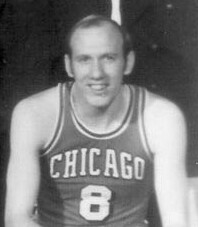
Bob Weiss
View on Wikipedia
Robert William Weiss (born May 7, 1942) is an American former professional basketball player and coach.
Key Information


Early life and education
[edit]Weiss was born on May 7, 1942, in Easton, Pennsylvania. He played high school basketball at Athens Area High School in Athens, Pennsylvania.
College career and statistics
[edit]Weiss played college basketball at Penn State University from 1963 to 1965, where he averaged 16.3 points per game during his senior season.
| GP | Games played | GS | Games started | MPG | Minutes per game |
| FG% | Field goal percentage | 3P% | 3-point field goal percentage | FT% | Free throw percentage |
| RPG | Rebounds per game | APG | Assists per game | SPG | Steals per game |
| BPG | Blocks per game | PPG | Points per game | Bold | Career high |
| Year | Team | GP | GS | MPG | FG% | 3P% | FT% | RPG | APG | SPG | BPG | PPG |
|---|---|---|---|---|---|---|---|---|---|---|---|---|
| 1962–63 | Penn State | 20 | – | – | .423 | – | .704 | 4.5 | – | – | – | 15.3 |
| 1963–64 | Penn State | 23 | – | – | .436 | – | .800 | 3.9 | – | – | – | 17.0 |
| 1964–65 | Penn State | 24 | – | – | .420 | – | .769 | 4.8 | – | – | – | 16.4 |
| Career | 67 | – | – | .427 | – | .762 | 4.4 | – | – | – | 16.3 | |
National Basketball Association
[edit]Philadelphia 76ers
[edit]Weiss was selected by the Philadelphia 76ers in the 1965 NBA draft in the third round with the 22nd overall selection. Weiss interspersed his career with the 76ers with a stint in the Eastern Professional Basketball League (EPBL), where he played for the Wilmington Blue Bombers in Wilmington, Delaware. Weiss won EPBL championships with the Blue Bombers in 1966[1] and 1967.[2] He led the EPBL in assists in the 1966–67 season and was named to the All-EPBL First Team that season.[3][4]
In 1967, Weiss was a member of the Philadelphia 76ers' championship team.
Seattle SuperSonics
[edit]In the 1967 NBA expansion draft, he was selected by the Seattle SuperSonics.[5] Weiss played in the NBA for twelve seasons, including six with the Chicago Bulls.
NBA career statistics
[edit]| GP | Games played | GS | Games started | MPG | Minutes per game |
| FG% | Field goal percentage | 3P% | 3-point field goal percentage | FT% | Free throw percentage |
| RPG | Rebounds per game | APG | Assists per game | SPG | Steals per game |
| BPG | Blocks per game | PPG | Points per game | Bold | Career high |
| † | Won an NBA championship | * | Led the league |
Regular season
[edit]| Year | Team | GP | GS | MPG | FG% | 3P% | FT% | RPG | APG | SPG | BPG | PPG |
|---|---|---|---|---|---|---|---|---|---|---|---|---|
| 1965–66 | Philadelphia | 7 | – | 4.3 | .333 | – | .000 | 1.0 | 0.6 | – | – | 0.9 |
| 1966–67† | Philadelphia | 6 | – | 4.8 | .500 | – | .400 | 0.5 | 1.7 | – | – | 2.0 |
| 1967–68 | Seattle | 82 | – | 19.7 | .430 | – | .839 | 1.8 | 4.2 | – | – | 9.8 |
| 1968–69 | Milwaukee | 15 | – | 16.1 | .316 | – | .794 | 1.8 | 1.8 | – | – | 6.6 |
| 1968–69 | Chicago | 62 | – | 19.9 | .397 | – | .802 | 2.2 | 2.8 | – | – | 6.6 |
| 1969–70 | Chicago | 82* | – | 31.0 | .427 | – | .842 | 2.8 | 5.8 | – | – | 11.5 |
| 1970–71 | Chicago | 82 | – | 27.3 | .422 | – | .840 | 2.3 | 4.7 | – | – | 9.5 |
| 1971–72 | Chicago | 82 | – | 29.9 | .430 | – | .835 | 2.1 | 4.6 | – | – | 11.3 |
| 1972–73 | Chicago | 82* | – | 25.4 | .426 | – | .841 | 1.8 | 3.6 | – | – | 8.7 |
| 1973–74 | Chicago | 79 | – | 21.6 | .466 | – | .835 | 1.3 | 3.8 | 1.3 | 0.2 | 8.5 |
| 1974–75 | Buffalo | 76 | – | 17.6 | .391 | – | .806 | 1.4 | 3.4 | 1.1 | 0.3 | 3.4 |
| 1975–76 | Buffalo | 66 | – | 15.1 | .486 | – | .729 | 1.0 | 2.3 | 0.7 | 0.2 | 3.2 |
| 1976–77 | Washington | 62 | – | 12.4 | .466 | – | .784 | 1.1 | 2.1 | 0.9 | 0.1 | 2.5 |
| Career | 783 | – | 22.1 | .428 | – | .828 | 1.8 | 3.7 | 1.0 | 0.2 | 7.6 | |
Playoffs
[edit]| Year | Team | GP | GS | MPG | FG% | 3P% | FT% | RPG | APG | SPG | BPG | PPG |
|---|---|---|---|---|---|---|---|---|---|---|---|---|
| 1966–67† | Philadelphia | 1 | – | 4.0 | .667 | – | .000 | 2.0 | 2.0 | – | – | 4.0 |
| 1969–70 | Chicago | 5 | – | 24.2 | .424 | – | .800 | 1.2 | 4.8 | – | – | 11.6 |
| 1970–71 | Chicago | 7 | – | 35.7 | .457 | – | .867 | 2.6 | 8.1 | – | – | 15.7 |
| 1971–72 | Chicago | 4 | – | 29.8 | .490 | – | .875 | 3.3 | 3.0 | – | – | 13.8 |
| 1972–73 | Chicago | 7 | – | 25.0 | .430 | – | .762 | 2.3 | 2.1 | – | – | 12.0 |
| 1973–74 | Chicago | 11 | – | 22.8 | .311 | – | 1.000 | 1.8 | 2.9 | 0.6 | 0.1 | 4.7 |
| 1974–75 | Buffalo | 7 | – | 16.1 | .478 | – | .667 | 1.0 | 2.4 | 0.6 | 0.1 | 4.3 |
| 1975–76 | Buffalo | 7 | – | 5.1 | .375 | – | .667 | 0.6 | 0.4 | 0.3 | 0.0 | 1.1 |
| 1976–77 | Washington | 4 | – | 8.5 | .600 | – | .000 | 0.8 | 0.5 | 0.3 | 0.0 | 1.5 |
| Career | 53 | – | 20.8 | .426 | – | .802 | 1.7 | 3.1 | 0.5 | 0.1 | 7.7 | |
Coaching career
[edit]NBA
[edit]After retiring as a player in 1977, Weiss briefly worked for an investment firm in Anaheim, California. In 1978, he joined the San Diego Clippers as an assistant coach.[6] In 1980, he moved to the Dallas Mavericks, an expansion franchise.
After six years in Dallas, Weiss accepted his first head coaching job in 1986 with the San Antonio Spurs. He coached the Spurs for two seasons, never posting a winning record. He did, however, lead them to the playoffs in 1988.
After one year as an assistant with the Orlando Magic, Weiss moved to the Atlanta Hawks as head coach. In three seasons, his Hawks teams posted a record of 124–122 and made the playoffs twice.
Weiss left the Hawks in 1993. He spent one year as head coach of the Los Angeles Clippers before joining the SuperSonics as an assistant coach. He served in that post for 12 years under both George Karl and Nate McMillan, going to the NBA Finals in 1996. He was promoted to head coach in 2005 after McMillan left for the Portland Trail Blazers. However, Weiss did not last even one season, as the Sonics struggled to a losing record. After a 13–17 start to the 2005–06 season, his three-year deal was terminated on January 3, 2006, and he was replaced with Bob Hill.
China
[edit]In 2008, Weiss went to China to coach the Shanxi Brave Dragons in the Chinese Basketball Association.[7] He also coached for the Shandong Lions.[8]
Return to NBA
[edit]In 2012, Weiss joined the Atlanta Hawks' coaching staff.[9] The next year, he became an assistant with the Charlotte Bobcats.[10] In 2017, he was hired by the Denver Nuggets as an assistant coach.[11]
Head coaching record
[edit]| Regular season | G | Games coached | W | Games won | L | Games lost | W–L % | Win–loss % |
| Playoffs | PG | Playoff games | PW | Playoff wins | PL | Playoff losses | PW–L % | Playoff win–loss % |
| Team | Year | G | W | L | W–L% | Finish | PG | PW | PL | PW–L% | Result |
|---|---|---|---|---|---|---|---|---|---|---|---|
| San Antonio | 1986–87 | 82 | 28 | 54 | .250 | 6th in Midwest | — | — | — | — | Missed playoffs |
| San Antonio | 1987–88 | 82 | 31 | 51 | .378 | 5th in Midwest | 3 | 0 | 3 | .000 | Lost in First Round |
| Atlanta | 1990–91 | 82 | 43 | 39 | .524 | 4th in Central | 5 | 2 | 3 | .400 | Lost in First Round |
| Atlanta | 1991–92 | 82 | 38 | 44 | .463 | 5th in Central | — | — | — | — | Missed playoffs |
| Atlanta | 1992–93 | 82 | 43 | 39 | .524 | 4th in Central | 3 | 0 | 3 | .000 | Lost in First Round |
| L.A. Clippers | 1993–94 | 82 | 27 | 55 | .329 | 7th in Pacific | — | — | — | — | Missed playoffs |
| Seattle | 2005–06 | 30 | 13 | 17 | .433 | (fired) | — | — | — | — | — |
| Career | 522 | 223 | 299 | .427 | 11 | 2 | 9 | .182 | |||
References
[edit]- ^ "1965-66 Wilmington Blue Bombers Statistics". Stats Crew. Retrieved March 5, 2025.
- ^ "1966-67 Wilmington Blue Bombers Statistics". Stats Crew. Retrieved March 5, 2025.
- ^ NBA Register: 1986–87 Edition. The Sporting News Publishing Company. 1986. p. 280. ISBN 9780892042272.
- ^ "Bob Weiss minor league basketball statistics". Stats Crew. Retrieved February 16, 2025.
- ^ Andrieson, David (October 13, 2007), "Sonics ushered Seattle into the big time 40 years ago Saturday", The Seattle Post-Intelligencer
- ^ "Weiss joins Clippers". Chicago Tribune. August 30, 1978. E5.
- ^ Kelley, Steve (February 19, 2012), "New books details Bob Weiss' basketball adventure in China", Seattle Times
- ^ Jon Pastuszek (November 20, 2011). "2011–2012 CBA Preview". NiuBBall – Basketball with Chinese Characteristics. Archived from the original on November 27, 2011. Retrieved April 8, 2016.
- ^ "Atlanta Hawks add Kenny Atkinson, Bob Weiss to coaching staff". Inside Hoops. August 28, 2012. Retrieved April 8, 2016.
- ^ "Charlotte Bobcats Name Ewing, Beyer, Silas, Weiss, Price to Coaching Staff – THE OFFICIAL SITE OF THE CHARLOTTE BOBCATS". NBA.com. Archived from the original on July 8, 2013.
- ^ "Denver Nuggets: Bob Weiss Hired as Assistant Coach". NBA. August 16, 2017. Retrieved August 19, 2017.
Bob Weiss
View on GrokipediaEarly life and education
High school career
Bob Weiss was born on May 7, 1942, in Easton, Pennsylvania.[1] He attended Athens Area High School in Athens, Pennsylvania, where he played basketball as a point guard and shooting guard during his high school years, approximately from 1958 to 1961.[4] His performance at Athens Area earned him a basketball scholarship to Penn State University in 1961.[5]College career
Bob Weiss played college basketball for the Penn State Nittany Lions as a guard from 1962 to 1965.[6] During his sophomore season in 1962–63, he averaged 15.3 points and 4.5 rebounds per game.[6] As a junior in 1963–64, his scoring increased to 17.0 points per game while averaging 3.9 rebounds.[6] In his senior year of 1964–65, Weiss averaged 16.4 points and 4.8 rebounds per game, serving as a key contributor to the team's offensive efforts.[6] Over his entire college career spanning 67 games, he tallied 16.3 points and 4.4 rebounds per game, establishing himself as one of Penn State's leading scorers.[6] That season, the Nittany Lions compiled a 20–4 record as an independent program and earned a berth in the NCAA University Division tournament, where they fell to Princeton 60–58 in the first round.[7][8] Following his senior year, Weiss was selected by the Philadelphia 76ers in the third round (22nd overall pick) of the 1965 NBA draft.[9]Playing career
Philadelphia 76ers
Bob Weiss entered the NBA as a third-round draft pick of the Philadelphia 76ers in 1965, selected fifth overall in that round from Penn State.[1] During his rookie 1965–66 season, he served primarily as a reserve guard, appearing in just seven games with limited minutes, averaging 4.3 minutes, 0.9 points, and 0.6 assists per game.[10] His role was modest amid a deep backcourt led by stars like Hal Greer and Wali Jones, focusing on practice contributions and development rather than regular rotation play.[11] In the 1966–67 season, Weiss remained a bench player for the 76ers, logging six regular-season games with averages of 4.8 minutes, 2.0 points, and 1.7 assists per game.[12] He earned a spot on the championship roster as the team, powered by Wilt Chamberlain's dominance and a balanced offense, clinched the NBA title by defeating the San Francisco Warriors 4–2 in the Finals.[13] Weiss appeared in one Finals game, playing four minutes and recording four points and two assists in Game 5, providing brief relief support during the series.[14] Concurrently from 1965 to 1967, Weiss played in the Eastern Professional Basketball League (EPBL) for the Wilmington Blue Bombers, balancing NBA reserve duties with more prominent minor-league action.[15] He helped the Blue Bombers secure EPBL championships in both 1966 and 1967, earning All-League First Team honors in the latter year.[16] Weiss led the league in assists during the 1966–67 season, showcasing his playmaking skills in a starting role that contrasted his NBA bench status.[17] Following the 1967 championship, Weiss was selected by the Seattle SuperSonics in the NBA expansion draft on May 1, 1967, ending his tenure with Philadelphia after two seasons.[18]Seattle SuperSonics and Milwaukee Bucks
Weiss joined the Seattle SuperSonics as part of the 1967 NBA expansion draft, where he was selected from the Philadelphia 76ers after contributing to their championship run the previous season.[19] As one of the league's newest franchises, the SuperSonics entered their inaugural 1967-68 campaign with a largely inexperienced roster and finished with a 23-59 record, struggling to establish consistency amid rapid team-building efforts.[20] Weiss, valued for his recent championship pedigree, filled a key role as a veteran backup guard, appearing in all 82 games while averaging 9.8 points, 4.2 assists, and 1.8 rebounds in 19.7 minutes per game.[1] His steady presence helped stabilize the backcourt for a young team navigating the challenges of expansion, including frequent lineup experiments and defensive vulnerabilities that led to the league's worst scoring margin that year. Weiss's outside shooting and playmaking proved reliable, though the SuperSonics' overall inexperience limited their competitiveness. His championship experience from Philadelphia enhanced his trade value heading into the next expansion cycle.[21] In the 1968 NBA expansion draft, Weiss was again selected, this time by the Milwaukee Bucks from the SuperSonics, joining another fledgling franchise eager for seasoned leadership.[22] The Bucks mirrored Seattle's early struggles in their 1968-69 debut, posting a 27-55 record amid ongoing roster flux and integration issues typical of expansion teams. Weiss played in 15 games, averaging 6.6 points and 1.8 assists in 16.1 minutes per game, providing backcourt depth but seeing diminished opportunities as the team adjusted its rotations.[1][23] Weiss's brief tenure in Milwaukee highlighted the instability of young franchises, with constant trades and personnel shifts disrupting continuity; he was dealt to the Chicago Bulls on November 23, 1968, along with forward Bob Love in exchange for guard Flynn Robinson, underscoring his role as a movable veteran asset in the league's evolving landscape.[22]Chicago Bulls
Weiss joined the Chicago Bulls midway through the 1968–69 NBA season after being traded from the Milwaukee Bucks on November 23, 1968, along with Bob Love, in exchange for Flynn Robinson.[1] This marked the beginning of his longest professional stint, spanning six seasons through 1973–74, during which he established himself as a reliable backcourt presence for a franchise in its formative years following its 1966 inception. As the primary point guard, Weiss transitioned from a sixth-man role early on to a consistent starter, providing steady ball-handling and playmaking amid the Bulls' efforts to build a competitive roster around emerging talents like Bob Love and Chet Walker.[1] During his Bulls tenure, Weiss appeared in 469 regular-season games, averaging 9.4 points, 4.2 assists, and 2.1 rebounds per game while shooting 43.5% from the field.[1] His performance peaked from 1969–70 to 1971–72, a period of personal growth where he averaged 10.8 points and 5.0 assists per game across those three seasons, underscoring his evolution into a key offensive facilitator.[1] Notable individual highlights included 25 points on November 18, 1970, in a 128–107 road victory over the Cincinnati Royals, where he also added 7 assists.[24] Weiss's consistency was evident in playing all 82 games in three consecutive seasons (1969–70 through 1971–72), contributing to the team's developing identity as a gritty, defensive-minded squad. The following table summarizes Weiss's per-game averages during his Bulls years:| Season | Games Played (GS) | Points | Assists | Rebounds |
|---|---|---|---|---|
| 1968–69 | 62 (39) | 6.6 | 2.8 | 2.2 |
| 1969–70 | 82 (82) | 11.5 | 5.8 | 2.8 |
| 1970–71 | 82 (82) | 9.5 | 4.7 | 2.3 |
| 1971–72 | 82 (82) | 11.3 | 4.6 | 2.1 |
| 1972–73 | 82 (82) | 8.7 | 3.6 | 1.8 |
| 1973–74 | 79 (79) | 8.5 | 3.8 | 1.3 |
Buffalo Braves and Washington Bullets
Weiss joined the Buffalo Braves in 1974 after being traded from the Chicago Bulls, marking the beginning of a diminished role in his playing career as he transitioned to a bench position behind primary point guard Ernie DiGregorio. During the 1974–75 season, he appeared in 76 games, averaging 17.6 minutes, 3.4 points, and 3.4 assists per game, contributing to the Braves' 49–33 regular-season record and their advancement to the Eastern Conference Semifinals, where they lost 3–4 to the Boston Celtics. In the playoffs, Weiss played all seven games, averaging 4.3 points and 2.4 assists.[1] The following year, 1975–76, Weiss's playing time further decreased amid team adjustments, including injuries to key players; he logged 66 games off the bench, averaging 15.1 minutes, 3.2 points, and 2.3 assists, as the Braves finished 46–36 and reached the Eastern Conference Semifinals again after defeating the Philadelphia 76ers 2–0 in the first round, only to fall 2–4 to the Celtics. His playoff contributions were minimal, with 5.1 minutes per game across seven contests.[1][25] In his final NBA season, Weiss signed with the Washington Bullets in 1976, serving in a limited reserve capacity at age 34, playing 62 games for 12.4 minutes each, 2.5 points, and 2.1 assists, helping the team to a 48–34 record. The Bullets advanced past the Cleveland Cavaliers 2–0 in the first round but lost 2–4 to the Houston Rockets in the Eastern Conference Semifinals, with Weiss appearing in four playoff games for sparse minutes.[1][25] Weiss retired at age 35 after the 1976–77 season, concluding a 12-year NBA career with 783 regular-season games played, reflecting his longevity as a steady but unflashy guard whose role had steadily declined due to age and team depth rather than specific injuries. This paved the way for his immediate shift to coaching roles in the league.[26]Playing statistics
Regular season
Over his 12-season NBA career spanning 1965 to 1977, Bob Weiss appeared in 783 regular-season games, accumulating 5,989 points (7.6 per game), 1,398 rebounds (1.8 per game), and 2,931 assists (3.7 per game).[1][27] As a reliable point guard known for his defensive tenacity and playmaking, Weiss demonstrated notable consistency, particularly in maintaining high availability with multiple 82-game seasons during his Chicago Bulls tenure from 1969 to 1973.[1] His assists peaked during these Bulls years, reaching a career-high 5.8 per game in 1969–70, when he served as a key facilitator alongside stars like Bob Love and Chet Walker, though comprehensive assist-to-turnover ratios are unavailable due to limited tracking of turnovers prior to the 1973–74 season.[1] Later seasons saw a decline in scoring and minutes as he transitioned to reserve roles, but he sustained solid assist numbers relative to his reduced playing time.[1] The following table summarizes Weiss's per-game regular-season statistics for points, rebounds, assists, and field goal percentage by season:| Season | Team(s) | G | PTS | TRB | AST | FG% |
|---|---|---|---|---|---|---|
| 1965–66 | PHI | 7 | 0.9 | 1.0 | 0.6 | .333 |
| 1966–67 | PHI | 6 | 2.0 | 0.5 | 1.7 | .500 |
| 1967–68 | SEA | 82 | 9.8 | 1.8 | 4.2 | .430 |
| 1968–69 | SEA/MIL | 77 | 6.6 | 2.1 | 2.6 | .379 |
| 1969–70 | CHI | 82 | 11.5 | 2.8 | 5.8 | .427 |
| 1970–71 | CHI | 82 | 9.5 | 2.3 | 4.7 | .422 |
| 1971–72 | CHI | 82 | 11.3 | 2.1 | 4.6 | .430 |
| 1972–73 | CHI | 82 | 8.7 | 1.8 | 3.6 | .426 |
| 1973–74 | CHI | 79 | 8.5 | 1.3 | 3.8 | .466 |
| 1974–75 | BUF | 76 | 3.4 | 1.4 | 3.4 | .391 |
| 1975–76 | BUF | 66 | 3.2 | 1.0 | 2.3 | .486 |
| 1976–77 | WSH | 62 | 2.5 | 1.1 | 2.1 | .466 |
Playoffs
Bob Weiss appeared in 54 NBA playoff games across nine postseason runs, primarily as a reserve guard providing steady ball-handling and scoring off the bench. His playoff debut came with the Philadelphia 76ers in the 1967 NBA Finals, where he played just one game but contributed to their championship victory. Weiss later reached the playoffs in five consecutive seasons with the Chicago Bulls from 1970 to 1974, including a Western Conference Finals appearance in 1974, and made two additional postseason trips with the Buffalo Braves in 1975 and 1976.[1] In the 1967 NBA Finals against the San Francisco Warriors, Weiss saw limited action as a rookie reserve behind starters like Wilt Chamberlain and Hal Greer, averaging 4.0 points, 2.0 rebounds, and 2.0 assists per game over his single appearance. He entered in Game 2, a 117–109 loss on April 16, 1967, playing four minutes and recording 4 points on 2-of-3 shooting, along with 2 assists and 2 rebounds, during the series that the 76ers won 4–2 for their first NBA title since relocating from Syracuse. This brief but effective stint in the high-stakes series highlighted his poise as a newcomer in a championship context.[28][29] Over his full playoff career, Weiss averaged 8.1 points, 3.2 assists, and 1.7 rebounds per game, reflecting his role as a low-usage facilitator who maintained consistent production in shorter bursts compared to his regular-season volume. These figures represented a slight uptick in scoring efficiency from his regular-season 7.6 points per game, with improved field-goal percentage in high-pressure environments, though his assist numbers dipped marginally due to reduced minutes in intense series. With the Bulls, he provided key bench support in first-round exits and deeper runs, such as averaging 4.7 points and 2.9 assists across 11 games in the 1974 playoffs en route to the conference finals. Similarly, during the Braves' 1975–76 postseason in the Eastern Conference, Weiss contributed as a reserve in their semifinal victory over the Detroit Pistons and conference finals loss to the Boston Celtics.[1] The following table summarizes Weiss's per-game playoff statistics for points, rebounds, assists, and field goal percentage by season:| Season | Team(s) | G | PTS | TRB | AST | FG% |
|---|---|---|---|---|---|---|
| 1966–67 | PHI | 1 | 4.0 | 2.0 | 2.0 | .667 |
| 1969–70 | CHI | 5 | 7.6 | 1.6 | 4.0 | .424 |
| 1970–71 | CHI | 7 | 7.9 | 2.6 | 5.0 | .457 |
| 1971–72 | CHI | 4 | 5.3 | 1.5 | 2.8 | .490 |
| 1972–73 | CHI | 7 | 6.9 | 1.4 | 3.0 | .476 |
| 1973–74 | CHI | 11 | 4.7 | 1.8 | 2.9 | .311 |
| 1974–75 | BUF | 6 | 9.7 | 2.3 | 4.5 | .447 |
| 1975–76 | BUF | 13 | 1.5 | 0.5 | 1.0 | .375 |
| 1976–77 | WSH | 3 | 2.0 | 0.7 | 1.3 | .500 |
Coaching career
Assistant coaching roles
Weiss began his NBA coaching career as an assistant with the San Diego Clippers in 1978, serving under head coach Gene Shue for two seasons through 1980.[30] In this role, he drew on his experience as a former point guard to help implement offensive strategies for the team during its transition from Buffalo.[31] From 1980 to 1986, Weiss joined the expansion Dallas Mavericks as an assistant coach under head coach Dick Motta, contributing to the franchise's foundational years.[31] During this period, the Mavericks made their first playoff appearances in 1983 and 1984, reaching the Western Conference Finals in the latter year, where Weiss assisted in player rotations and defensive preparations against teams like the Los Angeles Lakers.[30] After a stint as head coach with the San Antonio Spurs, Weiss returned to assistant duties with the Orlando Magic for the 1989–1990 season under head coach Matt Guokas.[31] His tenure with the expansion Magic focused on integrating young talent into the league's competitive landscape. Weiss's longest assistant role came with the Seattle SuperSonics from 1994 to 2005, spanning 11 seasons under head coaches George Karl and Nate McMillan.[31] In this capacity, he played a key part in the team's 1996 NBA Finals run, where the SuperSonics defeated the Houston Rockets in the Western Conference Finals before falling to the Chicago Bulls in the championship series.[32] Weiss contributed to defensive schemes that helped Seattle rank among the league's top defenses, particularly in developing guard play for stars like Gary Payton, who earned Defensive Player of the Year honors multiple times during this era.[33] Later in his career, Weiss served as an assistant with the Atlanta Hawks for the 2012–2013 season under Larry Drew, providing veteran insight on team defense and rotations.[34] He then joined the Charlotte Hornets from 2013 to 2017 as part of Steve Clifford's staff, where he focused on player development and helped guide the team to playoff appearances in 2014 and 2016.[35] Weiss concluded his assistant coaching tenure with the Denver Nuggets from 2017 to 2019 under Michael Malone, amassing over 25 years in assistant roles across multiple franchises. Weiss retired from coaching following the 2018–19 season.[31] Throughout his career, Weiss's longevity and emphasis on guard development and defensive fundamentals earned him respect as a mentor in the league.[3]Head coaching in the NBA
Bob Weiss began his NBA head coaching career with the San Antonio Spurs in 1986, taking over a rebuilding franchise. In his first season (1986–87), the Spurs finished with a 28–54 record, missing the playoffs. The following year (1987–88), Weiss guided the team to a 31–51 mark, securing the final playoff spot in the Western Conference as the eighth seed; however, they were swept 3–0 by the [Los Angeles Lakers](/page/Los Angeles_Lakers) in the first round. Weiss was fired shortly after the playoff loss, concluding his Spurs tenure with an overall record of 59–105.[2][36] After two years as an assistant with the Orlando Magic, Weiss returned to head coaching with the Atlanta Hawks in 1990, entering the Dominique Wilkins era where the scoring forward was the team's centerpiece. His first season (1990–91) saw the Hawks achieve a 43–39 record and earn a playoff berth, but they lost to the Detroit Pistons 2–3 in the first round. The 1991–92 campaign resulted in a 38–44 finish, missing the postseason. Weiss's final year with Atlanta (1992–93) mirrored his debut with another 43–39 record, but the team fell 3–0 to the Knicks in the first round. Over three seasons, Weiss compiled a 124–122 mark, emphasizing ball movement to improve the Hawks' passing, which had been among the league's weakest. He was relieved of his duties after the 1993 playoffs.[2][37] Weiss's next head coaching opportunity came with the Los Angeles Clippers in 1993, where he inherited a roster featuring Loy Vaught and Ron Harper. The 1993–94 season ended with a 27–55 record, placing the team seventh in the Pacific Division and out of the playoffs. Weiss was fired in May 1994, with the Clippers citing a lack of progress amid internal team issues he described as a "selfish atmosphere."[38][39] More than a decade later, after extensive assistant roles, Weiss was named head coach of the Seattle SuperSonics on July 18, 2005. He recorded a 13–17 mark in his 30 games before being fired on January 3, 2006, as the team finished 35–47 overall and third in the Northwest Division, missing the playoffs.[40][17] Throughout his NBA head coaching stints, Weiss prioritized a defensive-oriented system and collective team play over individual heroics, often simplifying schemes like incorporating more zone defenses to foster cohesion. His overall NBA head coaching record stands at 223–299 (.427) across 522 games, with five playoff appearances but a 2–9 postseason ledger.[2][17][37]Coaching in China
After being fired as head coach of the Seattle SuperSonics in 2006, Bob Weiss sought new opportunities abroad, leading him to accept a role in the Chinese Basketball Association (CBA) as a post-NBA venture.[41] Following prostate cancer surgery, his agent suggested China over Europe due to emerging prospects for American coaches there, and Weiss was drawn by the league's passionate basketball culture after attending an Adidas training camp in Shanghai.[41][42] In 2008, Weiss became the first former NBA head coach to lead a CBA team, taking over Shanxi Zhongyu (known as the Brave Dragons) for two seasons through 2010.[41] The team had finished last in the league the prior season with a 5-24 record, but under Weiss, it achieved a winning season, culminating in a dramatic buzzer-beater victory over playoff-bound Hangzhou that boosted player confidence.[43][41] He introduced NBA-style training emphasizing up-tempo play, decision-making, and enjoyment of the game to counter the CBA's rote drills and harsh methods, while addressing the team's limited height by focusing on defensive speed and attacking efficiency.[42][41] Despite challenges like language barriers requiring translators, owner Wang Xingjiang's frequent interference in practices and substitutions, and cultural clashes rooted in nationalist influences, Weiss's adaptations led to noticeable team improvements and playoff contention.[44][41][43] Weiss then moved to the Shandong Lions (also called the Golden Lions) for the 2010–2011 season, his final year in the CBA.[45] There, he prioritized player development amid league hurdles such as roster imports and competitive intensity, integrating American talents like Rodney White to elevate performance.[46] A highlight was Shandong's 120-109 upset over previously undefeated Xinjiang, where White scored 40 points and grabbed 10 rebounds, showcasing the team's growing cohesion under Weiss's guidance.[46] Continuing his NBA-influenced approach, he navigated ongoing adaptations to language issues and cultural differences, contributing to incremental progress in win percentages despite the CBA's unique pressures.[41]Head coaching record
Regular season
| Season | Team | G | W | L | W–L% | Finish | PG | PW | PL | PW–L% |
|---|---|---|---|---|---|---|---|---|---|---|
| 1986–87 | San Antonio Spurs | 82 | 28 | 54 | .341 | 5th in Midwest | — | — | — | — |
| 1987–88 | San Antonio Spurs | 82 | 31 | 51 | .378 | 4th in Midwest | 3 | 0 | 3 | .000 |
| 1990–91 | Atlanta Hawks | 82 | 43 | 39 | .524 | 3rd in Central | 5 | 2 | 3 | .400 |
| 1991–92 | Atlanta Hawks | 82 | 38 | 44 | .463 | 5th in Central | — | — | — | — |
| 1992–93 | Atlanta Hawks | 82 | 43 | 39 | .524 | 4th in Central | 3 | 0 | 3 | .000 |
| 1993–94 | Los Angeles Clippers | 82 | 27 | 55 | .329 | 6th in Pacific | — | — | — | — |
| 2005–06 | Seattle SuperSonics | 30 | 13 | 17 | .433 | (resigned) | — | — | — | — |
| Career | 522 | 223 | 299 | .427 | 11 | 2 | 9 | .182 |