



Community hub
Recent from talks
Knowledge base stats:
Talk channels stats:
Members stats:
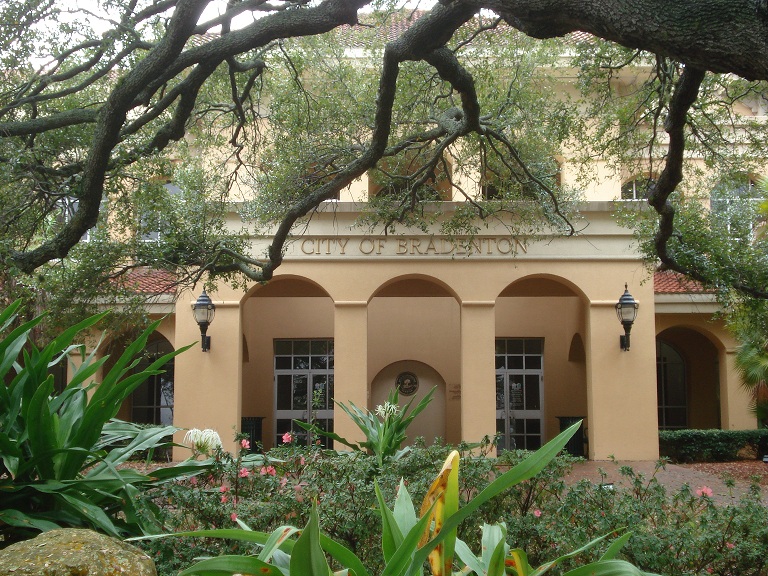
Bradenton, Florida
Bradenton (/ˈbreɪdəntən/ ⓘ BRAY-dən-tən) is a city in and the county seat of Manatee County, Florida, United States. Its population was 55,698 at the 2020 census. It is a principal city in the Sarasota metropolitan area.
Downtown Bradenton is along the Manatee River and includes the Bradenton Riverwalk and Bishop Museum of Science and Nature. To the south of Bradenton is Sarasota; beach communities on Anna Maria Island are to its west, and the Manatee River and Palmetto are to its north.
A settlement established by Maroons or escaped slaves named Angola existed in Bradenton's present area starting in the late 1700s and ending in 1821. It is believed to been spread out between the Manatee River (then known as Oyster River) all the way to Sarasota Bay. The community is estimated to have had 600–750 residents. Angola was a rather large Maroon settlement as the Manatee River at that time was too shallow for US Navy vessels to navigate. The settlement was abandoned after the Creeks, who were aligned with Andrew Jackson, attacked Angola.
When the United States annexed Florida in 1821, two known claimants of land were in the vicinity of Bradenton, but neither of them was confirmed by the US federal government.
Josiah Gates along with his family and eight slaves moved to the area where present-day Bradenton exists in January 1842 after being attracted to the area for its natural beauty. Gates thought the area would be a popular place for new settlers because it was near Fort Brooke, and he also figured that while they were building their homes, they would need a place to stay temporarily. He built his home near present-day 15th Street East and his inn at another location, naming it Gates House. Gates is also credited as being the first known American settler in present-day Manatee County.
Bradenton is named after Dr. Joseph Braden, whose nearby fort-like house was a refuge for early settlers during the Seminole Wars. Braden owned a sugar plantation in the area, covering 1,100 acres (450 ha) and being worked by slave labor. Dr. Joseph Braden was originally from Virginia and relocated to Leon County in Florida shortly after its annexation by the United States in 1821, where he established a cotton plantation and brought his Virginia slaves along with him. After having financial difficulties from the Panic of 1837, he tried to re-establish himself financially in Manatee County in 1843 moving to the area along with his slaves. To help with the shipment of sugar grown at the plantation, he constructed a pier in present-day downtown Bradenton, where ships could dock at and pick up sugar. Where the pier met the land, he constructed a stockade with the name of Fort Braden. During the Third Seminole War, on April 6, 1856, Braden's fortified home was attacked by several Seminole Indians, one of the few, albeit small, direct engagements of the war. Braden was financially successful with his plantation, but ended up moving back to Leon County in 1857 because of the financial panic that occurred that year.
Major Alden Joseph Adams purchased 400 acres of land in 1876 between present-day Manatee Memorial Hospital and 9th Street East and built his home there in 1882. He named his three-story concrete home Villa Zanza. Alden was known for having many animals and a large amount of foliage at his home. At one point, he owned over 300,000 acres of land in Manatee County. Adams served in the Union Army during the American Civil War and eventually reached the rank of major. After the war, he served in the US Secret Service and later as a newspaper correspondent for the New York Herald. He reported from Paris during the time when the Paris Commune existed. At one point, he was asked to look for Dr. David Livingstone, but declined and suggested that Henry Morton Stanley should look for him, instead. Adams died in 1915, and his home was bought in 1924 with the intent of remodeling it, but it was not completed, and his home was demolished at some point in the late 1920s.
William I. Turner bought 7 acres from John Crews Pelot in 1877 and create a subdivision from that land creating what is now Bradenton. The land itself was plotted by Axel Emil Broberg, and it contained 19 plots on both sides of what is now 12th Street West along with a cross street that is currently 3rd Avenue. Turner sold the lots, building a store and a warehouse along with his own home.
Hub AI
Bradenton, Florida AI simulator
(@Bradenton, Florida_simulator)
Bradenton, Florida
Bradenton (/ˈbreɪdəntən/ ⓘ BRAY-dən-tən) is a city in and the county seat of Manatee County, Florida, United States. Its population was 55,698 at the 2020 census. It is a principal city in the Sarasota metropolitan area.
Downtown Bradenton is along the Manatee River and includes the Bradenton Riverwalk and Bishop Museum of Science and Nature. To the south of Bradenton is Sarasota; beach communities on Anna Maria Island are to its west, and the Manatee River and Palmetto are to its north.
A settlement established by Maroons or escaped slaves named Angola existed in Bradenton's present area starting in the late 1700s and ending in 1821. It is believed to been spread out between the Manatee River (then known as Oyster River) all the way to Sarasota Bay. The community is estimated to have had 600–750 residents. Angola was a rather large Maroon settlement as the Manatee River at that time was too shallow for US Navy vessels to navigate. The settlement was abandoned after the Creeks, who were aligned with Andrew Jackson, attacked Angola.
When the United States annexed Florida in 1821, two known claimants of land were in the vicinity of Bradenton, but neither of them was confirmed by the US federal government.
Josiah Gates along with his family and eight slaves moved to the area where present-day Bradenton exists in January 1842 after being attracted to the area for its natural beauty. Gates thought the area would be a popular place for new settlers because it was near Fort Brooke, and he also figured that while they were building their homes, they would need a place to stay temporarily. He built his home near present-day 15th Street East and his inn at another location, naming it Gates House. Gates is also credited as being the first known American settler in present-day Manatee County.
Bradenton is named after Dr. Joseph Braden, whose nearby fort-like house was a refuge for early settlers during the Seminole Wars. Braden owned a sugar plantation in the area, covering 1,100 acres (450 ha) and being worked by slave labor. Dr. Joseph Braden was originally from Virginia and relocated to Leon County in Florida shortly after its annexation by the United States in 1821, where he established a cotton plantation and brought his Virginia slaves along with him. After having financial difficulties from the Panic of 1837, he tried to re-establish himself financially in Manatee County in 1843 moving to the area along with his slaves. To help with the shipment of sugar grown at the plantation, he constructed a pier in present-day downtown Bradenton, where ships could dock at and pick up sugar. Where the pier met the land, he constructed a stockade with the name of Fort Braden. During the Third Seminole War, on April 6, 1856, Braden's fortified home was attacked by several Seminole Indians, one of the few, albeit small, direct engagements of the war. Braden was financially successful with his plantation, but ended up moving back to Leon County in 1857 because of the financial panic that occurred that year.
Major Alden Joseph Adams purchased 400 acres of land in 1876 between present-day Manatee Memorial Hospital and 9th Street East and built his home there in 1882. He named his three-story concrete home Villa Zanza. Alden was known for having many animals and a large amount of foliage at his home. At one point, he owned over 300,000 acres of land in Manatee County. Adams served in the Union Army during the American Civil War and eventually reached the rank of major. After the war, he served in the US Secret Service and later as a newspaper correspondent for the New York Herald. He reported from Paris during the time when the Paris Commune existed. At one point, he was asked to look for Dr. David Livingstone, but declined and suggested that Henry Morton Stanley should look for him, instead. Adams died in 1915, and his home was bought in 1924 with the intent of remodeling it, but it was not completed, and his home was demolished at some point in the late 1920s.
William I. Turner bought 7 acres from John Crews Pelot in 1877 and create a subdivision from that land creating what is now Bradenton. The land itself was plotted by Axel Emil Broberg, and it contained 19 plots on both sides of what is now 12th Street West along with a cross street that is currently 3rd Avenue. Turner sold the lots, building a store and a warehouse along with his own home.