
Recent from talks
Brazilian Army in the First Republic
Knowledge base stats:
Talk channels stats:
Members stats:
Brazilian Army in the First Republic
During Brazil's First Republic (1889–1930), the Brazilian Army was one of several land-based military forces present in the country. The army was equipped and funded by the federal government, while state and local chiefs had the Public Forces ("small state armies") and irregular forces such as patriotic battalions.
The First Republic began and ended with political interventions by the army—the Proclamation of the Republic and the Revolution of 1930, respectively—and the army was additionally deployed in several internal conflicts. Profound army reforms, inspired by European standards and competition against Argentina, increased the Brazilian Army's capabilities both for war and for participation in society. The army's function was twofold: external defense and maintenance of internal order. These were reflected in its territorial distribution, concentrated mostly in Rio Grande do Sul and in the federal capital in Rio de Janeiro.
At the beginning of the First Republic, the army was a small force of less than 15,000 men, organized in small battalions or equivalent isolated forces, without larger permanent units. Mobilization was difficult. Soldiers were recruited through voluntary service or forced conscription, they had no routine military training and served long "professional" careers without being incorporated into a reserve. Officers had academic education of a civilian nature at the Military School of Praia Vermelha (EMPV), the "scientists", or little to no education, the "tarimbeiros". In the violent 1890s, the army exhibited a poor performance in campaigns such as the War of Canudos, motivating reforms implemented by successive administrations in the Ministry of War from the turn of the century. The General Staff of the Army (EME) was created in 1896 to serve as the highest body, but it was not clear whether command of the army would be exercised by the Minister of War or the head of EME. A new system of coastal fortifications was built in Guanabara Bay over several decades.
The Imperial German Army became the main outside influence in 1908, under Hermes da Fonseca's War Ministry. Officers sent to train in Germany launched a movement for military reform upon their return, earning the nickname "Young Turks". Until 1921, a modern order of battle was established, with military regions, regiments, brigades and divisions, although many units were not created or were understaffed. New German weapons equipped the troops and the Vila Militar was built in Rio de Janeiro. Mandatory military service was instituted through the Sortition Law in 1908, but only during the First World War, when the importance of the Armed Forces increased, did it come into effect in 1916. Through this new mechanism, soldiers became a temporary component of the force and a constant increase in personnel was possible, which reached up to 50,000 men in 1930.
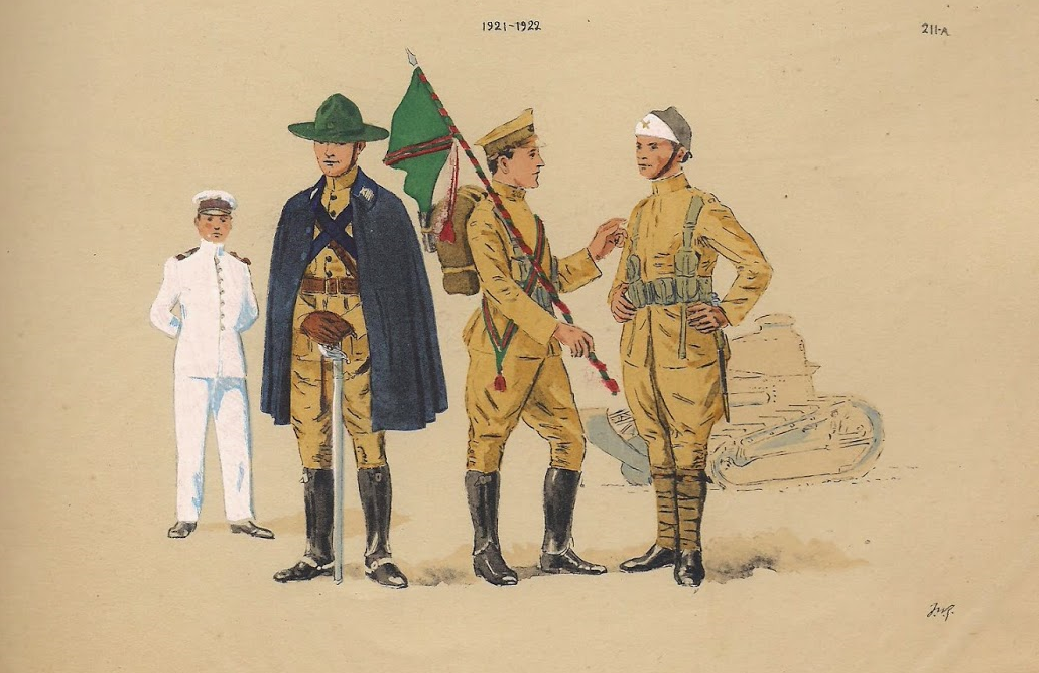
German influence gave way to the French Military Mission, hired in 1919. Sergeants gained importance at the head of the new tactical units, the combat groups, and the army acquired its first armored vehicles and aviation. Almost all equipment was imported, as the country's arms industry was inexpressive. In the 1920s, a new generation of officers had already emerged, professionalized at the Military School of Realengo, which succeeded the EMPV. Career progression came to depend on new or reformed schools such as the Officers Improvement School and the General Staff School. Defense plans were prepared against Argentina, which had a more modern army. Military authorities hoped that the reforms would produce officers more loyal to the hierarchy, but the result were the lieutenant revolts from the lower ranks. In the long run, the strengthening of the army's leadership and the expansion of the concept of national defense, initiated in this period, allowed for military interventions by generals that occurred later in Brazilian history, such as the 1937 coup d'état.
The republic was established in Brazil by a coup d'état by officers dissatisfied with the civilian elite of the Empire. As these soldiers were not united, after two military governments (Deodoro da Fonseca and Floriano Peixoto) power passed to the civilian oligarchies in 1894. The Old or First Brazilian Republic, which lasted until the Revolution of 1930, was marked by the predominance of the elites of São Paulo and Minas Gerais in the country's political scene, the large autonomy of the states and coronelism in local politics. The country's economy relied on agricultural exports, with the coffee cycle reaching its peak, but industrialization and urbanization also advanced.
In this context, army officers were marginalized and resentful of the civilian elite. They came from the small educated portion of the population, but still from the middle strata, with no money to pay for a law or medical school for their children; some were from traditional military families. A military career was a form of social ascension. The pay was modest and, below the rank of colonel, the standard of living was outside the middle class. The low number of army soldiers from São Paulo and Minas Gerais was an indication of the divorce with the civilian elite: in 1895, there were eight generals from Rio Grande do Sul, one from São Paulo and none from Minas Gerais; in 1930 there were eight from Rio Grande do Sul and none from Minas Gerais or São Paulo. Officers were not apolitical: bonuses and bribes helped to co-opt senior officials, who worked politically through appointments and promotions and sometimes used their prestige to win elections. The urbanization and industrialization of the period created new allies in society for officers opposed to the dominant oligarchies.
The coastal towns were the origin of a large part of the officialdom. The intellectual officers who served in the cities were appalled at the conditions encountered by their colleagues sent to units in the vast interior of the country. From then on, the officers' self-image as a civilizing force was born, which would mark the presence of the State in the most remote borders of the country, transmit civic and military instruction to its populations and transform Brazil into a nation state.
Hub AI
Brazilian Army in the First Republic AI simulator
(@Brazilian Army in the First Republic_simulator)
Brazilian Army in the First Republic
During Brazil's First Republic (1889–1930), the Brazilian Army was one of several land-based military forces present in the country. The army was equipped and funded by the federal government, while state and local chiefs had the Public Forces ("small state armies") and irregular forces such as patriotic battalions.
The First Republic began and ended with political interventions by the army—the Proclamation of the Republic and the Revolution of 1930, respectively—and the army was additionally deployed in several internal conflicts. Profound army reforms, inspired by European standards and competition against Argentina, increased the Brazilian Army's capabilities both for war and for participation in society. The army's function was twofold: external defense and maintenance of internal order. These were reflected in its territorial distribution, concentrated mostly in Rio Grande do Sul and in the federal capital in Rio de Janeiro.
At the beginning of the First Republic, the army was a small force of less than 15,000 men, organized in small battalions or equivalent isolated forces, without larger permanent units. Mobilization was difficult. Soldiers were recruited through voluntary service or forced conscription, they had no routine military training and served long "professional" careers without being incorporated into a reserve. Officers had academic education of a civilian nature at the Military School of Praia Vermelha (EMPV), the "scientists", or little to no education, the "tarimbeiros". In the violent 1890s, the army exhibited a poor performance in campaigns such as the War of Canudos, motivating reforms implemented by successive administrations in the Ministry of War from the turn of the century. The General Staff of the Army (EME) was created in 1896 to serve as the highest body, but it was not clear whether command of the army would be exercised by the Minister of War or the head of EME. A new system of coastal fortifications was built in Guanabara Bay over several decades.
The Imperial German Army became the main outside influence in 1908, under Hermes da Fonseca's War Ministry. Officers sent to train in Germany launched a movement for military reform upon their return, earning the nickname "Young Turks". Until 1921, a modern order of battle was established, with military regions, regiments, brigades and divisions, although many units were not created or were understaffed. New German weapons equipped the troops and the Vila Militar was built in Rio de Janeiro. Mandatory military service was instituted through the Sortition Law in 1908, but only during the First World War, when the importance of the Armed Forces increased, did it come into effect in 1916. Through this new mechanism, soldiers became a temporary component of the force and a constant increase in personnel was possible, which reached up to 50,000 men in 1930.
German influence gave way to the French Military Mission, hired in 1919. Sergeants gained importance at the head of the new tactical units, the combat groups, and the army acquired its first armored vehicles and aviation. Almost all equipment was imported, as the country's arms industry was inexpressive. In the 1920s, a new generation of officers had already emerged, professionalized at the Military School of Realengo, which succeeded the EMPV. Career progression came to depend on new or reformed schools such as the Officers Improvement School and the General Staff School. Defense plans were prepared against Argentina, which had a more modern army. Military authorities hoped that the reforms would produce officers more loyal to the hierarchy, but the result were the lieutenant revolts from the lower ranks. In the long run, the strengthening of the army's leadership and the expansion of the concept of national defense, initiated in this period, allowed for military interventions by generals that occurred later in Brazilian history, such as the 1937 coup d'état.
The republic was established in Brazil by a coup d'état by officers dissatisfied with the civilian elite of the Empire. As these soldiers were not united, after two military governments (Deodoro da Fonseca and Floriano Peixoto) power passed to the civilian oligarchies in 1894. The Old or First Brazilian Republic, which lasted until the Revolution of 1930, was marked by the predominance of the elites of São Paulo and Minas Gerais in the country's political scene, the large autonomy of the states and coronelism in local politics. The country's economy relied on agricultural exports, with the coffee cycle reaching its peak, but industrialization and urbanization also advanced.
In this context, army officers were marginalized and resentful of the civilian elite. They came from the small educated portion of the population, but still from the middle strata, with no money to pay for a law or medical school for their children; some were from traditional military families. A military career was a form of social ascension. The pay was modest and, below the rank of colonel, the standard of living was outside the middle class. The low number of army soldiers from São Paulo and Minas Gerais was an indication of the divorce with the civilian elite: in 1895, there were eight generals from Rio Grande do Sul, one from São Paulo and none from Minas Gerais; in 1930 there were eight from Rio Grande do Sul and none from Minas Gerais or São Paulo. Officers were not apolitical: bonuses and bribes helped to co-opt senior officials, who worked politically through appointments and promotions and sometimes used their prestige to win elections. The urbanization and industrialization of the period created new allies in society for officers opposed to the dominant oligarchies.
The coastal towns were the origin of a large part of the officialdom. The intellectual officers who served in the cities were appalled at the conditions encountered by their colleagues sent to units in the vast interior of the country. From then on, the officers' self-image as a civilizing force was born, which would mark the presence of the State in the most remote borders of the country, transmit civic and military instruction to its populations and transform Brazil into a nation state.
Recent media