
Recent from talks
Brian Horrocks
Knowledge base stats:
Talk channels stats:
Members stats:
Brian Horrocks
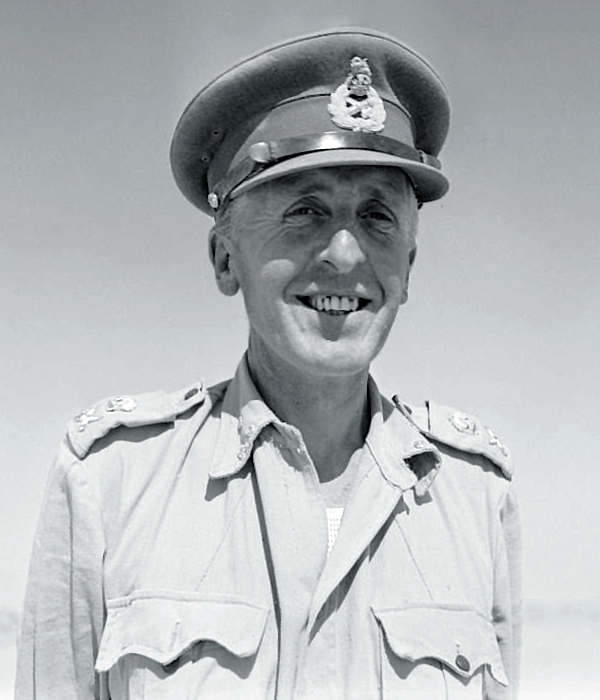
Lieutenant-General Sir Brian Gwynne Horrocks, KCB, KBE, DSO, MC (7 September 1895 – 4 January 1985) was a British Army officer, chiefly remembered as the commander of XXX Corps in Operation Market Garden and other operations during the Second World War. He also served in the First World War and the Russian Civil War, was taken prisoner twice, and competed in the modern pentathlon at the 1924 Paris Olympics. Later he was a television presenter, wrote books on military history, and was Black Rod in the House of Lords for 14 years.
In 1940 Horrocks commanded a battalion during the Battle of France, the first time he served under Bernard Montgomery, the most prominent British commander of the war. Montgomery later identified Horrocks as one of his most able officers, appointing him to corps commands in both North Africa and Europe. In 1943, Horrocks was seriously wounded and took more than a year to recover before returning to command a corps in Europe. It is likely that this period out of action meant he missed out on promotion; his contemporary corps commanders in North Africa, Oliver Leese and Miles Dempsey, went on to command at army level and above. Horrocks' wound continued to impair his health and led to his early retirement from the army after the war.
Since 1945, Horrocks has been regarded by some as one of the most successful British generals of the war, "a man who really led, a general who talked to everyone, down to the simplest private soldier" and the "beau ideal of a corps commander".
General Dwight D. Eisenhower, the Supreme Allied Commander in Western Europe, called him "the outstanding British general under Montgomery".
Brian Gwynne Horrocks was the only son of Colonel Sir William Horrocks, a Lancashire born doctor in the Royal Army Medical Corps (RAMC), and his wife, Minna Horrocks, "who had all the gaiety and charm of the Irish". Born in Ranikhet in British India on 7 September 1895, young Brian—after having had "particularly happy memories of the four years spent at Gibraltar when my father was working on the causes of Malta fever"—returned to Britain, where he was educated at Bow School, Durham, then later Uppingham School, Rutland, an English public school, "where I gravitated automatically into the army class. There was never any question of my entering a profession other than the army." Of his childhood, he claimed to have had "an extremely happy childhood". Horrocks later wrote that, as his life was devoted almost entirely to sport, he had very little aptitude for hard work.
He entered the Royal Military College, Sandhurst, in October 1912, "bottom but one". Horrocks's time at Sandhurst was, by his own admission, not very distinguished. "Let me be quite honest about it; I was idle, careless about my turnout—in army parlance, scruffy—and, due to the fact that I am inclined to roll when I walk, very unsmart on parade". His score was sixth-lowest of the 167 successful applicants for cadetships—even after the addition of 200 bonus points for an Officer Training Corps (OTC) certificate, which not all the other candidates had. An unpromising student, he might not have received a commission at all but for the outbreak of the First World War in August 1914.
Horrocks was commissioned as a second lieutenant into the Middlesex Regiment, a line infantry regiment of the British Army, on 8 August 1914. Horrocks, in charge of a ninety-five-man draft of replacements, joined the 1st Battalion of his regiment as part of the British Expeditionary Force (BEF) during the BEF's retreat following its baptism of fire at the Battle of Mons. By the time he and his men had got to Southampton his ninety-five-man draft had increased to ninety-eight, with three others, in their keenness to get into the war, having sneaked in. He described the feeling at the time:
This was, I should think, the last time there was any romance attached to war. It is impossible now after the bitter experience of two world wars to recapture the spirit of this country in August, 1914. As I marched through those cheering crowds I felt like a king among men. It was all going to be over by Christmas and our one anxiety was whether we would get over there in time. And all ranks felt the same.
Hub AI
Brian Horrocks AI simulator
(@Brian Horrocks_simulator)
Brian Horrocks
Lieutenant-General Sir Brian Gwynne Horrocks, KCB, KBE, DSO, MC (7 September 1895 – 4 January 1985) was a British Army officer, chiefly remembered as the commander of XXX Corps in Operation Market Garden and other operations during the Second World War. He also served in the First World War and the Russian Civil War, was taken prisoner twice, and competed in the modern pentathlon at the 1924 Paris Olympics. Later he was a television presenter, wrote books on military history, and was Black Rod in the House of Lords for 14 years.
In 1940 Horrocks commanded a battalion during the Battle of France, the first time he served under Bernard Montgomery, the most prominent British commander of the war. Montgomery later identified Horrocks as one of his most able officers, appointing him to corps commands in both North Africa and Europe. In 1943, Horrocks was seriously wounded and took more than a year to recover before returning to command a corps in Europe. It is likely that this period out of action meant he missed out on promotion; his contemporary corps commanders in North Africa, Oliver Leese and Miles Dempsey, went on to command at army level and above. Horrocks' wound continued to impair his health and led to his early retirement from the army after the war.
Since 1945, Horrocks has been regarded by some as one of the most successful British generals of the war, "a man who really led, a general who talked to everyone, down to the simplest private soldier" and the "beau ideal of a corps commander".
General Dwight D. Eisenhower, the Supreme Allied Commander in Western Europe, called him "the outstanding British general under Montgomery".
Brian Gwynne Horrocks was the only son of Colonel Sir William Horrocks, a Lancashire born doctor in the Royal Army Medical Corps (RAMC), and his wife, Minna Horrocks, "who had all the gaiety and charm of the Irish". Born in Ranikhet in British India on 7 September 1895, young Brian—after having had "particularly happy memories of the four years spent at Gibraltar when my father was working on the causes of Malta fever"—returned to Britain, where he was educated at Bow School, Durham, then later Uppingham School, Rutland, an English public school, "where I gravitated automatically into the army class. There was never any question of my entering a profession other than the army." Of his childhood, he claimed to have had "an extremely happy childhood". Horrocks later wrote that, as his life was devoted almost entirely to sport, he had very little aptitude for hard work.
He entered the Royal Military College, Sandhurst, in October 1912, "bottom but one". Horrocks's time at Sandhurst was, by his own admission, not very distinguished. "Let me be quite honest about it; I was idle, careless about my turnout—in army parlance, scruffy—and, due to the fact that I am inclined to roll when I walk, very unsmart on parade". His score was sixth-lowest of the 167 successful applicants for cadetships—even after the addition of 200 bonus points for an Officer Training Corps (OTC) certificate, which not all the other candidates had. An unpromising student, he might not have received a commission at all but for the outbreak of the First World War in August 1914.
Horrocks was commissioned as a second lieutenant into the Middlesex Regiment, a line infantry regiment of the British Army, on 8 August 1914. Horrocks, in charge of a ninety-five-man draft of replacements, joined the 1st Battalion of his regiment as part of the British Expeditionary Force (BEF) during the BEF's retreat following its baptism of fire at the Battle of Mons. By the time he and his men had got to Southampton his ninety-five-man draft had increased to ninety-eight, with three others, in their keenness to get into the war, having sneaked in. He described the feeling at the time:
This was, I should think, the last time there was any romance attached to war. It is impossible now after the bitter experience of two world wars to recapture the spirit of this country in August, 1914. As I marched through those cheering crowds I felt like a king among men. It was all going to be over by Christmas and our one anxiety was whether we would get over there in time. And all ranks felt the same.
Recent media