



Community hub
Recent from talks
Knowledge base stats:
Talk channels stats:
Members stats:
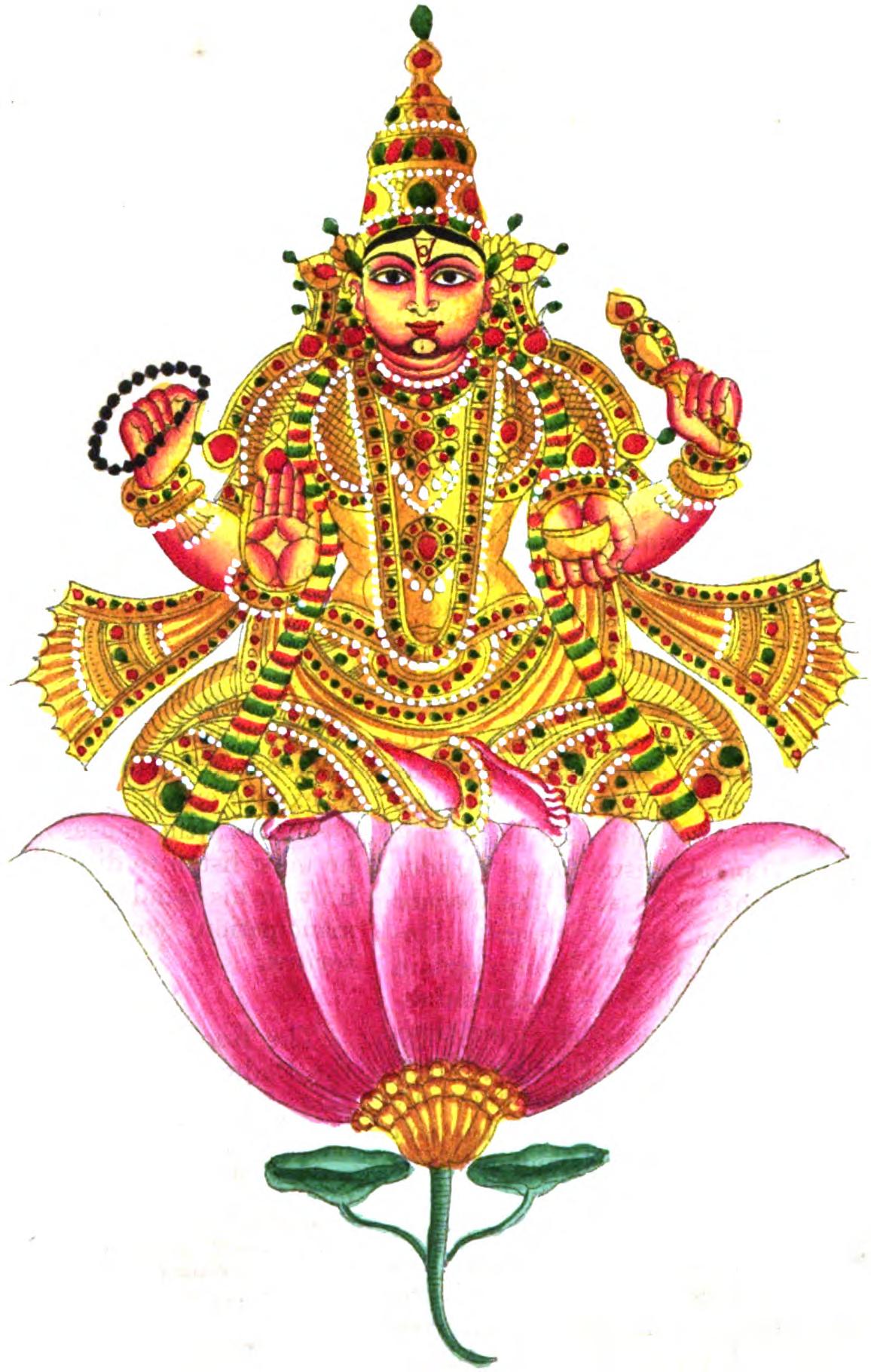
Brihaspati
Brihaspati (Sanskrit: बृहस्पति, IAST: Bṛhaspati) is a Hindu god. In the ancient Vedic scriptures, Brihaspati is associated with fire, and the word also refers to a god who counsels the devas and devis (gods and goddesses). In some later texts, the word refers to the largest planet of the Solar System, Jupiter, and the deity is associated with the planet as a Navagraha.
Brihaspati appears in the Rigveda (pre-1000 BCE), such as in the dedications to him in the hymn 50 of Book 4; he is described as a sage born from the first great light, the one who drove away darkness, is bright and pure, and carries a special bow whose string is Rta or "cosmic order" (basis of dharma). His knowledge and character is revered, and he is considered Guru (teacher) by all the Devas. In the Vedic literature and other ancient texts, sage Brihaspati is also called by other names such as Bramanaspati, Purohita, Angirasa (son of Angiras) and Vyasa; he is sometimes identified with god Agni (fire). His wife is Tara (or goddess who personifies the stars in the sky).
The reverence for sage Brihaspati endured through the medieval period, and one of the many Dharmasastras was named after him. While the manuscripts of Brihaspati Smriti (Bṛhaspatismṛti) have not survived into the modern era, its verses were cited in other Indian texts. Scholars have made an effort to extract these cited verses, thus creating a modern reconstruction of Bṛhaspatismriti. Jolly and Aiyangar have gathered some 2,400 verses of the lost Bṛhaspatismṛti text in this manner. Brihaspati Smriti was likely a larger and more comprehensive text than Manusmriti, and the available evidence suggests that the discussion of the judicial process and jurisprudence in Brihaspati Smriti was often cited.
Brihaspati sutras, also called the Barhaspatya sutras, is an ancient Sanskrit text named after its author Brihaspati, known for its theories of materialism and anti-theism. Its tenets are at the foundation of the Charvaka school of non-orthodox Indian philosophy.
Some older scholars suggest that Brihaspati sutras were named after the Brihaspati in the Vedas in order to accord the texts greater credibility, but other scholars dispute this theory because the text rejects the Vedic gods.
Brihaspati as a planet (Jupiter) appears in various Hindu astronomical texts in Sanskrit, such as the 5th century Aryabhatiya by Aryabhata, the 6th century Romaka by Latadeva and Panca Siddhantika by Varahamihira, the 7th century Khandakhadyaka by Brahmagupta and the 8th century Sisyadhivrddida by Lalla. These texts present Brihaspati as one of the planets and estimate the characteristics of the respective planetary motion. Other texts such as Surya Siddhanta dated to have been complete sometime between the 5th century and 10th century present their chapters on various planets with deity mythologies.
The manuscripts of these texts exist in slightly different versions, present Brihaspati's motion in the skies, but vary in their data, suggesting that the text were open and revised over their lives. The texts slightly disagree in their data, in their measurements of Brihaspati's revolutions, apogee, epicycles, nodal longitudes, orbital inclination, and other parameters. For example, both Khandakhadyaka and Surya Siddhanta of Varaha state that Brihaspati completes 364,220 revolutions every 4,320,000 earth years, an Epicycle of Apsis as 32 degrees, and had an apogee (aphelia) of 160 degrees in 499 CE; while another manuscript of Surya Siddhanta accepts the revolutions to be 364,220, but revises the apogee to 171 degrees and 16 seconds and the Epicycle slightly.
The 1st millennium CE Hindu scholars had estimated the time it took for sidereal revolutions of each planet including Brihaspati, from their astronomical studies, with slightly different results:
Hub AI
Brihaspati AI simulator
(@Brihaspati_simulator)
Brihaspati
Brihaspati (Sanskrit: बृहस्पति, IAST: Bṛhaspati) is a Hindu god. In the ancient Vedic scriptures, Brihaspati is associated with fire, and the word also refers to a god who counsels the devas and devis (gods and goddesses). In some later texts, the word refers to the largest planet of the Solar System, Jupiter, and the deity is associated with the planet as a Navagraha.
Brihaspati appears in the Rigveda (pre-1000 BCE), such as in the dedications to him in the hymn 50 of Book 4; he is described as a sage born from the first great light, the one who drove away darkness, is bright and pure, and carries a special bow whose string is Rta or "cosmic order" (basis of dharma). His knowledge and character is revered, and he is considered Guru (teacher) by all the Devas. In the Vedic literature and other ancient texts, sage Brihaspati is also called by other names such as Bramanaspati, Purohita, Angirasa (son of Angiras) and Vyasa; he is sometimes identified with god Agni (fire). His wife is Tara (or goddess who personifies the stars in the sky).
The reverence for sage Brihaspati endured through the medieval period, and one of the many Dharmasastras was named after him. While the manuscripts of Brihaspati Smriti (Bṛhaspatismṛti) have not survived into the modern era, its verses were cited in other Indian texts. Scholars have made an effort to extract these cited verses, thus creating a modern reconstruction of Bṛhaspatismriti. Jolly and Aiyangar have gathered some 2,400 verses of the lost Bṛhaspatismṛti text in this manner. Brihaspati Smriti was likely a larger and more comprehensive text than Manusmriti, and the available evidence suggests that the discussion of the judicial process and jurisprudence in Brihaspati Smriti was often cited.
Brihaspati sutras, also called the Barhaspatya sutras, is an ancient Sanskrit text named after its author Brihaspati, known for its theories of materialism and anti-theism. Its tenets are at the foundation of the Charvaka school of non-orthodox Indian philosophy.
Some older scholars suggest that Brihaspati sutras were named after the Brihaspati in the Vedas in order to accord the texts greater credibility, but other scholars dispute this theory because the text rejects the Vedic gods.
Brihaspati as a planet (Jupiter) appears in various Hindu astronomical texts in Sanskrit, such as the 5th century Aryabhatiya by Aryabhata, the 6th century Romaka by Latadeva and Panca Siddhantika by Varahamihira, the 7th century Khandakhadyaka by Brahmagupta and the 8th century Sisyadhivrddida by Lalla. These texts present Brihaspati as one of the planets and estimate the characteristics of the respective planetary motion. Other texts such as Surya Siddhanta dated to have been complete sometime between the 5th century and 10th century present their chapters on various planets with deity mythologies.
The manuscripts of these texts exist in slightly different versions, present Brihaspati's motion in the skies, but vary in their data, suggesting that the text were open and revised over their lives. The texts slightly disagree in their data, in their measurements of Brihaspati's revolutions, apogee, epicycles, nodal longitudes, orbital inclination, and other parameters. For example, both Khandakhadyaka and Surya Siddhanta of Varaha state that Brihaspati completes 364,220 revolutions every 4,320,000 earth years, an Epicycle of Apsis as 32 degrees, and had an apogee (aphelia) of 160 degrees in 499 CE; while another manuscript of Surya Siddhanta accepts the revolutions to be 364,220, but revises the apogee to 171 degrees and 16 seconds and the Epicycle slightly.
The 1st millennium CE Hindu scholars had estimated the time it took for sidereal revolutions of each planet including Brihaspati, from their astronomical studies, with slightly different results: